

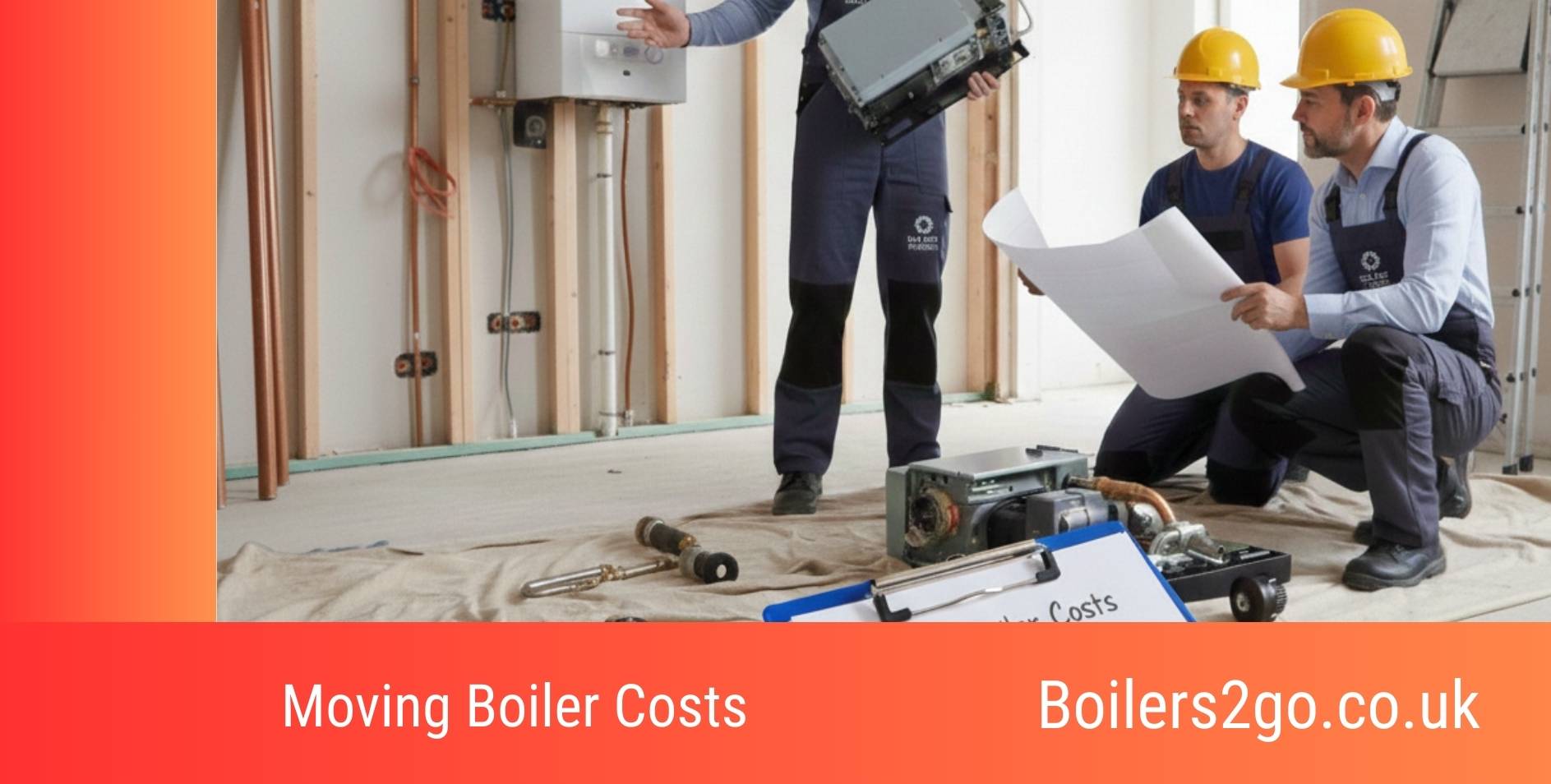
Understanding the moving boiler cost is essential for any UK homeowner or landlord planning renovation work, layout changes, or heating system upgrades. Costs vary by boiler type, so if you are unsure whether you have a combi, system or regular boiler, start with our guide to what type of boiler you have.
Moving a boiler is not as simple as shifting an appliance from one corner to another—it involves gas pipework, flue repositioning, condensate rerouting, and strict Gas Safe regulations. For the practical and legal side of relocation, see our guide on whether you can move a boiler.
This guide breaks down every major factor that affects the cost of moving a boiler, the reasons these costs arise, and the actionable steps you can take to avoid unnecessary expenses.
I’ll discuss the common causes that increase moving costs, explain how to fix or mitigate them, and help you understand how to plan a move safely, legally, and cost-effectively.
What Affects the Moving Boiler Cost?
The moving boiler cost depends on several interlinked factors such as distance moved, pipework modifications, flue requirements, and access challenges. These elements create both labour and materials costs, and each specific cause can impact your final bill significantly.
Below, we break down the individual causes and explain how they influence price, including practical fixes or actions you can take.
Why Does the Distance of the Move Affect the Cost?
The distance of the move affects the moving boiler cost because every extra metre of pipework requires additional copper, insulation, joints, labour time, and potential wall, floor, or ceiling alterations.
Cause 1: Longer Gas Pipe Runs
Longer distances often require upsizing pipework to maintain correct gas pressure, especially for modern combi boilers. Choosing the best place to put a boiler close to the existing gas supply keeps pipe runs, and costs, down.
How to Reduce Gas Pipe Costs
To minimise this part of the cost:
- Choose the closest practical location. Keeping the new site close to the existing boiler or gas meter reduces materials and labour.
- Avoid overly long runs. Long horizontal runs through floors or walls raise costs dramatically.
- Consult early. Pre-planning with a Gas Safe engineer helps identify the cheapest possible route.
Cause 2: Additional Flow/Return & Condensate Pipework
Heating and condensate pipes must also be rerouted. This may involve removing floorboards, lifting carpet, or routing pipes externally.
How to Reduce Pipework Rerouting Costs
- Select a location with simple pipe access, e.g., utility rooms or ground-floor airing cupboards.
- Avoid loft installs unless absolutely necessary—condensate freezing risks require extra protection and cost.
- Ensure overflow and condensate have direct access to drainage to reduce construction work.
Why Does Moving the Boiler to a Different Room Increase the Cost?
Moving a boiler to a different room increases the moving boiler cost because each room has different building requirements, ventilation needs, and structural challenges.
Cause 1: Flue Repositioning
Every boiler must vent outside. New flue holes may need cutting through brickwork, rendering, or roofing. Our guide to boiler flue replacement costs covers typical prices for this part of the job.
How to Reduce Flue Costs
- Choose a room with an existing external wall.
- Avoid flue runs through the roof if possible—roof penetrations add complexity and cost.
- Check flue clearance regulations early to avoid surprises (e.g., distance from windows, boundaries).
Cause 2: Room-Specific Building Requirements
Regulations vary depending on the chosen location:
- Kitchens may need additional cupboard ventilation.
- Bathrooms require adherence to strict boiler placement zones.
- Garages may require frost protection.
- Lofts may require safe access ladders, boarding, and lighting.
How to Reduce Building Work Costs
- Pick a compliant room that needs minimal modification.
- Ask your engineer for a pre-move compliance assessment.
- Avoid rooms requiring major structural changes.
Why Do Boiler Type and Age Affect the Cost of Moving?
The boiler’s type and age affect the moving boiler cost because older models often require replacement parts, rewiring, or compatibility adjustments.
Cause 1: Old or Non-Condensing Boilers
Old boilers may not comply with modern flue requirements or efficiency rules. Back boilers are the most extreme example, as they sit behind a fireplace and are usually replaced rather than relocated; our guide to what a back boiler is explains why.
How to Reduce Costs for Older Boilers
- Consider upgrading during the move.
Combining the move with a new A-rated boiler installation can be cheaper long-term. - Check whether your existing boiler is still serviceable.
- Plan for replacement parts, which may be discontinued for older models.
Cause 2: Combi vs System vs Regular Boiler Differences
Each boiler type requires different pipework:
- Combi boilers need hot/cold feed and gas upsizing.
- System boilers require extra pipework for cylinders.
- Regular boilers need feed-and-expansion tanks, making moves complex.
How to Reduce Pipework Costs by Boiler Type
- If simplifying, consider switching to a combi boiler, which is typically the cheapest type to relocate.
- Choose locations with easier access to cold feed, hot water, and heating circuits.
Why Does Accessibility Impact the Moving Boiler Cost?
Accessibility impacts the moving boiler cost because the harder the area is to reach, the more labour time, safety equipment, and structural work is required.
Cause 1: Loft or High-Level Positions
Engineers may need:
- Platforms or ladders
- Boarding for safe access
- Additional insulation to protect pipes
How to Reduce Loft and High-Level Costs
- Avoid inaccessible spaces unless necessary.
- Invest in proper loft boarding and lighting if you must install a boiler in a loft.
- Choose a ground or first-floor location to reduce installation time.
Cause 2: Tight Cupboards or Wall-Mounted Enclosures
Confined spaces require longer installation times and specialised tools.
How to Reduce Costs in Tight Spaces
- Widen or clear the space beforehand.
- Remove shelves, old boxing, and adjacent cupboards to reduce labour hours.
- Pick a room with better working access to minimise engineering costs.
How Much Does It Cost to Move a Boiler in the UK?
The moving boiler cost in the UK typically ranges between £300 and £1,200 for a simple relocation, and £1,200 to £3,000+ for major moves (e.g., across the house, into a loft, or into a garage).
Typical Boiler Moving Cost Breakdown
- Same room but different wall: £300 – £750
- Different room on same floor: £750 – £1,500
- Loft relocation: £1,200 – £2,500
- Garage relocation: £900 – £1,800
- Full system modification with new flue runs: £1,500 – £3,000+
Additional Boiler Moving Costs That May Apply
- Upgrading gas supply pipe: £150 – £400
- New flue installation: £150 – £500
- Condensate drainage rerouting: £80 – £250
- Electrical work: £80 – £200
- Making good plaster/brickwork: £60 – £300
Prices vary based on region, property age, and complexity.
How to Prevent High Boiler Moving Costs in the Future
To keep future moving boiler cost expenses low:
- Plan boiler locations before renovation work begins.
- Choose a long-term position to avoid multiple relocations.
- Keep boilers close to drainage and external walls.
- Use annual servicing to maintain safe and compliant operation.
- Avoid boxed-in installs that limit access.
Moving Boiler Costs: FAQs
Does Moving a Boiler Affect Home Insurance?
Yes. If the relocation is not carried out by a Gas Safe engineer, your insurer may refuse future claims related to heating or fire damage.
Can I Move a Boiler During a Kitchen Renovation?
Absolutely—many homeowners move boilers during kitchen refits to free up wall space. Just ensure your engineer is involved early in the design.
Is It Cheaper to Move a Boiler or Replace It?
In many cases, replacing during the move is more cost-effective because the engineer is already doing extensive pipework and flue work.
Can I Hide My Boiler After Moving It?
Yes, as long as sufficient ventilation, service access, and manufacturer clearances are maintained. Cupboards must meet minimum depth and access requirements.
How Long Does Moving a Boiler Take?
A simple move takes 4–8 hours, while a complex relocation may take 1–2 full days, especially if new pipework routes or access work is required. If you are replacing the boiler at the same time, see how long it takes to fit a new boiler.
Stay warm, The Boilers2Go Team

I’m Penny North, a home energy heating expert. My mission is to demystify new boilers and complex heating systems to help you achieve a warm, cosy home with lower energy bills and a smaller environmental footprint.