

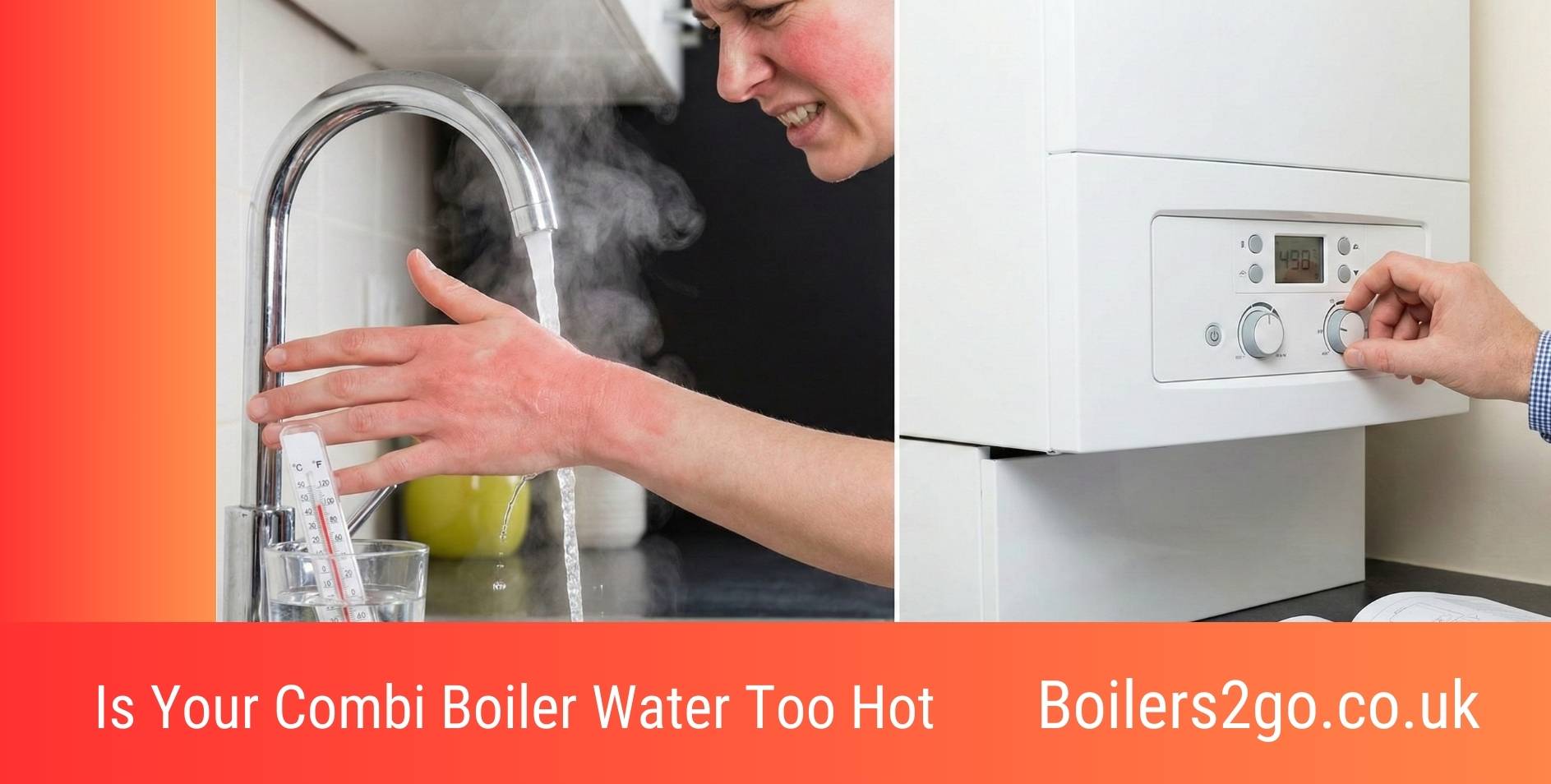
As a veteran in the UK boiler and home heating industry, I’ve seen countless issues, and one that causes immediate concern for homeowners and landlords is when their hot tap water is scalding.
A combi boiler is designed to deliver hot water instantly at a consistent, safe temperature, so when it starts producing scalding water, it signals a specific fault in the system’s regulation.
I’m here to walk you through the primary causes and provide actionable fixes, ensuring you get safe, comfortable domestic hot water (DHW) back at your taps.
Need a new boiler?
Get a quote today and take the stress out of replacing your boiler. At Boilers2Go, we offer fast, reliable installation across the UK - often as soon as the next day.
Get Installation QuoteWhat Is the Most Common Reason Combi Boiler Water Is Too Hot?
The most common reason your combi boiler water is too hot is almost always an issue with the settings on your boiler’s control panel, specifically the Domestic Hot Water (DHW) temperature control.
Many modern and older combi boilers have two separate dials: one for the radiator temperature (central heating) and one for the water temperature coming out of your taps (DHW). If this DHW setting is too high, the boiler will heat the water to an excessive, potentially unsafe temperature before it reaches your shower or sink.
The Fix:
- Locate the DHW Control: This is usually represented by a tap icon.
- Adjust the Temperature: Turn the dial down. I always recommend setting your DHW temperature between 50°C and 55°C (never below 50°C for safety against Legionella bacteria, but rarely over 60°C).
- Test the Water: Run a tap for a minute or two to let the new temperature register. If the water is still scalding, the issue is likely internal, and you should read on.
Can a Faulty Thermistor Make Combi Boiler Water Too Hot?
Yes, a faulty thermistor is a very frequent cause of your combi boiler water being too hot and is the next item on my checklist after the temperature settings.
The thermistor is a crucial temperature sensor responsible for reading the temperature of the water as it passes through the boiler and reporting that data back to the boiler’s Printed Circuit Board (PCB). If the thermistor fails, it can send an incorrect, low-temperature reading to the PCB.
The Mechanism of Failure:
If the thermistor is faulty and tells the PCB the water is only, say, 30°C when it is actually 65°C, the PCB responds by instructing the gas valve to burn hotter to meet the set temperature. This overcompensating action results in scalding hot water at the tap, as the safety mechanism has been fooled.
What to do:
- This is an internal component failure and requires professional attention.
- A Gas Safe registered heating engineer must diagnose the thermistor using a multimeter to check its resistance (the accurate way to test one). If it is indeed faulty, they will replace the DHW thermistor. It’s a relatively inexpensive part to replace, making it a good repair option.
Why Does Restricted Flow Make Combi Boiler Water Too Hot?
Restricted water flow, even a slight reduction, is a non-obvious but common reason your combi boiler water is too hot, especially if you only experience the issue when running water slowly. Where limescale or sludge is behind the restriction, it can also jam other combi components, and a faulty diverter valve is a common result, leaving your heating and hot water fighting each other.
A combi boiler is designed to heat a large volume of water passing through the heat exchanger very quickly. If the flow rate of the incoming cold water is significantly reduced, the water spends more time in the highly heated heat exchanger.
Essentially, the same amount of heat is being applied to a smaller volume of water, resulting in an unnaturally high output temperature at your tap or shower. This can happen due to a blocked filter, low incoming mains water pressure, or—most commonly—limescale build-up within the pipework or the plate heat exchanger itself.
The Fix:
- Check Flow Rate: If the water flow from the tap seems low generally, the issue might be your mains pressure or a blockage in the tap’s aerator.
- Professional Assessment: If the flow is normal but the water is scalding, you likely have limescale affecting the heat exchanger. This requires a professional chemical clean or, if the damage is severe, replacing the plate heat exchanger. Addressing limescale is key to maintaining a healthy home heating system.
Can a Faulty Gas Valve Make Combi Boiler Water Too Hot?
Yes, though less common than a thermistor issue, a fault with the gas valve can certainly make your combi boiler water too hot because the boiler is unable to modulate or reduce the gas flame correctly.
The gas valve is a critical component that controls the amount of gas fed to the burner, allowing the boiler to increase or decrease the intensity of the flame to maintain the set temperature.
If the gas valve gets stuck, or if its solenoid fails, it may continue supplying too much gas to the burner even when the temperature sensor is telling the PCB to reduce the heat. This uncontrolled, excessive heat production results in dangerously hot DHW.
Key Point: This is a serious fault with the gas supply components and must never be tampered with by anyone who is not Gas Safe registered.
What to do:
- Immediate action: If you suspect a gas valve fault, turn the boiler off and call a professional.
- A Gas Safe heating engineer will check the valve’s pressure and electrical function. Gas valve repairs or replacements are complex and must be handled by an expert to ensure your safety and the longevity of your combi boiler unit.
Time to Consider an Upgrade? Request a New Boiler Quote from Boilers 2 Go
If you are facing recurring issues where your combi boiler water is too hot or if you’re dealing with expensive repairs to crucial components like the PCB, gas valve, or heat exchanger, it may be a clear indicator that your boiler is past its prime. For UK homeowners and landlords, continuous safety concerns and inefficiency from an old system are not viable long-term.
At Boilers 2 Go, we specialise in providing seamless, fixed-price boiler replacements. We can upgrade your old, temperamental unit with a new, A-rated, energy-efficient model that offers superior temperature control, reliable hot water, and a long manufacturer’s warranty. This ensures your domestic hot water is safe and your central heating bills are lower.
Stop dealing with scalding water and costly call-outs. Find out how affordable a brand-new, reliable home heating solution can be.
Request your free, no-obligation new boiler quote from Boilers 2 Go today!
Combi Boiler Water Too Hot: FAQs
What Is the Safest Hot Water Temperature for a Combi Boiler?
The safest recommended DHW temperature setting for a combi boiler is typically between 50°C and 55°C. This range is crucial for two reasons: it is above the 20–45°C range in which Legionella bacteria multiply (and combis store little or no hot water, so the risk is low), and it is cool enough to prevent scalding injuries, which can occur almost instantly with water above 60°C.
Maintaining this temperature balance is essential for home heating safety.
Will Turning On Another Hot Tap Help if the Water Is Too Hot?
Yes, sometimes turning on another hot water tap (like a sink tap) while running a shower can help to temporarily regulate the temperature if the water is too hot. By opening a second tap, you increase the overall flow rate of water through the boiler’s heat exchanger.
As the flow increases, the water spends less time being heated, causing the output temperature to drop slightly, potentially bringing it down to a more comfortable and safer level.
Does a Low Flow Rate Reduce the Risk of Scalding From a Combi Boiler?
No. Running a combi boiler on a very low flow rate can actually increase the chance of scalding. As I explained, if the flow is too low, the water stays in the heat exchanger longer, resulting in an increased temperature and potentially causing the combi boiler water to be too hot.
To reduce the risk of scalding, always ensure you have a decent, consistent flow rate at your tap, typically above 6-8 litres per minute for a shower.
Can a Powerflush Fix Combi Boiler Hot Water Temperature Issues?
Not directly, but it can help. A Powerflush is a chemical clean primarily designed to clear sludge and debris from your central heating circuit (radiators and pipes). While it won’t fix an electrical fault like a failed thermistor, a Powerflush is highly beneficial if the temperature issue is caused by limescale or debris clogging the plate heat exchanger (a key component for DHW).
By clearing this blockage, the Powerflush can restore proper water flow and therefore allow the boiler to accurately regulate the hot water temperature.
How Can I Prevent Limescale Making My Combi Boiler Water Too Hot?
The most effective way to prevent limescale build-up, which is a major contributor to combi boiler water too hot issues (especially in hard water areas of the UK), is to install a suitable scale inhibitor or a magnetic filter on the cold water inlet pipe feeding the boiler.
These devices condition the water or capture scale particles before they enter the boiler’s internal components, protecting the delicate heat exchanger and thermistors from becoming caked in mineral deposits.
Stay warm, The Boilers2Go Team

I’m Penny North, a home energy heating expert. My mission is to demystify new boilers and complex heating systems to help you achieve a warm, cosy home with lower energy bills and a smaller environmental footprint.