

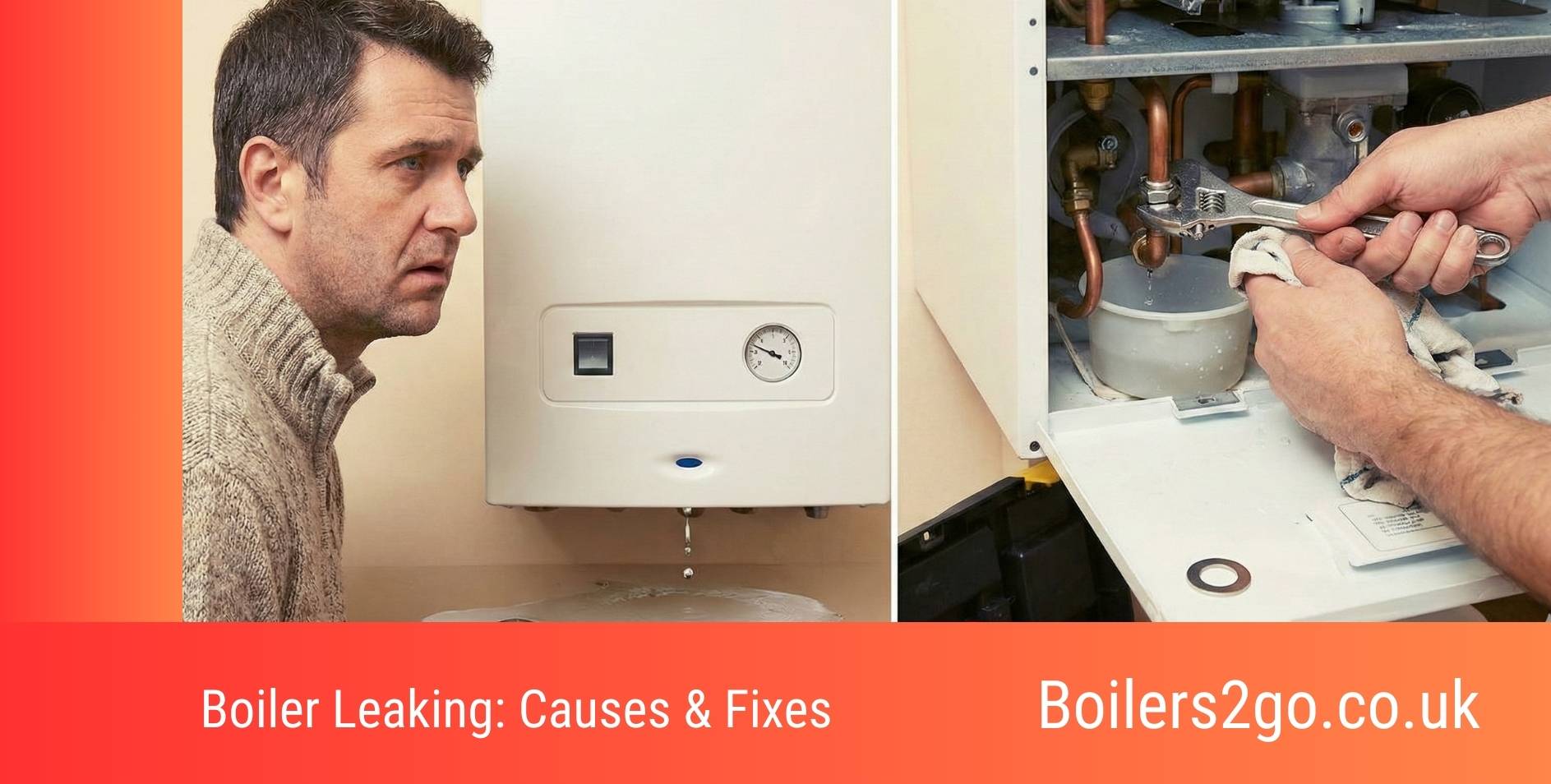
When you discover your boiler leaking, it’s a moment guaranteed to cause stress for any UK homeowner or landlord. As a long-time expert in the UK boiler and home heating industry, I can tell you that any sign of water escaping your boiler should be taken seriously.
Water damage is costly, and internal leaks can severely damage the electrical components of your unit, rendering it unsafe.
The good news is that by identifying where the leak is coming from and the type of liquid involved, we can often pinpoint the cause and determine the necessary fix. I’ll guide you through the most common reasons your boiler might be leaking and what steps you need to take right now. If the water is brown, see our guide to a boiler leaking brown water.
What Should I Do First If My Boiler Is Leaking?
If your boiler is leaking, the most urgent action you should take is to immediately turn off the power and the water supply to the unit to prevent further damage or potential electrical short circuits. Water and electricity are a dangerous combination, so safety is paramount.
- Switch off the Power: Locate the main isolation switch (usually a simple wall switch near the boiler) and turn it off. This protects the internal electrics (like the PCB) from water damage.
- Turn off the Water Supply: If you can locate the water inlet valve, shut it off. If not, you may need to turn off your home’s main stopcock temporarily.
- Call a Gas Safe Engineer: Leaks are rarely a DIY fix, as they involve internal pressure, seals, and system components. Only a Gas Safe registered engineer should diagnose and repair the fault.
Why Is My Boiler Leaking From the Pipework or Pump?
If your boiler is leaking from the pipework or pump, it usually indicates a fault with a connection, a seal, or the component itself due to corrosion or high pressure. Leaks are typically categorised by their location:
1. Leaking Pump Seals
The circulating pump moves water around your central heating system. Over time, the internal seals can degrade or fail due to system pressure and water quality, leading to a visible drip underneath or around the pump casing.
The Fix:
The pump itself or its seals will need to be replaced by a professional.
2. Faulty Pipe Connections
The pipes connecting to and from the boiler—the flow and return pipes, the gas pipe, and the domestic hot water pipes—all have joints and seals. Wear and tear, or movement (thermal expansion and contraction), can cause these joints to loosen or their seals to crack.
The Fix:
An engineer will need to tighten or reseal the affected connection, which may involve replacing a washer or a compression joint.
Is a Boiler Leaking From the Pressure Relief Valve (PRV) a Serious Problem?
Yes, if your boiler is leaking from the Pressure Relief Valve (PRV), it is a definitive sign that your system pressure is too high, or the valve itself has failed. The PRV is a critical safety mechanism designed to automatically release water to the outside (via a visible external copper pipe) if the system pressure exceeds a safe limit (usually above 3.0 bar).
Causes of PRV Activation (and subsequent leak):
- Over-Pressurisation: If you recently topped up the pressure using the filling loop and went above 1.5 bar, the PRV is doing its job by venting the excess pressure.
- Faulty Expansion Vessel: If the boiler is constantly rising in pressure when the heating is on, and then dropping when cold, the expansion vessel is likely failed or depressurised. This component absorbs the expanding hot water. If it fails, the pressure quickly builds up, causing the PRV to vent.
- Failed PRV: Sometimes the valve is faulty and fails to close properly after venting, leading to a continuous drip, even when the system pressure is normal.
The Fix: You need a Gas Safe engineer to diagnose the root cause: either repressurise the expansion vessel, repair the filling loop (if it’s leaking), or replace the PRV itself.
Why Is My Boiler Leaking From the Heat Exchanger?
If your boiler is leaking from the internal heat exchanger, this is unfortunately one of the most serious and expensive leaks you can encounter, often forcing the repair-versus-replace decision for homeowners and landlords. The heat exchanger is the core component that heats the water, and leaks typically develop due to internal corrosion.
The Cause:
Water quality is the enemy here. If the central heating water hasn’t been treated with a corrosion inhibitor (like Fernox or Sentinel) and the system hasn’t been regularly flushed, contaminants and oxygen cause internal corrosion over time. This corrosion eats away at the heat exchanger metal, creating pinhole leaks. The leak is usually visible inside the boiler casing. Our guide to boiler corrosion covers prevention in more detail.
The Fix:
- For small leaks on older boilers, sometimes a professional might use a temporary leak sealant, but this is a temporary fix.
- The definitive fix is replacing the heat exchanger. As this is a very costly component and involves significant labour, if your boiler is over 8-10 years old, replacing the entire boiler is often the more sensible and economically sound decision.
Tired of Water Damage and Worry? Request a New Boiler Quote from Boilers 2 Go
Dealing with a boiler leaking is stressful, messy, and costly. Recurring leaks, particularly those stemming from the heat exchanger or PRV issues linked to a failed expansion vessel, signal that your old boiler is nearing the end of its reliable lifespan. Continued repairs are often just delaying the inevitable.
As a homeowner or landlord, you deserve a dependable, safe home heating system. At Boilers 2 Go, we make the upgrade process simple and affordable. We provide transparent, fixed-price quotes for installing a brand-new, A-rated, highly efficient boiler, complete with long warranties. This eliminates the worry of sudden leaks and high repair bills.
Take control of your home heating—don’t wait for the next leak to flood your utility room.
Request your free, no-obligation gas boiler replacement quote from Boilers 2 Go today!
Boiler Leaking: FAQs
Is It Safe to Leave a Small Boiler Drip Until the Engineer Arrives?
No, I strongly advise against leaving any boiler drip, no matter how small, until the engineer arrives. A small drip can quickly become a serious leak, and even small amounts of water can track along internal wiring and damage crucial electrical components like the PCB (Printed Circuit Board) or sensors, which will significantly increase your repair bill. A leak that drops the system pressure or reaches the electrics will often trigger a boiler lockout, and our guide explains how to clear one safely once the leak is fixed.
If you cannot turn off the water inlet valve to the boiler, at least keep the boiler powered off.
Can System Water Quality Cause a Boiler to Leak?
Yes, absolutely. System water quality is one of the most significant factors in premature boiler failure and leaking. Dirty, acidic, or untreated water accelerates corrosion (rust) within the system.
This leads to the pinhole leaks often seen in the heat exchanger and causes seals and washers to degrade faster. Regular use of a quality corrosion inhibitor (added annually) and the installation of a magnetic filter are essential preventative measures against future leaks.
What Does the Colour of Water Leaking From My Boiler Mean?
The colour of the water leaking from your boiler can provide a clue to its source. Clear or slightly cloudy water usually indicates a fresh leak of mains water, likely from the PRV or a domestic hot water pipe.
However, if the water is black or very dark brown, it means it’s central heating system water. This dark colour is due to the presence of magnetite sludge (rust particles), confirming corrosion is occurring within your radiators or boiler and highlighting the need for a Powerflush.
Where Does the Boiler Pressure Relief Valve (PRV) Pipe Go?
The Pressure Relief Valve (PRV) is connected to a small diameter copper discharge pipe (typically 15mm) that runs directly from the boiler, through the wall, and terminates outside, usually above a ground-level drain.
This pipe’s sole purpose is to safely dump excess hot water and pressure when the PRV is activated. If you see water dripping constantly from this pipe outside, it is confirmation that the PRV is venting, and you have an over-pressurisation issue inside the boiler.
How Does an Expansion Vessel Fault Cause a Boiler Leak?
An expansion vessel is a key safety component that absorbs the increase in water volume when your heating system gets hot. If the vessel’s internal air charge fails, the water has nowhere to expand, causing the system pressure to rise dangerously high (often spiking above 3.0 bar).
This excessive pressure then forces the weakest point in the system, typically the PRV, to open and vent water, leading to the visible external boiler leak. Our guide to high boiler pressure explains the causes and fixes.
Stay warm, The Boilers2Go Team

I’m Penny North, a home energy heating expert. My mission is to demystify new boilers and complex heating systems to help you achieve a warm, cosy home with lower energy bills and a smaller environmental footprint.