

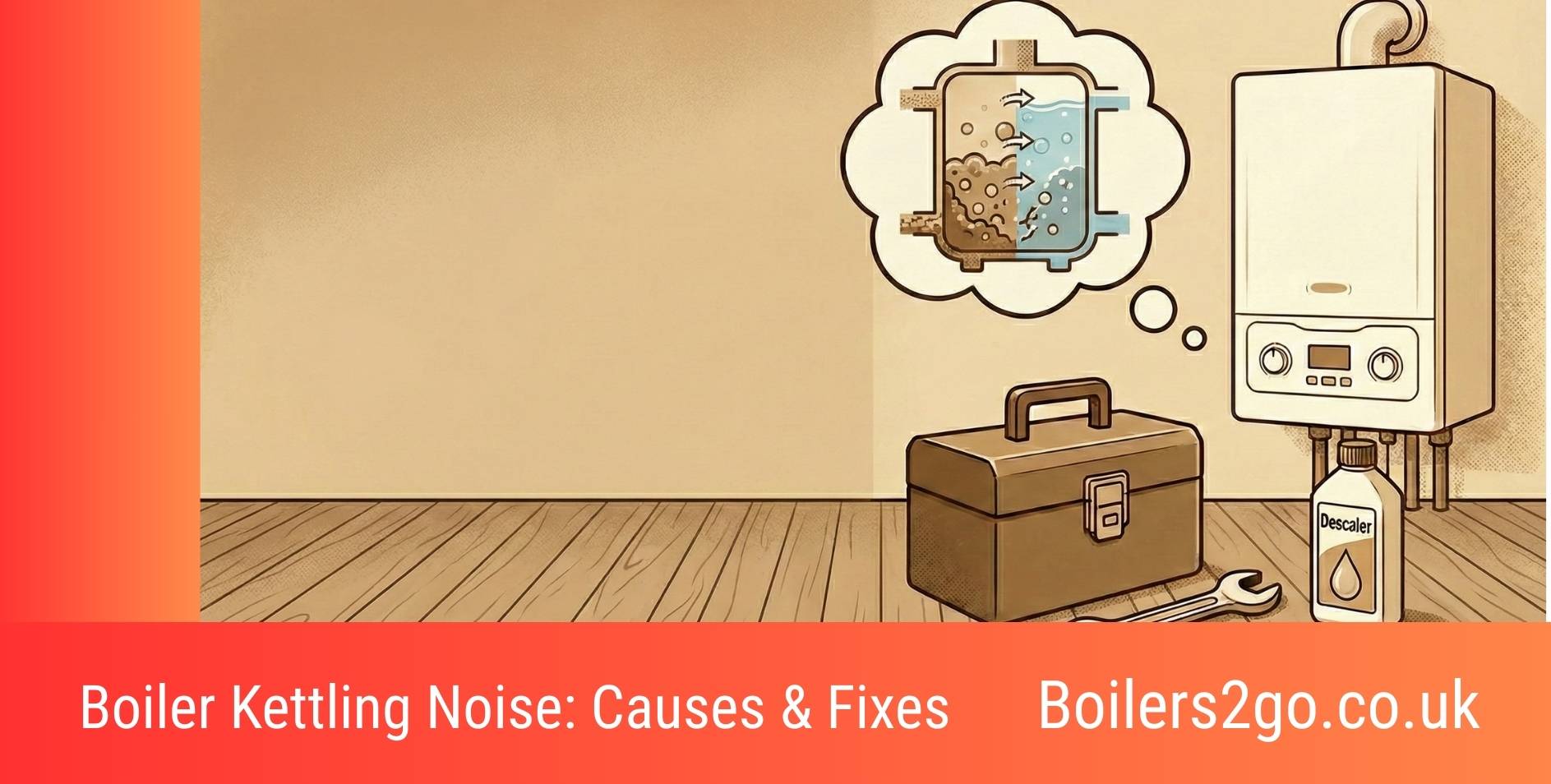
If you are hearing a boiler kettling noise, it means your central heating system is essentially screaming for attention. The term ‘kettling’ describes a banging, rumbling, or bubbling sound identical to a kettle boiling rapidly—and it’s a major indicator of internal inefficiency and damage.
I’m going to explain exactly why this happens, why it’s a big deal for UK homeowners and landlords, and the definitive causes and fixes for this serious common boiler fault.
What Causes Boiler Kettling Noise?
The cause of the distinctive boiler kettling noise is primarily due to a build-up of limescale and/or sludge (known as magnetite) inside the main heat exchanger, the core component where the water is heated. This build-up acts like an insulating blanket, preventing the boiler from heating the water efficiently and uniformly.
The Mechanism of Kettling:
- Overheating: The limescale/sludge prevents the water from absorbing the heat correctly. The metal of the heat exchanger underneath the scale gets excessively hot.
- Steam Formation: The water trapped in tiny pockets within the scale layer flash-boils into steam bubbles.
- Explosion: When these steam bubbles move into the cooler surrounding water, they instantly collapse, creating small internal shockwaves or “explosions”—this is the loud banging or rumbling sound you hear.
This process significantly reduces your boiler’s efficiency, forcing it to work harder and increasing your gas bills.
Why Does Limescale Cause Boiler Kettling in the UK?
Limescale build-up is a major contributor to boiler kettling noise particularly across the South, East, and Central regions of the UK, where the water is known to be hard water. Hard water contains high concentrations of minerals, primarily calcium carbonate.
When this water is heated repeatedly in the boiler, the minerals deposit themselves as a hard, chalky coating on the metallic surfaces of the heat exchanger.
The thicker this scale layer becomes, the worse the kettling gets, and the greater the thermal stress on the boiler. Landlords especially should be aware that neglecting this issue will dramatically shorten the lifespan of the boiler unit, leading to an expensive premature replacement.
How Does Sludge (Magnetite) Cause Boiler Kettling?
Sludge (or magnetite) contributes to the boiler kettling noise by restricting the flow of water and settling on the lower parts of the heat exchanger, creating similar insulation and overheating issues as limescale. Magnetite is a fine black sediment composed of rust particles that flake off the inside of your radiators and pipework due to system corrosion. The same sludge is often behind a boiler leaking brown water, so discoloured drips around the boiler are another sign the system needs cleaning.
When this sludge accumulates:
- Restricted Flow: It prevents adequate circulation, causing water to remain in the heat exchanger longer than intended.
- Localised Overheating: The thick, silty layer of sludge prevents effective heat transfer, leading to severe localised overheating, which triggers the flash-boiling and the loud rumbling.
The Fix (The Powerflush):
- This type of contamination requires a Powerflush. A Powerflush uses high-velocity water combined with specialist chemicals to flush the magnetite sludge and scale from the boiler, radiators, and pipework.
- Once the system is clean, an engineer will add a corrosion inhibitor to the water, which chemically protects the system components from rusting and prevents the problem from recurring.
Can Low Boiler Pressure or Thermostat Faults Make Boiler Kettling Worse?
Yes, while limescale and sludge are the root causes, low boiler pressure or certain thermostat faults can exacerbate the boiler kettling noise. These issues interfere with the boiler’s ability to correctly manage temperature and water flow, stressing the heat exchanger further. Both faults feature in our guide to common boiler problems, which covers quick checks for each.
- Low System Pressure: If the water pressure is too low (below 1.0 bar), the system may struggle to circulate water effectively. Poor circulation means the water heats too quickly and unevenly in the heat exchanger, increasing the likelihood and severity of the kettling sound.
- Faulty Thermostat/Sensor: If the boiler’s main temperature sensor (thermistor) or internal thermostat is failing, it might incorrectly tell the boiler to fire at a much higher intensity than required. This uncontrolled overheating massively accelerates the boiling process, making the kettling noise much louder and more persistent.
The Fix:
Before scheduling a Powerflush, an engineer will first check and rectify the system pressure, and perform diagnostics on the boiler’s control systems and sensors to eliminate these secondary contributing factors.
If your heating system is making other strange sounds, our guide to boiler making noise covers the most common causes and fixes.
Is It Time to Replace a Kettling Boiler?
If your boiler kettling noise has become a chronic issue, requiring constant chemical treatments or even system flushes, you have to weigh the ongoing costs against the benefit of a modern upgrade. Kettling is a sign of internal damage that is often irreversible without a major, expensive component replacement (like the heat exchanger).
For UK homeowners and landlords, the most effective long-term solution is to replace an old, kettling unit with a new, A-rated, quiet, and highly efficient boiler.
At Boilers 2 Go, we offer free, no-obligation, fixed-price quotes for new central heating installations. Upgrading guarantees a quiet operation, eliminates the threat of internal sludge and scale damage, and provides you with lower gas bills and a long-term manufacturer’s warranty.
Don’t let the rumbling noise continue to signal wasted energy and internal damage. Invest in a reliable, quiet home heating solution today.
Request your free, no-obligation new gas boiler quote from Boilers 2 Go today!
Boiler Kettling Noise: FAQs
Is Boiler Kettling Noise Dangerous?
While boiler kettling noise is primarily a sign of inefficiency and long-term damage, it can become dangerous if severe and ignored. The constant, aggressive overheating can put immense stress on the heat exchanger and seals, potentially leading to a catastrophic failure, such as the unit bursting or a major leak developing.
Therefore, while a low rumble isn’t an immediate hazard, it should be treated as a fault that requires prompt professional attention to ensure the safety and longevity of your boiler system.
Can a Magnetic Filter Prevent Boiler Kettling?
A magnetic filter is an excellent preventative measure against the cause of kettling. While it won’t remove existing hard scale (limescale), it actively captures magnetite sludge (rust particles) before they settle in the heat exchanger and contribute to the kettling sound.
Installing one after a Powerflush is a highly recommended way to keep the system water clean, protecting your new or newly cleaned boiler components from further corrosion and sludge build-up.
Does a Chemical Inhibitor Stop Boiler Kettling?
Using a chemical inhibitor like Fernox or Sentinel is vital for preventing corrosion and further sludge formation. If your kettling noise is caused by new sludge forming, adding the inhibitor can slow the problem.
However, an inhibitor is a preventative measure, not a cleaning agent. It cannot dissolve and remove existing layers of thick, baked-on limescale or heavy magnetite. To fix existing kettling, you first need a Powerflush or chemical clean, and then the inhibitor is added to maintain the clean system.
How Much Does a Powerflush to Fix Boiler Kettling Cost?
The typical cost for a Powerflush in the UK varies widely depending on the size of your property (the number of radiators) and the severity of the sludge, but it generally ranges from £300 to £800. While this is a significant outlay, I consider it a necessary investment.
When you compare this cost to the price of a new heat exchanger (which can exceed £1,000 for some models) or the cost of replacing the entire home heating system, it often proves to be the cheaper and more energy-efficient solution for a boiler that is otherwise in good condition.
Can Bleeding Radiators Reduce Boiler Kettling Noise?
No, bleeding your radiators will not directly reduce the boiler kettling noise. Bleeding radiators removes trapped air from the central heating circuit, which helps resolve issues like cold spots on radiators and general circulation problems.
The kettling noise, however, originates from the localised boiling of water inside the heat exchanger due to scale or sludge build-up. While good circulation is important, bleeding radiators does not clean the heat exchanger itself, so it won’t fix the underlying cause of the noise.
Stay warm, The Boilers2Go Team

I’m Penny North, a home energy heating expert. My mission is to demystify new boilers and complex heating systems to help you achieve a warm, cosy home with lower energy bills and a smaller environmental footprint.