

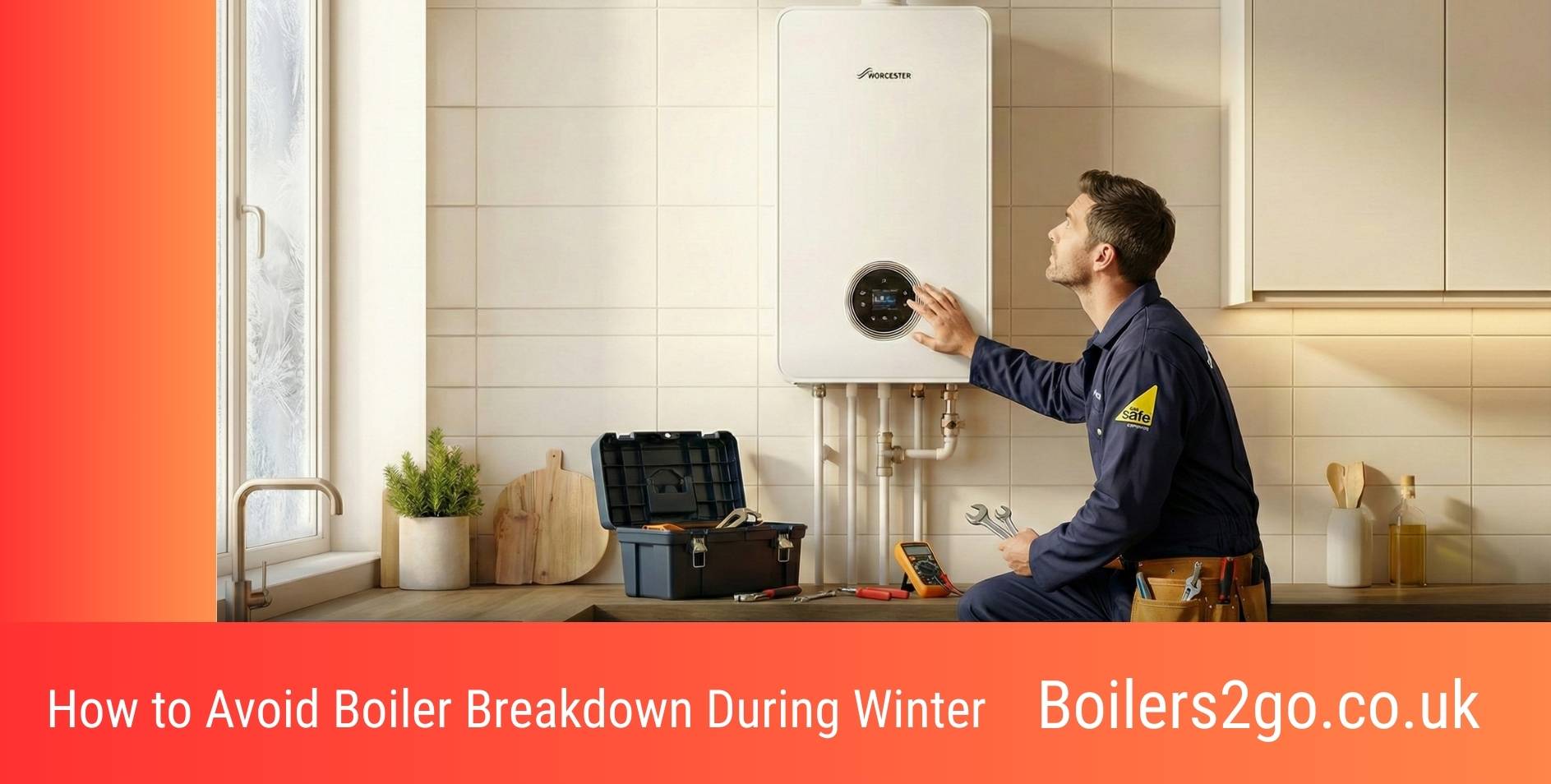
The deep chill of a UK winter is when your boiler and home heating system works hardest—and when it’s most likely to fail. As a seasoned expert in this industry, I know that for both UK homeowners and landlords, a winter breakdown is more than just an inconvenience; it can be an emergency.
The good news is that most winter boiler breakdowns are entirely preventable. Knowing how to avoid boiler breakdown during winter isn’t complicated; it comes down to smart preparation and proactive maintenance.
I’m going to walk you through the essential, actionable steps you need to take now to ensure your boiler runs reliably and efficiently right through the cold season, from servicing and pressure checks to preventing a frozen condensate pipe.
Why Is Annual Boiler Servicing the Best Way to Avoid a Winter Breakdown?
Annual boiler servicing is the single most effective way to avoid boiler breakdown during winter because it allows a qualified professional to detect and fix minor issues before the cold weather forces them into major, expensive failures. Think of it as an MOT for your central heating system.
My Perspective:
When a boiler sits dormant or on low demand during the warmer months, small problems—like a deteriorating seal, a slightly scaled-up sensor, or a fan that’s starting to seize—go unnoticed.
As soon as the temperature plummets, and your boiler is forced to fire for hours on end at maximum capacity, those small faults are put under extreme stress and fail. By booking a Gas Safe registered engineer for a service in late summer or early autumn, you ensure the system is in peak condition before the winter rush begins.
What Is the Simplest DIY Step to Avoid a Boiler Breakdown in Winter?
The simplest DIY step to take to avoid a boiler breakdown during winter is to check and maintain the system’s water pressure and bleed your radiators. Low system pressure and trapped air are two of the most frequent non-component reasons for a boiler lockout.
- Check the Pressure Gauge: Look at the pressure gauge on the front of your boiler (typically a circular dial or a digital display). The cold pressure should sit between 1.0 and 1.5 bar. If it’s too low, you must repressurise the system using the filling loop according to your manufacturer’s instructions.
- Bleed the Radiators: If your radiators have cold spots, particularly at the top, it means there is trapped air. Air pockets prevent hot water from circulating effectively, forcing your boiler to work harder and increasing the risk of mechanical strain.
How to Fix:
Turn the heating off, wait for the radiators to cool, and use a radiator key to release the air until water starts dripping out, then check the pressure again.
How Can You Prevent a Frozen Condensate Pipe in Winter?
You can prevent the most common winter boiler fault, the frozen condensate pipe, by proactively insulating the exposed section of the pipe. The condensate pipe carries acidic wastewater from your modern, high-efficiency condensing boiler to an outside drain, and because it runs externally, it is extremely vulnerable to freezing.
Proactive Steps:
- Insulate (Lagging): Purchase foam pipe insulation (lagging) from any DIY store. This is cheap, easily available, and simple to fit over the exposed plastic pipe. This acts as a barrier against sub-zero temperatures. Ensure the lagging is weatherproof.
- Maintain Low Flow: If you are leaving the property for a few days during a cold snap, set the heating timer to come on for short periods throughout the day (e.g., one hour in the morning and one hour in the evening) or activate the frost protection setting (usually 10°C-14°C) to keep water moving and prevent freezing.
Why Should You Test Your Central Heating Before Winter?
Testing the central heating is important before the coldest months arrive because it allows you to identify underlying, chronic issues like kettling or noisy pumps when it’s still mild enough to book an engineer for a non-emergency repair.
When your boiler has been off or on low demand all summer, firing it up in October or November forces water through the entire system. This test run lets you check for:
- Uneven Heating: Do all radiators heat up fully and quickly? Uneven heating suggests trapped air or sludge build-up (magnetite) in the system.
- Kettling Noises: A banging or rumbling sound indicates scale on the heat exchanger (limescale), which requires chemical cleaning or a Powerflush.
- Leaks: Does the pressure drop drastically during the test? This signals a leak in the pipework or a failing component.
How to Fix:
Run your central heating for about 30 minutes at least once a month, even in summer, but definitely give it a thorough test before temperatures drop below freezing. Early detection prevents a costly and uncomfortable emergency breakdown.
Secure Your Peace of Mind: Request a New Boiler Quote from Boilers 2 Go
If your proactive efforts reveal persistent problems—like chronic low pressure, constant kettling noises, or frequent lockout codes—it might be a sign that your boiler has reached the end of its efficient life. While preparation helps, no amount of lagging or bleeding will fix a failing heat exchanger or a corroded main component.
For UK homeowners and landlords seeking ultimate reliability and a guaranteed solution to avoid boiler breakdown during winter, a replacement boiler from Boilers 2 Go is the best investment. Our modern, A-rated boilers are built with superior component quality and come with long warranties, eliminating the winter worry for years to come.
Stop maintaining a dying system. Get a new, reliable home heating solution installed.
Request your free, no-obligation new boiler quote from Boilers 2 Go today!
Avoiding Winter Boiler Breakdowns: FAQs
Is It Better to Leave the Heating on Low All Day or Use a Timer in Winter?
Generally, it is more energy-efficient and kinder to your boiler to use the timer and set the heating to come on only when needed (e.g., morning and evening). However, during periods of extreme cold (sub-zero temperatures), leaving the heating on a low, continuous background temperature (around 14°C) is highly recommended. Our guide to central heating running costs covers more ways to keep winter bills down.
This prevents pipes, especially those in unheated areas like lofts or garages, from freezing and bursting, which is a major cause of winter flood damage and boiler failure.
Can a Smart Thermostat Help Avoid a Boiler Breakdown?
Yes, a smart thermostat can indirectly help avoid a boiler breakdown. Modern smart controls often feature weather compensation and optimisation features that prevent the boiler from running harder than necessary. For more ways to get the most from your boiler, see our guide on how to increase boiler efficiency.
Crucially, many smart systems include an internal frost protection function that overrides the schedule and fires the boiler automatically if the temperature near the boiler drops too low, which helps prevent a frozen condensate pipe.
How Can You Tell if Your Heating System Has Sludge Build-Up?
You can tell if your system has sludge build-up (magnetite, or black iron oxide) if your radiators are cold at the bottom while hot at the top. Sludge is heavy and settles at the lowest points.
If you see this, or if your system water is black when you bleed a radiator, the circulation is being restricted, putting immense strain on your boiler’s pump and heat exchanger, making a winter failure highly likely. This requires a professional Powerflush.
Should You Turn Off Your Boiler When You Go on Holiday in Winter?
No, you should not fully turn off your gas boiler if you go away on holiday during the UK winter. Instead, set your programmer to its frost protection mode, or set the timer to run the heating for at least two hours a day, keeping the thermostat set to around 12°C–14°C.
This minimal heat ensures the pipes and the boiler itself stay warm enough to avoid freezing, preventing the catastrophic damage caused by burst pipes.
What Does a Boiler’s Anti-Cycle Feature Do in Winter?
The Anti-Cycle feature (or minimum run time) is a setting, often factory-set, that prevents the boiler from turning on and off too frequently (known as dry cycling). In winter, the boiler needs to run for extended periods. If your boiler is cycling on and off every few minutes, the Anti-Cycle timer forces a mandatory wait period.
If you notice rapid cycling despite this, it often signals restricted flow or a faulty thermostat, which needs checking to ensure the boiler isn’t damaging itself during constant ignition attempts.
Stay warm, The Boilers2Go Team

I’m Penny North, a home energy heating expert. My mission is to demystify new boilers and complex heating systems to help you achieve a warm, cosy home with lower energy bills and a smaller environmental footprint.