

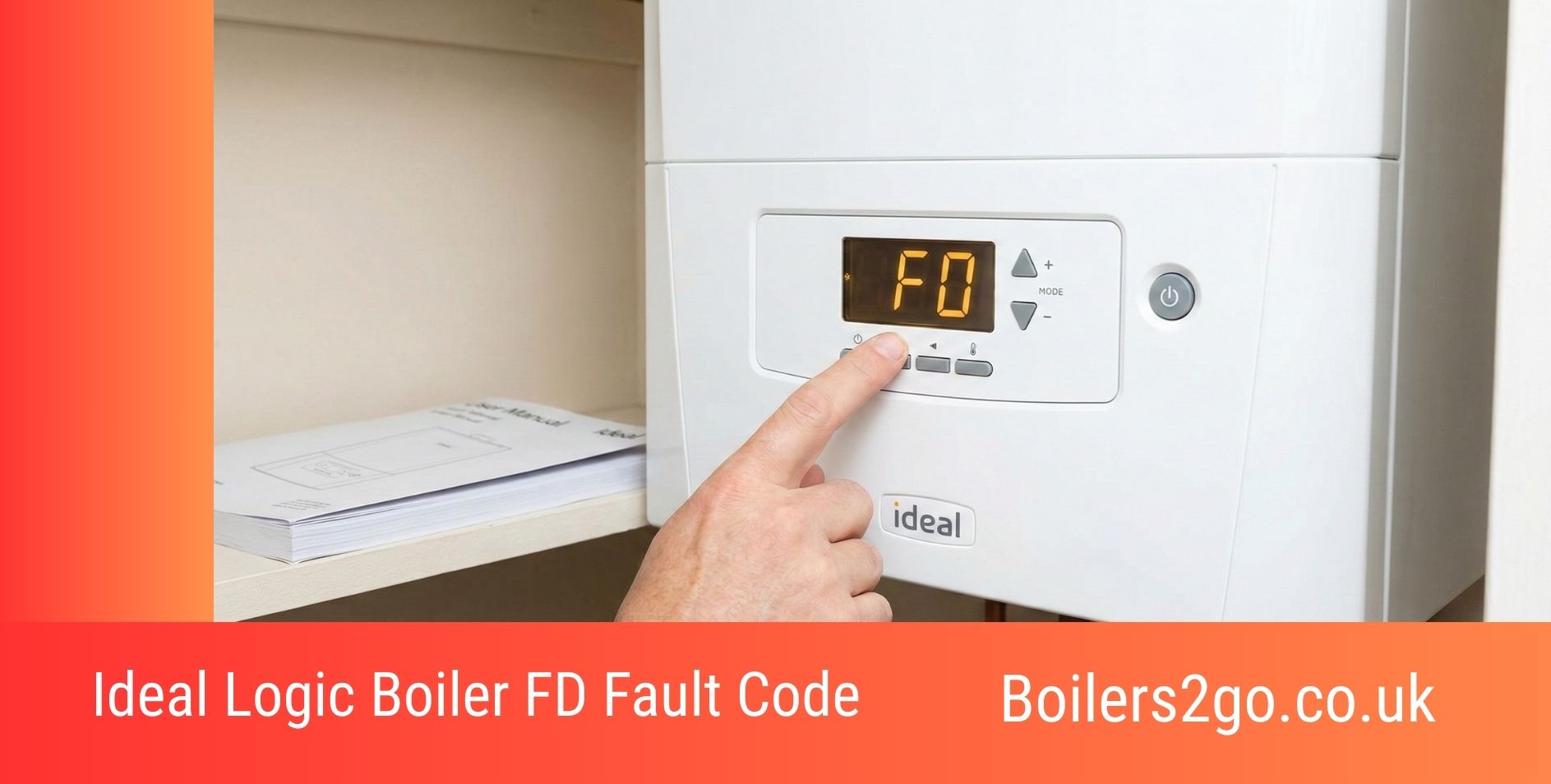
The Ideal Logic boiler FD fault code is a familiar sight across the UK boiler world. It’s the no-flow alert that grinds heating to a halt just as the temperature drops.
If a boiler’s screen is flashing FD, it’s signalling a lack of water circulation. This guide explains what it means, the usual causes behind it, and hands-on fixes for each, aimed at helping UK homeowners restore heat quickly and landlords keep properties running smoothly.
What Does the Ideal Logic Boiler FD Fault Code Mean?
The Ideal Logic boiler FD fault code means the boiler has detected no water flow through the system, triggering a safety lockout to prevent overheating or damage.
Across combi and heat-only units, it’s the boiler’s built-in watchdog spotting insufficient circulation, usually showing on the display to halt operation until the issue is resolved. It functions as a red flag for flow issues in the central heating setup.
Ideal Logic FD Fault Code Video Guide
Why Does the Ideal Logic FD Code Appear?
This error protects components like the heat exchanger from running dry, a common risk in UK hard water areas where blockages build up over time.
Beyond checking and topping up the pressure, FD repairs such as pump or valve work inside the boiler are not something a homeowner should attempt directly. By law and for safety, only a Gas Safe registered engineer can carry out gas-related repairs; a quick check on the Gas Safe Register confirms an engineer’s credentials before booking a callout.
Our Ideal boiler error codes guide covers the other fault codes you may see on an Ideal Logic.
What Causes the Ideal Logic Boiler FD Fault Code?
The causes of the Ideal Logic boiler FD fault code typically stem from disruptions in water movement or detection, which leave the boiler’s sensors reading no flow. These often tie back to maintenance lapses or installation quirks common in British homes.
Low Water Pressure
Low water pressure happens when the system’s pressure drops below the ideal 1 to 1.5 bar, often from slow leaks, evaporation, or recently bled radiators, preventing detectable flow.
How to Fix Low Water Pressure
- Check the pressure gauge on the boiler. If it reads below 1 bar, locate the filling loop, usually flexible hoses under the unit.
- Slowly turn the valves to add mains water until the gauge reaches 1.2 bar, with the system cold.
- Securely close the valves, reset the boiler by holding the reset button, and test the heating.
- Monitor for drops. If it recurs, inspect for leaks or call a Gas Safe engineer.
Faulty Water Pressure Sensor
A faulty water pressure sensor occurs when the device gets clogged with debris or fails electrically, misreading flow even when pressure is genuinely adequate.
How to Fix a Faulty Water Pressure Sensor
- Reset the boiler to clear any glitches by pressing and holding the reset button for 5 to 10 seconds.
- Verify pressure manually. If it’s stable but the code persists, suspect the sensor.
- Arrange a Gas Safe professional to clean or replace it, typically £100 to £200 including checks.
- Pair this with a system flush to help avoid future clogging.
Blocked or Faulty Pump
A blocked or faulty pump develops from sludge accumulation or mechanical wear, where the pump runs but can’t push water effectively, mimicking a no-flow condition.
How to Fix a Blocked or Faulty Pump
- Listen for unusual pump noises such as humming, and reset the boiler first.
- Bleed radiators to release any air that might be impeding flow.
- Call a Gas Safe engineer for a pump inspection and replacement if needed, typically £190 to £350.
- Install a magnetic filter to catch debris and reduce the chance of a repeat fault.
Air in the System
Air in the system builds up from installation work, repairs, or poor bleeding, creating pockets that block water paths and trigger the no-flow detection.
How to Fix Air in the System
- Switch off the boiler and let it cool.
- Use a bleed key to vent each radiator, starting upstairs, until water flows steadily.
- Repressurise via the filling loop if pressure drops after bleeding.
- Reset and test. If air returns, a professional may need to check for entry points.
Sludge Buildup in Pipes or Heat Exchanger
Sludge buildup in pipes or the heat exchanger results from corrosion and mineral deposits in UK water, restricting channels and reducing flow to undetectable levels.
How to Fix Sludge Buildup
- Add a chemical inhibitor to the system via a radiator for minor cases.
- Reset the boiler and monitor performance.
- Arrange a power flush by a Gas Safe specialist to clear heavy deposits, typically costing £350 to £850.
- Maintain the system with annual inhibitor dosing to prevent recurrence.
FD is a different fault from F1 (low pressure), F2 (flame loss after lighting) and L2, so check which code your display is actually showing. If it reads F1, our Ideal boiler F1 fault code guide covers low pressure causes and fixes.
When Should You Replace an Ideal Logic Boiler?
If the FD fault keeps reappearing after these fixes, or the Ideal Logic in question is pushing 10 or more years old with declining efficiency, it’s a reasonable cue to start exploring a replacement.
Upgrading to a modern A-rated unit generally eliminates these flow-related frustrations, while also trimming energy bills and keeping the installation compliant with current regulations.
If you are unsure whether the fault justifies a replacement, our guide on whether to repair or replace your boiler can help you decide.
Related Ideal Logic Boiler Guides
- Ideal Logic Max combi boiler review
- How to reset an Ideal Logic combi boiler
- Low boiler pressure
- Boiler pump not working
Ideal Logic FD Fault Code: FAQs
Does Cold Weather Cause Ideal Logic FD Faults?
It can. Cold snaps can worsen FD codes by contracting pipes or freezing components, which reduces flow at exactly the point demand is highest.
Pre-winter insulation and a pressure check in exposed setups, such as boilers in lofts or garages, help prevent this before the cold weather sets in.
Is an Ideal Logic FD Fault Covered by Warranty?
Usually, provided the boiler has been serviced every year. Many Ideal warranties require proof of annual Gas Safe servicing to cover FD-related parts such as sensors and pumps.
Keeping a record of resets, fixes, and service visits helps preserve any warranty claim, since a missing service history is one of the most common reasons a claim gets challenged.
Can a Smart Control Warn You About Ideal Logic FD Faults?
Yes, Ideal’s own Halo smart control sends boiler fault notifications directly to a phone and tracks pressure trends over time, which can flag a slow drop before it becomes a full FD lockout.
This is particularly useful for landlords managing a property remotely, since an early pressure alert allows a fix before a tenant even notices anything is wrong.
How Often Should Landlords Service Ideal Logic Boilers to Avoid FD?
At least once a year. Beyond the yearly service most warranties require, a bi-annual pressure check in tenant-heavy properties catches triggers like air ingress or a slow leak before they escalate to a full FD lockout.
This small extra step tends to be cheaper than an emergency callout during a cold snap, when demand for Gas Safe engineers is at its highest.
Can Solar Thermal Reduce Ideal Logic FD Faults?
Not in any meaningful way. FD faults come from circulation problems such as low pressure, sludge, a failing pump or leaks, so the fix is to deal with those causes directly rather than adding solar thermal.
Can the FD Code Appear on a Brand New Ideal Logic Boiler?
Yes, though it’s less common. On a new installation, FD is more likely to point to trapped air left over from commissioning, or a filling loop that wasn’t fully closed after pressurising the system.
If it appears within the first few weeks, contacting the installer directly is usually the right first step, rather than assuming a component fault, since it may simply need a final adjustment.
Does an Ideal Logic FD Fault Need a Separate Callout?
Usually, yes. A standard annual service checks pressure, the pump, and general system health, which can catch the early signs of an FD-causing issue, but it won’t necessarily resolve an active fault code.
If FD is already showing on the display, that’s a repair callout rather than a routine service, even if the annual service happens to be due around the same time.
Can Repeatedly Resetting an Ideal Logic Boiler Make FD Worse?
It can. Resetting once or twice to test whether the fault clears is generally fine, but repeatedly resetting a boiler that keeps returning to FD can mask a developing fault rather than fix it.
If the code comes back within a day of a reset, that’s a sign the underlying cause, whether pressure, a sensor, or the pump, needs a proper diagnosis rather than another reset.

I’m Penny North, a home energy heating expert. My mission is to demystify new boilers and complex heating systems to help you achieve a warm, cosy home with lower energy bills and a smaller environmental footprint.