

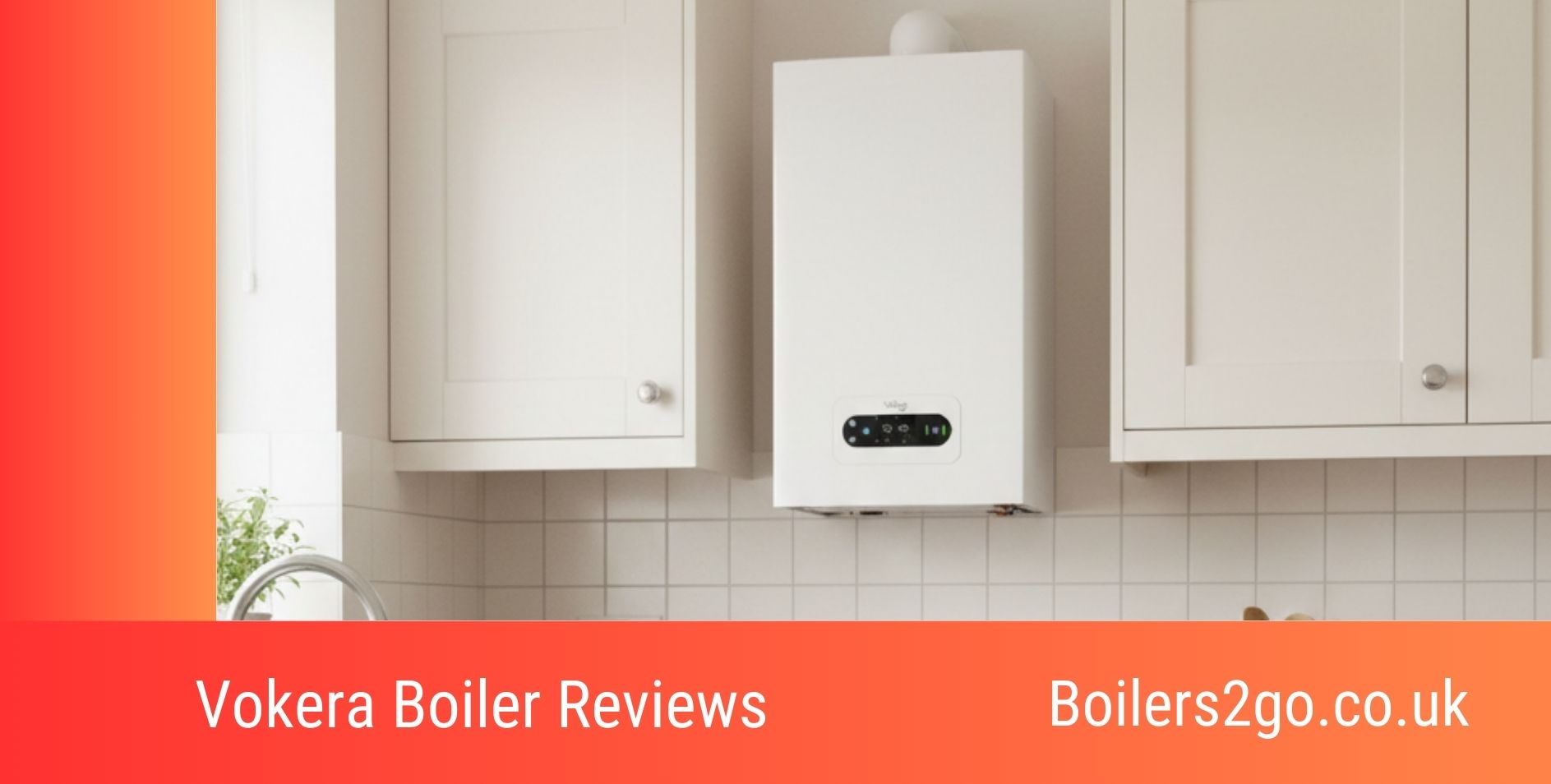
Vokera occupies an unusual space in the UK boiler market. It is stronger than many people expect on efficiency, flow rates, and warranty cover, but it remains a value brand positioned below Worcester Bosch, Vaillant, and Viessmann in terms of build quality and long-term track record. Whether that matters depends entirely on what a homeowner or landlord is actually looking for.
The experience you get from a Vokera boiler depends less on the badge on the front and more on how well the system was designed, installed, and looked after. Get those right and a Vokera can perform well for a decade or more. Get them wrong and problems tend to show up early. Like any boiler, Vokera units can develop common boiler problems to troubleshoot, and understanding what to look out for helps homeowners maintain efficiency and extend system life.
Get a quote today and take the stress out of replacing your boiler. At Boilers2Go, we offer fast, reliable installation across the UK - often as soon as the next day. 
Need a new boiler?
Vokera is an Italian-owned manufacturer, part of the Riello Group, with over 40 years of presence in the UK and Ireland. Every boiler is factory-tested before leaving the production line. This is not a white-label import brand with no engineering heritage behind it. What it is, though, is a manufacturer that prioritises simple controls, compact designs, and low upfront cost over premium features and long-term finish.
That positioning explains why Vokera appeals primarily to landlords, developers, and cost-conscious homeowners, while owner-occupiers planning to stay long-term tend to gravitate towards Worcester Bosch boiler reviews and comparisons, the Vaillant boiler efficiency ratings explained guide, or the Viessmann Vitodens 050W performance review for a higher-investment alternative. It is not about Vokera being bad: it is about what it is designed for and what it is not.
Watch Our Quick Video Overview Here:
Vokera Models: Which One Is Right for You?
Three model ranges in the Vokera portfolio stand out most clearly from a real-world fit perspective. The table at the end of this section gives a quick reference across all seven main ranges before the individual reviews.
When comparing upfront investment for specific models, the costs of ideal boilers reviewed article and the Viessmann boiler efficiency ratings explained guide both provide useful benchmarks for understanding where Vokera pricing sits relative to mid-market and premium alternatives.
Pinnacle
The Pinnacle is Vokera’s most premium offering and the one model in the range that genuinely competes on quality rather than just price. It uses a stainless steel heat exchanger (rather than the aluminium units found on lower Vokera models), delivers 94% seasonal efficiency, and has a 1:13 modulation ratio that minimises short-cycling and component wear over the boiler’s lifetime.
Active Combustion Control (ACC) adapts the air-to-gas mix based on real-time gas quality, which keeps combustion clean across varying supply conditions. A digital modulation pump provides precise flow control for efficient heat distribution.
Available in 25 kW, 30 kW, and 35 kW outputs, the Pinnacle covers anything from a modern flat to a four-bedroom family home. Noise levels are noticeably lower than older Vokera models, and controls are more responsive. The 12-year parts and labour warranty is the standout feature: it is one of the longest offered by any boiler in the budget-to-mid-range segment and gives genuine peace of mind for long-term owner-occupiers. For a comparison of how viessmann boiler efficiency ratings stack up against the Pinnacle’s 94% figure, the Viessmann guide covers that in detail.
Synergy
The Synergy is designed for straightforward heating needs and works best in smaller homes, flats, and rental properties. With typical outputs of 25 kW to 29 kW, it is well matched to one-bathroom properties with average hot water demand: reliable heating, acceptable shower performance, and low running noise without features that push the price up.
Where Synergy stands out is value stability. The 10-year parts and labour warranty is generous for a cost-focused boiler, and the relatively simple control system means fewer opportunities for user error and easier long-term maintenance. Landlords managing multiple properties find the combination of low upfront cost and decade-long warranty cover particularly attractive for predictable ownership budgeting. For a value comparison from an alternative budget brand, the alpha boiler cost analysis and reviews covers Alpha’s equivalent positioning.
Vibe MAX
The Vibe MAX occupies the middle ground in the Vokera range. Typically available in 25 kW and 30 kW outputs, it suits two-to-three-bedroom homes with moderate hot water demand. In everyday use it feels more capable than entry-level models, particularly when running heating and hot water back-to-back.
The main benefit of the Vibe MAX is balance: better usability and styling than budget combis without the cost or complexity of the Pinnacle. Compared to older Compact models, owners notice smoother temperature control and quieter operation. The 7-year parts and labour warranty provides sensible mid-term reassurance for homeowners planning to stay five to eight years.
Vision Plus 35C
This is Vokera at its strongest in pure output terms. The 35 kW combi delivers a hot water flow rate of 14.2 litres per minute at a 35-degree Celsius rise, comfortably running a good shower and a tap simultaneously in a typical UK semi. It is ErP A-rated at approximately 92% efficiency, includes OpenTherm control compatibility, has an embedded 7-day digital clock, and carries a 7-year parts and labour warranty when registered and serviced annually.
On paper it sits much closer to premium brands than its price suggests. In practice, it still relies heavily on correct sizing, clean system water, and proper filtration. Installed well, it runs quietly and consistently. Installed on a dirty system or rushed job, sludge-related faults appear faster than on premium alternatives.
Easi-Heat i
The Easi-Heat i range is all about practicality and speed of installation. With typical outputs of 25 kW and 29 kW, it suits flats, starter homes, and smaller properties with one bathroom and limited simultaneous hot water demand. It is not designed to run multiple outlets at once.
Where Easi-Heat i works well is in replacement scenarios. Its compact size and straightforward layout make it ideal for like-for-like swaps where budget and turnaround time matter. Compared with higher-end Vokera models it lacks refinement and advanced controls, but for landlords, first-time buyers, and short-term homeowners the lower upfront cost and 5-year warranty often make it the most sensible choice available at the price point.
Compact 25A
A smaller A-rated combi at approximately 93% efficiency with a 20.8 kW central heating output and a standard 5-year warranty. User experiences show the two sides of Vokera very clearly on this model. Some owners report years of fault-free operation in lower-demand homes; others describe mid-life failures and expensive repairs, particularly where the aluminium heat exchanger has been affected by sludge or scale.
That pattern reflects a clear truth: the Compact 25A works well in low-to-moderate demand properties with good system design and water treatment. It is far less suited to larger family homes with multiple bathrooms and high daily usage.
Easi-Heat Plus Combis (25Ci / 29Ci)
High-efficiency A-rated combis at approximately 93% efficiency with 25 kW to 29 kW outputs and a 5-year standard warranty. They come with simple controls, built-in clock functions, and a clear market position: affordable, accessible, and easy to install.
These are no-nonsense boilers for situations where speed, price, and practicality matter more than premium feel. For homeowners considering whether a combi is right for their property type, understanding the combi boiler installation benefits is worth doing before specifying the model. And if smart controls matter after installation, the viessmann vitodens 100w features review shows what a premium alternative delivers in terms of smart controls and efficiency for context.
Vokera Model Comparison: At a Glance
| Model | Type | Positioning | Warranty | Typical Buyer | Key Pros | Watch-outs |
|---|---|---|---|---|---|---|
| Pinnacle | Combi | Flagship, high efficiency, stainless steel exchanger | 12 years | Long-term owner-occupiers, larger homes | 94% efficiency, 1:13 modulation, ACC combustion control, sleek design | Higher cost for Vokera; best justified when staying 10+ years |
| Synergy | Combi | Quieter, value-stable mid-range | 10 years | Landlords and budget buyers wanting longer cover | Low noise, simple controls, generous warranty for the price | Less refined feel than premium brands; good system quality required |
| Vibe MAX | Combi | Mid-range, value meets features | 7 years | Style-aware buyers wanting more than entry-level | Contemporary look, better usability than budget Vokera | Shorter warranty than Pinnacle/Synergy |
| Vision Plus 35C | Combi | Higher-output, strong hot water value | 7 years | Busy small-medium homes, good shower demand | 14.2 l/min flow rate, OpenTherm, built-in timer | Needs clean system and quality install for reliability |
| Easi-Heat i (25/29 kW) | Combi | Practicality and fast installation | 5 years | Landlords, flats, like-for-like swaps | Compact, fast to install, low upfront cost | Not suited to high demand or multi-bathroom homes |
| Compact 25A | Combi | No-frills budget combi | 5 years | Flats, single-bathroom rentals, simple swaps | Compact footprint, simple controls, low cost | Mixed mid-life reliability; aluminium exchanger wears faster |
| Easi-Heat Plus (25Ci/29Ci) | Combi | Budget swap-out with built-in clock | 5 years | Cost-conscious buyers wanting quick, easy replacement | Sharp pricing, A-rated efficiency, easy to install | Fewer features; heavily benefits from system filter and flush |
How Vokera Performs in the Real World
The most honest assessment of Vokera is that the boiler itself is only half the story. System quality, installation standard, and ongoing maintenance have a disproportionate impact on how a Vokera boiler performs compared to premium brands that are more tolerant of sub-optimal conditions.
Reliability and Lifespan
Which? surveys (May/June 2025, covering 7,000 UK gas boiler owners) give Vokera three stars for owner satisfaction, with the proportion of detractors higher than the industry average. Installer feedback follows the same split: many engineers report years of trouble-free performance on clean, well-maintained systems, while others regularly encounter blocked components and early failures on poorly treated installations.
Trustpilot data from 2,038 Vokera reviews (current at June 2026) shows a mixed picture. Positive reviews highlight responsive engineers and quick warranty resolutions on individual jobs; critical reviews describe warranty claim delays, long phone waiting times, and inconsistent support quality from the customer service team.
One independent installer report covering 180-plus Vokera units notes a failure rate of approximately 3.2% in years one to five, roughly double the figure for Viessmann. The aluminium heat exchanger on budget models costs around £580 to replace at year ten, which can erode the initial saving versus a premium brand when factored into whole-life ownership cost.
Performance and Comfort
When sized correctly, models like the Vision Plus 35C and the Pinnacle deliver strong hot water flow for the price bracket. The Pinnacle’s stainless steel heat exchanger and 1:13 modulation ratio produce noticeably more stable temperatures than the entry-level Vokera range, and the experience is closer to premium brands in daily use.
Comparisons with Worcester Bosch or Vaillant models often note more stable temperatures under load and a more effortless feel from the higher-end products. The difference is not dramatic, but it is noticeable over years of daily use.
Parts Availability
Vokera parts availability through UK merchants is generally strong. Glen Dimplex holds distribution rights and stocks components across a wide merchant network, with most common parts available for next-day delivery. This keeps repair windows shorter than with some less-established brands and makes Vokera more practical for landlords who need quick turnarounds.
Vokera Compared to Premium Boilers
When comparing Vokera directly against Worcester Bosch, Vaillant, or Viessmann, the value trade-off becomes clear:
- Efficiency is broadly similar on paper, though premium boilers use more advanced modulation systems such as the Viessmann 1:6 or 1:10 turndown ratios that reduce gas waste during low-demand periods.
- Hot water performance from the Pinnacle and Vision Plus is strong for the price bracket. Premium models tend to deliver more stable temperatures under load.
- Warranty periods are decent on Vokera at the premium end (10 to 12 years), but brands like Viessmann and Worcester Bosch also offer 12-year guarantees through accredited installers.
- Upfront cost is significantly lower with Vokera: an installed 28 kW Compact is typically around £400 less than a comparable Worcester Bosch and £900 less than a Viessmann.
- Long-term reliability: independent data suggests premium brands have lower mid-life failure rates. For owner-occupiers planning 12 or more years of occupancy, the premium may pay for itself through fewer call-outs and lower repair costs.
Vokera works best in budget installs, rental properties, and smaller homes where the system will be maintained properly and the lower upfront cost is the priority. Premium brands suit owner-occupied homes where long-term peace of mind, advanced smart controls, and consistent performance over 15 or more years justify the higher investment.
Get a New Boiler Quote
If you are considering a Vokera installation or comparing it against other options, Boilers 2 Go can provide a personalised recommendation based on your property size, hot water demand, and budget. We supply and install boilers across the UK, often available next day.
FAQs
Are Vokera boilers expensive to service and repair?
Vokera servicing costs are broadly in line with other mainstream combi boilers, typically £80 to £120 per year for an annual Gas Safe service. Repair costs can rise if components block due to sludge or scale, which is why fitting a magnetic filter and dosing the system with inhibitor at the point of installation makes a measurable difference to long-term costs. Parts are widely stocked and usually available next-day through the Glen Dimplex distribution network.
Do Vokera boilers need a magnetic filter?
A magnetic filter is strongly recommended, particularly on budget Vokera models with aluminium heat exchangers. These boilers are less tolerant of dirty system water than premium brands with stainless steel exchangers. Fitting a magnetic filter on the return pipe and dosing the system with a corrosion inhibitor helps protect internal components, reduce breakdown risk, and support long-term reliability. Skipping this step is one of the most common causes of avoidable mid-life faults on Vokera boilers.
How long do Vokera boilers typically last?
With correct installation, clean system water, and annual Gas Safe servicing, a Vokera boiler can last 10 years or more. The Pinnacle’s stainless steel heat exchanger is rated for a longer potential service life than the aluminium units on budget models. Units installed without proper flushing or ongoing maintenance tend to develop issues in the five-to-eight-year window. Lifespan depends more on how well the system is maintained than on the brand itself.
Are Vokera boilers noisy?
Modern Vokera boilers, particularly the Pinnacle and Synergy, run quietly when installed correctly. Noise complaints are usually linked to air trapped in the system, incorrect pipe sizing, or poor commissioning rather than a specific model fault. The budget Compact 25A has been noted in some reviews for audible operation in open-plan flats (around 41 dB at close range), which is less suitable when the boiler is near living areas. Addressing commissioning issues at installation stage prevents most ongoing noise problems.
Can Vokera boilers work with smart thermostats?
Several Vokera models, including the Vision Plus 35C and Pinnacle, support OpenTherm controls, enabling compatibility with a range of modern smart thermostats such as Nest, Hive, and Tado. OpenTherm allows the thermostat and boiler to exchange data for precise modulation rather than simple on/off switching, which reduces gas consumption. Compatibility should be confirmed for the specific model before purchasing a thermostat, as not all Vokera ranges support OpenTherm.
Are Vokera boilers suitable for hard water areas?
Vokera boilers can be installed in hard water areas, but limescale build-up accelerates inside the heat exchanger and on the diverter valve if no preventive measures are in place. A scale reducer on the cold mains inlet and an annual inhibitor dose significantly extend component life. This applies particularly to the budget models with aluminium heat exchangers, where limescale impact is more pronounced than on the stainless steel Pinnacle.
Is a Vokera boiler a good choice for first-time buyers?
For first-time buyers working to a tight budget, a Vokera Synergy or Vibe MAX can be a sensible entry point into modern condensing boiler technology. The 10-year warranty on the Synergy provides good cover relative to the purchase price. The key factors are ensuring a Gas Safe registered engineer installs it correctly with a system flush, magnetic filter, and inhibitor, and that annual servicing is booked without fail to keep the warranty valid.
Should I choose a bigger Vokera boiler just in case?
No. Oversizing a Vokera boiler causes short-cycling, which accelerates wear on the heat exchanger and ignition components and reduces efficiency rather than improving it. Correct sizing based on a proper heat loss calculation for your property and hot water demand is far more important than choosing a higher kW rating for reassurance. A Gas Safe engineer should assess your radiator count, pipe runs, and bathroom configuration before specifying the output.

I’m Penny North, a home energy heating expert. My mission is to demystify new boilers and complex heating systems to help you achieve a warm, cosy home with lower energy bills and a smaller environmental footprint.