

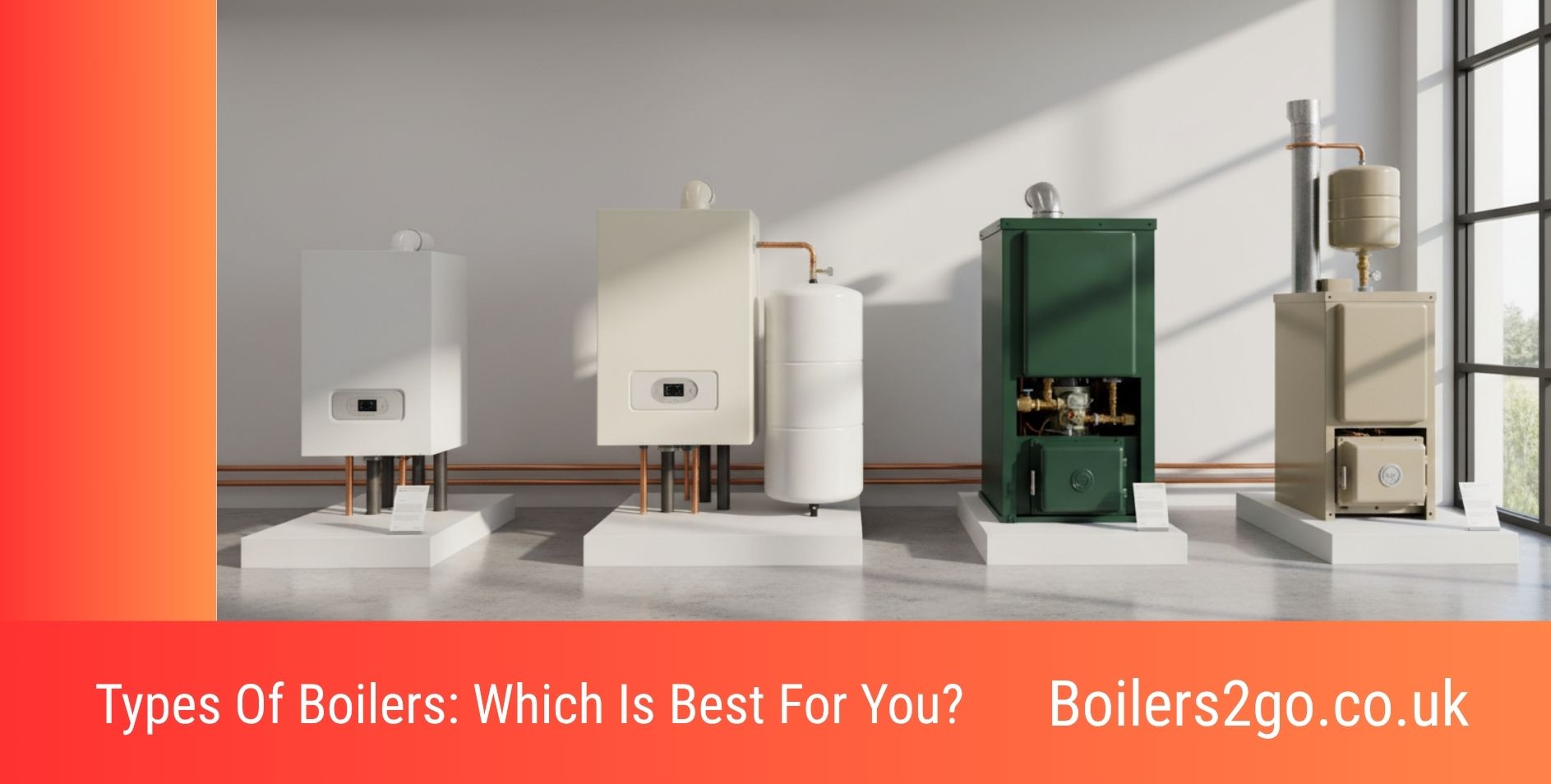
Understanding the types of boilers available in the UK helps homeowners improve comfort and efficiency while enabling landlords to meet EPC requirements, reduce maintenance issues, and ensure tenant satisfaction in rental properties. Evaluating natural gas boiler efficiency ratings is essential for selecting the most effective heating solution. Higher efficiency ratings not only drive down energy costs but also contribute to reducing carbon footprints. Homeowners and landlords alike can benefit from understanding these ratings to make informed decisions on their heating systems.
If you are evaluating different types of boilers for your home or rental portfolio, request a new boiler quote from Boilers 2 Go today for expert guidance on the right system for your needs.
What Are The Main Types Of Boilers?
The main types of boilers commonly installed in UK homes and rental properties are combi boilers, system boilers, conventional boilers, storage combi boilers, and oil boilers, each designed for specific hot water and heating demands.
Combi Boilers
Combi boilers provide instant hot water on demand and heat radiators without needing a separate hot water cylinder, making them ideal for smaller homes and flats. Various models are available, including gas, electric, and oil options, each with distinct advantages for different types of swimming pool boilers. When selecting the right boiler, it’s essential to consider factors such as energy efficiency, capacity, and the specific needs of your pool environment. This ensures optimal performance and comfort throughout the swimming season. In regions where winter temperatures plummet, understanding heat pump efficiency in colder climates becomes crucial for maintaining energy savings and comfort. Homeowners should look for models specifically designed to function effectively in sub-zero conditions to ensure consistent heating performance. Investing in such technology not only enhances comfort during the cold months but also contributes to lower energy bills year-round.
They offer excellent space-saving design, good ErP A-rated efficiency, and simpler installation but may struggle with high simultaneous hot water use in larger family homes or HMOs. Homeowners appreciate lower running costs while landlords value reduced risk of cylinder-related leaks in tenanted properties.
System Boilers
System boilers work with an unvented cylinder to store hot water, delivering strong flow rates for multiple bathrooms and supporting higher simultaneous demand.
They suit medium to large properties, provide consistent pressure, and are easier to upgrade with smart controls. Landlords benefit from reliable performance in family rentals, though they require more space than combi boilers. Nest smart thermostat features explained are essential for enhancing energy efficiency and comfort within these larger properties. With advanced learning capabilities, they adapt to user habits and optimize heating schedules. This ensures that landlords not only save on energy costs but also provide a more comfortable living experience for their tenants.
Conventional Boilers
Conventional boilers, also called regular or heat-only boilers, use a cold water storage tank and feed-and-expansion tank in the loft to supply hot water via a cylinder.
They are suited to older properties with existing gravity-fed systems and offer good reliability but take up more space and can be less efficient due to stored water heat loss. Homeowners in period homes often retain them during renovations, while landlords may replace them to improve EPC ratings.
Storage Combi Boilers
Storage combi boilers combine combi convenience with a small integrated cylinder (typically 40-60 litres) for better hot water flow and reduced pressure drops. When considering the most efficient options, it’s essential to explore the toprated combi boilers for efficiency on the market today. These models not only offer outstanding performance but also contribute to lower energy bills and a reduced carbon footprint. With advancements in technology, many brands are focusing on developing highly efficient systems that meet modern energy standards. However, it’s equally important to avoid the worst combi boiler brands in 2026, as these can lead to significant inefficiencies and increased maintenance costs. Consumers should conduct thorough research and read reviews to identify models that have not lived up to expectations. By prioritizing the most reliable and efficient brands, homebuyers can ensure they invest in a system that provides long-term value and performance.
They deliver performance similar to system boilers in a compact unit, making them suitable for properties needing occasional high demand without a full cylinder. Landlords find them useful in flats or smaller rentals where space is limited but multiple showers are common.
Oil Boilers
Oil boilers are used in off-grid properties without mains gas, burning kerosene to heat water and radiators in condensing models that achieve high efficiency.
They are essential for rural homes and rentals but involve higher fuel costs, annual OFTEC servicing, and oil tank maintenance. Landlords in remote areas must factor in compliance with pollution prevention rules.
How To Choose The Right Type Of Boiler For Your Property?
Choosing the right type of boiler depends on your property size, hot water demand, existing system, budget, EPC targets, and whether you are a homeowner prioritising comfort or a landlord focused on compliance and low maintenance. For homeowners considering an upgrade or replacement, exploring boiler finance options for homeowners can provide flexibility in managing costs. This allows you to invest in a more efficient system without the immediate financial burden. With various plans available, you can choose a solution that fits your budget while ensuring comfort and reliability in your home.
- Choose a combi boiler if you have 1-2 bathrooms, limited space, and lower simultaneous hot water needs.
- Don’t choose a combi boiler if you have a large family home with multiple bathrooms running showers and taps at once.
- Choose a system boiler if you need strong hot water flow for 2+ bathrooms and already have or plan an unvented cylinder.
- Don’t choose a system boiler if cupboard space is very limited or you prefer on-demand heating without stored water.
- Choose a conventional boiler if your property has an old gravity-fed system you wish to retain.
- Don’t choose a conventional boiler if you want modern efficiency and space-saving installation.
- Choose a storage combi boiler if you need better hot water performance than a standard combi but want to avoid a full cylinder.
- Don’t choose a storage combi boiler if your budget is tight or demand is very low.
- Choose an oil boiler if your property has no mains gas supply and you are in a rural area.
- Don’t choose an oil boiler if you are in a gas-connected urban area or want lower long-term fuel costs.
Need A New Boiler Quote?
Selecting the best type of boiler for your home or rental property can significantly improve energy efficiency, EPC performance, and reliability. Request a new boiler quote from Boilers 2 Go today for personalised recommendations, competitive pricing, and professional Gas Safe or OFTEC installation tailored to homeowners and landlords. With the best quiet boilers of 2026, you can enjoy a peaceful environment without sacrificing performance. These advanced models are designed to operate quietly while maintaining efficient heating, making them ideal for homes and rental properties alike. Explore the latest options that combine technology and noise reduction to enhance your living space even further.
FAQs
Can I change from one type of boiler to another without major plumbing alterations?
Switching boiler types often requires changes to pipework, cylinders, or tanks, but a qualified engineer can assess feasibility during a site survey.
Do different boiler types have varying lifespans?
Modern condensing boilers typically last 10-15 years with proper servicing, though oil boilers may need more frequent component replacement due to fuel characteristics.
Are all new boilers required to be condensing models?
Yes, Building Regulations mandate A-rated condensing boilers for gas and oil installations to meet minimum efficiency standards.
How do boiler types influence my property’s EPC rating?
High-efficiency combi and system boilers generally contribute to better EPC scores through improved SAP calculations compared to older conventional or non-condensing models.
What maintenance differences exist between boiler types?
Combi boilers usually require simpler annual checks, while system and conventional boilers involve additional cylinder and tank inspections; oil boilers need specialist OFTEC servicing. When considering the best options for your heating needs, it’s essential to look at Worcester Bosch product reviews and ratings to gauge their reliability and efficiency. Homeowners often share their experiences, which can provide valuable insights into performance and customer service. This feedback can help guide your decision-making process when investing in a new boiler system.

I’m Penny North, a home energy heating expert. My mission is to demystify new boilers and complex heating systems to help you achieve a warm, cosy home with lower energy bills and a smaller environmental footprint.