

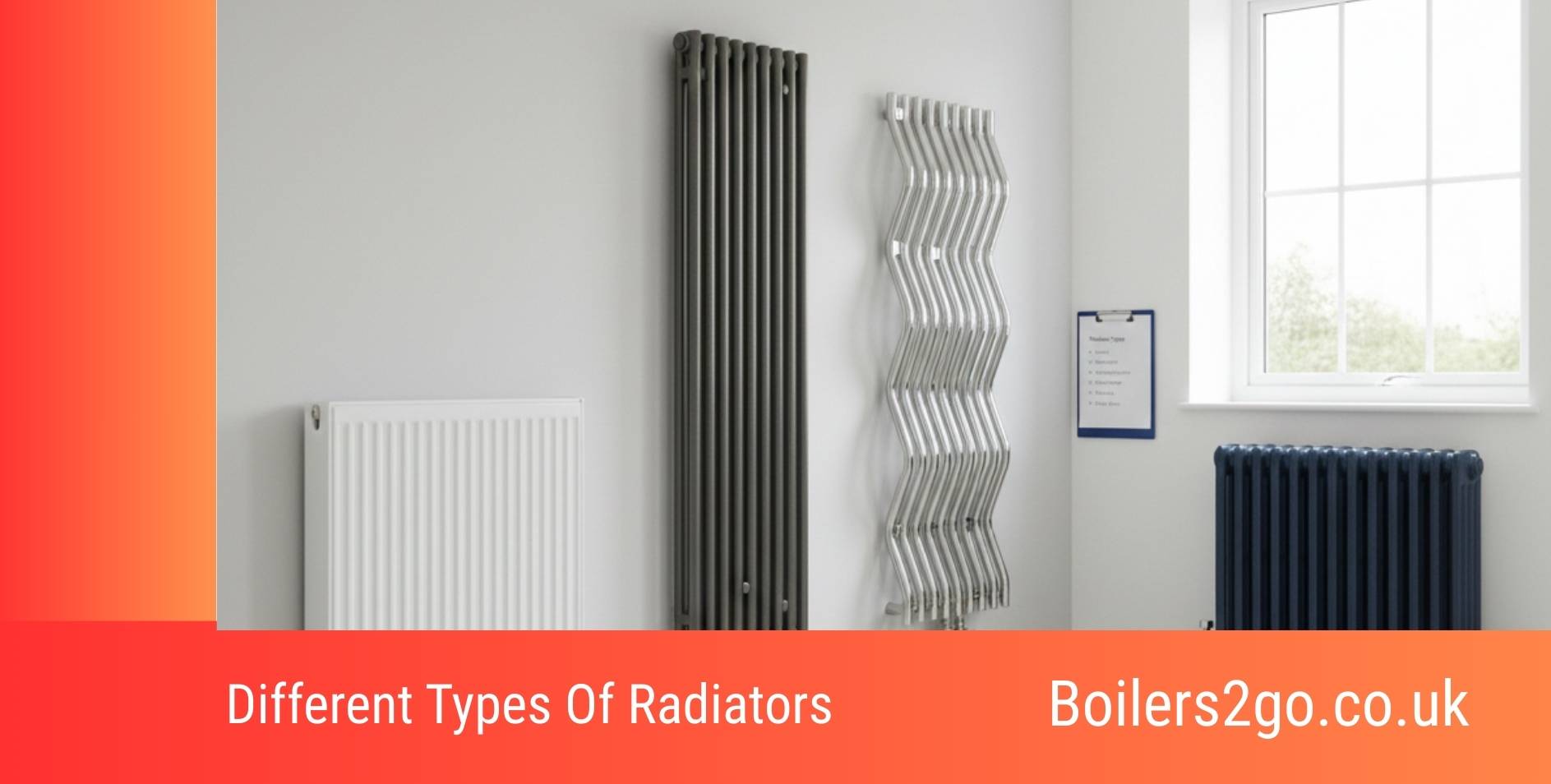
Types of Radiators in UK Homes and How to Choose
If you walk through a typical UK house, you’ll probably see a mix of radiators rather than one single style everywhere. That’s not bad planning — it’s usually the result of different rooms needing heat in different ways.
Bedrooms, bathrooms, hallways and living rooms all lose heat differently, and radiators work best when they’re matched to how a room is actually used, not just how it looks on a floor plan. Understanding the main radiator types makes choosing replacements or upgrades far less confusing.
Standard Steel Panel Radiators
Most UK homes still rely on conventional steel panel radiators. They’re the flat, rectangular units you’ll find under windows or along external walls. Hot water flows through the panels, the metal warms up, and heat moves into the room through a mix of radiation and warm air circulation. That’s also why boxing a panel radiator in can hold heat back; our guide on whether radiator covers waste heat looks at how much difference they make.
They’re popular because they’re predictable. They work with almost every boiler type, they’re easy to size, and replacement is usually straightforward. If your heating system behaves sensibly — rooms warm evenly, boiler cycles normally — chances are these radiators are doing their job quietly in the background.
Why Radiator Panel Depth Matters More Than Size
What many people don’t realise is that two radiators of the same height and width can give very different heat output. The difference usually comes down to how many panels and fins are hidden inside.
Slim, single-panel radiators suit small rooms where heat demand is low. Add a second panel and a set of fins behind it, and suddenly the same wall space can deliver much more warmth. That’s why kitchens and living rooms often feel underpowered when they’re fitted with the same radiators as bedrooms.
In plain terms: more metal and more airflow paths mean more heat gets into the room, faster.
Type 11 vs Type 22 Radiators: What’s the Difference?
A Type 11 radiator has one panel and one set of fins. It’s fairly compact and works well in bedrooms, bathrooms or box rooms where doors stay shut and heat loss is limited.
A Type 22 has two panels and two fin layers. That extra depth allows far more warm air to circulate, which is why Type 22s are the default choice for lounges, dining rooms and open spaces.
The important point isn’t that Type 22s are “better” — it’s that they’re better where demand is higher. Putting a small radiator in a large room forces the boiler to work harder for longer, which wastes energy and often still leaves the room feeling chilly.
Towel Radiators: Not Just for Warm Towels
Towel radiators are designed around bathrooms, but they’re doing more than drying towels. By warming the air and reducing moisture, they help prevent condensation and mould, especially in poorly ventilated spaces.
Most modern towel rails connect straight into the central heating system, while some also have electric elements for summer use. The ladder design means they don’t pump out heat as aggressively as a large panel radiator, but in a small bathroom that’s usually exactly what you want.
Column Radiators
Column radiators look traditional, but they’re not just decorative. Their vertical tubes hold more water and create a larger heating surface, which suits rooms with higher ceilings or older properties where heat escapes more easily.
They tend to give a softer, more radiant warmth rather than blasting hot air, which is why they’re often used in hallways and living rooms where comfort matters as much as output.
Low Surface Temperature (LST) Radiators
Low surface temperature (LST) radiators are built for places where people might come into contact with them — schools, care homes, nurseries. An outer casing keeps the surface cooler while still allowing warm air to circulate.
You don’t see them often in standard homes, but they sometimes make sense where children or vulnerable adults are present and safety outweighs appearance.
Skirting Board Radiators
Skirting board radiators sit low along the wall and release heat gently upward. They’re useful in rooms where wall space is tight or where visible radiators would disrupt the layout.
They don’t suit every home, but in the right space they can give surprisingly even warmth without dominating the room visually.
Underfloor Heating as an Alternative to Radiators
Underfloor heating isn’t a radiator, but it often replaces them. By spreading low-temperature heat across a large surface, it creates steady warmth rather than hot and cold spots.
It works best in well-insulated homes and pairs naturally with heat pumps, though many UK houses still combine underfloor heating downstairs with radiators upstairs.
How to Choose the Right Type of Radiator
The mistake many homeowners make is choosing radiators by appearance alone. The smarter approach is matching output to the room’s heat loss, and our guide on what size radiator you need walks through the key factors. If rooms stay cold despite adjustments, see when to replace your radiators.
A radiator that’s too small will run constantly without ever quite getting the room warm. One that’s too large can overheat the space and cause the boiler to cycle inefficiently. Getting the balance right allows lower flow temperatures, quieter operation and lower bills.
That’s why most UK homes end up with a mix:
-
Smaller radiators in bedrooms
-
Higher-output Type 22s in living areas
-
Towel radiators in bathrooms
-
Decorative options where style matters
When radiators are sized properly, the heating system feels effortless. Rooms warm evenly, the boiler doesn’t struggle, and you stop fiddling with thermostats to compensate.
That’s usually the sign a system has been designed — not just installed.

I’m Penny North, a home energy heating expert. My mission is to demystify new boilers and complex heating systems to help you achieve a warm, cosy home with lower energy bills and a smaller environmental footprint.