

Turning off a radiator is one of those simple heating jobs that feels confusing until you’ve done it once. After that, it makes complete sense — a bit like bleeding a radiator or topping up boiler pressure.
At Boilers2go, customers usually ask about this when a spare bedroom feels too warm, a radiator starts leaking, or decorating day arrives and suddenly the radiator is in the way.
Get a boiler cover, repair and annual service plan online here >
In most UK homes, you can stop a radiator from heating by closing the valve that controls water flow into it. If you need to work on the radiator itself, you’ll need to close both valves to isolate it completely from the central-heating system.
Get a quote today and take the stress out of replacing your boiler. At Boilers2Go, we offer fast, reliable installation across the UK - often as soon as the next day. 
Need a new boiler?
How to Turn Off a Radiator Using a TRV
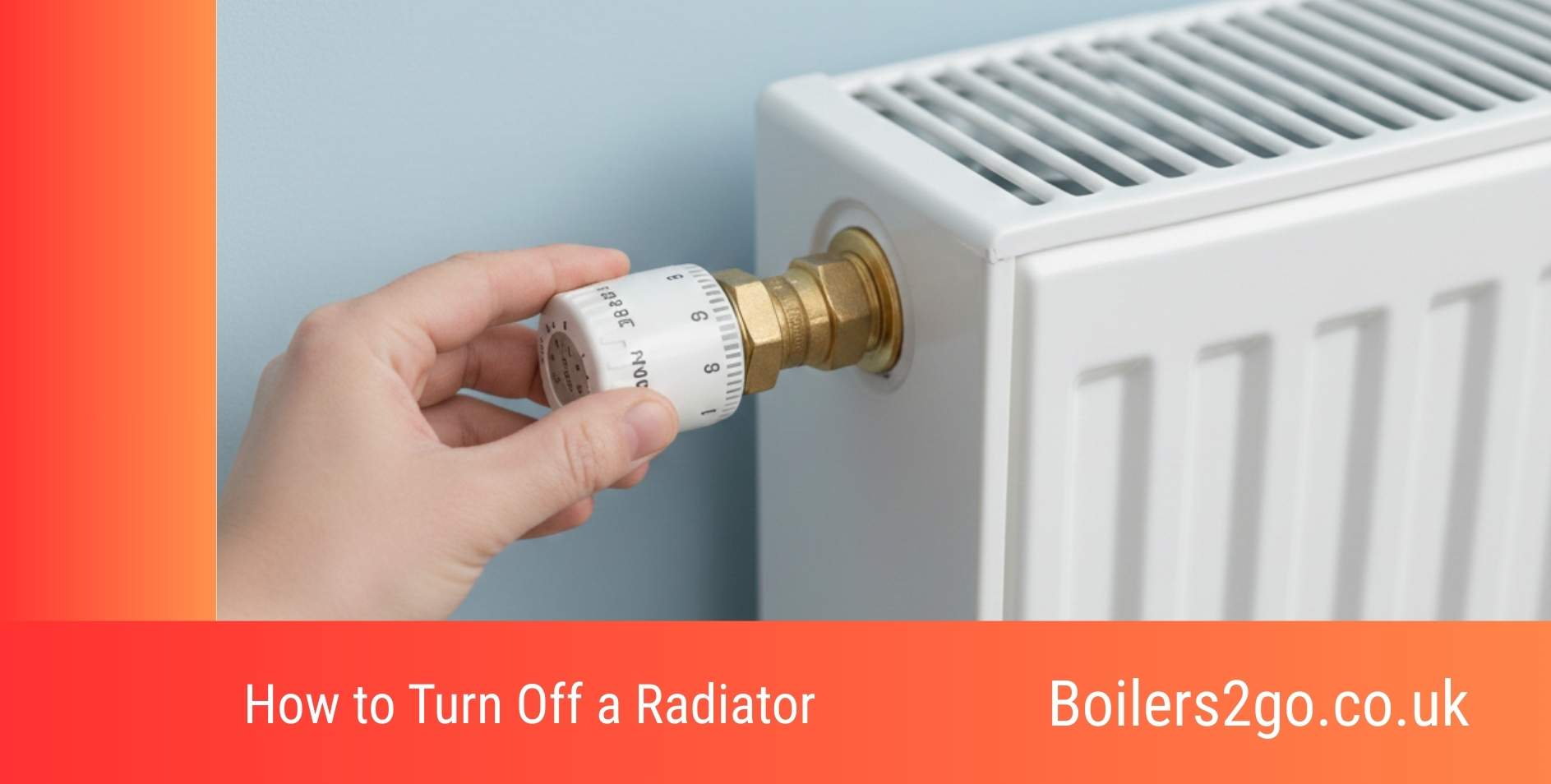
Most modern UK radiators have a thermostatic radiator valve (TRV) on one side. This is the valve with numbers or a snowflake symbol on the dial.
To stop the radiator heating the room, simply turn the TRV dial clockwise until it reaches 0 or the frost symbol. When the heating next comes on, that radiator should stay cold.
Some homeowners worry when the radiator still feels slightly warm near the bottom. That’s normal. Many TRVs allow a tiny amount of water flow for frost protection, which prevents pipes freezing in colder parts of the house. The radiator won’t heat the room, even if the pipework feels lukewarm.
This is the quickest way to stop heating an unused room and doesn’t require tools.
How to Turn Off a Radiator With a Manual Valve
Older radiators or simpler systems may use a manual radiator valve instead of a TRV. These usually look like a small tap or plastic knob.
Turning the valve clockwise until it stops closes the valve and prevents hot water entering the radiator.
Some engineers recommend turning it back slightly after closing it, especially in rarely used rooms. This reduces the chance of the valve spindle sticking over time — something that can happen after long periods without use.
Manual valves don’t offer automatic temperature control, but they’re straightforward and reliable.
How to Fully Isolate a Radiator
If a radiator is leaking, needs replacing, or you want to remove it for decorating, you’ll need to isolate it from the system completely. That means closing both the control valve and the lockshield valve.
Start by turning off the control side — either the TRV or manual valve. Then move to the opposite end of the radiator to find the lockshield valve, which usually has a small plastic cap rather than a dial.
Removing the cap reveals a metal spindle underneath. Turning this clockwise with a spanner or flat-head screwdriver closes the valve and stops water flowing through the radiator.
One tip engineers always follow is counting how many turns it takes to close the lockshield valve. This makes it much easier to return the radiator to the same position later and keep the heating system balanced. Without that balance, some radiators can become too hot while others struggle to warm up.
Once both valves are closed, the radiator is effectively isolated from the central-heating system.
Turning Off vs Bleeding a Radiator
These two jobs are often confused, but they’re completely different.
Turning off a radiator stops hot water flowing through it using the valves at the bottom. Bleeding a radiator releases trapped air using the small bleed screw at the top.
If you’re bleeding a radiator, always turn the heating off first and let the system cool down. Opening a bleed valve while the system is hot can release scalding water or cause pressure issues. Our guide on how to bleed a radiator covers the full process.
Get a quote today and take the stress out of replacing your boiler. At Boilers2Go, we offer fast, reliable installation across the UK - often as soon as the next day.
Need a new boiler?
Why Does a Radiator Stay Hot When the TRV Is Off?
A radiator that stays hot with the TRV set to zero usually has a stuck valve pin. It’s a common problem in UK homes. A pin can just as easily stick in the closed position, and our guide to one radiator not working covers that and the other common reasons a single radiator stays cold.
Usually, this happens because the small spring-loaded pin inside the TRV valve body becomes stuck open, especially after summer when the heating hasn’t been used. The valve head turns, but the internal pin doesn’t move to stop water flow.
In this situation, the radiator can still be isolated using the lockshield valve as a temporary fix. Longer term, the TRV head or valve body may need replacing.
It’s one of those heating quirks that shows up every autumn when boilers start firing up again.
Is It OK to Turn Off Radiators You Don’t Use?
Yes — turning down or switching off radiators in unused rooms can help reduce wasted heat. Spare bedrooms and box rooms are the usual candidates.
That said, completely isolating multiple radiators can affect central-heating system balance, especially in older systems. Leaving TRVs set to a low level rather than fully isolating them is often the safer option for everyday use.
It’s a bit like traffic on a motorway — if too many routes close at once, the flow through the system changes.
The Simple Rule for Turning Off a Radiator
If you just want to stop a room heating, turn the TRV or manual valve off.
If you need to work on the radiator, close both valves to isolate it.
That’s really all there is to it — and once you know where the lockshield valve is, the whole process becomes much less mysterious.
Get a quote today and take the stress out of replacing your boiler. At Boilers2Go, we offer fast, reliable installation across the UK - often as soon as the next day.
Need a new boiler?

With years of experience in boilers and home improvements in general, Myles Robinson is a passionate advocate for making home heating simpler, safer, and more affordable for households across the UK. With years of experience in the heating industry, Myles combines hands-on knowledge with a focus on customer-first service, helping homeowners choose the right boiler, understand their systems, and keep their heating running efficiently all year round. His articles break down complex topics into clear, practical advice you can trust.