

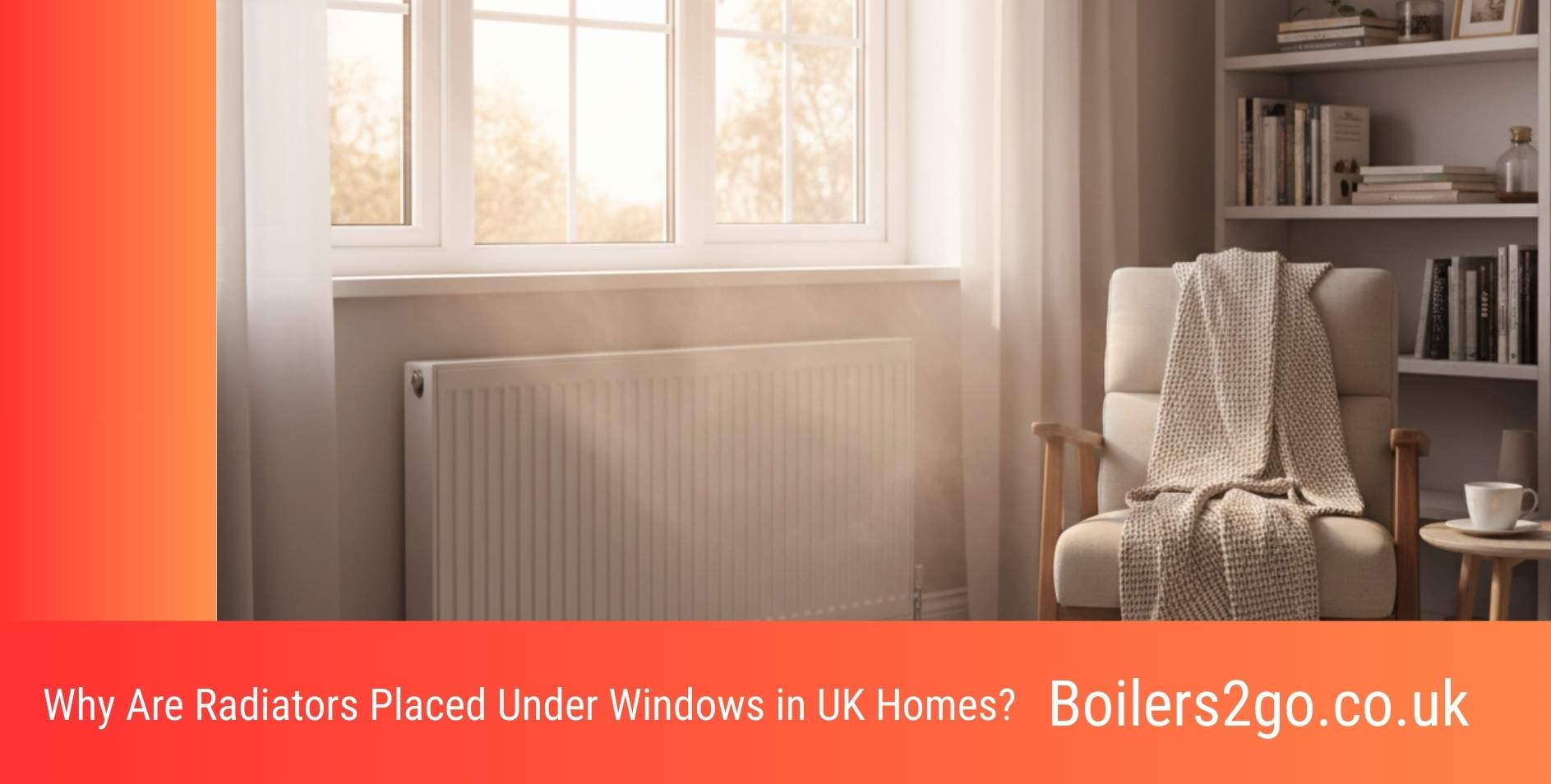
If you walk into almost any older UK home, you’ll probably find the radiator sitting directly under the window. It’s such a common layout that many people assume it’s the only correct place to put one.
In reality, radiators were traditionally installed under windows to balance cold draughts, improve comfort, and make use of wall space that couldn’t easily be used for furniture. That logic still applies in some homes — but with modern glazing and insulation, radiator placement is now more flexible than it used to be.
These days, it’s usually a balance between heating efficiency, room layout, and aesthetics.
Why Were Radiators Originally Placed Under Windows?
Historically, windows were the coldest surfaces in a room. In the days of single glazing, you could often feel cold air dropping down from the glass during winter.
Putting a radiator underneath created a column of warm rising air that mixed with the colder air falling from the window. This circulation helped distribute heat more evenly around the room and reduced the feeling of draughts near the window.
It also helped warm the glass itself, which reduced condensation forming on frames and curtains — something still familiar in older or humid homes.
The convention stuck because it worked well. Even as double glazing became standard, the “radiator under the window” layout remained the default in many UK properties.
There’s also a practical reason: the wall beneath a window is rarely useful for tall furniture, so installing a radiator there avoids sacrificing more flexible wall space elsewhere in the room.
Pros of Placing Radiators Under Windows
Radiators under windows still make a lot of sense in certain homes, particularly older properties or rooms with large panes of glass.
Positioning a radiator beneath the window helps neutralise the coldest part of the room, which can make the overall temperature feel more even. In spaces with bay windows, patio doors, or older glazing, that warm airflow can noticeably improve comfort.
It can also help reduce condensation on glass and protect surrounding paintwork, curtains, and frames from moisture.
From a layout perspective, using the window wall for heating often frees up other walls for sofas, storage, or media units — something homeowners usually appreciate once furniture goes in.
The Downsides of Under-Window Radiators
The traditional placement isn’t always perfect.
Long curtains can trap heat behind the fabric, sending warmth toward the window instead of into the room. It’s surprisingly common in UK homes with full-length curtains covering panel radiators.
Furniture can also reduce performance. A sofa or bed pushed tight against a radiator blocks airflow and limits heat output, regardless of where the radiator is positioned. Our guide to putting furniture in front of a radiator covers the trade-offs in more detail.
And in well-insulated modern homes with double or triple glazing, the original efficiency advantage of under-window placement is often much smaller. In those cases, sticking to tradition can sometimes restrict room layout without delivering much heating benefit.
Pipework layout can also become a factor during refurbishments. Under-window pipe runs don’t always suit new room designs, particularly when replacing radiators or changing flooring.
Is Under-Window Radiator Placement Still the Best Option?
In many modern UK homes, radiator placement is no longer tied to windows in the way it once was.
Better insulation, improved glazing, and more airtight construction mean cold downdraughts are far less noticeable than they were decades ago. As long as a radiator is correctly sized for the room and has good airflow around it, it can usually be installed wherever it suits the layout best.
Today, heating engineers tend to prioritise three things: keeping radiators unobstructed, minimising pipe runs, and allowing flexibility for furniture placement.
Sometimes that still means installing radiators under windows — and sometimes it doesn’t.
Alternative Radiator Layout Ideas
If you’re redesigning a room or replacing radiators, there are several options that work just as well as the traditional setup. If you do move a radiator, make sure the new pipework isn’t tight where it passes through floors and walls, as that’s a common cause of the radiator tapping noises covered in our separate guide.
A vertical radiator beside a window can still create a warm column of air while freeing up the wall beneath the window. In well-insulated rooms, placing a radiator on an internal wall often works perfectly without creating cold spots.
Bay windows sometimes suit curved or sectional radiators, or even built-in seating with a grille above the radiator to allow heat to circulate. In more modern interiors, low-profile or bench-style radiators can blend into the room design while still providing effective heating.
The key is always airflow and correct sizing rather than sticking rigidly to tradition.
How to Get More Heat From a Radiator Under a Window
If your radiators are under windows, a few small adjustments can improve performance. Using blinds or shorter curtains helps prevent heat getting trapped behind fabric. Curtain brackets that hold curtains slightly away from the wall can also help warm air circulate properly. It’s also worth bleeding the radiator at the start of each heating season; our guide on how to bleed a radiator shows how.
It’s also worth leaving a small gap between furniture and any radiator to allow airflow.
And if you’ve recently upgraded to double glazing, it’s worth asking yourself whether the window area still feels cold. In many cases, the traditional radiator placement still works well — but it’s no longer the only sensible option.

With years of experience in boilers and home improvements in general, Myles Robinson is a passionate advocate for making home heating simpler, safer, and more affordable for households across the UK. With years of experience in the heating industry, Myles combines hands-on knowledge with a focus on customer-first service, helping homeowners choose the right boiler, understand their systems, and keep their heating running efficiently all year round. His articles break down complex topics into clear, practical advice you can trust.