

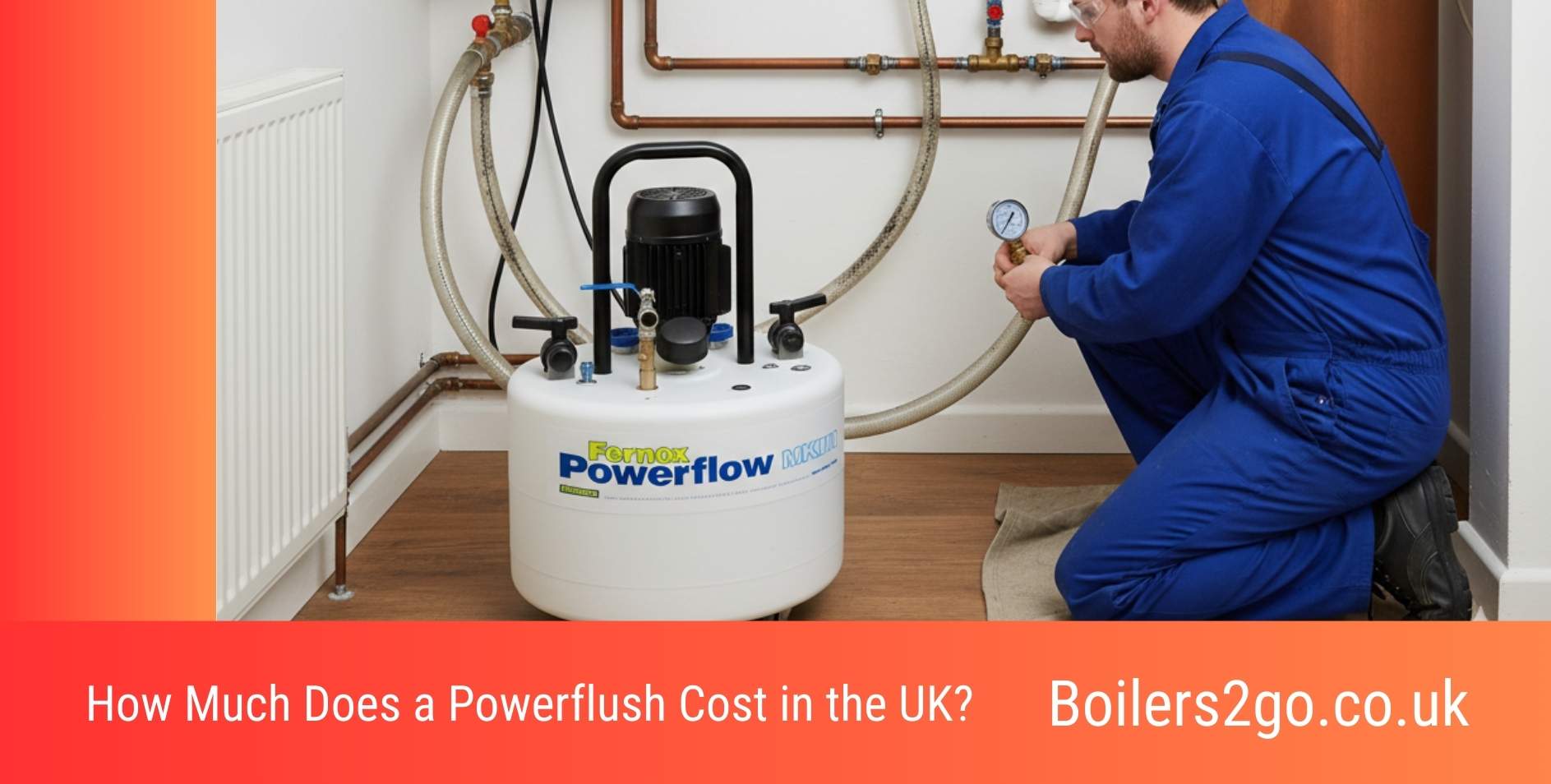
If your radiators are cold at the bottom, your boiler sounds like it’s working harder than usual, or the heating takes longer to warm up, sludge in the system is often the culprit. That’s usually when a heating engineer suggests a powerflush.
For most UK homes, a professional powerflush typically costs between about £350 and £850, depending mainly on the number of radiators in the system and how heavily it’s contaminated.
It’s best thought of as a deep clean for your central-heating system, rather than a repair or replacement job.
Get a boiler cover, repair and annual service plan online here >
Powerflush Cost by Number of Radiators
The number of radiators in your home is usually the biggest factor in the final price. Each radiator and section of pipework needs to be flushed individually, which affects how long the job takes.
Here’s a realistic guide based on typical UK installations.
| Number of Radiators | Typical Property Size | Estimated Powerflush Cost |
|---|---|---|
| 4–6 radiators | Flat / small house | £350–£450 |
| 7–10 radiators | 2–3 bed house | £450–£600 |
| 11–15 radiators | 3–4 bed house | £550–£850 |
| 15+ radiators | Large property | £700–£950+ |
Most homes fall somewhere in the middle of this range, which is why powerflushing is usually priced in the mid-hundreds.
How Does Powerflush Cost Compare to Other Heating Costs?
Powerflushing sits between routine maintenance and major heating work in terms of cost.
Replacing a boiler typically costs £2,000–£4,000 or more, while installing a completely new central-heating system can cost £3,500–£8,500+ depending on the property.
Regular servicing is essential to ensure efficiency and longevity, often ranging from £70 to £120 per visit. It’s advisable to factor in these costs when budgeting for your home’s heating needs.
For comparison, our guide to boiler repair costs in the UK covers typical prices for common faults.
Additionally, investing in a high-quality boiler can lead to lower long-term repair and maintenance costs, providing savings over time.
That’s why powerflushing is often recommended when heating performance drops but the boiler itself is still in good condition.
Removing sludge from the system can improve circulation, help radiators heat more evenly, and reduce strain on pumps and heat exchangers.
Get a quote today and take the stress out of replacing your boiler. At Boilers2Go, we offer fast, reliable installation across the UK - often as soon as the next day. 
Need a new boiler?
Signs Your Heating System Needs a Powerflush
Central-heating sludge, often made up of magnetite from internal corrosion, builds up gradually over time. Most homeowners don’t notice it until heating performance starts to drop. Our guide to central heating sludge explains how it forms and the options for removing it.
One of the clearest signs is radiators that are cold at the bottom but warm at the top, where sludge settles and restricts hot water flow.
You might also notice radiators taking longer to heat up, certain rooms staying cooler than others, or the system struggling to warm the house evenly.
Another common symptom is noisy heating, such as gurgling radiators or a boiler making kettling sounds. These noises often point to restricted circulation caused by debris inside the system.
Sometimes the clue appears when bleeding a radiator — dark or black water usually indicates sludge in the pipework.
When several of these signs appear together, the system often benefits from a proper clean.
Powerflush vs MagnaCleanse vs Chemical Flush
Not every heating system needs a full powerflush. The right type of system clean usually depends on how much sludge has built up and how old the system is. Where the build-up is light, draining and refilling the system with fresh inhibitor can be enough, as explained in our guide on how to drain a central heating system.
Here’s a simple comparison.
| Flush Type | Typical Cost | Best For | How It Works |
|---|---|---|---|
| Chemical flush | £150–£350 | Newer systems or light sludge | Cleaning chemicals circulate through the system using the existing pump, then the system is drained and refilled. |
| MagnaCleanse / magnetic flush | £270–£470 | Moderate sludge or new boiler installs | Uses a flushing unit and magnetic filters to capture magnetite debris while circulating water. |
| Powerflush | £350–£850 | Older systems with heavy sludge | High-flow pump and chemicals force debris out of radiators, pipework, and heat exchanger. |
A chemical flush is often enough for routine maintenance or newer heating systems with only mild debris.
A MagnaCleanse sits somewhere in the middle and is commonly carried out during new boiler installations to protect the heat exchanger from contamination.
A powerflush is typically recommended when circulation problems are already noticeable, particularly in older central-heating systems.
In practice, the choice usually depends on how blocked the system is rather than the boiler itself.
When Is a Powerflush Worth It?
Powerflushing is most useful in older heating systems with heavy sludge build-up, especially when radiators are cold along the bottom or the boiler becomes noisy during operation.
The process uses a high-flow flushing pump and specialist cleaning chemicals to remove debris from radiators, pipework, and the heat exchanger. In most homes, it’s completed within a day.
It won’t fix every heating issue, but when circulation problems are caused by sludge, it can restore performance surprisingly well.
How Much Should You Pay for a Powerflush?
For most UK homeowners, a realistic expectation for a powerflush is £350–£850 depending on system size.
It’s not the cheapest heating job you’ll ever do, but it’s far less expensive than replacing boilers, radiators, or pipework. In the right system, it can make the heating feel noticeably more responsive again.
Get a quote today and take the stress out of replacing your boiler. At Boilers2Go, we offer fast, reliable installation across the UK - often as soon as the next day.
Need a new boiler?

I’m Penny North, a home energy heating expert. My mission is to demystify new boilers and complex heating systems to help you achieve a warm, cosy home with lower energy bills and a smaller environmental footprint.