

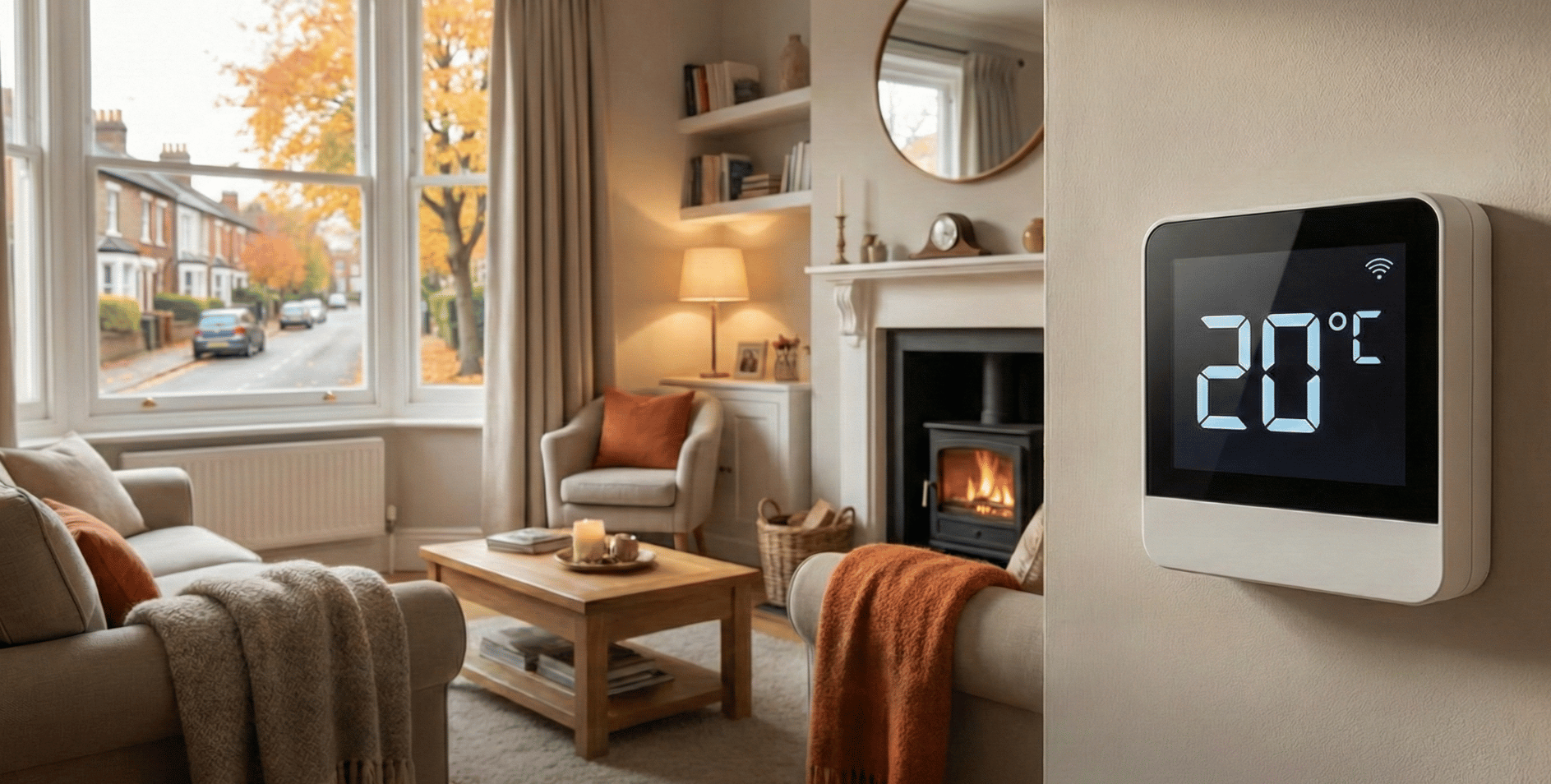
There isn’t one thermostat setting that works for everyone, but most UK homes feel comfortable within a familiar range. For healthy adults, the best room temperature usually sits between 18 and 21°C. It’s warm enough to relax, cool enough to stay alert, and sensible when it comes to energy use.
This range is often used as the recommended room temperature, but it works best as a guide rather than a hard rule. Different rooms, different people, and even different times of day benefit from small adjustments. Read more in this quick guide from us here at Boilers2Go.
Quick Reference: Ideal Room Temperatures to Set Your Thermostat
| Area / Use | Recommended Temperature | Why This Works |
| General living spaces | 18–21°C | Comfortable for most adults, balances health and energy use |
| Living room / lounge | 20–22°C | You’re usually sitting still, so slightly warmer feels better |
| Home office | 20–22°C | Helps focus without feeling cold or sluggish |
| Kitchen | 18–20°C | Cooking adds heat naturally |
| Hallways / landings | 15–18°C | Low-use areas don’t need heavy heating |
| Adult bedroom (sleep) | 16–18°C | Supports natural drop in core body temperature for better sleep |
| Babies (newborns) | 16–20°C | Reduces overheating risk, safer for sleep |
| Babies & toddlers | 16–20°C | Light layers preferred over higher heat |
| Older adults (living areas) | 18°C+ | Helps reduce cold-related health risks |
| Pregnancy comfort | Varies (often slightly cooler) | Hormonal changes increase heat sensitivity |
| Dogs & cats | 18–22°C | Most breeds comfortable; access to warmer/cooler spots helps |
| Small pets (rabbits, guinea pigs) | 18–22°C (stable) | Sensitive to drafts and temperature swings |
| Reptiles / exotic pets | Species-specific | Usually need dedicated heat sources |
| Houseplants (most types) | 18–24°C | Avoid drafts and radiator heat |
| Cut flowers | Cooler rooms (16–18°C) | Last longer at lower temperatures |
| Winter comfort (whole home) | 18–20°C | Steady warmth beats overheating |
| Summer indoor comfort | Below 25°C | Higher temps affect sleep and focus |
| Smart thermostat night setback | 1–2°C lower overnight | Saves energy without discomfort |
| 3D printing (PLA) | 20–25°C | Stable temps reduce print failures |
| 3D printing (ABS) | Warm, enclosed space | Prevents warping and cracking |
| Away from home (frost protection) | 5–7°C | Prevents frozen pipes |
Why One Temperature Rarely Suits the Whole House
A living room where you sit still for hours doesn’t need the same warmth as a hallway you pass through for seconds. Kitchens generate heat naturally, while bedrooms tend to work better cooler, especially overnight.
Heating the whole house to one fixed temperature usually wastes energy and still leaves some rooms feeling wrong. Homes feel noticeably better when temperatures are adjusted to match how each space is actually used.
What’s the Ideal Bedroom Temperature for Sleep?
Sleep quality is closely linked to temperature. As evening approaches, your body naturally cools down, helping you relax and fall asleep.
For most adults, the best temperature for sleep is lower than daytime comfort, typically somewhere in the mid-to-high teens. Bedrooms that are slightly cool tend to support deeper, more settled sleep.
Rooms that stay too warm can lead to restless nights and frequent waking. Very cold rooms can also be uncomfortable. The aim is a gentle coolness that helps your body switch off.
What Temperature Is Safest for Babies, Newborns, and Toddlers?
Babies and young children can’t regulate body temperature as well as adults, which makes room temperature more important.
For newborns, babies, and toddlers, a bedroom temperature between 16 and 20°C is generally considered safe, particularly overnight. Overheating is a bigger risk than being slightly cool, so breathable bedding and light layers are usually better than turning the heating up.
A useful check is to feel a baby’s chest or neck rather than hands or feet. Toddlers, who move more during sleep, often prefer rooms toward the cooler end of the range.
This temperature range aligns with UK safer-sleep guidance from organisations such as the Lullaby Trust and the NHS.
What Indoor Temperature Suits Older Adults Best?
Older adults often feel the cold more and are more affected by low indoor temperatures.
Living areas should be kept at around 18°C or slightly above, with steady warmth rather than big swings. Bedrooms can sit at a similar level, although some people prefer them slightly warmer.
Keeping warmth consistent in rooms that are used most, while letting spare rooms run cooler, usually feels better than heating the entire house evenly.
Public health guidance suggests indoor temperatures should not regularly fall below 18°C, particularly for older adults or those with health conditions.
What’s a Comfortable Temperature During Pregnancy?
Pregnancy can make people feel warmer than usual, and comfort levels can change from day to day.
There’s no fixed temperature to aim for. Slightly cooler rooms often feel more comfortable, especially with good airflow and hydration. Avoiding extremes matters more than hitting a specific number.
Listening to how your body feels is usually the best guide.
Room Temperatures for Dogs and Cats
Most dogs and cats are comfortable at similar temperatures to humans, typically around 18–22°C.
Short-haired breeds, senior pets, and young animals may feel the cold more, while thick-coated breeds can struggle in warmer rooms. Pets should always have the option to move to a cooler or warmer spot rather than being stuck in one temperature all day.
If your pet constantly seeks out radiators or cold floors, it’s often a sign the temperature could be adjusted slightly.
Room Temperatures for Small Pets and Exotic Animals
Small mammals like rabbits, guinea pigs, and hamsters prefer stable temperatures in the high teens to low twenties, away from draughts or direct heat sources.
Reptiles and tropical species usually need carefully controlled environments and should not rely on general household heating. These animals often require dedicated heat lamps or mats with thermostats to stay safe.
Always follow species-specific guidance, as overheating can be just as dangerous as cold.
Room Temperatures for Houseplants and Flowers
Many houseplants thrive between 18 and 24°C, with slightly cooler temperatures overnight.
Cold draughts, sudden drops, or placing plants too close to radiators can cause stress, leaf drop, or wilting. In winter, moving plants away from cold windows and dry heat helps keep them healthy.
Cut flowers also tend to last longer in cooler rooms, particularly overnight.
What Temperature Should a House Be to Stop Damp?
Damp isn’t just about cold air — it’s about cold surfaces meeting moisture. When warm, moist air hits cold walls, windows, or corners, condensation forms. Over time, that moisture soaks in and leads to mould.
For most UK homes, keeping indoor temperatures at or above 18°C in regularly used rooms is one of the simplest ways to reduce the risk of damp. This helps keep surfaces warm enough to stop moisture in the air from turning into condensation.
This aligns with guidance from organisations like the Energy Saving Trust, which recommends steady, moderate heating rather than letting rooms drop cold and reheating them later.
Why Consistency Matters More Than Cranking the Heat
A common mistake is letting the house get cold during the day, then blasting the heating in the evening. That sudden warm air carries moisture, which then hits cold walls — the perfect setup for condensation.
Keeping rooms gently warm throughout the day, even at a lower setting, is far more effective at preventing damp than short bursts of high heat.
What Actually Affects How Warm a Room Feels?
The thermostat number is only part of the story. Insulation, draughts, window size, ceiling height, airflow, and humidity all influence how warm a room feels.
That’s why one home can feel cosy at 19°C while another feels chilly at 21°C. Improving insulation, sealing gaps, and managing airflow can often improve comfort more than increasing heating.
Smart Heating, TRVs, and Automation: Getting Temperature Right Without Thinking About It
Smart heating isn’t about filling your home with gadgets. It’s about control.
Smart thermostats like Google Nest and Hive let you adjust temperatures from your phone, set schedules around your routine, and avoid heating an empty house.
Smart TRVs (thermostatic radiator valves) take things further by letting you control individual radiators. This means bedrooms can stay cooler at night, living rooms can warm up in the evening, and spare rooms don’t get heated unless they’re actually being used.
Automation handles the rest in the background — lowering temperatures when you leave, warming rooms just before you get home, and reducing overnight heating without switching it off completely. The result is a steadier, more comfortable home with less energy wasted.
How Can I Keep My Home Comfortable in Winter?
In winter, steady warmth works better than blasting the heating.
Closing curtains at dusk, sealing draughts, keeping doors shut between rooms, and servicing your heating system all help your home hold onto heat. Heating unused rooms less and focusing warmth where you spend time improves comfort and keeps costs down.
How Can I Keep My Home Cooler in Summer?
Keeping heat out matters just as much as keeping it in.
Close blinds during peak sun, ventilate early in the morning or late at night, and reduce indoor heat from cooking and appliances on hot days. Good insulation also helps slow heat build-up in summer.
Smart controls make it easy to prevent accidental heating when the weather changes.
How Do I Heat My Home Without Wasting Money?
Efficient heating comes down to control rather than higher temperatures.
Warm the rooms you use, keep unused spaces cooler, seal draughts, and service your boiler or heating system regularly. Radiator valves and smart controls help avoid heating rooms unnecessarily.
Even small changes, like lowering your overall temperature slightly, can reduce energy use without making your home feel cold.
Best Room Temperature for 3D Printing Plastic
If you use a 3D printer at home, room temperature can affect print quality more than many people expect.
Common plastics like PLA tend to print best in rooms around 20–25°C, where temperatures are stable and drafts are minimal. Materials like ABS benefit from warmer, enclosed environments to reduce warping or cracking.
A consistent room temperature without cold airflow often makes the difference between a clean print and a failed one.
The Bottom Line
The goal isn’t locking in one perfect number. It’s understanding how temperature affects people, babies, pets, plants, and even modern hobbies like 3D printing — then adjusting your home to support all of it.
When warmth is used where it matters and eased back where it doesn’t, homes feel more comfortable, sleep improves, and heating systems work smarter rather than harder.

I’m Penny North, a home energy heating expert. My mission is to demystify new boilers and complex heating systems to help you achieve a warm, cosy home with lower energy bills and a smaller environmental footprint.