

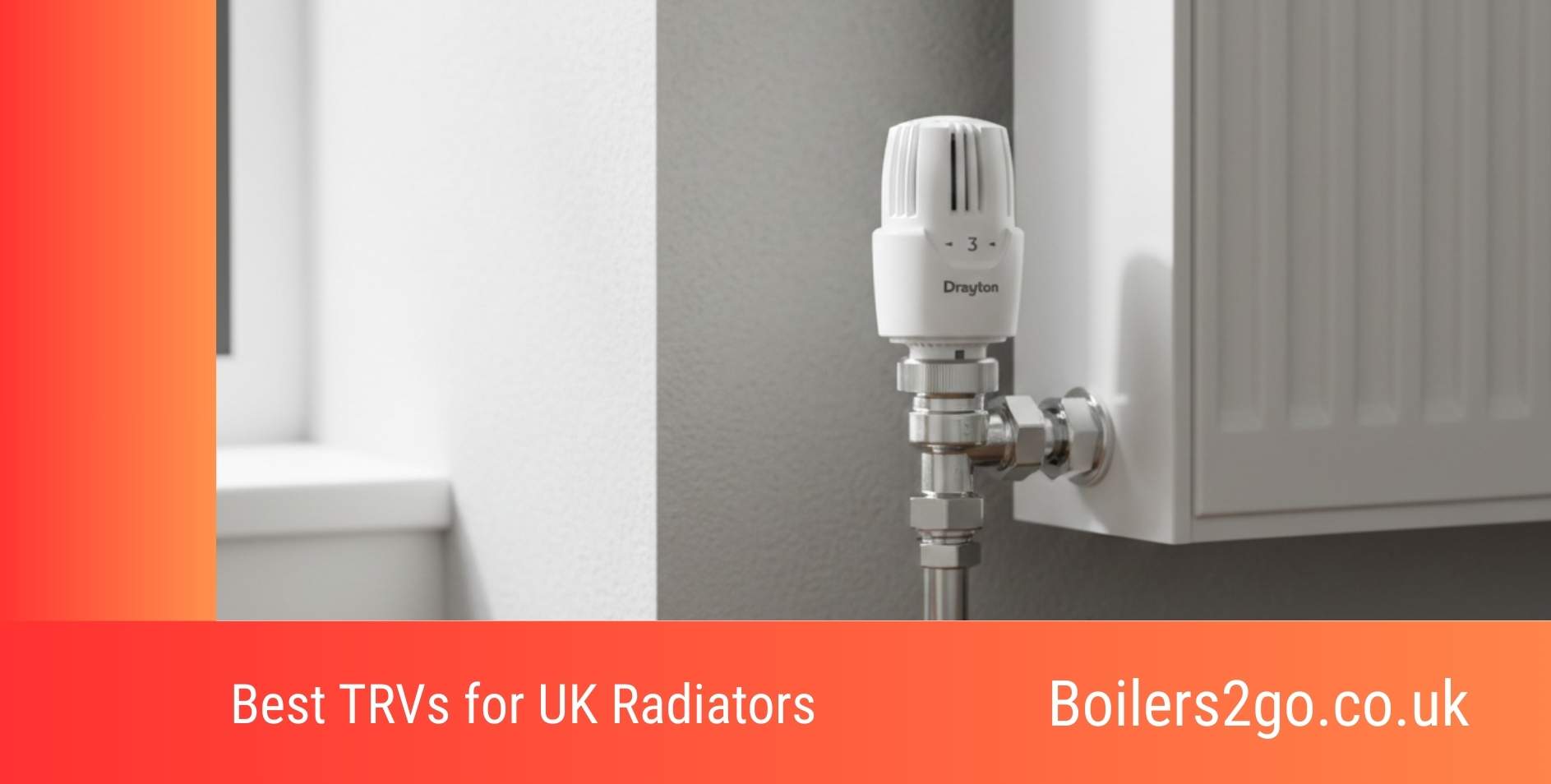
If thermostatic radiator valves (TRVs) were people, mechanical ones would be the dependable old tradesperson who turns up early and never complains, while smart TRVs would be the tech-savvy relative who insists on controlling the heating from their phone. Both work — it just depends what kind of household you’re running.
At Boilers2go, we usually explain TRVs to customers like this: they’re one of the simplest upgrades you can make to improve comfort, reduce wasted heat, and stop spare rooms from feeling like tropical greenhouses in winter.
The “best” TRV in the UK usually falls into one of two categories — classic mechanical valves from brands like Drayton, Honeywell, and Danfoss, or smart radiator valves from systems like Tado, Hive, Wiser, and Honeywell Evohome. The right choice depends on how much control you want, how tech-friendly your home is, and whether you prefer simplicity or automation.
Best TRVs for Radiators: Quick Guide
| Rank | TRV Model | Type | Best For | Why We Rate It | Potential Downsides |
|---|---|---|---|---|---|
| 1 | Drayton TRV4 | Mechanical | Reliability and long-term use | Extremely dependable, smooth liquid sensor control, widely trusted by UK installers | No smart features |
| 2 | Drayton Wiser TRV | Smart | Whole-home smart heating systems | Local scheduling works without internet, strong ecosystem support | Requires Wiser hub and setup |
| 3 | Tado Smart TRV | Smart | Room-by-room automation | Excellent app control, geofencing, automation features | Subscription features and cloud reliance |
| 4 | Danfoss RAS-D2 / RA2000 | Mechanical | Fast temperature response | Gas-filled sensor reacts quickly and accurately | Higher price for multi-radiator installs |
| 5 | Honeywell Home HR92 | Smart | Multi-zone heating systems | Quiet operation, clear display, reliable zoning control | Higher upfront system cost |
| 6 | Honeywell Home VT Series | Mechanical | Retrofit installations | Bi-directional flow simplifies installation | Less design-focused appearance |
| 7 | Hive Radiator Valve | Smart | Simple smart-heating upgrades | Easy to use if already in Hive ecosystem | Less flexible than competitors |
What Makes a TRV “Good” in a UK Heating System?
In most UK homes, a good thermostatic radiator valve does three simple things well: it senses room temperature accurately, controls radiator flow smoothly, and lasts for years without sticking or leaking.
A TRV improves efficiency by regulating how much hot water enters a radiator based on the temperature in the room. When the space warms up, the valve reduces flow, preventing overheating and helping the boiler run more efficiently. That’s why properly working TRVs often lead to lower heating bills without homeowners changing their habits.
Most UK radiators connect to 15 mm pipework, which is the standard size across domestic central-heating systems. Established brands like Drayton, Honeywell Home, and Danfoss are designed around this standard, which is why installers trust them to fit reliably without extra adapters.
Another detail that matters more than people realise is the temperature sensor inside the TRV head. Liquid-filled and gas-filled sensors typically respond more smoothly and accurately to temperature changes than very cheap wax-based designs. You might never think about it — until a poor-quality valve causes rooms to swing between too hot and too cold.
Best Smart TRVs in the UK
Smart TRVs have become increasingly popular in UK homes where people want zoned heating and app control. Instead of heating the entire house evenly, smart radiator valves allow each room to follow its own schedule, which can significantly reduce wasted energy — particularly in homes where spare bedrooms or home offices aren’t used every day.
Tado Smart Thermostatic Radiator Valve
Tado’s smart radiator valve is often chosen by homeowners who want precise room-by-room control and automation features like geofencing and open-window detection.
From a Boilers2go perspective, Tado feels like the “Apple” of smart heating — polished, clever, and heavily cloud-based. When everything is connected, the system can automatically adjust heating based on occupancy and weather conditions, helping reduce unnecessary boiler runtime.
The main compromise is reliance on internet connectivity and a hub to unlock full functionality. Some advanced features are now subscription-based, which has become a talking point among homeowners who expected long-term smart control without ongoing costs.
Drayton Wiser Smart Radiator Thermostats
Wiser smart TRVs are popular with homeowners who prefer reliability and local control over cloud-dependent systems.
One of the biggest advantages is that heating schedules continue working even if the internet drops out. That’s reassuring in rural areas or older homes with patchy Wi-Fi, where cloud-dependent systems can feel less dependable.
From installer experience, Wiser systems tend to feel solid and predictable. The occasional complaints we hear are usually related to battery performance or signal coverage in larger houses, but overall reliability is strong.
Hive Smart Radiator Valves
Hive radiator valves are often installed in homes already using Hive Active Heating, particularly when the boiler is controlled through the same app.
They’re easy to use and familiar to many UK homeowners, which makes them appealing for people who want simple smart heating without too much setup or customisation. Compared to some competitors, Hive focuses more on usability than deep automation.
Honeywell Home HR92 (Evohome)
The Honeywell HR92 is well known in larger multi-zone Evohome heating systems and is often praised for its quiet operation and clear display.
Bedrooms are where these valves really stand out. The motor is extremely quiet, which matters more than most people expect when the heating turns on early in the morning during winter.
Best Mechanical TRVs (Still the Installer Favourite)
Despite the growth of smart heating controls, mechanical TRVs remain the most commonly installed valves across UK homes, especially in rental properties and straightforward central-heating systems.
They’re reliable, inexpensive, and don’t need batteries or apps. In many homes, they simply do their job for decades without attention. As many engineers will tell you, boring heating components are often the best ones.
Drayton TRV4
The Drayton TRV4 has become something of a benchmark in UK plumbing. Installers trust it because it delivers consistent temperature control and long-term reliability.
Its liquid sensor responds smoothly to changes in room temperature, helping radiators maintain steady warmth without frequent overheating. The valve’s strong efficiency rating and reputation for durability are why it’s often recommended in energy-saving guidance.
Honeywell Home VT Series
Honeywell mechanical TRVs are commonly used in retrofit installations, partly because many models support bi-directional flow. This allows engineers to fit the valve on either side of the radiator depending on pipe layout, which simplifies installation.
It’s one of those small engineering details that homeowners rarely notice but installers appreciate immediately.
Danfoss RA2000 / RAS-D2
Danfoss valves are known for their gas-filled sensors, which respond quickly when room temperatures change.
They’re often selected for higher-quality installations where durability and responsiveness matter. While more expensive than budget valves, they’re built to last and backed by strong warranties.
Design-Led TRVs (The Unexpected Trend)
One quirky trend we’ve noticed in recent years is that radiator valves are becoming part of interior design rather than something hidden behind furniture.
In homes with column radiators, towel rails, or anthracite radiators, valves are increasingly chosen to match the finish of the heating system. Chrome, brushed brass, and anthracite valve sets are now common in design-led refurbishments.
The trade-off is that some designer valves prioritise appearance over sensor quality. They often perform perfectly well, but internally they can be similar to standard valves with a premium finish — a bit like designer taps compared to standard plumbing fittings.
Smart vs Mechanical TRVs: Which Is Better?
The honest Boilers2go answer is that both are good — they simply suit different homes.
Smart TRVs work best where heating schedules vary between rooms or where homeowners want remote control and automation. Mechanical TRVs are ideal where reliability, simplicity, and low cost matter more than fine-tuned control.
In many UK homes, the biggest improvement comes from simply having working TRVs installed correctly. Older systems often have stuck valves or missing TRVs entirely, which leads to uneven heating and wasted energy.
When radiator valves are functioning properly and the system is balanced, the whole heating system runs more efficiently — and that’s what really reduces energy bills over time.
FAQS
Do TRVs work with combi boilers?
Yes — thermostatic radiator valves work perfectly with combi boilers, system boilers, and conventional boilers. TRVs control the flow of hot water into individual radiators, while the boiler simply provides the heated water. The two systems operate independently but complement each other to improve efficiency and comfort.
Should every radiator have a TRV?
Most radiators in a home should have TRVs, but typically one radiator is left without one, usually in the same room as the main thermostat. This ensures the heating system always has a path for water flow when other valves close.
In many UK homes, this is the hallway radiator.
Can TRVs save money on heating bills?
Yes — TRVs can reduce heating costs by preventing rooms from overheating and allowing unused rooms to stay cooler. In practice, savings depend on how consistently the valves are used and whether the heating system is properly balanced.
Homes with spare bedrooms or irregular heating patterns usually see the biggest benefit.
How long do TRVs typically last?
A good-quality TRV from a recognised brand often lasts 10–15 years or more. The valve body usually lasts longer than the thermostatic head, which can wear out or become less accurate over time.
Sticking pins are the most common age-related issue, especially after summer when the heating hasn’t been used.
Why do TRVs sometimes stop working after summer?
During warmer months, the small spring-loaded pin inside the valve body can stick in place due to inactivity. When heating is turned back on in autumn, the radiator may stay cold because the valve can’t open properly.
This is a very common and easily fixable issue in UK heating systems.
Are TRVs required by UK regulations?
In most modern heating installations, TRVs are recommended or required as part of energy-efficiency standards such as Part L of the Building Regulations. They help ensure homes can control heating room by room rather than overheating the entire property.
Can TRVs cause boiler problems?
Not directly — but if every radiator valve closes at once, it can restrict water flow through the system. This is why systems usually include a bypass radiator or automatic bypass valve to maintain circulation.
A properly installed system won’t have issues.
Do smart TRVs replace the main thermostat?
No — smart TRVs usually work alongside a central thermostat or smart heating controller. They refine control at the radiator level rather than replacing the main heating control entirely.
Think of the thermostat as controlling the boiler, and TRVs controlling the rooms.

With years of experience in boilers and home improvements in general, Myles Robinson is a passionate advocate for making home heating simpler, safer, and more affordable for households across the UK. With years of experience in the heating industry, Myles combines hands-on knowledge with a focus on customer-first service, helping homeowners choose the right boiler, understand their systems, and keep their heating running efficiently all year round. His articles break down complex topics into clear, practical advice you can trust.