

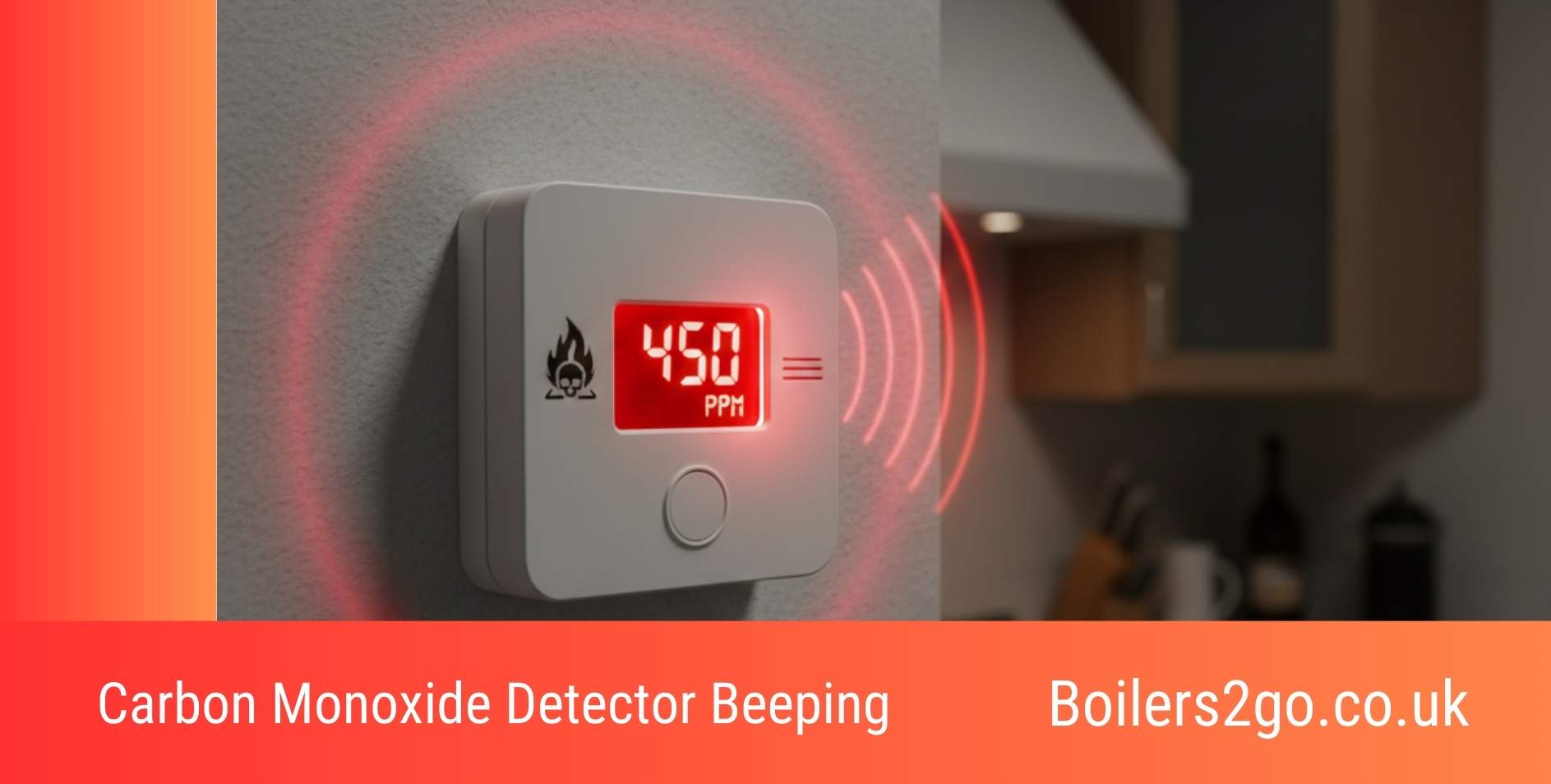
If your carbon monoxide detector is beeping, it’s a critical alert that should never be ignored. This guide explains the most common reasons for the beeping, what each sound pattern typically means, and the immediate steps UK homeowners and landlords should take to stay safe.
Enjoy peace of mind all year round with our affordable Boiler Cover plans, giving you reliable protection, annual servicing, and expert support so you’re never left out in the cold.
Need boiler cover?
What Does Carbon Monoxide Detector Beeping Mean?
Carbon monoxide detector beeping serves as an urgent warning system. It either signals the presence of dangerous levels of carbon monoxide (a colourless, odourless, deadly gas) or indicates a problem with the detector itself.
Quick action is essential to protect everyone in the household from carbon monoxide poisoning, which can cause headaches, dizziness, nausea, confusion and, in severe cases, loss of consciousness or death.
Here are the 7 most common causes of a carbon monoxide detector beeping, along with what to do for each:
1. Low or dead battery
The most frequent reason. Most detectors emit a single chirp every 30–60 seconds when the battery is low.
Fix: Replace the battery immediately (usually 9V or AA). Test the alarm after replacement to confirm it’s working.
2. End of detector lifespan
Carbon monoxide detectors have a limited lifespan—typically 7–10 years from the manufacture date. After this time, the sensor degrades and the unit may chirp every few seconds or give a specific end-of-life pattern.
Fix: Check the manufacture date on the back. Replace the entire detector if it has reached or exceeded its lifespan.
3. Actual carbon monoxide detection (dangerous levels)
A rapid, repeating pattern (often four beeps, pause, four beeps) means the detector has detected carbon monoxide. This is an emergency.
Action: Evacuate everyone from the property immediately. Open windows and doors for ventilation. Do not re-enter. Call the National Gas Emergency Service on 0800 111 999 or 999 from outside.
4. Dust, dirt or insect buildup on the sensor
Dust, cobwebs or insects can interfere with the sensor, causing false or nuisance alarms (usually intermittent chirps).
Fix: Power off the unit, gently vacuum or use compressed air to clean the vents. Avoid using liquids or harsh chemicals.
5. High humidity or steam exposure
Placing the detector too close to bathrooms, kitchens or humid areas can trigger false alarms due to moisture affecting the sensor.
Fix: Relocate the detector at least 3 metres away from steam sources (bathrooms, kettles, tumble dryers). Follow manufacturer placement guidelines.
6. Faulty or ageing sensor
Even if the detector is within its lifespan, the sensor can become unreliable due to age, manufacturing defects or prolonged exposure to contaminants. Fix: Test the unit monthly using the test button. If it fails to respond or continues alarming after cleaning and battery replacement, replace it.
7. Carbon monoxide leak from a boiler, fire, heater or cooker
Incomplete combustion in gas, oil or solid-fuel appliances (blocked flue, poor ventilation, lack of servicing) can produce carbon monoxide that triggers the alarm. Action: If there is any chance of a real leak, evacuate and call for professional help immediately. Never ignore this cause.
If your carbon monoxide detector beeping is linked to your gas boiler or heating system, it could indicate the need for urgent servicing or replacement. Boilers 2 Go provides expert advice and competitive quotes for modern, safer boilers that reduce the risk of carbon monoxide issues.
Ready to Upgrade Your Heating System? Get a New Boiler Quote from Boilers 2 Go
A repeatedly beeping detector tied to your current boiler is often a sign that the system is ageing or not being serviced properly. Switching to a new, high-efficiency condensing boiler can significantly improve safety and reliability. Boilers 2 Go specialises in A-rated boilers and low-carbon heating solutions for UK homeowners and landlords.
Request a free, no-obligation quote today to explore options, grants and installation packages that deliver peace of mind and lower running costs.
FAQs
What is the legal requirement for carbon monoxide detectors in UK rental properties?
Landlords must install carbon monoxide detectors in rooms containing solid-fuel appliances (wood burners, coal fires). While not yet mandatory for gas appliances in all cases, it is strongly recommended and often required under tenancy agreements and best practice.
How often should I test my carbon monoxide detector?
You should press the test button at least once a month to confirm the alarm sounds and the indicator lights work correctly.
Can carbon monoxide detectors detect natural gas or LPG leaks?
No. Carbon monoxide detectors are designed only to detect carbon monoxide. Natural gas and LPG leaks require separate gas detectors or a gas alarm.
What should I do if my detector beeps at night but stops by morning?
This can indicate intermittent low-level exposure (e.g., from a pilot light or flue issue). Do not ignore it—arrange a Gas Safe engineer inspection as soon as possible.
Are there different beep patterns for different brands of detectors?
Yes. While four-beep patterns commonly indicate CO detection, low-battery chirps and end-of-life signals vary by brand (Kidde, FireAngel, Honeywell, etc.). Always check your user manual for the exact meaning of each sound.

I’m Penny North, a home energy heating expert. My mission is to demystify new boilers and complex heating systems to help you achieve a warm, cosy home with lower energy bills and a smaller environmental footprint.