

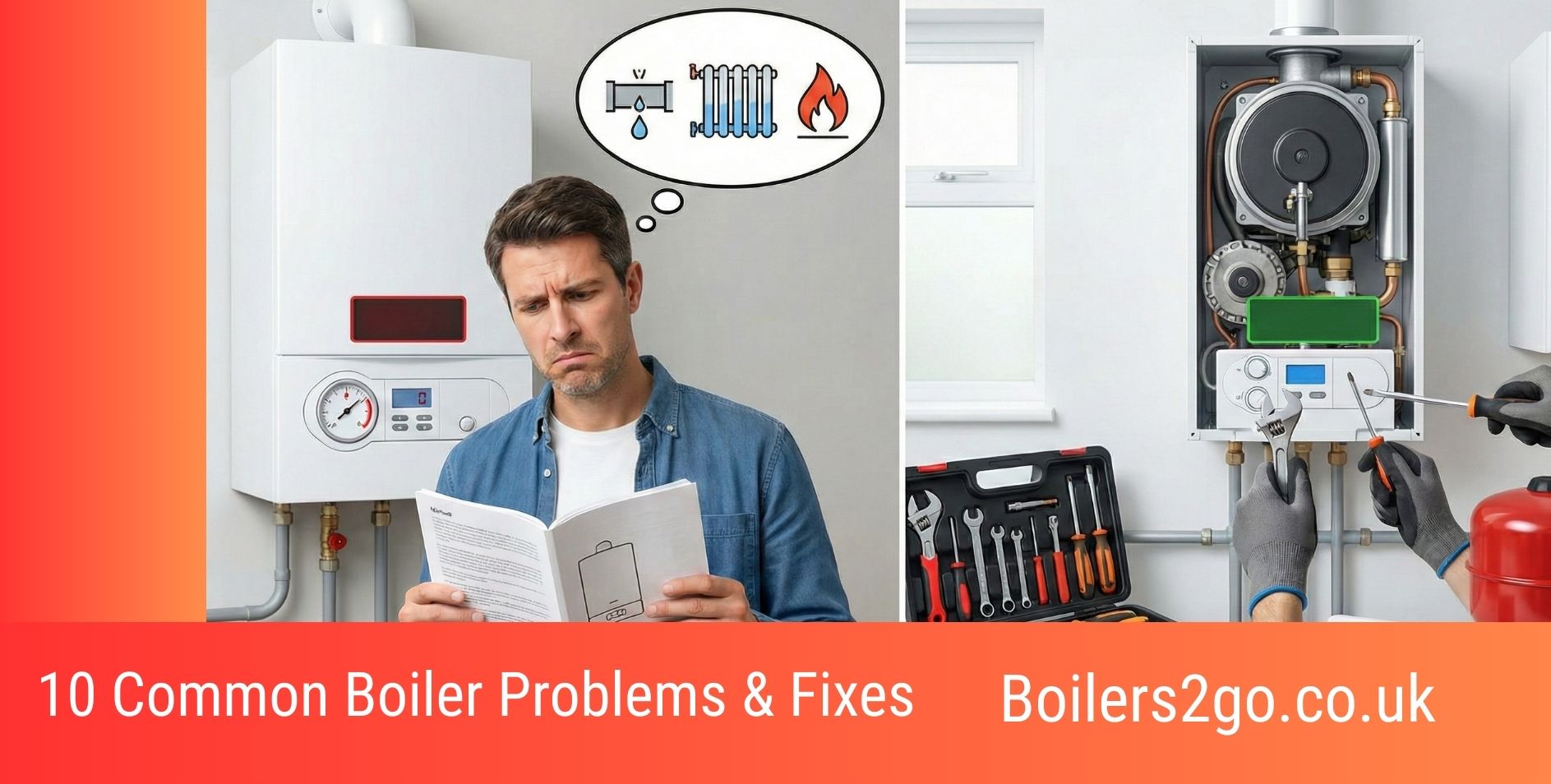
As a veteran in the UK boiler industry, with hands-on experience sorting out heating headaches for countless homeowners and landlords, I’ve seen my fair share of common boiler problems that can turn a cosy home into a chilly nightmare, especially during those biting British winters.
If you’re grappling with issues like strange noises or no hot water from your combi or system boiler, you’re not alone—these glitches often stem from everyday wear and tear, but understanding them can help you troubleshoot effectively and decide when to call in the pros.
What Are Common Boiler Problems?
Common boiler problems are those recurring issues that disrupt your home heating or hot water supply, often signalling underlying faults in your central heating system. From my years diagnosing everything from Worcester to Vaillant models across UK properties, these tend to arise from factors like age, poor maintenance, or environmental conditions; here’s a deep dive into 10 of the most frequent ones.
Low Boiler Pressure
Low boiler pressure happens when the water pressure in your system drops below the optimal 1-1.5 bar, causing your boiler to lock out as a safety precaution to avoid damage from insufficient circulation. Causes include slow leaks in pipes, radiators, or valves, natural evaporation in open-vented systems, or recent radiator bleeding that wasn’t followed by repressurising.
How to Fix It
- Locate the pressure gauge on your boiler—if it’s below 1 bar, find the filling loop (often flexible hoses beneath the unit) and slowly open the valves to add water until it reaches 1.2 bar with the system cold.
- Close the valves firmly, reset the boiler according to your manual, and test the heating.
- Monitor the gauge over a few days; if it drops again, check for visible leaks around joints or radiators.
- For ongoing drops, call a Gas Safe engineer to seal hidden leaks or replace faulty components, typically costing £100-£300.
No Hot Water or Heating
No hot water or heating from your boiler means the system fails to respond to demands, leaving taps cold or radiators lukewarm despite the unit powering on. Common causes are a faulty thermostat not detecting temperature changes, diverter valve issues in combi boilers sticking in one mode, or electrical faults like tripped breakers interrupting power.
How to Fix It
- Check and replace batteries in wireless thermostats or recalibrate wired ones to ensure accurate readings.
- Reset the boiler and test by turning up the thermostat—if no response, inspect the consumer unit for tripped switches and flip them back.
- For diverter problems, isolate the boiler and contact a Gas Safe pro to clean or replace the valve, around £150-£250.
- Schedule regular electrical checks to catch wiring wear early, preventing full outages.
Leaking Boiler
A leaking boiler involves water dripping from the unit itself or nearby pipes, potentially causing damage to your property if ignored. Causes range from corroded internal components like the heat exchanger due to limescale buildup in hard water areas, loose connections from vibrations, or pressure relief valve failures releasing excess pressure.
How to Fix It
- Turn off the boiler at the isolator and mop up excess water to prevent slips.
- Inspect visible pipes for loose fittings and tighten gently with a wrench if safe.
- If the leak is internal, avoid DIY—call a Gas Safe engineer to diagnose and repair, such as descaling or replacing the valve, costing £200-£500.
- Install a scale inhibitor to combat limescale in future, especially in regions like London.
Strange Noises (Kettling or Banging)
Strange noises like kettling (a rumbling sound) or banging in your boiler signal trapped air, sludge, or overheating issues disrupting normal operation. Kettling causes include limescale deposits on the heat exchanger restricting water flow and causing localised boiling, while banging often stems from air pockets or pump cavitation in ageing systems.
How to Fix It
- Bleed radiators to release trapped air, starting from the top floor and working down.
- Add a noise reducer chemical to the system via a radiator for minor buildup.
- Arrange a power flush by a professional to clear sludge and scale, typically £400-£600.
- Maintain with annual inhibitor top-ups to prevent recurrence in hard water zones.
Frozen Condensate Pipe
A frozen condensate pipe occurs when the wastewater drainage line ices up in cold weather, blocking flow and locking out the boiler. This is common in condensing boilers where the pipe runs externally without insulation, caused by exposure to sub-zero temperatures or poor routing in unheated spaces.
How to Fix It
- Locate the white plastic pipe outside and pour warm (not boiling) water over the frozen section using a container.
- Wrap the pipe with foam lagging for immediate protection.
- Reset the boiler once thawed and monitor during cold snaps.
- Hire a Gas Safe engineer to relocate or add heating trace if it freezes repeatedly, around £100-£200.
Pilot Light Going Out
The pilot light going out in older Potterton or non-condensing boilers extinguishes the constant flame needed for ignition, halting all functions. Causes include draughts blowing it out through poor ventilation, thermocouple wear failing to detect the flame, or gas supply interruptions from low pressure.
How to Fix It
- Relight the pilot following your manual’s instructions—usually hold a button while igniting.
- Check for draughts around the boiler and seal vents if needed.
- Replace the thermocouple via a Gas Safe pro if it extinguishes quickly, costing £80-£150.
- Upgrade to a modern pilotless model for long-term reliability.
Boiler Overheating (Lockout Mode)
Boiler overheating leads to automatic lockout where the unit shuts down to prevent damage, often with an error code. Causes encompass low water levels from leaks causing dry firing, thermostat failures not regulating temperature, or circulation pump breakdowns stopping water flow.
How to Fix It
- Allow the boiler to cool, then repressurise if pressure is low.
- Reset the unit and test at a lower temperature setting.
- Clean or replace the thermostat if faulty, requiring a Gas Safe engineer, around £100-£200.
- Ensure annual pump checks to maintain flow and avoid seizures.
Radiators Not Heating Evenly
Radiators not heating evenly mean some stay cold while others warm, indicating imbalances in your heating network. Causes include sludge accumulation at the bottom of radiators blocking heat, airlocks in upper sections, or unbalanced systems where valves aren’t adjusted for equal flow.
How to Fix It
- Bleed cold radiators to expel air, collecting water in a towel.
- Balance the system by adjusting lockshield valves—close hotter ones slightly to divert flow.
- Flush individual radiators or the whole system chemically for sludge.
- Call pros for a full balance if DIY doesn’t even it out, costing £200-£400.
Boiler Not Igniting
A boiler not igniting fails to start the burner, leaving no heat or water despite power. Causes involve ignition electrode corrosion from moisture, gas valve faults not releasing fuel, or PCB (printed circuit board) errors from electrical surges.
How to Fix It
- Reset the boiler to clear electronic hiccups.
- Check gas supply by testing other appliances.
- Have a Gas Safe engineer clean or replace electrodes/valves, £100-£300.
- Fit surge protectors to safeguard the PCB.
Constant Cycling On and Off
Constant cycling on and off, or short cycling, sees the boiler firing briefly then shutting down repeatedly, wasting energy. Causes include oversized boilers for the property leading to rapid heating, thermostat placement in draughty spots causing false readings, or blocked heat exchangers from debris.
How to Fix It
- Relocate the thermostat to a central, draft-free area.
- Clean accessible filters to improve flow.
- Descale the heat exchanger professionally if blocked, £200-£400.
- Consider resizing or upgrading if the boiler’s mismatched, via expert assessment.
When Should You Get a New Boiler Quote?
If these common boiler problems persist or your system’s over 15 years old with mounting repair costs, it’s wise to explore a replacement for efficiency and reliability.
From my seasoned perspective, a new A-rated unit resolves these niggles, cutting bills by up to £300 annually. Request a new boiler quote from Boilers 2 Go for modern, eco-friendly options.
FAQs
How does UK weather contribute to seasonal boiler breakdowns?
Harsh winters exacerbate issues like frozen pipes in uninsulated setups, while damp summers foster corrosion—year-round checks in variable climates like Scotland help.
What role do smart thermostats play in preventing boiler faults?
Smart controls like Hive monitor usage patterns, alerting to inefficiencies before full failures in Potterton systems.
Are there government grants for fixing boiler issues?
Schemes like ECO4 offer funding for repairs or upgrades in low-income homes, targeting efficiency to cut carbon.
How often should landlords conduct boiler inspections?
Beyond annual Gas Safe certs, quarterly visual checks spot early signs in rental properties.
Can home insulation impact boiler performance?
Better insulation reduces demand spikes, easing strain on components and lowering fault risks.

I’m Penny North, a home energy heating expert. My mission is to demystify new boilers and complex heating systems to help you achieve a warm, cosy home with lower energy bills and a smaller environmental footprint.