

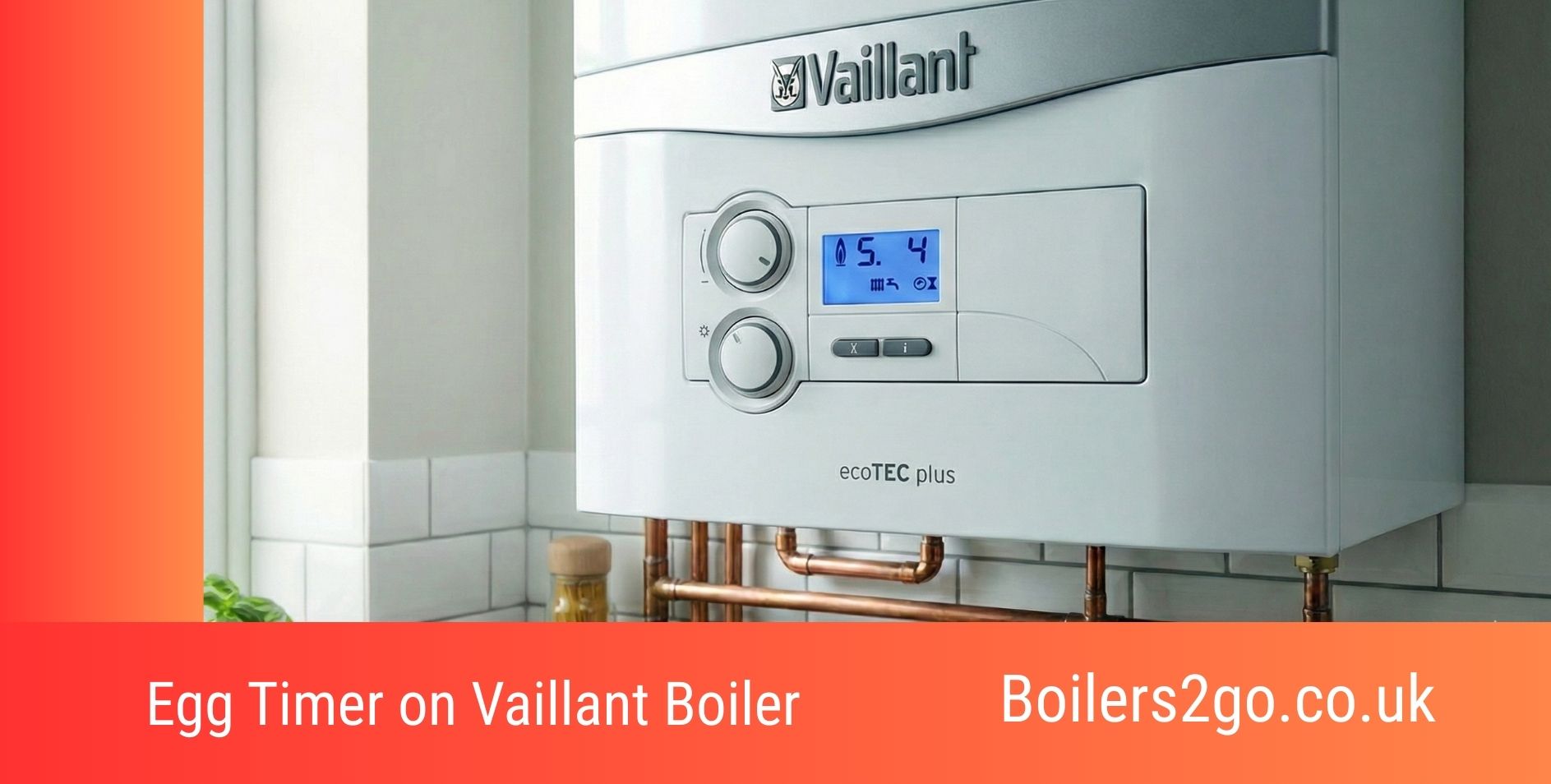
If you’re seeing the egg timer on your Vaillant boiler, you’re likely dealing with a common indicator that signals a temporary delay or issue in your home heating system. This symbol, often resembling an hourglass, can be frustrating for UK homeowners and landlords, especially during colder months when reliable hot water and central heating are essential.
In this guide, I’ll break down what it means, explore the potential causes, and provide step-by-step fixes to help you get your Vaillant combi boiler or system boiler back on track safely and efficiently.
What is the Egg Timer on a Vaillant Boiler?
The egg timer on a Vaillant boiler is an hourglass-shaped icon that appears on the display panel, indicating that the boiler is in a standby or waiting mode. This symbol, also known as the sand timer or delay indicator, is part of Vaillant’s fault code system designed to protect the appliance from overuse or damage.
It typically shows up after the boiler has attempted to ignite or operate but encounters a minor hiccup, triggering a built-in anti-cycling feature. For models like the Vaillant ecoTEC or ecoFIT series popular in UK homes, this prevents rapid on-off switching, which could lead to inefficiency or component wear.
Understanding this boiler error symbol is crucial for maintaining your domestic heating system, as it often points to underlying issues like pressure problems or thermostat malfunctions that, if ignored, could escalate into more serious Vaillant boiler faults.
Watch our video on what causes the egg timer on a Vaillant boiler below:
What Causes the Egg Timer on a Vaillant Boiler?
The egg timer on a Vaillant boiler can be triggered by several factors, ranging from simple maintenance oversights to more technical glitches in your central heating setup.
Below, I’ll detail the most common causes, drawing from Vaillant’s user manuals and real-world experiences shared by UK boiler engineers.
Each cause includes specific context to help you identify if it applies to your situation, followed by practical fixes tailored for homeowners and landlords.
Low Water Pressure in the System
Low water pressure in the system is a frequent culprit behind the egg timer symbol on Vaillant boilers, as it prevents the unit from operating safely and efficiently. In UK properties, especially older homes with radiator systems, pressure can drop due to leaks, bleeding radiators too often, or natural evaporation over time.
Vaillant boilers require a minimum pressure of around 1-1.5 bar for optimal function; anything below this threshold activates the delay mode to avoid damaging the heat exchanger or pump. This issue is particularly common in combi boilers, where the system is sealed and pressure fluctuations directly impact hot water supply and heating performance.
How to Fix Low Water Pressure
- To fix low water pressure causing the egg timer on your Vaillant boiler, start by checking the pressure gauge on the front panel—if it’s below 1 bar, you’ll need to repressurise the system.
- Locate the filling loop, usually a flexible hose with valves beneath the boiler, and slowly open both valves to allow cold water from the mains to enter until the gauge reads 1.5 bar.
- Close the valves securely once done, then reset the boiler by turning it off and on or pressing the reset button.
- Monitor the pressure over the next few days; if it drops again, inspect for visible leaks around radiators, pipes, or the boiler itself.
- For landlords managing rental properties, schedule annual servicing to catch pressure issues early, ensuring compliance with UK gas safety regulations.
Airlocks or Air in the Radiators
Airlocks or air in the radiators occur when trapped air bubbles disrupt the flow of hot water through your central heating pipes, leading to uneven heating and triggering the egg timer on Vaillant boilers.
This is common in UK households after summer when the system hasn’t been used, or following maintenance like draining the system. Air enters via small leaks or during refilling, causing the boiler’s sensors to detect imbalances and initiate a delay to prevent overheating or inefficiency.
In system boilers, this can affect the entire heating circuit, while combi models might show it alongside reduced hot water pressure.
How to Fix Airlocks or Air in the Radiators
- To fix airlocks or air in the radiators that cause the egg timer on your Vaillant boiler, begin by bleeding your radiators to release the trapped air.
- Turn off the boiler, then starting from the lowest floor, use a radiator key to open the bleed valve at the top of each radiator until you hear hissing air escape, followed by water—close it when steady water flows to avoid excessive pressure loss.
- Wipe away any drips and check the boiler pressure afterwards, repressurising if needed as described earlier.
- Run the heating for 10-15 minutes to circulate water and expel remaining air, then reset the boiler.
- Homeowners should do this seasonally, but if air persists, it might indicate a larger leak requiring professional inspection.
Faulty Room Thermostat or Controls
A faulty room thermostat or controls can mislead the boiler into thinking the desired temperature is reached prematurely, causing the egg timer symbol to appear as the unit enters anti-cycling mode.
In modern UK smart homes, Vaillant boilers integrate with thermostats like the vSMART or traditional models, but issues like dead batteries, wiring faults, or calibration errors disrupt communication.
This leads to intermittent operation, where the boiler shuts down temporarily to avoid unnecessary cycling, which is energy-inefficient and wears out components like the ignition system.
How to Fix a Faulty Room Thermostat or Controls
- To fix a faulty room thermostat or controls triggering the egg timer on your Vaillant boiler, first replace the batteries in wireless thermostats or check wired connections for loose wires.
- Test by adjusting the temperature setting higher than the current room temp and observe if the boiler fires up without delay—if not, reset the thermostat by following the manufacturer’s instructions, often involving a power cycle.
- For persistent issues, recalibrate the device using the user manual specific to your Vaillant model.
- Landlords should consider upgrading to compatible smart controls for better monitoring, but always ensure installations comply with Building Regulations Part L for energy efficiency in UK properties.
Blocked Condensate Pipe
A blocked condensate pipe happens when acidic wastewater from the boiler freezes or clogs with debris, backing up and forcing the Vaillant boiler into safe mode with the egg timer display.
This is especially prevalent in UK winters, where external pipes can freeze in sub-zero temperatures, or in areas with hard water leading to sludge buildup. The condensate trap or pipe, essential for draining byproducts from combustion, triggers the delay to prevent overflow or system damage, affecting both hot water and heating output.
How to Fix a Blocked Condensate Pipe
- To fix a blocked condensate pipe causing the egg timer on your Vaillant boiler, thaw any frozen sections by pouring warm (not boiling) water over the external pipe or using a hot water bottle.
- If it’s clogged with debris, disconnect the pipe carefully (wearing gloves) and flush it with warm water or a mild vinegar solution to dissolve buildup, then reconnect securely. Reset the boiler once cleared.
- For prevention in cold climates, insulate the pipe with foam lagging available at UK hardware stores like B&Q. If the blockage is internal or recurring, avoid DIY and seek professional help to prevent gas leaks.
Overheating or Sensor Issues
Overheating or sensor issues arise when the boiler’s internal temperature rises too high due to poor circulation, limescale buildup, or faulty thermistors, prompting the egg timer as a protective measure.
In hard water regions like the South East of England, limescale accumulates in the heat exchanger, reducing efficiency and causing sensors to detect anomalies. This anti-legionella or overheat protection is built into Vaillant boilers to comply with UK safety standards, but it can interrupt normal operation if not addressed.
How to Fix Overheating or Sensor Issues
- To fix overheating or sensor issues leading to the egg timer on your Vaillant boiler, ensure good water flow by checking that all radiator valves are open and the pump is functioning—listen for humming sounds.
- Descale the system using a power flush if limescale is suspected, but this often requires tools like a descaling kit; follow Vaillant’s guidelines for your model.
- Reset the boiler after corrections.
- For sensor faults, a multimeter test might be needed, but homeowners should limit to basic checks and call in experts for diagnostics to avoid voiding warranties.
How to Prevent the Egg Timer Error on Vaillant Boilers in the Future
Preventing the egg timer error on Vaillant boilers involves regular maintenance to keep your home heating system running smoothly. Schedule annual servicing by a Gas Safe registered engineer, which includes checking pressure levels, bleeding radiators, and inspecting pipes for leaks or blockages.
Install a magnetic filter to catch sludge and consider a water softener in hard water areas to reduce limescale. Monitor your boiler’s display weekly and maintain optimal pressure between 1-2 bar.
For landlords, incorporate these checks into tenancy agreements to ensure long-term efficiency and avoid costly breakdowns.
When You Absolutely MUST Call a Gas Safe Engineer
While many causes of the egg timer on Vaillant boilers can be addressed with simple DIY steps, certain situations demand professional intervention to ensure safety and compliance with UK gas regulations.
You must call a Gas Safe engineer if you suspect a gas leak (smell of gas or hissing sounds), if the issue persists after basic fixes like repressurising or bleeding, or if it involves electrical components, ignition faults, or internal repairs that could void your warranty.
Never attempt to dismantle the boiler yourself, as this risks carbon monoxide exposure or explosions. In emergencies, turn off the gas supply and contact a qualified professional immediately—search for local Gas Safe engineers via the official register for peace of mind.
FAQs
Is the egg timer symbol the same on all Vaillant boiler models?
The egg timer symbol varies slightly across Vaillant boiler models, but it generally appears as an hourglass on digital displays in series like ecoTEC Plus or atmoTEC, while older analogue versions might use a flashing light equivalent—always refer to your specific model’s manual for exact visuals.
Can weather conditions affect the egg timer appearing on my Vaillant boiler?
Weather conditions, particularly freezing temperatures, can indeed influence the egg timer on Vaillant boilers by causing condensate pipes to ice up, leading to temporary shutdowns; insulating exposed pipes helps mitigate this in UK winters.
How does the egg timer impact my energy bills?
The egg timer on a Vaillant boiler can indirectly increase energy bills by causing inefficient cycling or delayed heating, but resolving underlying issues like low pressure promptly ensures optimal performance and lower consumption over time.
What accessories can help monitor the egg timer issue remotely?
Accessories like Vaillant’s vSMART thermostat allow remote monitoring of issues like the egg timer on your boiler via a smartphone app, providing alerts for pressure drops or delays without needing to be at home.
Are there warranty implications if I ignore the egg timer on my Vaillant boiler?
Ignoring the egg timer on your Vaillant boiler could void your warranty if it leads to further damage, as manufacturers require prompt attention to faults; document any DIY fixes and consult the terms for coverage details.
Stay warm, The Boilers2Go Team

I’m Penny North, a home energy heating expert. My mission is to demystify new boilers and complex heating systems to help you achieve a warm, cosy home with lower energy bills and a smaller environmental footprint.