

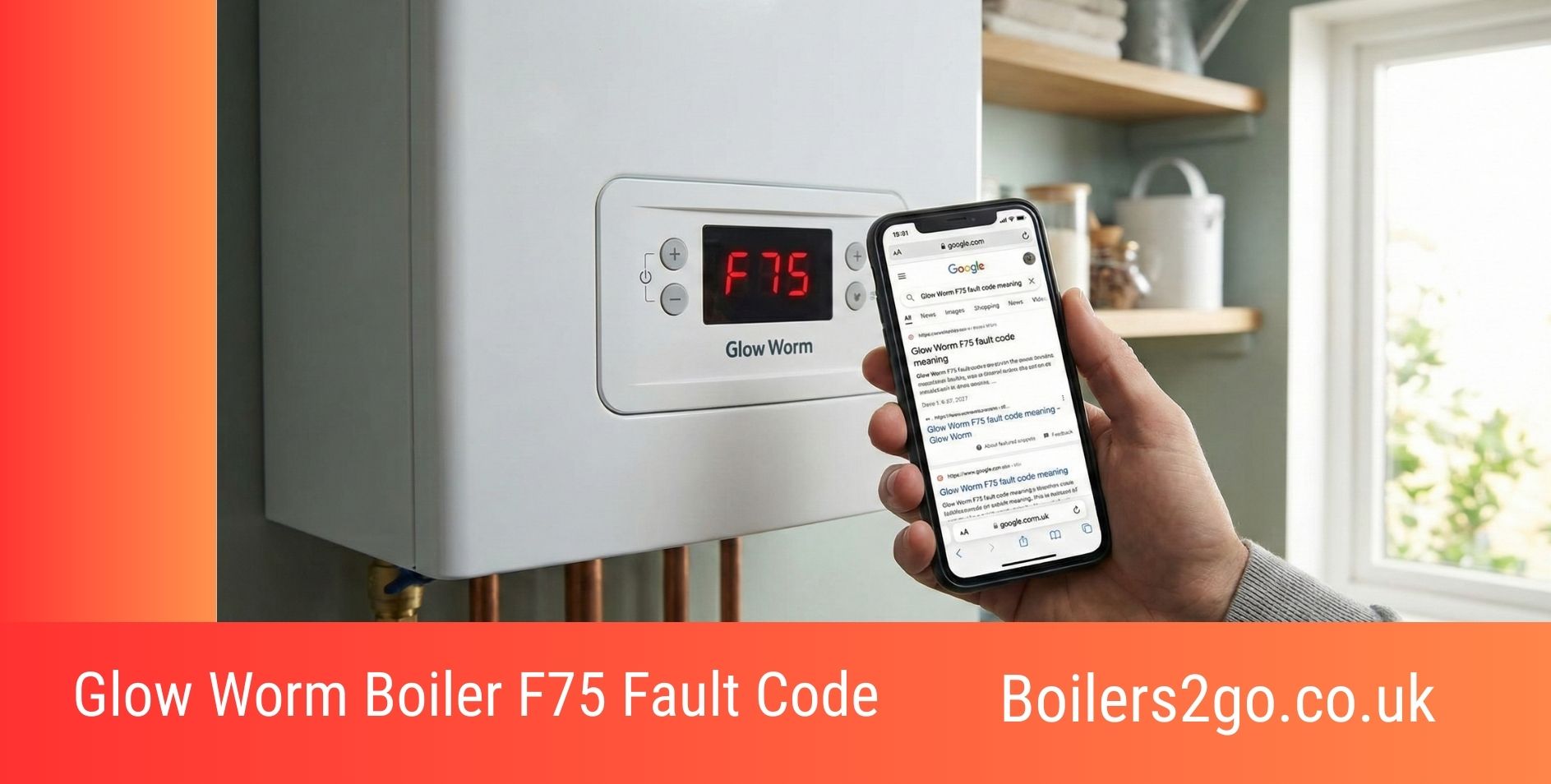
As a long-time expert in UK home heating, I’ve dealt with the Glow Worm boiler F75 fault code plenty of times—it’s that frustrating circulation alert that halts your heating right when you need it.
If this code is staring back at you from your Ultracom or Energy model, it’s pointing to a problem where the boiler can’t confirm proper water pressure changes when the pump runs, often locking out for safety.
In this guide, I’ll explain what it means, the typical reasons it happens, and clear steps to tackle each one, helping UK homeowners get back to warmth and landlords avoid tenant downtime.
What Does the Glow Worm Boiler F75 Fault Code Mean?
The Glow Worm boiler F75 fault code means the boiler has failed to detect a pressure rise when the pump starts, indicating a potential issue with water circulation or pressure sensing in your central heating system.
If you encounter this fault code, it’s essential to check for any blockages in the system that may hinder water flow or verify that the pump is functioning properly. Additionally, it may be helpful to consult the glow worm boiler f28 fault overview for further insights on related issues that could affect boiler performance. Regular maintenance and prompt attention to these warning signs can help prevent more severe complications in the heating system.
This safety feature prevents dry firing or overheating— the PCB expects a small pressure bump as water moves, and if it doesn’t happen, it locks out to protect components.
Why This Lockout Occurs
You’ll often hear the pump whirring but see no gauge movement, a telltale sign in combi or system boilers that something’s blocking reliable detection.
What Are the Common Causes of the Glow Worm Boiler F75 Fault Code?
The common causes of the Glow Worm boiler F75 fault code generally involve failures in detecting or creating water flow, from sensor glitches to mechanical wear that tricks the system into thinking circulation isn’t happening.
In such cases, it’s essential to check the water pressure and ensure that there are no blockages in the system. Additionally, users should be aware that other glow worm boiler error codes may also arise from similar issues, necessitating a thorough inspection of both sensors and water flow components. Regular maintenance can help prevent these errors and ensure optimal performance of the boiler system.
In addition to the F75 fault, users should familiarise themselves with other specific error codes that may indicate different underlying problems. For instance, the “glow worm boiler f9 fault explained” highlights issues related to the ignition system, which can further complicate the operation of the boiler if not addressed promptly. Understanding these codes can empower users to troubleshoot effectively and seek timely repairs to maintain their boiler’s efficiency.
Drawing from numerous repairs I’ve done, these often build up quietly over time in UK hard water zones or unmaintained setups; here’s a breakdown of the key ones.
Faulty or Blocked Pressure Sensor
A faulty or blocked pressure sensor develops when debris, sludge, or electrical issues prevent accurate readings, fooling the boiler into thinking there’s no circulation even if pressure is fine. This is the most frequent culprit I’ve encountered, especially in older Glow Worm installations where limescale clogs the tiny sensing port.
How to Fix a Faulty or Blocked Pressure Sensor
- Check the pressure gauge first—if it doesn’t rise when the pump runs, note this symptom.
- Attempt a boiler reset by holding the reset button for 5-10 seconds to clear temporary glitches.
- Call a Gas Safe engineer to inspect and clean the sensor or replace it if damaged, typically costing £100-£200 including labour.
- After repair, consider a system power flush to prevent recurrence from dirty water.
Malfunctioning Boiler Pump
A malfunctioning boiler pump happens when it runs but doesn’t generate enough flow due to seized bearings, sludge buildup, or electrical faults, so no pressure change registers. From my perspective, this hits pumps in high-use properties hard, mimicking a total failure to the PCB.
How to Fix a Malfunctioning Boiler Pump
- Listen for humming or vibrations—if present but weak, try resetting the boiler.
- Bleed radiators and repressurise to rule out airlocks affecting flow.
- Have a Gas Safe professional test the pump speed and replace if needed, around £200-£400, often with a system cleanse.
- Install a magnetic filter post-repair to catch future debris.
Low System Water Pressure
Low system water pressure occurs from leaks, bleeding radiators, or evaporation, dropping below the level needed for the pump to create detectable movement. Though less direct, I’ve seen it contribute when combined with minor sensor sensitivity issues in Glow Worm combis.
How to Fix Low System Water Pressure
- Locate the pressure gauge—if below 1 bar, prepare to top up.
- Use the filling loop (braided hose or valves under the boiler) to add water slowly until 1.2-1.5 bar.
- Reset the boiler and monitor—if it holds, test heating; if drops recur, hunt for leaks.
- Book an engineer for persistent leaks or if repressurising doesn’t clear F75.
Sludge or Air in the System
Sludge or air in the system builds up from corrosion or poor inhibition, restricting flow and preventing pressure spikes despite the pump working. In my unique take, this “silent blocker” often follows neglected annual services in UK properties.
How to Fix Sludge or Air in the System
- Bleed all radiators starting upstairs to release trapped air, catching drips.
- Repressurise after bleeding and reset the boiler.
- Add a chemical inhibitor via a radiator if minor buildup suspected.
- Arrange a professional power flush for heavy sludge, costing £400-£600, to restore full circulation.
Defective Expansion Vessel
A defective expansion vessel loses its air charge or diaphragm integrity, failing to accommodate water expansion and causing erratic pressure detection. This less common but sneaky issue shows up in ageing Glow Worm setups I’ve serviced.
How to Fix a Defective Expansion Vessel
- Check for pressure fluctuations or frequent topping up as clues.
- Reset and monitor—if F75 persists with stable gauge, suspect this.
- A Gas Safe engineer must recharge or replace the vessel, around £150-£300.
- Combine with a full service to check related components.
When Should You Get a New Boiler Quote?
If the F75 fault returns frequently despite fixes, or your Glow Worm is over 10-12 years old with climbing bills, it’s a strong signal to explore an upgrade for reliable, efficient heating.
A new A-rated model wipes out these circulation gremlins, potentially saving hundreds on energy. Request for a personalised quote for a new boiler from Boilers 2 Go today..
FAQs
How does UK hard water influence Glow Worm F75 occurrences?
Hard water accelerates sludge and scale in Glow Worm systems, heightening F75 risks by blocking sensors or pumps—fitting a scale reducer in limescale-heavy areas like the South East proves worthwhile.
What smart controls can help spot early signs of F75 in Glow Worm boilers?
Glow Worm-compatible apps or thermostats like Energy controls monitor pressure trends remotely, flagging anomalies before full F75 lockouts in connected properties.
Are there seasonal patterns to Glow Worm F75 faults?
Demand surges in autumn/winter often expose underlying pump weaknesses, spiking F75 reports—pre-season checks in colder regions prevent mid-winter breakdowns.
How do Glow Worm warranties handle F75-related repairs?
Extended warranties typically cover parts like sensors or pumps for F75 if annual Gas Safe services are documented—always verify your policy details.
Can adding system additives prevent future F75 issues in Glow Worm setups?
Quality inhibitors and cleaners maintain clean waterways, significantly cutting F75 triggers from buildup, especially when dosed during refills.

I’m Penny North, a home energy heating expert. My mission is to demystify new boilers and complex heating systems to help you achieve a warm, cosy home with lower energy bills and a smaller environmental footprint.