

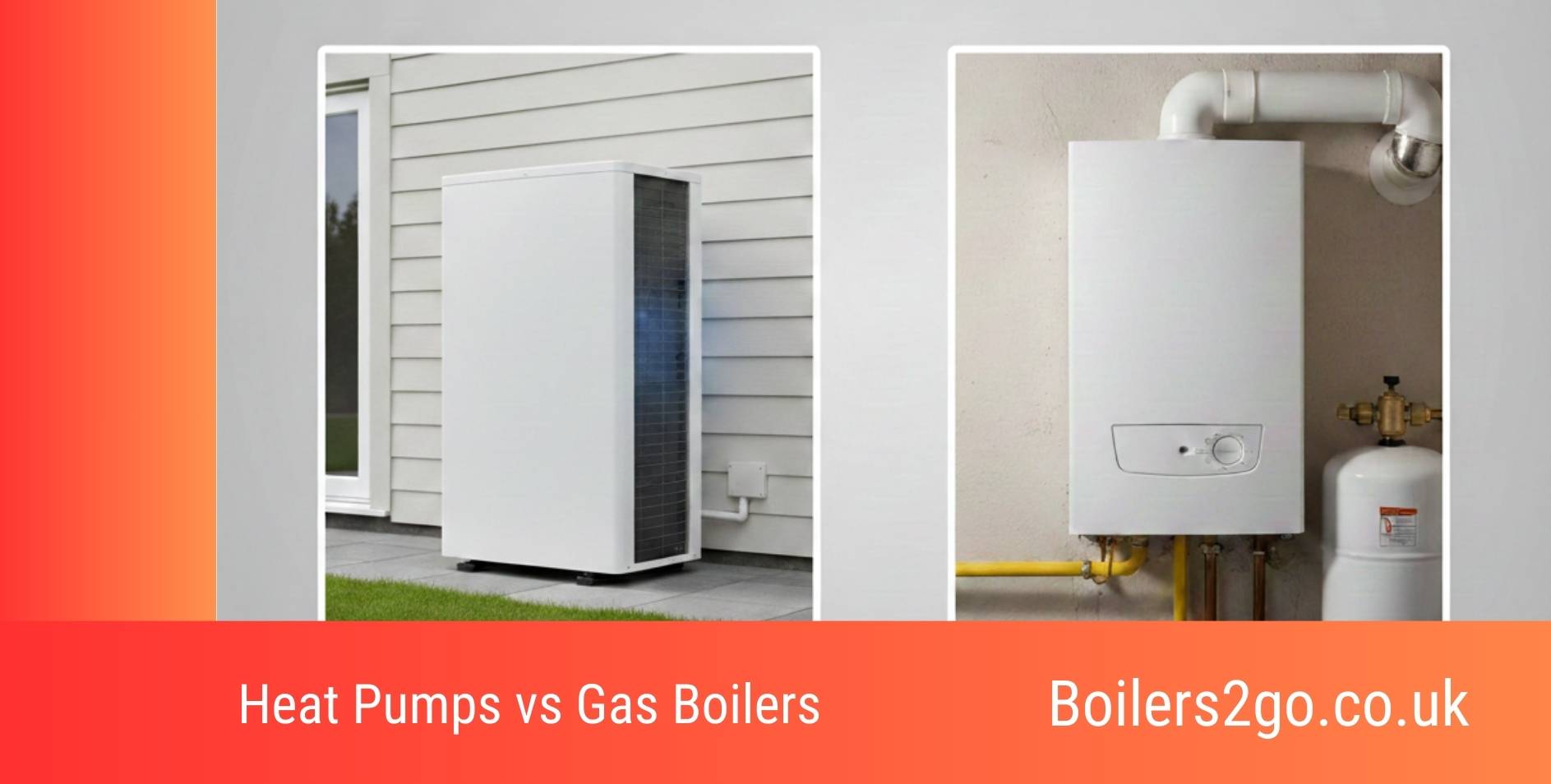
Heat pumps and gas boilers both keep UK homes warm and deliver hot water — but they operate on very different principles, and that affects efficiency, costs, carbon, and how your system feels in everyday use.
Where a gas boiler burns fuel to make heat, a heat pump moves heat from the air into your home. That difference ripples through everything from energy bills to emissions to upfront spending.
How Each System Works
A gas boiler takes natural gas or LPG and combusts it to heat water that feeds radiators or underfloor circuits. Modern condensing boilers are impressive — typically around 90–95% efficient — but you still lose a little energy in combustion.
An air-source heat pump (ASHP) uses electricity not to generate heat directly, but to transfer heat from outside air into your home. That’s why even on cold days it can deliver more heat than the electricity it uses, often with a seasonal coefficient of performance (SCOP) of 3–4, meaning 300–400% efficiency compared with the 90–95% of a gas boiler.
In simple terms:
Gas boilers convert fuel to heat. Heat pumps move heat from the air.
Real Hourly Running Costs for Heat Pumps Vs Gas Boilers
To make this tangible, below are hourly heating cost estimates for a typical cold day in UK winter, assuming the systems are matched appropriately to the home size and operating at a comfortable output.
These figures combine realistic fuel prices (mains gas ~8.5p/kWh; electricity for heat pump ~15p effective rate on a smart tariff) and typical system efficiencies.
Note: Your actual cost will vary with insulation, thermostat settings, outside temperature and usage patterns, but these figures are good practical guides for comparison.
Small Home (c. 70–90 m²)
A smaller home might need around 15–20 kW of heat when it’s cold out.
-
Gas boiler → ~£1.60–£2.20 per hour
-
Air-source heat pump → ~£1.80–£2.40 per hour
The heat pump is slightly higher here because electricity costs more per unit than gas, but the gap closes on a heat-pump-friendly electricity tariff.
Medium Home (c. 90–120 m²)
A 3-bed semi might draw around 20–30 kW of heat.
-
Gas boiler → ~£2.10–£2.90 per hour
-
Air-source heat pump → ~£2.30–£3.20 per hour
Even though the heat pump uses less energy overall, the higher unit cost of electricity keeps it roughly even with gas on typical tariffs. Tailored tariffs can swing the balance.
Large Home (c. 120–160 m²)
A bigger property might need 30–40 kW at peak demand.
-
Gas boiler → ~£2.80–£3.80 per hour
-
Air-source heat pump → ~£3.00–£4.20 per hour
Here the heat pump’s efficiency plays a bigger role, but electricity still tends to cost more than mains gas, so savings rely on using smart tariffs or off-peak pricing.
Ultra-Efficient Scenario (High Insulation + Smart Tariff)
If the house is well insulated and you’re on a low-cost heat-pump tariff (evening/weekend off-peak), many households see:
-
Heat pump running cost → ~£1.60–£2.50 per hour
-
Gas boiler running cost → ~£2.00–£3.00 per hour
In that situation, the heat pump can beat gas on cost as well as carbon.
Bills by the Year (Illustrative)
Looking at annual heating and hot water bills in a typical UK home:
-
Gas boiler → ~£900–£1,100 per year
-
Heat pump → ~£800–£1,200 per year (with smart/off-peak tariffs)
-
LPG boiler → ~£1,800–£2,200 per year
-
Oil boiler → ~£1,400–£1,800 per year
These figures help show why many urban homes still prefer gas, and why heat pumps are rapidly gaining traction where electricity tariffs and insulation support them.
Watch Our Video Comparison on Boilers vs Heat Pumps
Upfront Costs: What You Pay Today
The running cost argument only tells half the story. Upfront matters too.
A typical gas combi boiler install in a UK home usually sits in the £2,500–£4,500 range installed. An air-source heat pump install tends to be more — typically £8,000–£15,000 before grants.
Thanks to the Boiler Upgrade Scheme, you can claim £7,500 off the cost, which often brings a heat pump into the mid-range of investment. It’s still usually above a straight gas boiler swap, but it’s far closer than it used to be.
Comfort and Home Suitability
A heat pump delivers steady, gentle heat that works best when matched with low-temperature emitters like underfloor circuits or oversized radiators. Well-insulated homes with good airtightness get the most from heat pump technology.
Gas boilers deliver hotter flow temperatures and warm rooms quickly — which can feel more intuitive in older, draughtier homes or where insulation is harder to upgrade.
A heat pump also needs a suitable outdoor location for the unit. That’s easy in a detached home with a garden; trickier in city terraces or flats where space is tight.
Who Should Choose What?
For many UK homes today:
-
If you’re on the mains gas network, a modern gas boiler still makes excellent sense if upfront budget or insulation are constraints.
-
If your home is well insulated, you have outdoor space for the unit, and you’re happy to use tariffs that favour heat pumps, then an air-source heat pump can compete on cost and outperform on carbon.
-
For rural or off-grid homes, LPG or oil boilers still fill important roles — but heat pumps increasingly offer a compelling alternative if the building fabric is appropriate.
A Pragmatic Path for Most UK Households
For many people the answer isn’t “either gas or heat pump today.”
It’s:
-
Improve insulation and controls now — because that reduces bills with either system.
-
Replace an old boiler with a high-efficiency gas model if needed — for immediate reliability and comfort.
-
Plan for a heat pump transition when the home is ready — financially and physically — to maximise long-term savings and carbon benefits.
This staged approach avoids rushed decisions and spreads investment while still cutting costs and emissions over time.
Final Thought
Heating choice in the UK isn’t just about technology — it’s about the home you live in, the fuel available, the insulation you can achieve, and the way you use heat every day.
Whether you stick with gas today and plan for a heat pump later, or embrace electric heat now, the smartest moves are always the ones that fit your house and your lifestyle.

I’m Penny North, a home energy heating expert. My mission is to demystify new boilers and complex heating systems to help you achieve a warm, cosy home with lower energy bills and a smaller environmental footprint.