

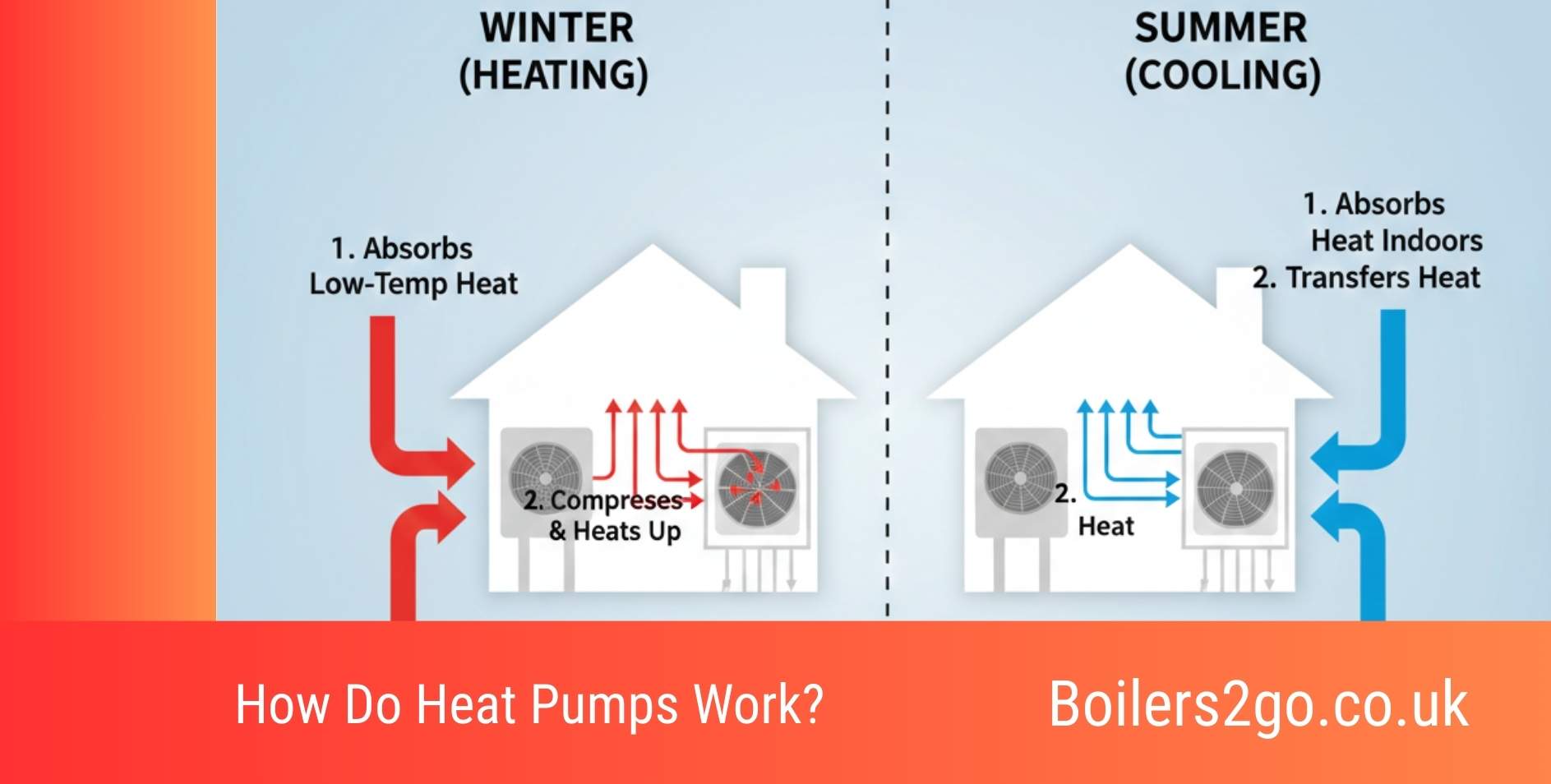
A heat pump doesn’t make heat in the way a boiler does. Instead, it moves heat from one place to another — a bit like a fridge, just working in reverse.
It pulls in low-level heat from the air, ground, or water, then upgrades it to a temperature that can warm your radiators, underfloor heating, or hot-water cylinder. That simple idea is why heat pumps are so efficient.
Heat moving, not heat making
Rather than burning gas or oil, a heat pump uses electricity to shift existing heat into your home.
Even cold air contains some heat. The ground and water hold even more. By moving that heat instead of creating it from scratch, a heat pump can typically deliver three to four units of heat for every unit of electricity used.
That’s why heat pumps have much lower running emissions — and why they behave differently from boilers.
What’s actually happening inside the system
Behind the scenes, all heat pumps use the same basic refrigeration cycle. It sounds complex, but it’s easier to understand when you break it down.
1. Picking up heat from outside
A cold liquid refrigerant flows through the outdoor coil. Even in winter, the air, ground, or water around it contains usable heat.
That heat causes the refrigerant to boil and turn into a low-pressure gas. Energy has now been absorbed from outside.
2. Turning low heat into useful heat
The gas then moves into the compressor. Compressing it raises both its pressure and temperature, transforming it into a hot, high-energy vapour.
This is the point where “low-grade” heat becomes useful for heating a home.
3. Releasing heat indoors
The hot vapour flows through an indoor heat exchanger connected to your radiators, underfloor heating, or hot-water cylinder.
As the refrigerant gives up its heat, it warms your heating system and condenses back into a liquid.
4. Resetting and starting again
That liquid passes through an expansion valve, which drops its pressure and temperature.
Now cold again, it returns to the outdoor coil to collect more heat — and the cycle repeats continuously while the system is running.
Modern heat pumps adjust their speed automatically, so they’re always matching output to demand rather than switching harshly on and off.
How air source heat pumps do this in cold weather
Air source heat pumps often raise eyebrows because they still work when it’s cold outside.
The key is the refrigerant. It has a very low boiling point, often around -40°C, which means it can evaporate and collect heat even when outdoor temperatures drop to -15°C or below on modern systems.
The outdoor unit pulls in air, extracts what heat it can, and passes that energy into the indoor system. It’s not magic — just physics working efficiently.
What’s different about ground and water source heat pumps
Ground source heat pumps use buried pipe loops filled with a water-antifreeze mix. The soil stays at a fairly stable temperature year-round, which makes heat collection consistent and efficient.
Water source heat pumps do the same thing using lakes, rivers, or boreholes, where temperatures are often even more stable.
In both cases, once the heat reaches the heat pump unit, the process inside is exactly the same as any other system. Only the heat source changes.
Heating and cooling from the same system
Many heat pumps can also cool your home.
They use a reversing valve that flips the process around. Instead of bringing heat inside, the system absorbs heat from indoors and releases it outside.
That’s why the same unit can provide heating in winter and cooling in summer — without needing separate systems.
Why this matters in real homes
Because heat pumps move heat gently and continuously, they work best with lower flow temperatures and steady operation. That’s why they pair so well with underfloor heating and well-sized radiators.
Once set up correctly, they’re designed to tick along quietly and efficiently rather than blasting heat in short bursts like a traditional boiler.
The takeaway
Heat pumps work by relocating heat that already exists — not by creating it through combustion. That single difference is what makes them efficient, low-carbon, and well suited to modern, well-insulated homes.

With years of experience in boilers and home improvements in general, Myles Robinson is a passionate advocate for making home heating simpler, safer, and more affordable for households across the UK. With years of experience in the heating industry, Myles combines hands-on knowledge with a focus on customer-first service, helping homeowners choose the right boiler, understand their systems, and keep their heating running efficiently all year round. His articles break down complex topics into clear, practical advice you can trust.