

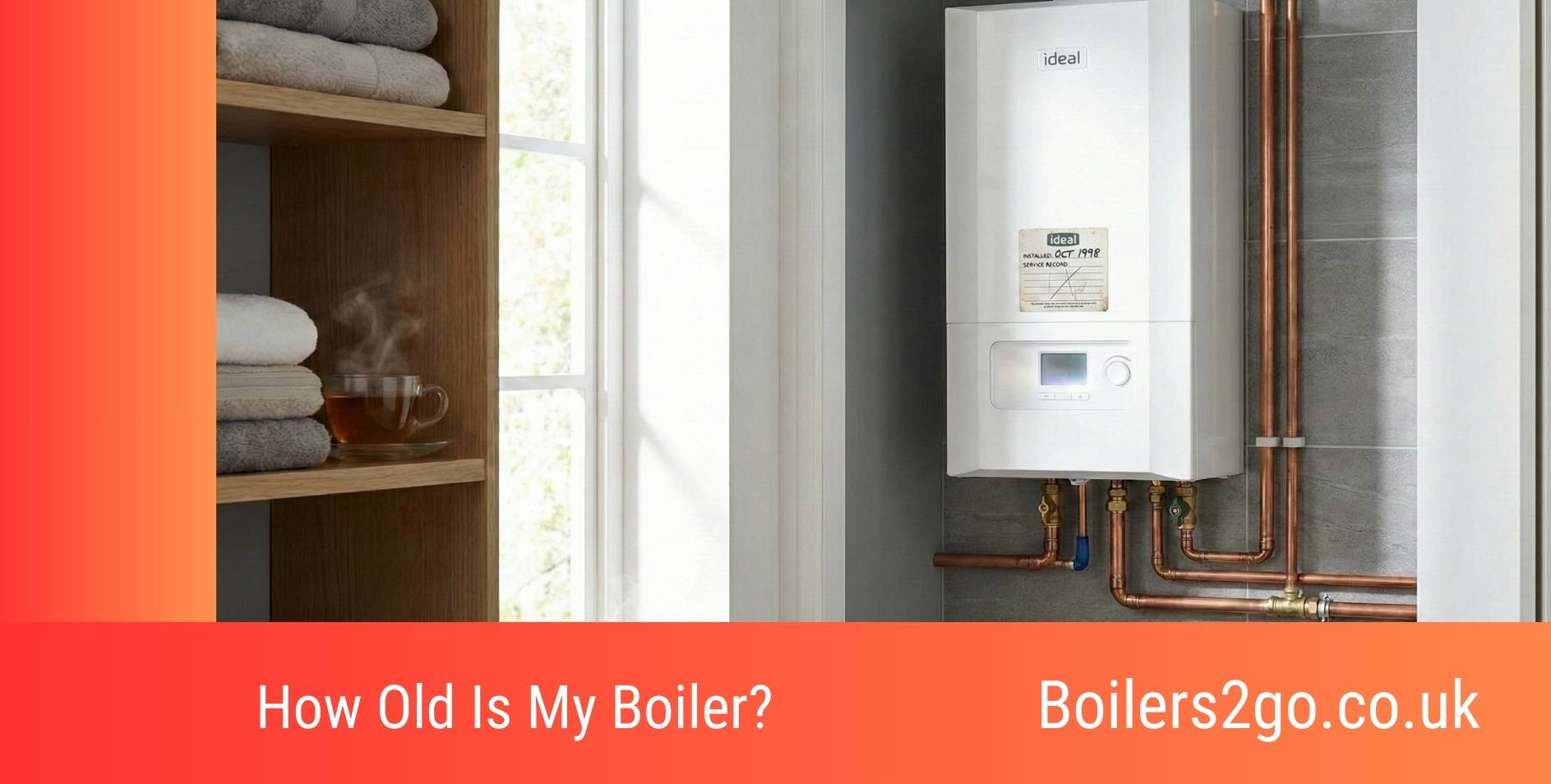
Knowing the age of your boiler isn’t just a matter of curiosity; it’s a vital piece of information for any UK property owner, directly impacting everything from your annual heating bills to the overall safety and reliability of your home’s central heating system.
Whether you own a combi, system, or conventional boiler, this in-depth guide is designed to walk you through the simple, yet often tricky, process of determining its age, helping you make informed decisions about its maintenance or an eventual boiler replacement.
Where Can I Find the Boiler Serial Number?
You can find the boiler serial number, which is a key piece of information for determining its age, on a sticker or label directly on the boiler casing itself, or within the official documentation.
This serial number is like your boiler’s unique fingerprint, a long string of letters and numbers (an SEO entity) that contains coded information about its date of manufacture.
I recommend checking three primary places to locate this crucial serial number:
- On the Boiler’s Exterior: Look for a sticker on the underside of the boiler, the side panel, or, most commonly, on the inside of the drop-down flap or panel on the front. This label often features a barcode next to the serial number.
- The Benchmark Certificate: This is an important piece of paperwork—often found in your installation manual—that a Gas Safe registered engineer fills out upon installation and during annual services. It should clearly record the installation date and often includes the boiler’s serial number. This certificate is particularly useful for landlords needing proof of compliance.
- The Installation Manual: If the sticker is faded or missing (a common issue with an old boiler), the owner’s manual or installation instructions provided with the boiler system should list the serial number and model information.
How Do I Decode My Boiler’s Serial Number to Find the Age?
Once you have the serial number, you can decode your boiler’s age by identifying the specific digits or characters within the sequence that correspond to the year of manufacture and, sometimes, the week.
Unfortunately, there isn’t one universal code; each boiler manufacturer, from giants like Worcester Bosch and Vaillant to Ideal and Baxi, uses their own unique format.
Here is a simplified guide to decoding the serial numbers for some of the UK’s most popular boiler brands:
- Baxi Boilers: For models manufactured after 2003, look at the 4th and 5th digits of the serial number—these typically indicate the year of manufacture. The 6th and 7th digits often represent the week.
- Vaillant Boilers: Vaillant serial numbers are often long (20 to 28 characters). The 3rd and 4th characters often represent the year of boiler manufacture, with the following two numbers indicating the assembly week.
- Ideal Boilers: The coding varies greatly by model (e.g., Logic, Mini, Classic). For newer models (post-2015), the date may be clearly printed at the end in DD/MM/YY format. For older Ideal Classic models, the third cluster of four digits often contains the year and week of production.
- Worcester Bosch Boilers: These can be tricky as the serial numbers were often designed for internal use. For many models, the manufacturing date is hidden in the 11th, 12th, and 13th digits or requires specific decoding. If in doubt, contacting Worcester Bosch or a Gas Safe engineer with the full serial number is the quickest solution.
Pro Tip: If you can’t decipher the code, don’t worry! Every manufacturer has a dedicated technical support line. Give them the serial number, and they will tell you the exact year your appliance was produced, providing a definitive answer to how old is my boiler.
Why is Knowing My Boiler’s Age So Important?
Knowing the age of your boiler is incredibly important because it allows you to assess its reliability, efficiency, and future maintenance costs, ultimately helping you save money and maintain safety.
From my 30 years in this industry, I’ve seen that a boiler’s age directly correlates with its performance and potential risks:
Efficiency and Energy Bills
Most modern condensing boilers (installed since the early 2000s) are A-rated and have an energy efficiency of over 90%. Conversely, older, non-condensing boiler models can have an efficiency rating as low as G, meaning they waste over 30% of the fuel they consume. The difference is stark: an older heating system will simply cost you significantly more to run.
- The 10-15 Year Lifespan: While some boilers can last longer, the average boiler lifespan for a UK domestic boiler is between 10 and 15 years. Once a boiler passes the 10-year mark, it’s generally wise to start thinking about a potential boiler replacement.
- Landlord Responsibilities: For UK landlords, efficiency isn’t just about saving money; it’s about providing tenants with an adequate, cost-effective heating solution. An inefficient, aged boiler can lead to tenant complaints and higher utility costs.
Reliability and Breakdown Risk
As internal components like the heat exchanger, pump, and valves age, wear and tear become inevitable. An older boiler is simply far more prone to frequent and costly breakdowns, particularly during the coldest winter months when you rely on your central heating the most. Finding replacement parts for discontinued models can become a nightmare, leading to long periods without heat or hot water.
Safety and Peace of Mind
The most critical factor is safety. Older boilers, especially those that have not been maintained, pose a higher risk of developing faults, including the potential for carbon monoxide (CO) leaks—an invisible, odourless, and deadly gas. Modern boilers have better safety features, but an annual boiler service is non-negotiable for any unit, especially an older one.
What Alternatives are There if I Can’t Find the Serial Number?
If the boiler’s serial number is nowhere to be found, there are several reliable alternatives you can use to determine its age.
- Check the Boiler Paperwork: As mentioned, the Benchmark Certificate or installation invoice will contain the date the appliance was first installed. This is a highly accurate reflection of your boiler’s age within your property.
- Look for the ‘G.C. Number’: Every boiler model has a unique ‘Gas Council’ or ‘GC Number’. While this doesn’t tell you the exact manufacture date, it is a code that can be used by a Gas Safe engineer to look up the start and end years of that particular model’s production. If your boiler is an old, discontinued model, this number can narrow down the age range considerably.
- Check the Energy Performance Certificate (EPC): If you are a landlord or recently bought your home, the property’s EPC may contain details about the heating system, including the type and sometimes the age of the boiler, as this information is used to calculate the home’s energy rating.
- Contact a Gas Safe Registered Engineer: An experienced heating engineer will be able to look at the boiler model, the style of the casing, and internal components to provide a very good estimate of the age of your appliance. They often have access to industry-specific databases that can decode even the most obscure serial numbers.
Time for a New, Efficient Boiler? Request a Quote from Boilers 2 Go
You’ve done the hard work and found the answer to how old is my boiler. If that age is pushing past 10 or 12 years, you’re likely sitting on an inefficient, high-risk, and costly appliance. Continuing to pump money into an ageing system for frequent boiler repairs simply doesn’t make financial sense in the long run, and it puts your peace of mind at risk.
At Boilers 2 Go, we specialise in supplying and installing A-rated, energy-efficient boilers across the UK. Upgrading your home heating system is one of the single best investments you can make in your property, drastically cutting your energy bills and providing you with a reliable source of warmth and hot water for the next decade or more.
Don’t wait for a complete system breakdown in the middle of winter!
Take the next step now: Click the link below or call our team to get a free, no-obligation new boiler quote. We make the process simple, quick, and hassle-free, matching you with the perfect new energy-efficient boiler for your UK home or property.
FAQs
Does the age of my boiler affect my home insurance?
The age of your boiler can indeed affect your home insurance, particularly if you rely on a home emergency cover or boiler breakdown policy. Many insurers place an age limit, typically around 12 to 15 years, on the boiler they are willing to cover for repairs.
If your boiler is older than this, your policy excess may be higher, or you may find that the policy will only cover a repair up to a certain value, encouraging you towards a full replacement. Always check the specific terms and conditions of your policy.
Can the model number help me determine the age of my boiler?
Generally, the model number (e.g., ‘Logic Plus’ or ‘Combi 30’) only identifies the type and series of your boiler, not the specific date it was manufactured. The model number remains the same for a production run of several years.
You must use the unique serial number (or the installation date on the Benchmark Certificate) to pinpoint the exact age of your individual appliance.
What is the average cost to repair an old boiler compared to a replacement?
For an older boiler (10+ years), the cost of repairs can quickly become uneconomical. A major repair, such as replacing the heat exchanger or circuit board, can easily run into the hundreds of pounds, sometimes reaching over £1,000.
When you factor in the reduced efficiency and lack of a long warranty on a repaired old boiler, investing that money into a new, A-rated boiler—which comes with a long-term guarantee (up to 12 years)—often provides better long-term value and significant savings on energy bills.
Are there any government grants available in the UK for replacing an old, inefficient boiler?
Yes, there are often government-backed schemes available in the UK, such as the ECO4 scheme (Energy Company Obligation). These schemes are generally aimed at helping low-income or vulnerable households improve their home’s energy efficiency.
If your current boiler is very old and non-condensing (a G-rated boiler), you may be eligible for a grant to cover some or all of the cost of a new, highly efficient heating system. I recommend searching for current UK government and local council energy-saving schemes for the latest information.
As a landlord, is there a legal age limit for boilers in my rental properties?
While there is no specific legal maximum age limit for a boiler in a rented property in the UK, landlords have a legal obligation to ensure that all gas appliances, including the boiler, are safe.
This is confirmed by an annual Gas Safety Check carried out by a Gas Safe registered engineer, resulting in a Landlord Gas Safety Record (CP12). If an older boiler is deemed unsafe or not working correctly, the engineer will report it, and the landlord must address the issue, which often means replacement. The age of the boiler indirectly forces the landlord to consider replacement due to safety and repair costs.
Stay warm, The Boilers2Go Team

I’m Penny North, a home energy heating expert. My mission is to demystify new boilers and complex heating systems to help you achieve a warm, cosy home with lower energy bills and a smaller environmental footprint.