

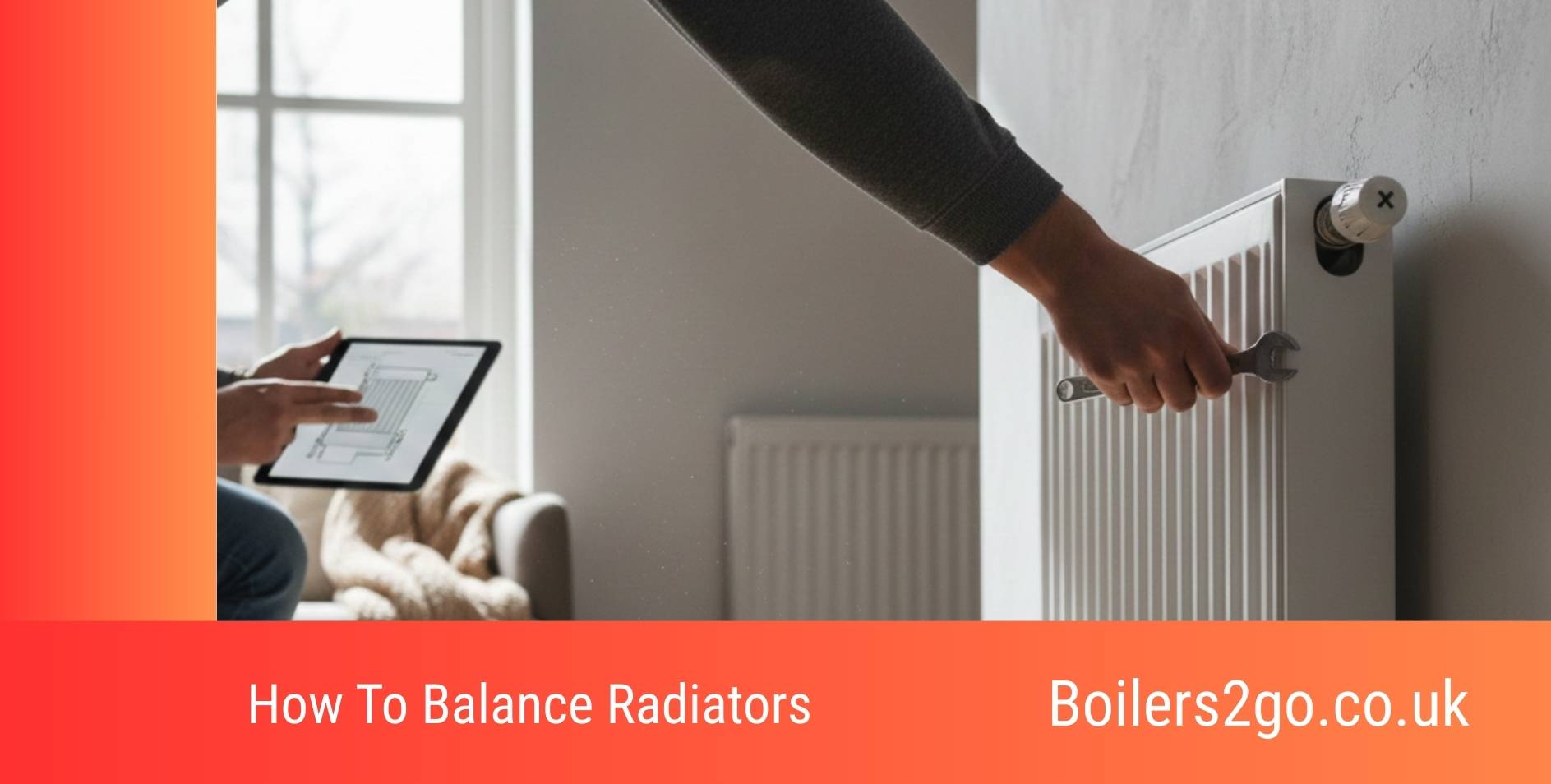
Balancing your radiators is one of those jobs most UK homeowners have never heard of — yet it’s often the reason one room feels like a sauna while another never quite warms up. Done properly, radiator balancing helps hot water flow evenly around your home, reduces boiler strain, and improves comfort without touching your thermostat.
Put simply: balanced radiators = even heat, calmer boiler, less wasted energy.
What “balancing radiators” actually means (in real life)
In a typical UK central heating system, hot water leaves the boiler and travels through radiators in a loop. The problem is distance.
Radiators closest to the boiler naturally steal more hot water first. They heat up quickly and aggressively, while radiators further away get whatever’s left — often lukewarm and slow.
Balancing radiators means deliberately slowing down the “greedy” radiators so hot water has time to reach every room.
Benefits
-
Uneven flow → uneven room temperatures → higher bills and poorer comfort
-
Balanced flow → even heat-up times → smoother, more efficient heating
Why balancing radiators makes such a difference
When radiators aren’t balanced, the heating system compensates in inefficient ways. The boiler runs longer, pumps work harder, and thermostats get confused by hot and cold pockets around the house.
A balanced system changes that.
You’ll usually notice:
-
Rooms heating up at roughly the same time
-
Fewer cold spots and fewer overheated rooms
-
A boiler that cycles less aggressively
-
TRVs behaving more predictably
-
Heating that just feels… calmer
It doesn’t magically halve your bills, but it removes wasted effort, which is often where unnecessary costs creep in.
When radiator balancing is actually worth doing
Balancing isn’t something you need every week — but there are clear moments when it makes sense.
It’s usually worth checking if:
-
Some radiators get hot fast while others lag behind
-
Certain rooms are always colder than the rest of the house
-
You’ve had a new boiler fitted or pipework altered
-
Radiators have been replaced or added
-
The heating “feels different” than it used to
In UK homes, especially older ones, balancing is often skipped after installation — so many systems have never been properly balanced at all.
How radiator balancing works (without the jargon)
Every radiator has two valves:
-
One controls temperature (often a TRV)
-
The other — the lockshield valve — controls water flow
Balancing is done using the lockshield valves only.
The idea isn’t to “set” radiators once and forget them forever. It’s to gently nudge water flow so each radiator warms up at a similar pace.
In practical terms:
-
Fast, very hot radiators get slightly restricted
-
Slower, cooler radiators are allowed more flow
-
The system settles into a more even rhythm
Engineers often aim for a temperature drop of around 10–12°C between the flow and return pipes on each radiator — but for homeowners, the real test is whether rooms heat evenly.
Common mistakes that undo balancing (and how to avoid them)
A few things regularly trip people up:
-
Skipping bleeding first
Trapped air changes how radiators heat, making balancing inaccurate. -
Over-adjusting valves
Lockshield valves respond to tiny movements. Big turns usually overshoot the fix. -
Fighting the TRVs
TRVs should be open during balancing — otherwise they keep changing the result. -
Ignoring hidden radiators
Spare rooms, hallways and box rooms still affect system flow.
Balancing is slow, slightly fiddly, and incremental — which is exactly why it works.
Tools you actually need (not a toolbox)
You don’t need specialist equipment. Most people manage with:
-
A radiator bleed key
-
A small adjustable spanner
-
A basic thermometer (optional, but helpful)
No draining, no pipe cutting, no boiler adjustments.
How often radiators need balancing in UK homes
For most homes:
-
Once a year is plenty, ideally before winter
-
Any time after major plumbing or radiator changes
-
If the heating behaviour noticeably changes
If nothing’s changed and the house heats evenly, you can leave it alone.
Balancing radiators after fitting new ones
New radiators often throw systems out of balance — even if they’re the “right size”.
That’s because:
-
New radiators heat faster
-
Old ones may already be partially restricted
-
Pipe routes rarely distribute flow evenly
After adding or replacing radiators, balancing helps the system re-learn how to share heat properly.
The quiet benefit most people miss
Balanced radiators don’t just improve comfort — they also reduce system stress.
More even flow means:
-
Less pump strain
-
Fewer pressure swings
-
Quieter operation
-
More predictable boiler behaviour
Over time, that can mean fewer callouts and longer component life.
The takeaway
Balancing radiators doesn’t make your boiler more powerful.
It makes your heating fairer.
Every room gets its share, the boiler stops overworking, and your home feels consistently warm instead of hit-and-miss.
For something that costs nothing but a bit of time, it’s one of the most underrated upgrades you can make to a UK central heating system.

I’m Penny North, a home energy heating expert. My mission is to demystify new boilers and complex heating systems to help you achieve a warm, cosy home with lower energy bills and a smaller environmental footprint.