

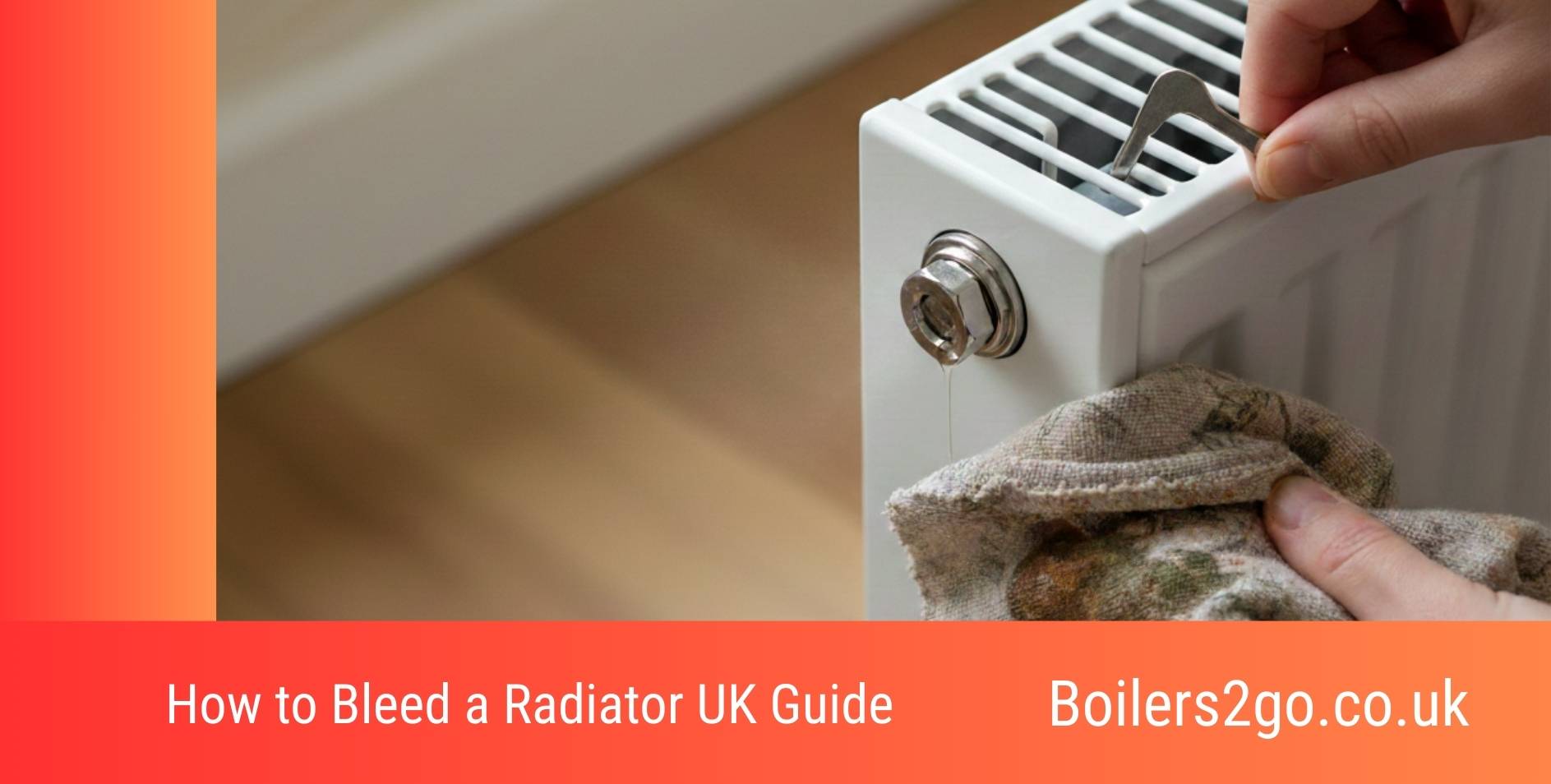
If a radiator feels cold at the top, makes weird gurgling noises, or just doesn’t heat the room properly, chances are it needs bleeding. This sounds dramatic, but it’s actually one of the easiest DIY jobs you can do in a UK home — no tools box, no plumbing experience, no panic required.
Bleeding a radiator simply means letting trapped air out so hot water can flow properly again. Done right, it can turn a useless radiator back into a warm one in minutes.
What “bleeding a radiator” actually means (in real life)
Your central heating works by pumping hot water from the boiler, through pipes, and into each radiator. The radiator then warms the room.
Over time, small pockets of air sneak into the system. Air always rises, so it collects at the top of the radiator. When that happens, hot water can’t fully fill the radiator — which is why the top stays cold and the bottom feels warm.
Bleeding releases that trapped air.
Air out → water fills the space → radiator heats properly again.
That’s it.
What you need (nothing fancy)
You don’t need a toolbox or special kit. Most people only need:
-
A radiator bleed key (cheap, fits most UK radiators)
-
A towel or cloth
-
A small cup or jug for drips
Some radiators don’t need a key at all — they use a flat screwdriver or small Allen key instead.
Step-by-step: how to bleed a radiator safely
1. Turn the heating off and wait
Switch the boiler or thermostat off and let the radiators cool down.
Never bleed a radiator while it’s hot — hot water can spray out and burn you.
If the radiator feels cool to the touch, you’re good to go.
2. Find the bleed valve
Stand facing the radiator.
Look at the top corner, usually on one side.
You’ll see a small metal valve — often square, sometimes with a slot.
Put your towel underneath and hold the cup just below the valve.
3. Open the valve slowly
Insert the bleed key (or screwdriver) and turn it anti-clockwise about a quarter turn.
You should hear a hissing sound.
That’s air escaping — exactly what you want.
4. Close it when water appears
Once the hissing stops and water starts to drip steadily, turn the valve clockwise to close it.
Don’t crank it tight. Just snug is fine.
Move on to the next radiator.
5. Repeat around the house
Start with:
-
Radiators furthest from the boiler
-
Then upstairs radiators (if you have them)
This helps push trapped air out properly instead of moving it around the system.
6. Check the boiler pressure
Bleeding releases air — and a little water — so boiler pressure can drop.
Look at the pressure gauge on your boiler:
-
Ideal cold pressure is usually 1.0–1.5 bar
If it’s lower, top it up using the filling loop under the boiler (instructions are usually inside the boiler flap).
Once pressure is back in range, turn the heating on and check the radiators again.
“My boiler pressure dropped — is that bad?”
No — that’s normal.
Bleeding removes air and water, so pressure can fall slightly.
Top it up once, then keep an eye on it.
If pressure keeps dropping over days or weeks, that’s not bleeding — that’s a leak or another issue that needs an engineer.
No bleed key? You still have options
-
Slotted valve → flat-head screwdriver
-
Hex/Allen valve → small Allen key
-
Nothing fits → don’t force it — a damaged valve causes leaks
Radiator keys cost a few quid and are worth keeping in a drawer.
Signs your radiator needs bleeding (not just cold at the top)
People often miss these:
-
Gurgling or bubbling noises
-
Radiators taking ages to warm up
-
Some radiators hot, others barely warm
-
Boiler sounds louder than usual
If you notice any of these, bleeding is always the first thing to try.
How often should you bleed radiators?
For most UK homes:
-
Once a year, ideally before winter
Older systems, noisy heating, or frequent pressure drops may need it more often.
If you’re bleeding radiators every few weeks, something else is wrong — bleeding shouldn’t be a constant job.
Common mistakes (and how to avoid them)
-
Bleeding while heating is on → burn risk
-
Over-tightening the valve → leaks later
-
Forgetting boiler pressure → heating won’t work
-
Ignoring repeat problems → sludge or leaks get worse over time
Bleeding fixes air problems. It doesn’t fix sludge, corrosion or failing valves.
One last thing to know
Bleeding radiators is maintenance, not repair.
If a radiator still won’t heat after bleeding — especially if the bottom stays cold — that usually points to sludge or blockage, not air.
At that point, it’s time to stop DIY and get advice.
Bottom line
If your radiators feel cold at the top, sound like they’re boiling, or just aren’t pulling their weight, bleeding them is the quickest, cheapest fix you can try — and most UK homeowners can do it safely in under 10 minutes.

I’m Penny North, a home energy heating expert. My mission is to demystify new boilers and complex heating systems to help you achieve a warm, cosy home with lower energy bills and a smaller environmental footprint.