

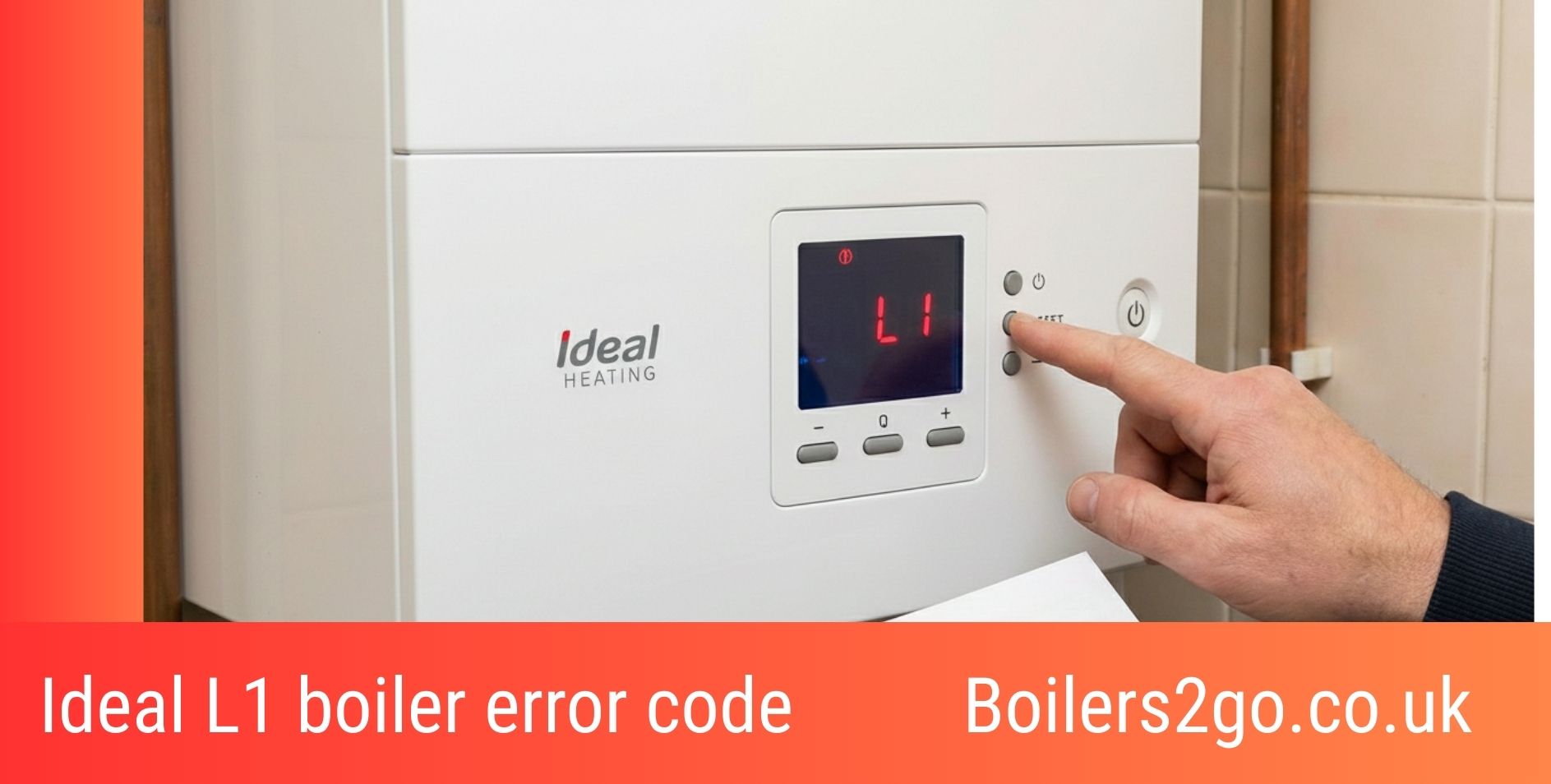
A boiler error code is never a welcome sight—especially on a cold morning when you need heating and hot water most. The Ideal Boiler L1 fault code is one of the most common issues our customers encounter. It’s important to know what it means, why it appears, and what you can do next.
This guide breaks down the L1 fault for typical UK homes, offering practical steps and clear advice on when to tackle a problem yourself and when to call a Gas Safe engineer.
Understanding the Ideal Boiler L1 Fault Code
The L1 fault code on an Ideal boiler is a built-in safety feature. When it displays, the boiler has detected an abnormal temperature in the hot water flowing out of the system. Usually, this means the water leaving the boiler—measured by the flow thermistor—is either too hot or colder than expected. To protect the system, the boiler goes into lockout. This shuts down operation to prevent further problems and ensure safety for your home.
In plain terms, the L1 code tells you that water temperature or circulation isn’t right. Acting quickly can prevent more costly repairs and keep your heating reliable.
What Causes the L1 Fault Code?
Several common issues in UK homes can lead to an L1 error on your Ideal boiler:
Faulty Flow Thermistor
The flow thermistor is a sensor that measures the temperature of the water flowing out of your boiler. If this part fails or gives incorrect readings, the boiler’s control board may think the water is outside safe limits and trigger a lockout. This is a frequent cause of the L1 code.
Limescale or Sludge Build-Up
If you live in a hard water area or your heating system hasn’t been maintained regularly, limescale can coat the inside of pipes and the heat exchanger. Rust and other debris can also create “sludge.” Both block or restrict water flow, causing parts of the boiler to overheat, which again can trigger the L1 code. Signs include cold spots on radiators and knocking sounds from the system.
Pump Problems (Failure or Blockage)
The heating pump circulates water throughout your central heating system. If the pump fails or gets blocked, water may stagnate in the system. When water isn’t moved as it should be, it can overheat in the boiler—leading to the error code.
PCB (Printed Circuit Board) Issues
The boiler’s PCB is its main control board. If wiring is faulty or if the board itself malfunctions, it may misread safe water temperatures or fail to manage water flow. Although less common, PCB faults can cause the L1 code and require professional attention.
Immediate Steps If You See the L1 Fault
Seeing the L1 code doesn’t always mean a major fault, but it’s a warning sign you shouldn’t ignore. Here are practical steps you can take:
1. Reset the Boiler
- Switch off the boiler at the main control.
- Wait two to three minutes.
- Switch it back on.
Sometimes, the system will clear the code and resume normal operation, especially if the issue was a temporary sensor blip or power surge.
2. Check for Obvious Signs of Blockage
- Do any radiators have cold spots or take longer to heat up?
- Is your boiler making loud, unusual noises?
- Have you noticed slow heating or persistent air in the system?
These signs suggest limescale or sludge build-up.
3. Listen for Pump Operation
- Can you hear the heating pump running when the boiler is on?
- Gently feel the area where the pump is (some systems have an external pump; many are in the boiler casing).
If the pump is unusually hot or silent, there might be a blockage or motor problem.
When to Call a Gas Safe Registered Engineer
If you’ve reset the boiler and checked for visible blockages but the error persists, don’t attempt to dismantle the boiler or access its internals. Engineering tasks involving boiler casings, pumps, wiring, or sensors must always be carried out by a Gas Safe registered engineer.
You should call for professional help if:
- The L1 code returns after resetting the boiler.
- There are signs of water leaks, persistent noises, or unusual smells.
- You suspect a faulty pump, thermistor, or circuit board.
- You are unsure or uncomfortable with any troubleshooting step.
It’s a legal requirement in the UK that all boiler repairs involving gas or internal parts are done by a Gas Safe registered engineer. For added peace of mind, you can check your engineer’s credentials on the official Gas Safe Register.
Why the L1 Fault Matters
The L1 fault code exists to protect both your boiler and your household. It reduces the risk of overheating, stops preventable damage, and highlights issues before they become larger problems, like a cracked heat exchanger (often one of the most costly fixes).
Ignoring a persistent L1 code or repeatedly resetting the boiler can lead to:
- Increased repair bills
- Boiler component failure
- Voided warranty or home insurance
- Higher risk to your property’s safety
Preventing L1 Faults in the Future
Routine maintenance is the simplest, most cost-effective way to keep your Ideal boiler working efficiently. To reduce the chance of L1 and other fault codes:
- Book an annual boiler service with a Gas Safe engineer.
- Ask about fitting a magnetic filter (especially in older systems or hard water areas).
- Use inhibitor chemicals as recommended to slow scale and sludge build-up.
- Run your heating occasionally in warmer months to keep water moving.
- Check pressure levels regularly and bleed radiators if needed.
Key Takeaways
- The Ideal Boiler L1 fault code means there is a problem with water temperature or circulation.
- Causes include a faulty thermistor, limescale or sludge build-up, pump problems, or control board issues.
- You can reset the boiler and check for obvious signs of blocked radiators, but do not dismantle the boiler.
- Always call a Gas Safe registered engineer if the code remains after basic checks or if you’re in doubt.
For more hassle-free advice, installation, and servicing, visit Boilers2Go’s help and support pages. Reliable heating starts with clear guidance and professional support—so you can keep your home warm and safe, all year round.
FAQS
What does the L1 fault code mean on an Ideal Logic boiler?
The L1 fault code on an Ideal Logic boiler indicates a problem with the water flow temperature. It’s a safety lockout triggered when the boiler detects that the water leaving the boiler is too hot or too cold, often due to circulation issues.
Are Ideal boilers prone to specific fault codes?
Like any boiler, Ideal models can display fault codes when issues arise. Common codes include L1 (water flow temperature issue), L2 (flame loss), and F1 (low pressure). These codes are designed to protect the boiler and ensure safety.
How do I reset an Ideal boiler after an L1 fault?
To reset an Ideal boiler, press and hold the reset button (usually marked with a flame symbol) for a few seconds. If the fault persists, it’s best to consult a Gas Safe registered engineer.
What maintenance does an Ideal boiler need to prevent faults?
Regular servicing by a Gas Safe engineer is essential. For Ideal boilers, this includes checking the heat exchanger, cleaning the condensate trap, and ensuring the flow thermistor and pump are functioning correctly.
Can I fix an L1 fault on my Ideal boiler myself?
You can try simple checks like topping up the pressure or thawing a frozen condensate pipe. However, diagnosing and repairing internal components like the flow thermistor or pump should be left to a professional.
What is the warranty coverage for Ideal boilers?
Ideal boilers typically come with warranties ranging from 2 to 12 years, depending on the model. To maintain warranty coverage, the boiler must be serviced annually by a qualified engineer.
Why does my Ideal boiler keep showing the L1 fault code?
Recurring L1 faults could indicate persistent issues like limescale buildup, a failing pump, or a faulty thermistor. These require professional diagnosis and repair.
Are Ideal boilers suitable for hard water areas?
Ideal boilers can be used in hard water areas, but it’s recommended to install a magnetic filter and use a water softener or chemical inhibitors to prevent limescale buildup.
What should I do if my Ideal boiler’s condensate pipe freezes?
Gently thaw the pipe using warm (not boiling) water or a hot water bottle. To prevent freezing, consider insulating the pipe or installing a trace heating system.
How can I check if my Ideal boiler is still under warranty?
You can check your boiler’s warranty status by contacting Ideal Heating directly or visiting their website with your boiler’s serial number.

I’m Penny North, a home energy heating expert. My mission is to demystify new boilers and complex heating systems to help you achieve a warm, cosy home with lower energy bills and a smaller environmental footprint.