

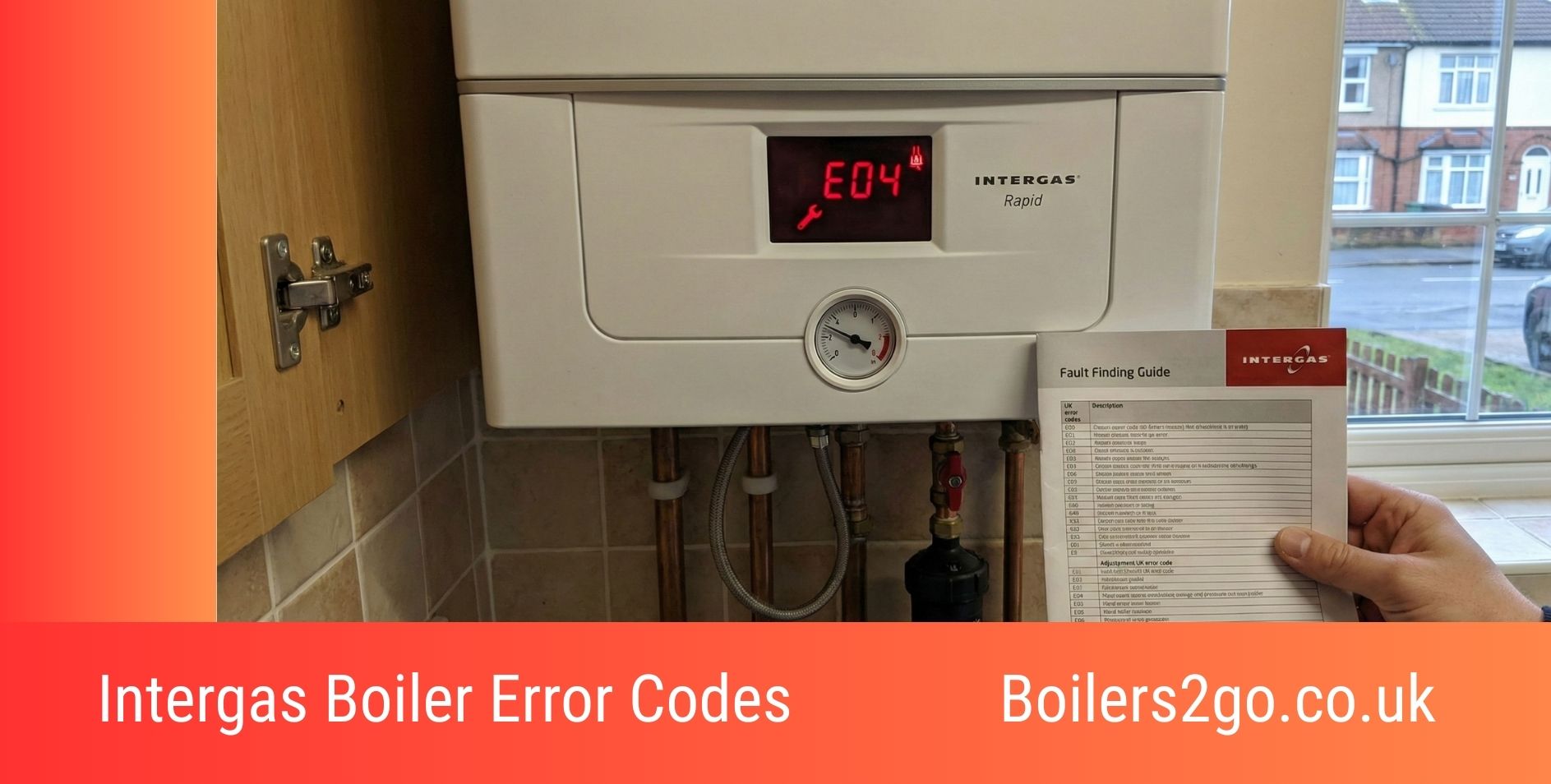
If you own an Intergas boiler – whether it’s the popular Rapid, HRE, ECO RF or Xtreme range – you’ll know they’re reliable, efficient combi boilers that rarely let you down. But like any modern gas boiler, when something does go wrong they flash up an error code rather than just stopping completely. That code is actually trying to help you (and your engineer) pinpoint the exact fault quickly.
This guide is written for UK homeowners and landlords who are staring at a blinking display in a cold house wondering “what on earth does E05 mean?” We’ll explain the most common Intergas fault codes, what they usually point to, safe DIY checks you can do yourself, and – most importantly – when it’s time to put the tools down and call a Gas Safe registered engineer.
Why Do Intergas Boilers Show Error Codes?
Intergas boilers are clever. Instead of dozens of moving parts like older boilers, they use a unique two-in-one heat exchanger design that’s simple and robust. Because there are fewer components to fail, when a problem does occur the boiler’s electronics can usually tell you exactly what’s wrong.
Error codes appear for two main reasons:
- A sensor has detected something outside normal operating limits (pressure, temperature, flame, airflow etc.)
- A safety device has tripped to protect you and the appliance
The codes are shown as a letter followed by a two-digit number (e.g. E05, H03, EA) and sometimes flash alternately with the current temperature.
Most Common Intergas Boiler Fault Codes and What They Mean
Here are the error codes Intergas owners in the UK see most often, based on real call-outs across terraced houses, semis and flats:
E01 – Ignition Failure / No Flame Detected
The boiler tried to light but couldn’t establish a flame.
Common causes:
- Gas supply turned off at the meter or isolation valve
- Very low incoming gas pressure (common in cold weather when everyone turns heating on)
- Blocked or dirty burner (needs professional clean)
- Faulty ignition electrode or lead
E05 / E06 – Overheat Fault
The boiler has got too hot and shut down for safety.
Typical reasons:
- Circulating pump failed or seized
- Blocked heat exchanger (limescale or sludge)
- Air in the system
- Thermistor fault
E07 – Flue / Ventilation Problem
The boiler isn’t getting enough air or the flue gases aren’t clearing properly.
Often seen when:
- External flue terminal blocked by leaves, snow or a wasp nest
- Internal air intake grille clogged with dust
- Flue seal perished (common after 8–10 years)
H03 / EA – Fan Fault
The fan that pushes flue gases out isn’t running at the correct speed.
Usually:
- Fan motor failing
- Venturi blocked with dust or spider webs
- PCB not reading fan speed correctly
Low Pressure Fault (often shown as “LP” or flashing pressure gauge)
Not strictly an error code but one of the most frequent issues.
Causes:
- Small leak on radiators or pipework
- Recent bleeding of radiators
- Faulty pressure relief valve (PRV) dripping outside
Frozen Condensate Pipe (usually E16 or E28 in very cold weather)
The external white plastic condensate pipe has frozen solid. Very common on Intergas combi boilers because the pipe runs outside.
Safe DIY Troubleshooting You Can Do Right Now
These checks are perfectly safe for homeowners to carry out and fix the majority of day-to-day Intergas problems:
Low boiler pressure
Find the filling loop (usually a silver flexible hose with a tap or key underneath the boiler). Slowly open it until the pressure gauge reaches 1–1.5 bar, then close tightly. Check our Intergas filling loop guide for photos.
Frozen condensate pipe
Pour warm (not boiling) water over the external 22mm or 32mm white pipe until it thaws, then reset the boiler. Fit a larger 32mm pipe or trace heating band to prevent it happening again.
No heating or hot water, but boiler fires briefly then locks out
Bleed all radiators starting downstairs and working up. If you get a lot of air, the system may need a proper powerflush.
Boiler not responding to thermostat
Replace the batteries in a wireless thermostat first. If it’s wired, check the little fuse in the switched spur above the boiler.
External flue terminal blocked
Safely clear leaves, snow or debris from the outside grille (only if easily reachable from ground level).
When You MUST Call a Gas Safe Engineer
Never attempt these yourself – they’re illegal and dangerous for anyone who isn’t registered:
- Any work involving gas pipework or the burner
- Replacing the heat exchanger, pump, PCB, gas valve or fan
- Investigating persistent E01, E05, E07 or fan faults
- Any smell of gas
You can check an engineer is genuinely Gas Safe registered at www.gassaferegister.co.uk using their licence number on the back of their card.
How to Keep Your Intergas Boiler Running Sweetly
Intergas boilers are built to last 15–20 years with proper care. Follow these simple habits:
- Annual service by a Gas Safe engineer (they’ll clean the unique heat exchanger properly)
- Keep the area around the boiler clear so air can circulate
- Use a magnetic system filter (like the Intergas own-brand one) to catch sludge
- Fit a good quality scale reducer if you live in a hard water area (most of southern England)
- Insulate the condensate pipe externally
Frequently Asked Questions About Intergas Boiler Problems
What does E05 mean on my Intergas boiler?
It’s an overheat fault – usually caused by poor circulation (pump issue, airlock or blocked heat exchanger).
Why does my Intergas keep losing pressure?
99% of the time there’s a small leak somewhere – often on radiator valves, underfloor pipework or the pressure relief valve outside.
How do I reset an Intergas boiler?
Press and hold the reset button (spanner symbol) for 3–5 seconds. If it locks out again straight away, there’s an underlying fault.
Is it worth repairing a 12-year-old Intergas boiler?
Almost always yes – the heat exchanger is one of the best on the market and parts are readily available.
Will home insurance cover my Intergas boiler repair?
Standard buildings insurance rarely covers boiler breakdown. You usually need specific boiler cover or home emergency add-on.
How much does a typical Intergas repair cost?
- Repressurising or thawing pipe: £80–£120 call-out
- New pump or fan: £250–£400
- Heat exchanger clean: £300–£450
- New PCB: £400–£550
If you’re seeing an error code right now and want to know whether it’s something simple or serious, drop the exact code in the comments below or give our technical team a ring – we’ve been Intergas specialists since they launched in the UK.
Stay warm!
The Boilers2Go Team

I’m Penny North, a home energy heating expert. My mission is to demystify new boilers and complex heating systems to help you achieve a warm, cosy home with lower energy bills and a smaller environmental footprint.