

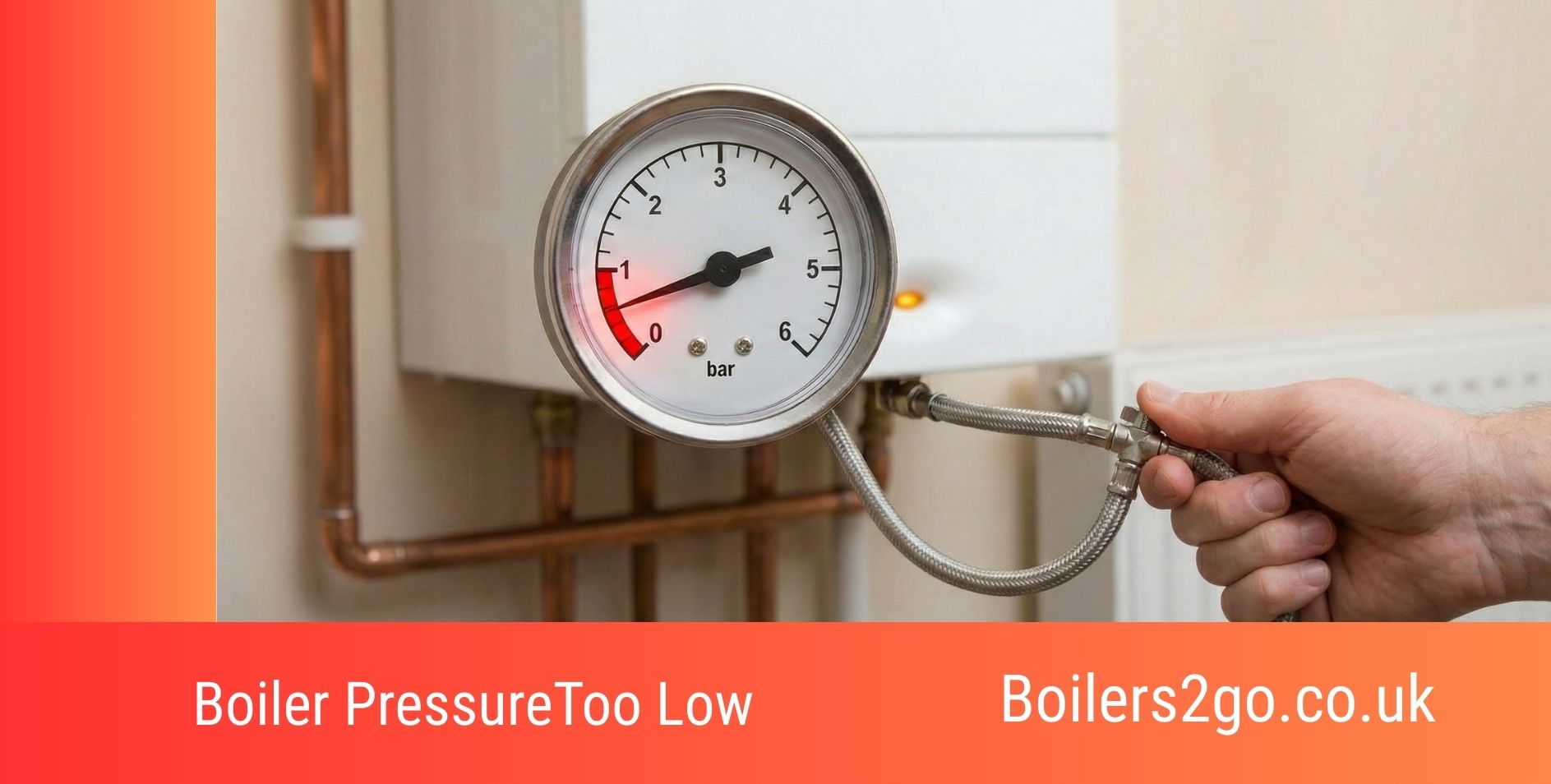
Low boiler pressure is a common issue that many UK homeowners and landlords encounter with their central heating systems, often leading to reduced efficiency or complete system shutdowns. In this guide, I’ll break down the potential causes, and practical fixes to help you maintain a warm and comfortable home.
What Causes Low Boiler Pressure?
What causes low boiler pressure? Low boiler pressure can stem from various factors, ranging from simple leaks to more complex system faults, affecting the overall performance of your home heating setup.
Understanding these causes is essential for UK homeowners and landlords to diagnose and address the problem promptly, preventing costly repairs. Below, we detail the most common reasons, along with step-by-step fixes for each.
Leaks in the Heating System
Leaks in the heating system are one of the primary culprits behind boiler pressure loss, where water escapes from pipes, radiators, or the boiler itself, gradually reducing the system’s pressure over time. These leaks might be visible as damp patches on walls or floors, or hidden within the pipework, making them tricky to spot without inspection.
How to Fix Leaks in the Heating System
- To fix leaks in the heating system, start by visually inspecting all accessible pipes, radiators, and joints for signs of water drips or corrosion—common in older UK properties with copper or steel piping.
- If you find a minor leak at a radiator valve, tighten it gently using an adjustable spanner, but avoid over-tightening to prevent further damage.
- For more persistent leaks, apply a sealant like PTFE tape around the joint, or replace faulty radiator valves, which you can purchase from local plumbing suppliers for around £10-£20.
- If the leak is from the boiler’s pressure relief valve, repressurise the system first using the filling loop (a flexible hose connecting cold water to the boiler), then monitor for recurrence.
- Always turn off the boiler and isolate the water supply before attempting repairs, and if the leak persists or is extensive, consult a professional to avoid water damage to your property.
Bleeding Radiators
Bleeding radiators, a routine maintenance task to release trapped air, can inadvertently cause low boiler pressure if not followed by repressurising, as air pockets reduce the effective water volume in the system. This is particularly relevant for UK homes with traditional radiator setups, where air buildup from dissolved gases in water leads to inefficient heating.
How to Fix Bleeding Radiators Causing Low Pressure
- To fix issues from bleeding radiators causing low pressure, begin by using a radiator key (available at hardware stores for under £1) to open the bleed valve at the top of each radiator, turning it anti-clockwise until air hisses out and water starts to drip—have a cloth ready to catch any spills.
- Close the valve once steady water flows, then move to the next radiator, starting from the furthest from the boiler.
- After bleeding all radiators, check the boiler’s pressure gauge; if it’s below 1 bar, use the filling loop to add water slowly until it reaches 1.2-1.5 bar, ensuring not to exceed this to avoid high pressure problems.
This process restores circulation, improving heat distribution and preventing cold radiators, but perform it with the system cold to minimise risks.
Faulty Pressure Relief Valve
A faulty pressure relief valve, designed to release excess pressure for safety, can malfunction and cause continuous dripping, leading to gradual pressure drop in the boiler. In UK boilers, this valve is a critical safety feature, often activated by over-pressurisation but can wear out over time due to sediment buildup or mechanical failure.
How to Fix a Faulty Pressure Relief Valve
- To fix a faulty pressure relief valve, first locate it on your boiler—usually a small brass component with a pipe leading outside—and check for constant dripping, which indicates it’s stuck open.
- Attempt to reset it by gently twisting the valve cap to dislodge any debris, but if dripping continues, you’ll need to replace the valve.
- Drain the system partially by attaching a hose to a drain cock and opening it until pressure drops, then unscrew the old valve using a wrench and install a new one (costing £15-£30), applying thread sealant for a secure fit.
- Repressurise the boiler afterwards via the filling loop, and test the system by running it briefly to ensure no leaks. This repair enhances boiler safety and efficiency, but if you’re unsure, it’s safer to involve an expert.
Expansion Vessel Issues
Expansion vessel issues occur when this component, which absorbs water expansion during heating, loses its air charge or has a damaged diaphragm, causing pressure fluctuations. Common in combi boilers popular in UK flats and houses, a failing vessel can’t accommodate volume changes, leading to low pressure warnings.
How to Fix Expansion Vessel Issues
- To fix expansion vessel issues, check the vessel’s air pressure using a tyre pressure gauge on the Schrader valve (similar to a car tyre valve) when the system is depressurised—it should read around 0.75-1 bar; if lower, use a bicycle pump to recharge it.
- If the diaphragm is ruptured (indicated by water discharge from the valve), replacement is necessary: isolate the boiler, drain the system, remove the old vessel (often located inside or beside the boiler), and fit a new one matching your model’s specifications (prices start at £50).
- Reconnect, repressurise, and monitor for stable pressure. This maintains consistent boiler operation, reducing strain on other parts like the heat exchanger.
Recent Boiler Installation or Maintenance
Recent boiler installation or maintenance can lead to low pressure if air isn’t fully purged from the system or if there’s minor settling in new components. In the UK, where boiler upgrades are common under energy efficiency schemes, initial pressure drops are normal but should be addressed to ensure long-term reliability.
How to Fix Low Pressure After Installation or Maintenance
- To fix low pressure after installation or maintenance, simply repressurise the boiler using the external filling loop or keyless manifold, opening the valves to allow mains water in until the gauge hits 1.2 bar, then close them securely to prevent overfilling.
- If pressure drops repeatedly post-installation, check for air locks by bleeding radiators as described earlier, or inspect new joints for leaks. This straightforward adjustment helps new systems stabilise, ensuring even heating across your property.
How to Prevent Low Boiler Pressure in the Future
Preventing low boiler pressure involves regular maintenance to keep your heating system in top condition. Schedule annual servicing by a Gas Safe registered engineer to check for leaks, recharge the expansion vessel, and ensure all components are functioning.
Monitor the pressure gauge weekly, especially during winter, and repressurise as needed. Insulate pipes to prevent freezing, which can cause cracks and leaks, and avoid over-bleeding radiators without checking pressure afterwards.
For landlords, include boiler checks in tenancy agreements to encourage tenants to report issues early, maintaining property value and tenant comfort.
When You Absolutely MUST Call a Gas Safe Engineer
While many low boiler pressure issues can be handled DIY-style, certain scenarios demand professional intervention to ensure safety and compliance with UK regulations. Call a Gas Safe engineer immediately if you suspect a gas leak (smell of gas or hissing sounds), if the boiler displays persistent error codes despite repressurising, or if there’s extensive water damage indicating major leaks.
Also, seek expert help for internal boiler faults like a damaged heat exchanger or if you’re not confident with electrical or gas components—tampering could void warranties or pose risks.
FAQs
Is Low Boiler Pressure Dangerous for My Home?
Low boiler pressure itself isn’t immediately dangerous, but it can lead to boiler breakdowns during cold snaps, potentially causing frozen pipes or discomfort in UK winters. Addressing it promptly safeguards your system’s longevity without escalating to hazardous situations like carbon monoxide leaks, which are unrelated but worth monitoring separately.
Can Low Boiler Pressure Affect My Energy Bills?
Yes, low boiler pressure can increase energy bills as the system works harder to heat your home inefficiently, leading to higher gas consumption. In UK households, maintaining optimal pressure ensures the boiler operates at peak efficiency, potentially saving on monthly utility costs through better heat circulation.
Does Low Boiler Pressure Impact Hot Water Supply?
Low boiler pressure often disrupts hot water supply in combi boilers, resulting in lukewarm showers or taps, as the system prioritises heating over water delivery. For UK landlords, this could lead to tenant complaints, so regular pressure checks are vital for consistent performance.
How Does Weather Affect Boiler Pressure?
Cold UK weather can exacerbate low boiler pressure by causing water contraction or pipe freezing, which might lead to micro-cracks and leaks. Insulating exposed pipes and keeping your home at a steady temperature helps mitigate these seasonal effects.
Can Low Boiler Pressure Be a Sign of Bigger Problems?
Occasionally, low boiler pressure signals underlying issues like corroded pipes or failing pumps, which could evolve into major repairs if ignored. For UK homeowners, viewing it as a warning sign prompts timely inspections to avoid expensive overhauls.
Stay warm, The Boilers2Go Team

I’m Penny North, a home energy heating expert. My mission is to demystify new boilers and complex heating systems to help you achieve a warm, cosy home with lower energy bills and a smaller environmental footprint.