

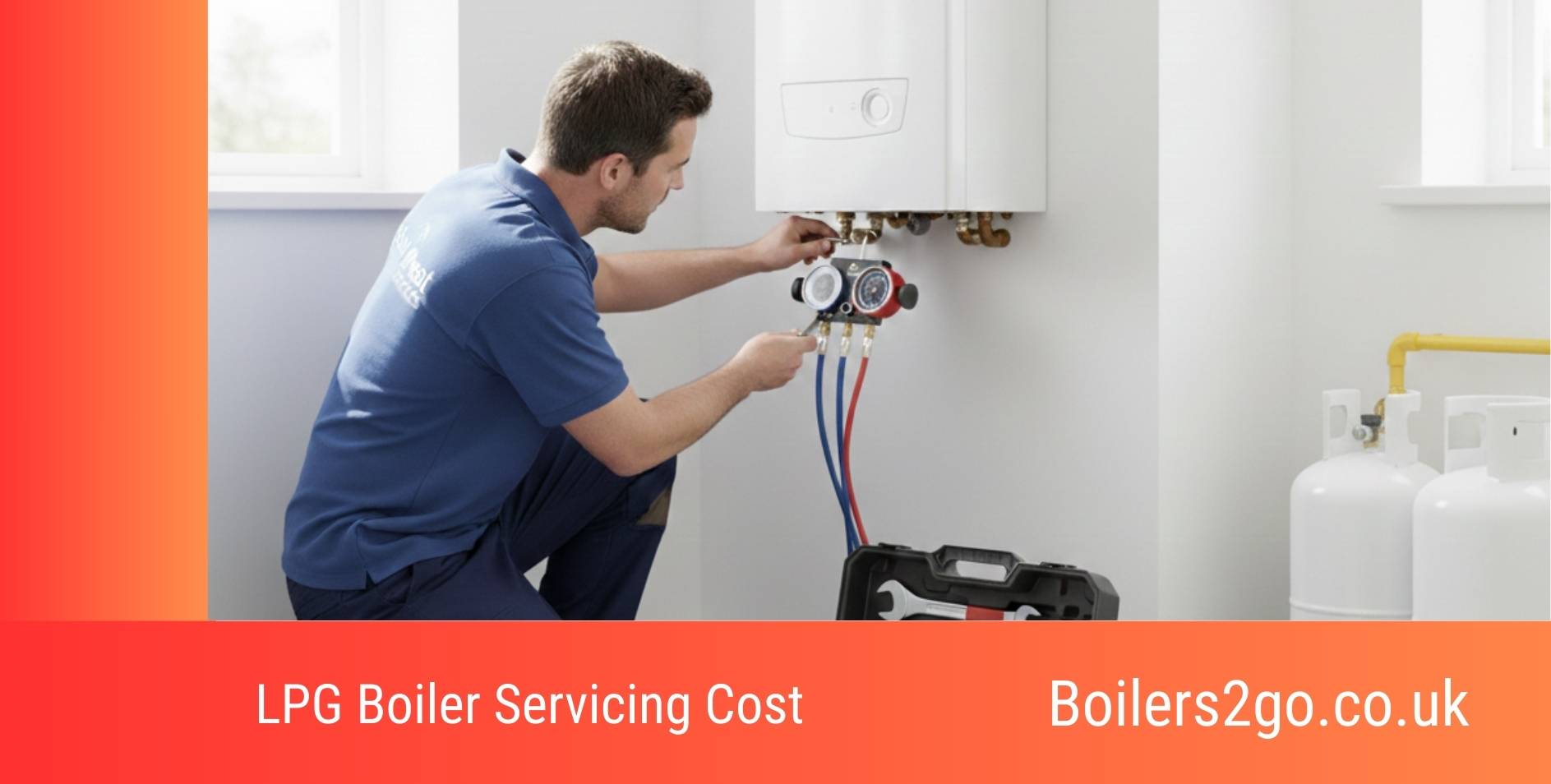
LPG boilers heat thousands of homes across rural Britain that aren’t connected to the mains gas grid. They’re reliable systems — but they’re not “set and forget”.
LPG behaves differently to natural gas, costs significantly more per unit, and relies on external tanks and regulators. That means regular, specialist servicing isn’t optional if you want the boiler to stay safe, efficient, and economical.
At Boilers2Go, our Gas Safe engineers with LPG certification service LPG boilers nationwide. This guide explains when servicing is urgent, how often it’s needed, how LPG servicing differs from natural gas, what actually happens during a service, and what it costs in 2026.
Signs Your LPG Boiler Needs Servicing Urgently
Some LPG boiler problems escalate quickly. If you notice any of the following, stop using the boiler and call a Gas Safe LPG engineer immediately:
-
Yellow, lazy, or sooty flames instead of clean blue combustion
-
Strong LPG or gas smells, indoors or near the tank
-
Repeated boiler lockouts, especially ignition or flame failure codes
-
Regulator frosting or hissing at the tank
-
Carbon monoxide alarm activating, even briefly
-
Kettling noises, pump whining, or unusual vibration
-
Weak hot water or erratic heating
-
Ice or frost forming on the tank or vapouriser
A major winter red flag is when the tank can’t maintain pressure — this is an emergency and shouldn’t be left.
How Often Should LPG Boilers Be Serviced?
For most homes, annual servicing is essential, not just recommended.
It’s required for:
-
Manufacturer warranties (brands like Vaillant, Worcester Bosch, and Ideal all insist on it)
-
Landlord compliance, including CP12 gas safety certification
-
Safety, because LPG is stored under pressure and is more volatile than mains gas
The best time to book is early autumn, before winter demand increases. Coastal locations, dusty environments, or high-usage homes may benefit from more frequent checks.
Skipping servicing doesn’t just risk breakdowns — it often leads to 10–20% efficiency losses, which on LPG can mean hundreds of pounds wasted each year.
LPG vs Natural Gas Boiler Servicing: What’s Different?
Although the boiler itself looks similar, LPG servicing involves extra checks that don’t exist on mains gas systems.
| Aspect | LPG Boiler | Natural Gas Boiler |
|---|---|---|
| Typical duration | 1.5–2.5 hours | 1–1.5 hours |
| Average cost | £90–£150 | £80–£120 |
| External checks | Tank, regulator, vapouriser | Not required |
| Pressure testing | LPG-specific (higher pressure) | Mains pressure |
| Engineer qualification | Gas Safe + LPG | Gas Safe |
| Common faults | Regulators, pressure issues | Heat exchangers |
The internal boiler checks are similar, but LPG adds an entire fuel supply system that also needs inspection.
What Happens During an LPG Boiler Service?
A proper LPG boiler service is methodical and thorough. Here’s what typically happens.
External Safety and Tank Checks
The engineer isolates the LPG supply and inspects the tank, regulator, vapouriser, valves, gauges, and pipework for leaks, corrosion, frost damage, or incorrect clearances.
Gas Tightness Testing
The system is pressure-tested using LPG-specific methods to confirm there are no leaks from tank to boiler.
Boiler Strip, Clean, and Inspection
Burners, injectors, and fans are removed and cleaned. Heat exchangers and combustion chambers are checked, along with seals, flues, and safety devices.
LPG-Specific Combustion Testing
Gas pressure is verified at both the regulator and boiler. Combustion analysis confirms clean burning, correct CO levels, and proper efficiency.
Commissioning and Functional Testing
Ignition, pumps, valves, and sensors are tested. Heating and hot water are run under load and adjusted for optimal LPG performance.
Documentation
A service record is issued, and landlords receive a CP12 Gas Safety Certificate if required.
LPG Boiler Service Checklist (Homeowner-Friendly)
A proper service should cover all of the following:
Tank and Supply
-
Tank condition and frost protection
-
Regulator pressure (typically 1.5–2 bar)
-
Vapouriser operation
-
Valves, pipework, and emergency shut-off
Boiler Internals
-
Burner and injectors cleaned
-
Heat exchanger inspected
-
Fan and ignition components checked
-
Flame supervision device tested
Safety
-
Gas tightness test passed
-
Flue integrity and spillage testing
-
CO levels within safe limits
Performance
-
Efficiency typically above 88%
-
Stable hot water and heating output
-
No fault codes present
LPG Boiler Servicing Costs in the UK (2026)
| Service | Typical Cost (inc. VAT) | Notes |
|---|---|---|
| Standard LPG boiler service | £90–£130 (avg ~£105) | Boiler only |
| Boiler + tank inspection | £110–£150 | Full LPG system |
| Landlord CP12 (LPG) | £100–£140 | Certificate included |
| Rural call-out | +£20–£50 | Off-grid travel |
| Cover plans | £12–£20/month | Service included |
Prices in London and the South East are typically 15–25% higher.
Why LPG Servicing Matters More Than Mains Gas
The stakes are higher with LPG.
-
LPG costs roughly twice as much per unit as mains gas
-
Fuel is delivered, not piped — winter delays matter
-
Stored fuel and regulators introduce additional failure points
Even a 5% efficiency loss on LPG can add £100+ a year to heating bills. Regular servicing protects both safety and running costs.
The Boilers2Go LPG Servicing Approach
At Boilers2Go, we price LPG servicing clearly and fairly — especially for rural homes.
Typical pricing:
-
LPG boiler service: £115
-
Full LPG system service: £145
-
LPG plus additional appliances: from £180
All work is carried out by Gas Safe engineers with LPG endorsement, and tank inspections are included where required.
The Bottom Line
LPG boilers work hard — often in the coldest, most remote parts of the UK. Regular servicing keeps them safe, efficient, and dependable when you need them most.
If your LPG boiler hasn’t been serviced in the last year, or winter is approaching, booking now is one of the simplest ways to avoid breakdowns, wasted fuel, and emergency call-outs later.

I’m Penny North, a home energy heating expert. My mission is to demystify new boilers and complex heating systems to help you achieve a warm, cosy home with lower energy bills and a smaller environmental footprint.