

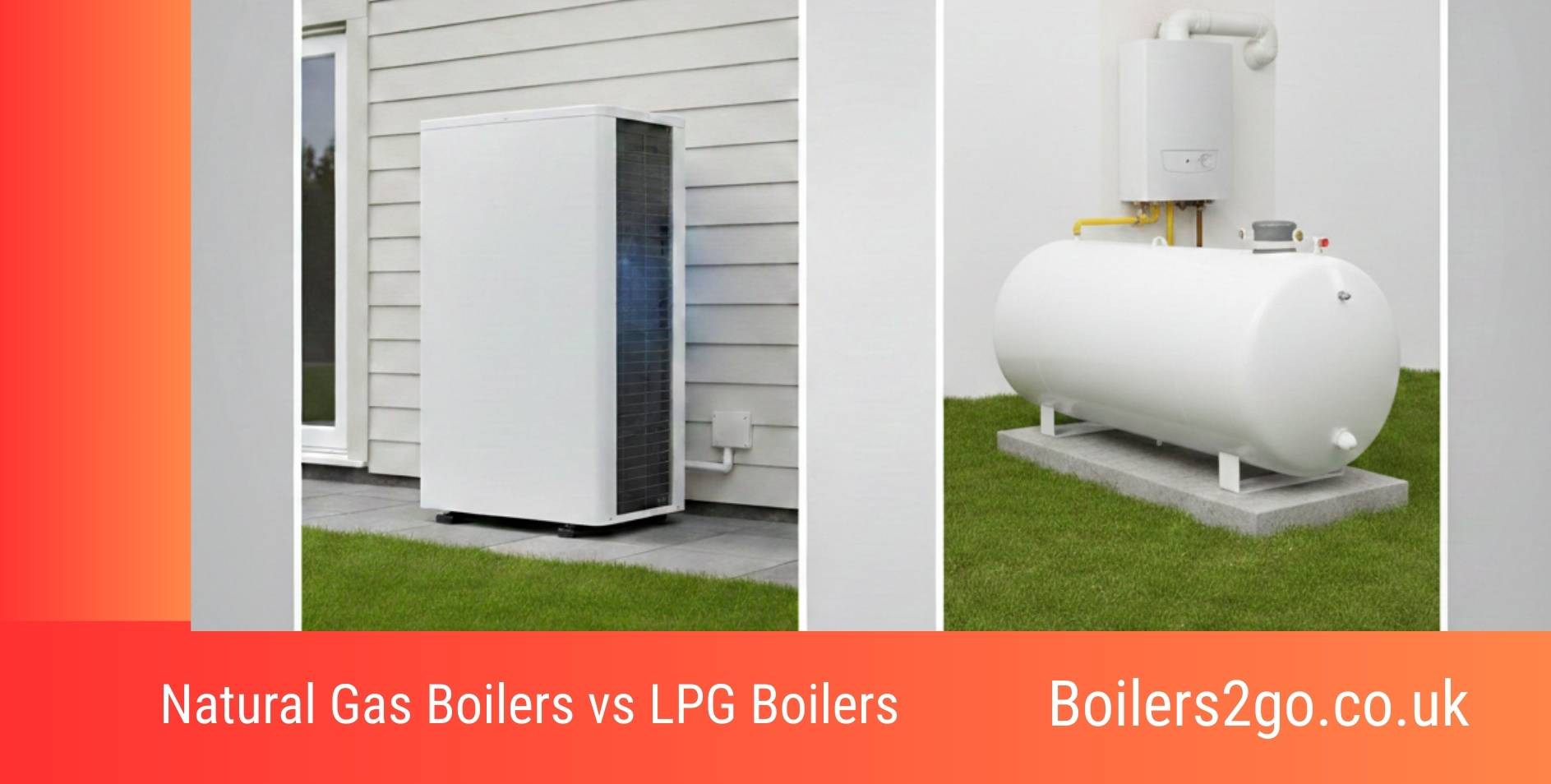
For most UK homeowners with a mains gas connection, a natural gas boiler is usually the most cost-effective and practical choice. LPG boilers step in for rural or off-grid homes where mains gas isn’t available, but they bring higher fuel costs and extra logistics. Adding running cost examples and a simple urban vs rural comparison helps you see what this means for your budget and lifestyle.
How Fuel Choice Affects Gas and LPG Running Costs
Modern heating systems — whether natural gas, LPG, oil, or heat pump — can all be highly efficient. The key difference for most UK households isn’t performance, it’s the cost per kilowatt-hour of fuel and how that translates to real annual spending. For a fuller comparison that also covers oil, electric heating and heat pumps, see our guide to central heating running costs.
Natural gas is generally the cheapest fossil fuel to heat a home, while LPG is often around double the cost per kWh. Electric heat pumps can be cheaper in some scenarios, especially with current UK smart tariffs and grants, but suitability depends on insulation and system design.
Gas vs LPG Hourly Running Costs by Boiler Size
To give you a feel for real running costs, below are approximate hourly figures for space heating and hot water — assuming average efficiency and typical UK fuel prices
Fuel Price Assumptions
– Gas: lowest unit rate of the four (mains; check the current Ofgem price cap)
– LPG: often around double the gas rate per kWh (delivered)
– Oil: usually between gas and LPG per kWh
– Heat pump: effective rate depends on your electricity tariff and seasonal performance
Small Home (18–24 kW system)
-
Natural gas boiler: ~£1.50–£2.10 per hour
-
LPG boiler: ~£3.40–£4.80 per hour
-
Oil boiler: ~£2.50–£3.30 per hour
-
Heat pump: ~£1.80–£3.00 per hour (varies with efficiency)
Medium Home (24–30 kW system)
-
Natural gas boiler: ~£1.90–£2.60 per hour
-
LPG boiler: ~£4.30–£6.00 per hour
-
Oil boiler: ~£3.00–£4.00 per hour
-
Heat pump: ~£2.10–£3.50 per hour
Large Home (30–40 kW system)
-
Natural gas boiler: ~£2.40–£3.30 per hour
-
LPG boiler: ~£5.30–£7.20 per hour
-
Oil boiler: ~£3.50–£4.80 per hour
-
Heat pump: ~£2.50–£4.00 per hour
These figures are intended as a realistic ballpark. Actual use varies with insulation, thermostat settings, controls, weather, and habits. But across typical UK homes, the pattern is clear: gas usually costs least, LPG usually costs most, and heat pumps can compete with gas when the home is well insulated and the tariff is smart/low-cost.
Annual Gas vs LPG Running Costs for a Typical UK Home
Taking a medium home (90–100 m²) as an example with average weekly use:
-
Natural gas → ~£900–£1,100 per year
-
LPG → ~£1,800–£2,200 per year
-
Oil → ~£1,400–£1,800 per year (depends on markets)
-
Heat pump → ~£800–£1,200 per year (given good insulation and smart tariff)
The boiler unit itself doesn’t usually cause large differences in fuel cost — it’s the fuel price per kWh that drives most of the gap.
Natural Gas Boilers: Practical Strengths
Natural gas boilers remain the default choice for many UK homes because they combine:
-
Lower running costs compared to LPG or electricity
-
Continuous supply with no deliveries or on-site storage
-
A wide choice of models, engineers, and service contracts
If your home is on or near the gas network, swapping an old boiler for a modern A-rated natural gas condensing boiler is almost always the simplest and most affordable upgrade.
The biggest drawback is not cost but access: if you’re not on the grid, gas simply isn’t available.
LPG Boilers: Where They Fit Best
LPG boilers are tailored for homes that can’t access mains gas but still want the responsiveness and control of a gas-style system. Modern LPG models are efficient, quiet, and similar in size and controls to natural gas boilers.
LPG systems do require a tank or cylinder storage on your land and regular deliveries, which means planning and using suppliers effectively. Fuel costs remain higher, but many rural households prefer this over oil or all-electric heating.
LPG also burns cleaner than oil and can work with emerging lower-carbon bioLPG without changing the boiler.
Urban vs Rural UK: Practical Differences in Heating Choices
Urban UK (Gas Grid Areas)
In towns, cities and most suburban streets, homes almost always have access to the national gas network.
Here, the everyday experience with a gas boiler is:
-
Easy billing through your energy supplier
-
Minimal fuel management — no tanks or deliveries
-
Wider choice of installers and spare parts
Running cost examples for a typical urban semi with a 30 kW gas boiler might be around £2.20 per hour on a cold day — comfortable and predictable.
Smart thermostats, zoning and weather compensation controls in urban homes also tend to make gas boilers more responsive and efficient than electric alternatives.
Rural UK (Off-Grid Areas)
In villages, hamlets and remote areas where the gas grid doesn’t reach, homeowners often choose between LPG, oil or heat pumps.
LPG wins on familiarity and clean combustion, but you carry the cost of tank maintenance and deliveries. A rural home with a 30–35 kW LPG boiler might spend £5–£7 per hour on heavy winter use — noticeably higher than gas.
Oil is often cheaper than LPG per kWh but comes with higher maintenance, smell and spill risk. Heat pumps are becoming more common in rural UK, particularly where insulation levels are higher or where renewable grants are available.
Gas vs LPG Boiler Installation Costs
Installation costs for gas and LPG boilers are surprisingly close. Current like-for-like installation prices generally put gas and LPG boiler installs in the same ballpark, with the main variable being tank or cylinder work for LPG.
-
A new gas or LPG combi boiler: roughly £2,500–£4,000 installed
-
Labour for swapping in the same location: £600–£1,000
-
LPG tank installation or base work: varies by site
Fuel storage — not the boiler — is where rural homes see most of the extra cost with LPG.
Should You Choose a Natural Gas or LPG Boiler?
If your home has a mains gas connection, a natural gas boiler is usually lowest-cost and simplest to run. Pairing it with good controls (thermostats, weather compensation) and insulation does more for bills than choosing between brands. If you already have a working boiler with a minor fault, our guide on whether to repair or replace your boiler can help you decide whether now is the time to change.
If you’re off-grid, an LPG boiler is the closest analogue to gas while retaining familiar controls and greenhouse gas performance better than oil. Many rural households balance fuel cost, delivery planning and carbon footprint to choose the model that fits their lifestyle.
Heat pumps offer the lowest long-term fuel cost and carbon emissions in homes that are insulated and well-designed for low-temperature heating. For others, they’re a great second stage after solving insulation and control issues.
Natural Gas vs LPG Boilers: Final Thoughts
Fuel choice should be informed by access, cost, and how you use your heating every day — not just by boiler specifications.
Whether you go with natural gas, LPG, oil or a heat pump, getting the system design right and managing it with good controls and simple habits will always deliver the biggest savings and comfort overall.

I’m Penny North, a home energy heating expert. My mission is to demystify new boilers and complex heating systems to help you achieve a warm, cosy home with lower energy bills and a smaller environmental footprint.