

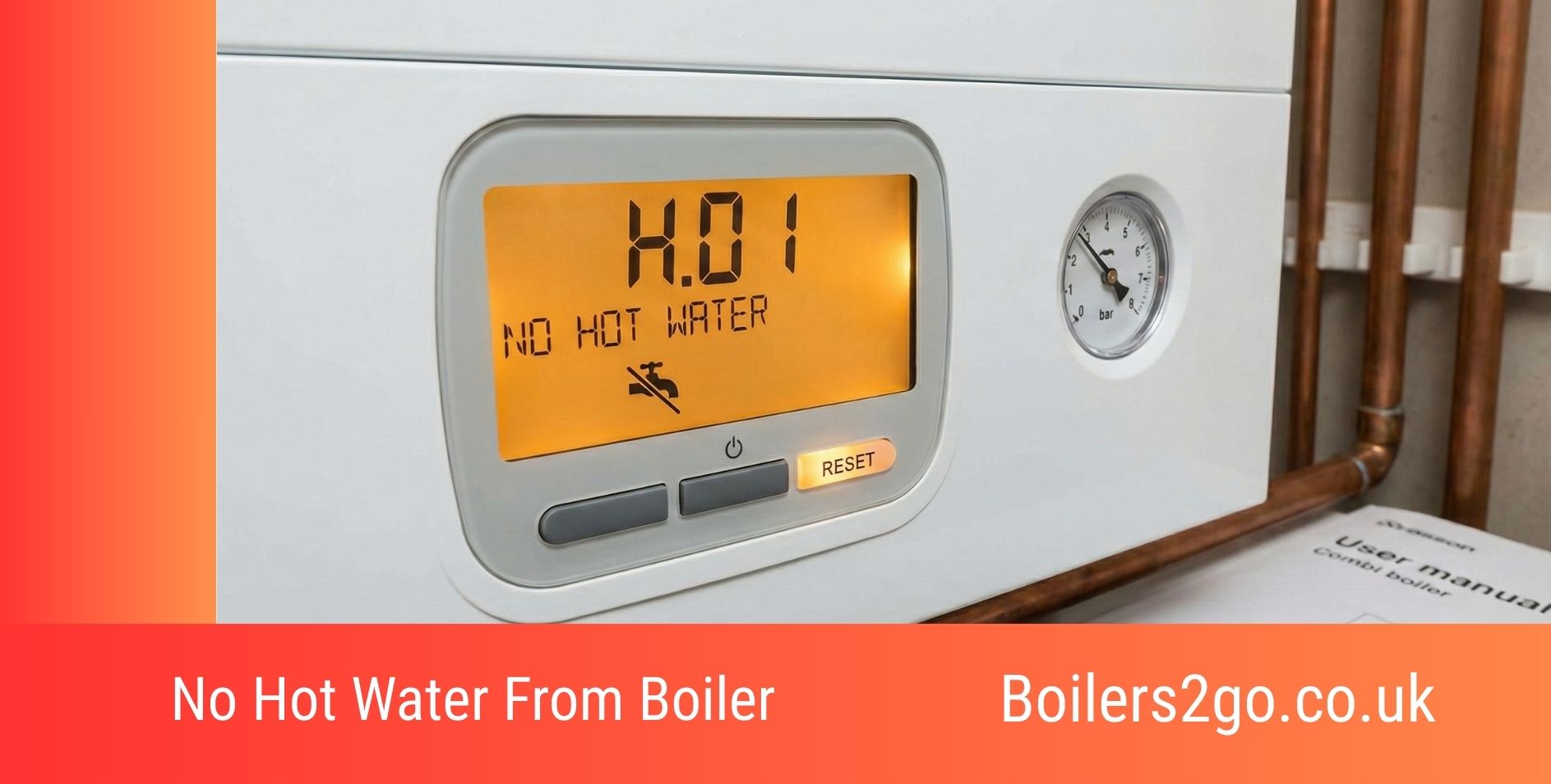
If you’re experiencing no hot water coming from your boiler, it can be a frustrating issue that disrupts daily routines like showering or washing dishes. As a UK homeowner or landlord, understanding the potential causes and simple fixes can help you troubleshoot safely and decide when to seek professional help from a Gas Safe registered engineer.
This guide covers common reasons for this central heating problem, including boiler faults, water supply issues, and maintenance tips.
Why Is There No Hot Water Coming from My Boiler?
There are several reasons why there is no hot water coming from your boiler, ranging from simple power supply problems to more complex component failures in your domestic heating system.
This symptom often indicates an underlying issue in your combi boiler, system boiler, or conventional boiler setup, affecting hot water production without necessarily impacting your central heating radiators.
Below, I’ll explain the most common causes in detail, including what each one entails, what triggers it, and step-by-step fixes where appropriate. Remember, always prioritise safety and turn off your boiler if you’re unsure.
Low Water Pressure in the Boiler System
Low water pressure in the boiler system refers to insufficient pressure in your home’s plumbing and heating pipes, which prevents the boiler from circulating water effectively to produce hot water on demand.
This is a frequent boiler malfunction in UK homes, especially in properties with combi boilers where pressure needs to stay between 1 and 1.5 bar for optimal operation.
What Causes Low Water Pressure?
Low water pressure can stem from leaks in the pipes or radiators, which allow water to escape and reduce overall system pressure over time. Another common trigger is a faulty pressure relief valve that releases water unnecessarily, often due to wear and tear in older installations.
In hard water areas like the Southeast of England, limescale buildup can also restrict water flow, mimicking low pressure symptoms. Additionally, recent bleeding of radiators without repressurising the system can drop pressure levels below the required threshold.
How to Fix Low Water Pressure
- To fix low water pressure caused by leaks, first inspect visible pipes, radiators, and the boiler itself for any signs of dripping or damp spots; if found, tighten loose connections or apply sealant tape to minor leaks, but call a professional for major ones to avoid water damage.
- For a faulty pressure relief valve, check the boiler’s pressure gauge—if it’s below 1 bar, locate the filling loop (usually a flexible hose under the boiler) and slowly open the valves to repressurise until the gauge reads 1.2-1.5 bar, then close them securely.
- In cases of limescale buildup, flush the system with a descaling solution available from plumbing stores, following the product’s instructions to dissolve deposits without damaging pipes.
- After repressurising due to radiator bleeding, monitor the pressure for 24 hours to ensure it stabilises, and reset the boiler by turning it off and on at the mains switch.
Faulty Diverter Valve
A faulty diverter valve is a mechanical component in combi and system boilers that directs hot water either to your taps or to the central heating radiators, and when it fails, it may prioritise heating over hot water supply, leading to cold taps.
What Causes a Faulty Diverter Valve?
A faulty diverter valve often results from wear and tear over years of use, where the internal pins or membranes seize up due to constant switching between heating and hot water modes. Mineral deposits from hard water can accelerate this, causing the valve to stick in one position.
Electrical issues, such as a malfunctioning motor within the valve, can also arise from power surges or ageing wiring in the boiler’s control system. In colder UK winters, lack of regular use can lead to corrosion, exacerbating the problem in underutilised holiday lets or rental properties.
How to Fix a Faulty Diverter Valve
- For wear and tear on the diverter valve, start by manually overriding the system—turn on the heating to see if the valve moves; if it doesn’t, gently tap the valve housing with a soft mallet to free stuck parts, but avoid forceful hits that could cause cracks.
- To address mineral deposits, isolate the boiler electrically, drain the system partially, and clean the valve with a vinegar-based solution by removing accessible covers as per your boiler manual, then reassemble and refill.
- If electrical issues are suspected, check the boiler’s fuse box for tripped circuits and reset them; for persistent problems, replace the motorised head of the valve, which involves unscrewing the old unit and fitting a compatible replacement from a supplier like Screwfix.
- In cases of corrosion from infrequent use, run hot water taps weekly to keep the valve lubricated, but if the issue recurs, a full valve replacement by a qualified engineer is recommended to ensure compliance with Building Regulations.
Broken Thermostat or Temperature Controls
A broken thermostat or temperature controls involve the sensors or dials that regulate the boiler’s water temperature, and when defective, they fail to signal the boiler to heat water adequately, resulting in lukewarm or cold output from taps and showers.
What Causes a Broken Thermostat?
A broken thermostat can be caused by battery depletion in wireless models, leading to loss of communication with the boiler receiver. Calibration drift over time, especially in analogue thermostats, occurs due to dust accumulation or mechanical fatigue.
Wiring faults, such as loose connections from vibrations in the home, can interrupt signals. In smart heating systems popular in modern UK homes, software glitches from power outages or incompatible updates can mimic thermostat failure.
How to Fix a Broken Thermostat
- To fix battery depletion, replace the batteries in your thermostat (usually AA or AAA) and resync it with the boiler by following the manufacturer’s pairing instructions, often involving pressing a reset button for 10 seconds.
- For calibration drift, clean the thermostat’s sensors with a soft cloth and recalibrate by adjusting the dial to a known temperature (e.g., 60°C for hot water) and verifying with a thermometer in the tap water.
- Address wiring faults by inspecting connections at the thermostat and boiler ends, tightening any loose screws, and insulating exposed wires to prevent future issues.
- For software glitches in smart systems, perform a factory reset via the app or control panel, then update the firmware through the manufacturer’s website to restore functionality.
Frozen Condensate Pipe
A frozen condensate pipe is the external pipe that drains acidic wastewater from condensing boilers, and when it freezes in sub-zero temperatures, it blocks drainage, causing the boiler to shut down and halt hot water production as a safety measure.
What Causes a Frozen Condensate Pipe?
A frozen condensate pipe is primarily caused by exposure to freezing UK winter weather, especially if the pipe is uninsulated or runs horizontally without a sufficient slope for drainage. Poor installation, where the pipe is too long or has inadequate lagging, increases vulnerability.
Sudden temperature drops, common in northern regions like Scotland, can freeze the pipe overnight. Neglected maintenance, such as not checking for blockages before winter, allows partial clogs to worsen with ice formation.
How to Fix a Frozen Condensate Pipe
- To thaw a frozen condensate pipe due to cold weather, pour warm (not boiling) water over the exposed section using a watering can, then wrap it with insulation foam or lagging tape available from DIY stores to prevent refreezing.
- For poor installation issues, shorten the pipe if possible or add a steeper gradient by repositioning clamps, ensuring it complies with boiler guidelines. During sudden temperature drops, use a hairdryer on low heat to gently melt the ice, keeping a safe distance to avoid melting plastic.
- To address neglected maintenance, clear any pre-existing debris with a pipe cleaner before winter, and install a condensate pump if the pipe run is problematic, though this requires professional fitting.
Pilot Light Out (For Older Boilers)
The pilot light out refers to the small continuous flame in non-condensing or older conventional boilers that ignites the main burner, and when extinguished, it stops the boiler from heating water entirely.
What Causes the Pilot Light to Go Out?
The pilot light can go out due to draughts from poorly sealed windows or doors, which blow out the flame in unventilated boiler cupboards. Thermocouple failure, where this safety device senses the flame and shuts off gas if it’s absent, often from age-related degradation.
Gas supply interruptions, such as low pressure from supplier issues or empty tanks in LPG systems, can starve the pilot. Dirt or soot buildup around the pilot assembly from incomplete combustion blocks the flame.
How to Fix the Pilot Light Being Out
- To relight the pilot due to draughts, seal gaps around the boiler area with draught excluders, then follow your boiler manual to depress the gas control knob, ignite with a long match or piezo igniter, and hold for 30 seconds until stable.
- For thermocouple failure, clean the tip with fine sandpaper to remove corrosion, or replace the unit by disconnecting wires and fitting a new one matched to your model.
- In gas supply interruptions, check your meter for credit (if prepay) or contact your supplier; once resolved, relight as above.
- Clean dirt buildup by turning off the gas, removing the pilot cover, and brushing away soot with a soft brush before relighting.
Airlock in the Hot Water Pipes
An airlock in the hot water pipes is a pocket of trapped air that blocks water flow, preventing hot water from reaching taps despite the boiler functioning.
What Causes an Airlock?
An airlock can be caused by recent plumbing work, such as installing new radiators, which introduces air into the system during draining and refilling. Low water levels in header tanks of open-vented systems allow air to enter.
Rapid temperature changes cause expansion and contraction, trapping air bubbles. Faulty pumps that don’t circulate water forcefully enough fail to push air out.
How to Fix an Airlock
- To clear an airlock from recent plumbing work, attach a hose to the affected tap’s drain point, connect the other end to a cold tap, and open both to force water backwards and dislodge air.
- For low water levels in header tanks, top up the tank in your loft to the marked line with fresh water, then bleed radiators starting from the highest.
- Address temperature changes by installing automatic air vents on pipes, which release trapped air without manual intervention.
- If due to a faulty pump, increase the pump speed setting on the boiler (if adjustable) or lubricate bearings with oil as per the manual to improve circulation.
How Can I Prevent No Hot Water Issues in the Future?
To prevent no hot water issues in the future, schedule annual boiler servicing by a Gas Safe engineer to catch early signs of wear, such as valve stiffness or pressure drops, ensuring your heating system remains efficient. Install a water softener in hard water regions to minimise limescale, which contributes to many boiler breakdowns. Additionally, consider upgrading to a more modern boiler if your current system is older and less efficient. Many companies offer new boiler installation services that can help improve your home’s heating performance and reduce energy costs. Regular maintenance combined with a timely upgrade can ensure consistent hot water supply and enhance overall system reliability.
Regularly check your boiler’s pressure gauge weekly and repressurise as needed to maintain optimal levels. Insulate external pipes, especially condensate lines, with weatherproof lagging before winter to avoid freezing.
Finally, bleed radiators monthly during heating season to expel air and maintain even water distribution, reducing the risk of airlocks and extending your boiler’s lifespan.
When You Absolutely MUST Call a Gas Safe Engineer
You absolutely must call a Gas Safe engineer if you suspect a gas leak, indicated by a sulphur-like smell or hissing sounds, as this poses an immediate safety risk requiring professional intervention.
Persistent issues after basic troubleshooting, like repeated low pressure despite repressurising, could signal hidden leaks or major faults. If your boiler displays error codes (e.g., F22 on Worcester models for low pressure) that don’t resolve with resets, expert diagnosis is essential.
For electrical problems beyond fuse checks or if you’re not confident with DIY fixes, always prioritise safety to comply with UK gas regulations. In rental properties, landlords are legally obligated to arrange prompt repairs to avoid tenant complaints or legal issues.
FAQs
Can a Faulty Immersion Heater Cause No Hot Water in Electric Systems?
A faulty immersion heater can indeed cause no hot water in electric boiler setups or as a backup in gas systems, often due to element burnout from overuse; test it by switching it on separately and checking for warmth in the cylinder after 30 minutes.
How Does Hard Water Specifically Impact Hot Water Availability?
Hard water impacts hot water availability by depositing calcium scales inside heat exchangers, reducing efficiency over time; in UK areas like London, this can halve heat transfer, leading to slower heating times even if the boiler fires up.
Is No Hot Water More Common in Certain Boiler Brands?
No hot water is more common in certain boiler brands like older Baxi models due to their prone diverter valves, but modern Worcester or Vaillant units are generally more reliable with better warranties covering such faults.
What Role Does the Hot Water Cylinder Play in This Issue?
The hot water cylinder plays a key role in storing heated water in system or regular boilers, and if it’s uninsulated or has a faulty thermostat, it can lead to rapid heat loss, mimicking no hot water symptoms despite boiler operation.
Could External Factors Like Power Cuts Affect Hot Water Recovery?
External factors like power cuts can affect hot water recovery by resetting boiler timers or causing temporary shutdowns; once power returns, manually reset the clock and programmer to resume normal hot water scheduling.
Stay warm, The Boilers2Go Team

I’m Penny North, a home energy heating expert. My mission is to demystify new boilers and complex heating systems to help you achieve a warm, cosy home with lower energy bills and a smaller environmental footprint.