

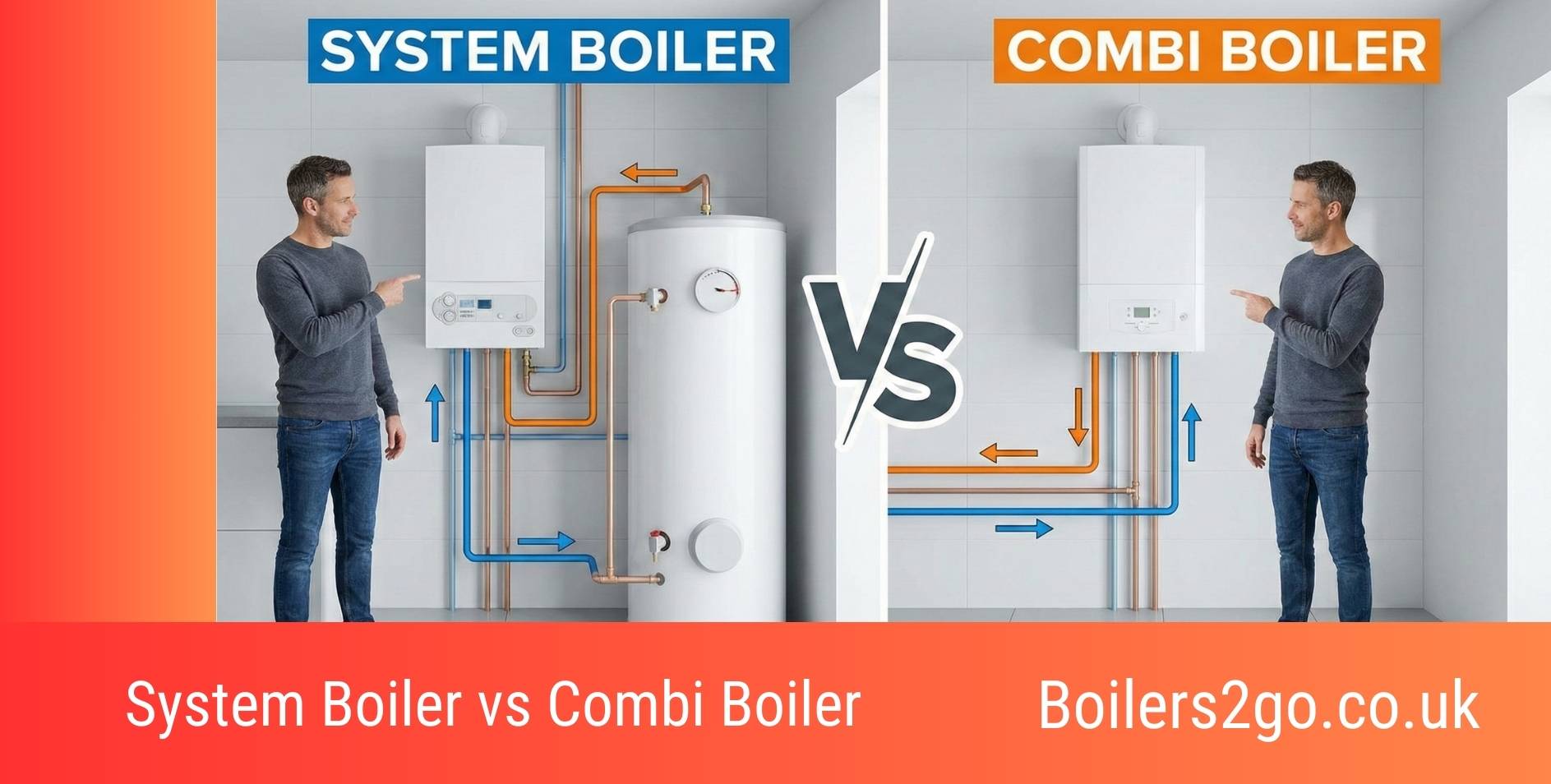
As a seasoned expert in the UK boiler industry, I’ll help you navigate the system boiler vs combi boiler debate, breaking down the differences so you can confidently select the ideal heating solution for your home or rental property. This guide draws on my years of experience to provide clear insights into efficiency, costs, and suitability, ensuring you make an informed choice that boosts comfort and cuts energy bills.
System Boiler vs Combi Boiler: A Quick Comparison
To give you an at-a-glance overview, here’s a handy table highlighting the main differences between these two popular central heating systems.
| Aspect | Combi Boiler | System Boiler |
| How It Works | Heats water on demand directly from the mains, no need for storage tanks. | Uses a separate hot water cylinder to store preheated water, fed from a cold water tank. |
| Space Requirements | Compact, wall-mounted unit; ideal for small spaces. | Requires space for a hot water cylinder and possibly a cold water tank. |
| Hot Water Supply | Instant hot water, but limited to one outlet at a time. | Provides hot water to multiple outlets simultaneously without pressure drop. |
| Efficiency | High efficiency (up to 94% in 2025 models), especially for low-demand homes. | Similar high efficiency, but slight heat loss from cylinder; condensing models excel. |
| Installation Cost | Lower, around £1,500-£3,000 including fitting. | Higher, £2,000-£4,000 due to additional components. |
| Suitability | Best for small to medium homes with 1-2 bathrooms. | Ideal for larger homes with 2+ bathrooms and high hot water needs. |
| Maintenance | Simpler, fewer parts; annual servicing recommended. | More components mean potentially higher servicing costs. |
Combi Boilers
Combi boilers, short for combination boilers, work by heating water straight from the mains supply whenever you turn on a tap or radiator, eliminating the need for bulky storage tanks. In my experience, this makes them a go-to for modern UK flats where space is at a premium.
Pros include their compact size, energy efficiency—many 2025 models are hydrogen-ready and boast A-rated ErP labels—and lower upfront costs, saving homeowners on installation. They also provide endless hot water without waiting for a tank to refill.
On the flip side, cons involve potential pressure drops if multiple taps run simultaneously, which can frustrate families during peak times. They’re less ideal for hard water areas without additional filters, as limescale buildup can affect the heat exchanger, leading to higher repair bills over time.
System Boilers
System boilers operate by drawing cold water from a loft tank into a separate hot water cylinder, where it’s heated and stored ready for use, while the boiler handles central heating separately.
From my perspective installing these in larger Victorian homes, they shine in setups requiring robust hot water flow. Pros encompass strong performance for multiple bathrooms, consistent pressure even during baths and showers, and compatibility with solar thermal systems for eco-friendly boosts in line with UK’s net-zero goals.
However, cons include the need for extra space—think airing cupboards or utility rooms—and potential heat loss from the cylinder, which might nudge up energy bills slightly. Installation is more involved, and in rentals, landlords must factor in cylinder maintenance to keep tenants happy.
System Boiler vs Combi Boiler: Key Differences
The key differences between system and combi boilers revolve around hot water handling, space needs, and long-term efficiency.
Efficiency
Efficiency-wise, both system and combi boilers can achieve over 90% ratings in 2025 condensing models, but combis edge out for on-demand heating without storage losses. I’ve seen combis save up to 20% on bills in small households by avoiding standby heat waste.
System boilers, while efficient, may lose 1-2% from cylinder insulation, though advanced models with better lagging mitigate this. For landlords, combis align with EPC requirements, potentially improving rental yields.
Here’s a quick table to compare efficiency aspects:
| Aspect | Combi Boiler | System Boiler |
| Typical Efficiency Rating (2025 models) | Up to 94% (A-rated ErP) | Up to 92-93% (slight loss from cylinder) |
| Heat Loss | Minimal – no storage tank | 1-2% possible from hot water cylinder |
| Best For | Low-demand homes, maximising bill savings | Larger homes with insulated cylinders |
| EPC Impact | Often boosts ratings in smaller properties | Reliable for high-demand rentals |
Costs
Costs differ significantly: combi boiler installation averages £2,000, cheaper due to fewer parts, while system setups hit £3,000+ including the cylinder. Ongoing, combis have lower servicing fees at £100-£150 annually, but systems might cost more if cylinder issues arise.
In my view, homeowners in budget-conscious regions like the North benefit from combi’s lower entry point, whereas landlords amortise system costs over reliable performance.
To make the cost differences clearer, here’s a breakdown table (approximate 2025 UK averages):
| Cost Type | Combi Boiler | System Boiler |
| Purchase & Installation | £1,500 – £3,000 | £2,500 – £4,500 (includes cylinder) |
| Annual Servicing | £100 – £150 | £150 – £250 (cylinder checks extra) |
| Potential Repair Costs | Lower (fewer components) | Higher if cylinder or pump fails |
| Long-Term Savings | Better for small households | Better for high usage (consistent pressure) |
Maintenance and Servicing
Maintenance and servicing for combis involve checking the heat exchanger and pressure, simpler and quicker. Systems require additional cylinder inspections for scale or leaks, potentially annual costs of £200.
From experience, combis suit busy homeowners with less hassle, while systems’ modularity allows part replacements without full shutdowns, beneficial for landlords minimising voids.
Here’s a handy comparison table:
| Aspect | Combi Boiler | System Boiler |
| Typical Annual Service | Basic checks (heat exchanger, pressure) | Full system + cylinder inspection |
| Service Time | 1-2 hours | 2-3 hours |
| Annual Cost | £100-£150 | £150-£250 |
| Common Issues | Limescale in heat exchanger | Cylinder scale, pump wear |
| Downtime During Repairs | Often full system off | Can isolate parts for minimal disruption |
Suitability to Property Type
Suitability to property type sees combis thriving in compact apartments or bungalows with low demand, whereas systems excel in family houses or multi-occupancy rentals needing simultaneous hot water. They handle higher flow rates without faltering, making them ideal for larger UK properties.
To help you match the right boiler to your property size and hot water needs, here’s a practical guide table:
| Property Size | Number of Bathrooms | Typical Hot Water Demand | Recommended Boiler | Why? |
| Studio / 1 Bedroom Flat | 1 | Low (1-2 people, single tap use) | Combi | Compact, instant hot water, space-saving, cost-effective |
| 2 Bedroom House/Flat | 1-2 | Moderate (2-4 people, occasional dual use) | Combi (or System if high demand) | Combi usually sufficient; System if multiple showers common |
| 3 Bedroom House | 2 | Medium-High (family, regular dual use) | Combi or System | Combi works if pressure good; System better for simultaneous use |
| 4+ Bedroom House | 2-3+ | High (large family, frequent multiple taps) | System | Strong pressure to multiple outlets, no drop during peak times |
| Multi-occupancy / HMO | 2+ | Very High (shared facilities) | System | Reliable supply for tenants, minimises complaints |
Installation Requirements
Installation requirements for combis are straightforward—Gas Safe engineer fits the unit with minimal pipework, often in a day. Systems demand more: space for cylinders, venting, and possibly loft tanks, extending to 2-3 days under Building Regulations Part G.
Unique insight: In 2025, both must be hydrogen-blend compatible, but systems offer easier integration with existing tanks, a synonym like “sealed heating systems.”
System Boiler or Combi Boiler: Which One Should You Choose?
Choosing between a system or combi boiler depends on your household’s size, hot water needs, and space constraints—let’s break it down practically.
Choose a combi boiler if you live in a small to medium UK home with 1-2 bathrooms, value space-saving designs, and want instant hot water without storage tanks; it’s perfect for flats or young couples prioritising efficiency and lower bills.
Don’t choose a combi boiler if your property has high simultaneous demand, like multiple showers running, or if you’re in a hard water area without mitigation, as it could lead to frequent breakdowns.
Choose a system boiler if you have a larger home with 2+ bathrooms, need consistent pressure for family use, or plan to integrate renewables like solar; landlords love it for reliable tenant satisfaction in bigger rentals.
Don’t choose a system boiler if space is tight, you’re on a tight budget for installation, or your hot water needs are minimal, as the extra components might be overkill.
Ready to Install a New Boiler? Get a Quote from Boilers 2 Go
If you’re ready to install a new boiler after weighing system vs combi options, why not reach out to Boilers 2 Go for expert advice tailored to your UK property? Our Gas Safe team offers free quotes on efficient, 2025-compliant models, ensuring seamless fitting whether you’re a homeowner or landlord. Contact us today—it’s the smart step to warm, worry-free heating!
FAQs
How do water pressure levels affect the choice between system and combi boilers?
In areas with low mains pressure, system boilers often perform better by using gravity-fed tanks, while combis rely directly on mains flow and might need pumps for adequate performance.
Can either boiler type integrate with underfloor heating systems?
Yes, both can work with underfloor heating, but system boilers provide more consistent low-temperature output, making them preferable for extensive setups in modern UK builds.
What environmental impact differences exist between the two?
Combi boilers typically have a slight edge in carbon footprint due to no storage losses, but 2025 hydrogen-ready systems in both reduce emissions when blended fuels become widespread.
How does warranty coverage vary for these boilers?
Most manufacturers offer 5-10 year warranties on both, but system boilers might require separate cylinder coverage, potentially extending protection for landlords’ peace of mind.
Are there noise level distinctions to consider?
Combi boilers are generally quieter during operation as they lack cylinder pumps, ideal for open-plan living, whereas systems might produce subtle humming from circulation components.

I’m Penny North, a home energy heating expert. My mission is to demystify new boilers and complex heating systems to help you achieve a warm, cosy home with lower energy bills and a smaller environmental footprint.