

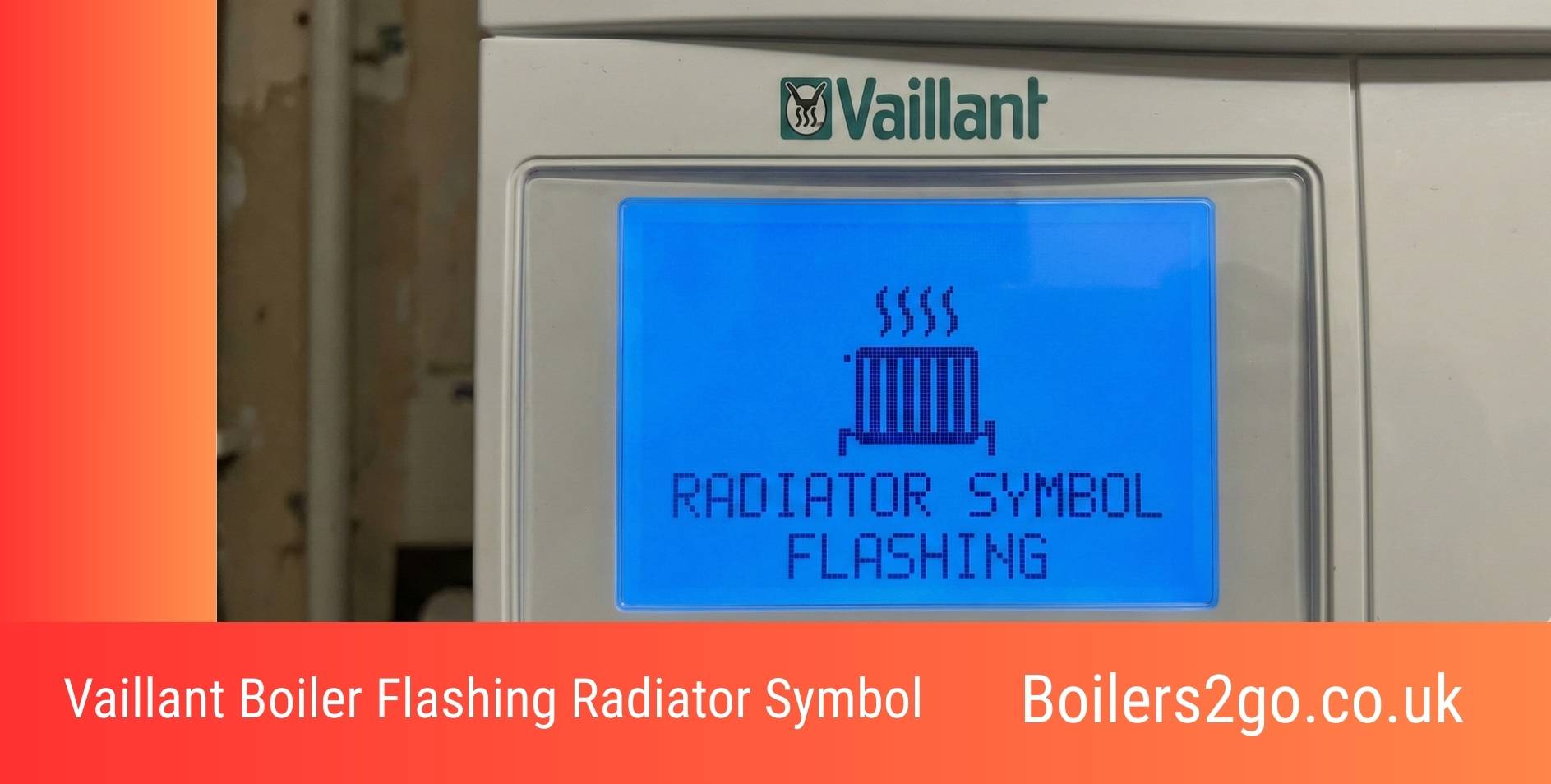
Seeing the radiator symbol flash on your Vaillant ecoTEC boiler can feel alarming, but in most cases it means the boiler is working exactly as designed. Before assuming something is wrong, it helps to understand what the symbol actually represents and what distinguishes normal operation from a genuine fault.
Get a boiler cover, repair and annual service plan online here >
This guide covers the full picture: what the flashing radiator means, when to ignore it, and the specific causes to investigate when the symbol is accompanied by cold radiators, fault codes, or unusual noises.
Vaillant Flashing Radiator Symbol: Video Guide
What Does the Flashing Radiator Symbol Actually Mean?
The flashing radiator symbol on a Vaillant boiler means the heating has reached its set temperature, the burner has switched off, and the pump is still running to circulate residual heat through the radiators. This is called pump overrun and it is a normal, deliberate safety feature on every Vaillant ecoTEC model. It is one of several status symbols rather than a fault code: a C on the display, for example, means the boiler is pre-heating hot water, which our guide to Vaillant comfort mode explains.
In plain terms: the boiler has done its job, the flame is out, and the pump is distributing the remaining heat to avoid any localised overheating in the heat exchanger. The symbol will stop flashing once the system has cooled down, typically within 1 to 10 minutes depending on the flow temperature at shutdown.
This is not an error symbol. It does not need to be cleared. If your radiators are warm, your hot water is working normally, and no fault code is displayed alongside it, the boiler is functioning exactly as Vaillant designed.
When Is the Flashing Radiator Symbol Normal vs. a Problem?
Normal: The symbol appears after a heating cycle, the radiators are warm, the house has reached temperature, and the symbol stops within a few minutes. No action needed.
Worth investigating: The symbol flashes continuously for an extended period (more than 15 to 20 minutes), the radiators are cold or unevenly warm, a fault code appears alongside it (such as F22, F75, or F25), or you hear unusual noises from the boiler or pipework.
The causes below all describe situations where the symbol is flashing due to an underlying issue rather than normal pump overrun.
Get a quote today and take the stress out of replacing your boiler. At Boilers2Go, we offer fast, reliable installation across the UK - often as soon as the next day. 
Need a new boiler?
Is Low Water Pressure Causing the Flashing Radiator Symbol?
Low system pressure is the most common reason for the flashing radiator symbol to appear as a problem indicator rather than a normal status. When pressure drops below 1.0 bar, the boiler struggles to circulate water efficiently, the burner may shut off prematurely, and the pump continues running without effectively distributing heat.
This is often accompanied by the F22 fault code on the display, and our Vaillant F22 fault code guide covers that in detail.
How to Fix Low Water Pressure on a Vaillant Boiler
- Check the pressure gauge on the boiler front panel. It should read between 1.0 and 1.5 bar when the system is cold.
- If it reads below 1.0 bar, locate the filling loop (usually underneath the boiler on ecoTEC Plus and Pro models) and open both valves slowly until the gauge reaches 1.2 bar.
- Close both valves firmly and reset the boiler by pressing and holding the reset button for 3 to 5 seconds.
- If pressure drops again within a few days without any radiator bleeding, there is likely a slow leak in the system that needs tracing by a Gas Safe engineer.
Could Air in the System Be Triggering the Flashing Radiator Symbol?
Trapped air in the radiator circuit forces the pump to work harder to move water around the system, keeping it running longer and the radiator symbol flashing beyond normal pump overrun duration. The radiators may feel cold at the top while warm at the bottom, and you may hear gurgling sounds from the pipework.
If bleeding the radiators doesn’t clear it, our guide to a boiler airlock covers the other causes and fixes.
How to Fix Trapped Air
- Turn the boiler off and let the system cool for 15 minutes.
- Starting from the highest radiator in the property and working downward, use a bleed key to open the bleed valve at the top corner of each radiator until air hisses out, then close it once a steady stream of water appears.
- Check boiler pressure after bleeding and top up via the filling loop if it has dropped below 1.0 bar.
- Reset the boiler and run a short heating cycle to confirm the radiators are now heating evenly.
Is a Faulty Pump Responsible for the Flashing Radiator Symbol?
It can be. If the pump has partially seized, worn out, or lost speed after 10 to 15 years of use, it cannot circulate water effectively even when the heating is calling for it. The boiler detects the demand, the pump runs, but insufficient flow means the set temperature is never reached, so the symbol flashes continuously without the radiators actually getting warm.
Symptoms of a failing pump include a humming noise with no circulation, the boiler cycling on and off more frequently than normal, or some radiators staying cold while others heat.
How to Fix a Faulty Pump
- Try a full system flush if sludge is suspected, as this can partially restore pump performance by clearing the blockage.
- If the pump hums but does not circulate, gently tapping the pump body can sometimes free a lightly seized impeller temporarily.
- A Gas Safe engineer can test the pump with a multimeter and confirm whether it is the pump or the PCB relay that has failed.
- Pump replacement on a Vaillant ecoTEC currently costs £200 to £400 including labour, depending on model and location.
Get a quote today and take the stress out of replacing your boiler. At Boilers2Go, we offer fast, reliable installation across the UK - often as soon as the next day.
Need a new boiler?
Might Thermostat Problems Be Causing the Radiator Symbol to Flash?
If the thermostat is sending a constant heat demand signal, or a signal that cuts in and out erratically, the boiler cannot complete a normal heating cycle and settle into pump overrun. Instead, it keeps attempting to fire, failing to reach stable temperature, and the radiator symbol stays active throughout.
This is common with wireless thermostats that have weak batteries, smart thermostats with connectivity issues, or room sensors in the wrong location (near a heat source or in direct sunlight).
How to Fix Thermostat Issues
- Replace the batteries in the thermostat, even if the display looks fine. Weak batteries cause erratic signalling long before the low battery warning appears.
- Turn the thermostat up above the current room temperature to confirm the boiler fires correctly and runs to completion.
- For Vaillant vSMART or sensoCOMFORT systems, power-cycle the control unit by removing it from its base for 60 seconds.
- If the thermostat is near a radiator or in a south-facing room, relocating it to an internal wall away from heat sources typically resolves erratic cycling.
Are Blocked Pipes or Radiators Causing the Flashing Symbol?
Sludge and limescale build-up in the pipework or radiators restrict water flow, forcing the pump to work harder without moving water effectively around the circuit. The boiler keeps detecting heat demand because the system never reaches temperature properly, and the radiator symbol continues flashing.
Our guide to central heating sludge explains how this build-up forms and how to remove it.
How to Fix Blocked Pipes or Radiators
- For mild cases, add a chemical cleaning agent (Fernox F3 or Sentinel X400) to the system and run the heating on high for several days before draining and refilling with fresh inhibitor.
- For severe blockages, a professional powerflush by a Gas Safe engineer is the most effective solution. A powerflush currently costs £300 to £800 depending on property size and the number of radiators.
- Fit a magnetic system filter (MagnaClean, Fernox TF1) afterwards to prevent sludge from re-accumulating.
- Add inhibitor (Fernox F1 or Sentinel X100) and top it up at every annual service.
When Should You Consider a New Boiler?
If the flashing radiator symbol is accompanied by recurring faults and the boiler is approaching 12 to 15 years old, it is worth getting a replacement quote alongside any repair quote. Our Vaillant boiler error codes guide can help you identify which faults keep returning.
A modern A-rated Vaillant ecoTEC replacement running on correctly balanced controls will typically eliminate the recurring pump and circulation symptoms that cause abnormal flashing radiator behaviour. A standard combi replacement currently costs £2,400 to £3,400 fully installed.
How to Prevent the Vaillant Radiator Symbol Flashing Abnormally
- Book an annual Gas Safe service. An engineer will check system pressure, test pump speed and response, inspect circulation, and top up inhibitor. These are exactly the conditions that, when neglected, cause the radiator symbol to behave abnormally.
- Check pressure monthly. A 60-second glance at the gauge catches slow pressure drops before they trigger a fault.
- Fit a magnetic system filter if you do not already have one. This single addition catches the sludge that causes pump wear, blockages, and fault codes over time.
- In hard-water areas (South East, Midlands, parts of Yorkshire), consider a scale reducer on the cold mains inlet to slow limescale accumulation in the heat exchanger and pump.
- Use Vaillant’s myVAILLANT app if your boiler supports it. The app monitors live boiler status and pressure and can flag abnormal operating patterns before they develop into lockouts.
When You Must Call a Gas Safe Engineer
The following situations require a Gas Safe engineer rather than DIY checks:
- The flashing radiator symbol is accompanied by a fault code on the display.
- Radiators remain cold after bleeding and repressurising.
- Pressure drops again within a few days of topping up.
- You hear banging, kettling, or grinding from the boiler or pipework.
- You can smell gas at any point. Leave the property and call 0800 111 999.
Verify any engineer’s credentials using the Gas Safe Register before they start work.
Vaillant Flashing Radiator Symbol: FAQs
How Does Hard Water Affect the Vaillant Flashing Radiator Symbol?
Hard water in regions like London, the South East, and the Midlands accelerates limescale build-up inside the heat exchanger and pump, reducing flow efficiency over time.
This contributes to the pump working harder and longer, making abnormal flashing radiator symptoms more likely in unserviced systems.
Fitting a scale reducer on the cold mains inlet is an effective long-term countermeasure.
Can Cold Weather Cause the Vaillant Radiator Symbol to Flash?
Yes, indirectly. Very cold weather can reveal underlying pressure issues that are otherwise hidden.
A system running at 1.1 bar in mild weather may drop below 1.0 bar in cold snaps as components contract, triggering the flashing symbol as a low-pressure indicator. Insulating exposed pipework and checking pressure before the heating season starts helps prevent this.
What Accessories Help Prevent the Vaillant Radiator Symbol Flashing?
A magnetic system filter (MagnaClean, Fernox TF1) reduces sludge that causes pump wear and flow restriction.
An expansion vessel in good condition maintains stable pressure across heating and cooling cycles. A scale reducer protects the heat exchanger in hard-water areas. All three together address the three most common underlying causes of abnormal flashing radiator behaviour.
How Often Should I Service My Vaillant Boiler?
Annual servicing by a Gas Safe engineer is the most effective prevention. Servicing also keeps the Vaillant manufacturer warranty valid, which requires documented annual service records on most models.
Missing a service year can invalidate cover on ecoTEC Plus and Exclusive models.
Can I Monitor the Vaillant Radiator Symbol Remotely?
Yes. If your Vaillant ecoTEC is connected to the myVAILLANT app (via the boiler’s WiFi module or the sensoCOMFORT control), you can monitor live boiler status, system pressure, and fault codes remotely.
The app sends alerts when pressure drops or faults are detected, which is particularly useful for landlords managing multiple properties or for monitoring a holiday home during cold periods.
Get a quote today and take the stress out of replacing your boiler. At Boilers2Go, we offer fast, reliable installation across the UK - often as soon as the next day.
Need a new boiler?

I’m Penny North, a home energy heating expert. My mission is to demystify new boilers and complex heating systems to help you achieve a warm, cosy home with lower energy bills and a smaller environmental footprint.