

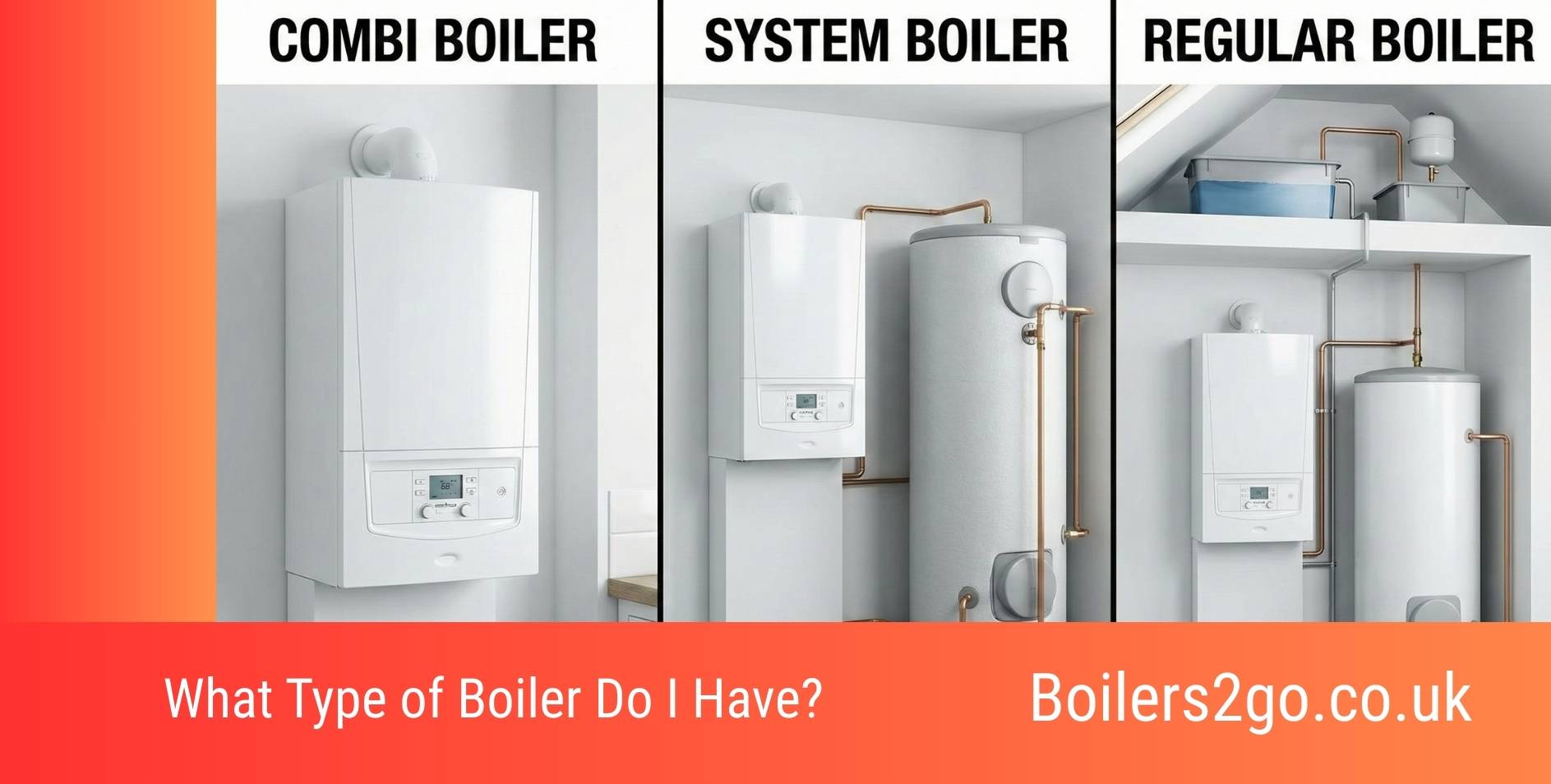
As a seasoned expert in the UK boiler industry with years of hands-on experience helping homeowners and landlords across the country, I’m here to guide you through figuring out what type of boiler you have. In this guide, I’ll walk you through simple steps to identify your boiler type, drawing from my real-world insights to make it straightforward and practical.
How to Identify What Type of Boiler You Have?
You can identify what type of boiler you have by checking its location, looking for specific components like tanks or cylinders, and noting how it delivers heating and hot water. From my experience working with countless UK homes, the easiest starting point is to head to where your boiler is installed – often in the kitchen, airing cupboard, or loft.
Look for clues like whether there’s a hot water cylinder nearby or if it’s a compact unit without extra tanks. This visual inspection, combined with your home’s setup, usually reveals if it’s a combi, system, or conventional boiler.
Checking the Boiler’s Location and Appearance
In many UK households, the boiler’s spot gives away its type right away. For instance, combi boilers are often wall-mounted in kitchens because they’re space-savers, while regular boilers might be tucked away in lofts with accompanying tanks. I’ve seen landlords surprised to find their system boilers hidden in utility rooms, blending seamlessly with pipework.
Looking for Hot Water Cylinders or Feed Tanks
A key indicator is the presence of storage tanks. If you spot a large hot water cylinder (often in the airing cupboard) and a cold water tank in the loft, that’s a classic sign of a conventional or heat-only boiler. System boilers might have a cylinder but no loft tank, and combis have neither – they heat water instantly.
Examining the Flue and Ventilation
The flue type can also hint at your boiler model. Modern condensing boilers, common in the UK since 2005 regulations, have plastic flues that vent horizontally through walls. Older non-condensing types might have metal flues going up chimneys, which I’ve encountered in period properties where upgrades are overdue.
What Are the Main Types of Boilers in UK Homes?
The main types of boilers in UK homes include combi boilers, system boilers, and regular (or conventional) boilers, each suited to different property sizes and hot water demands.
As someone who’s installed and serviced thousands of these, I can tell you that understanding these categories helps not just with identification but also with assessing if your current setup meets your needs as a homeowner or landlord.
Combi Boilers: Compact and Efficient
Combi boilers, short for combination boilers, are the most popular in smaller UK flats and houses because they provide central heating and hot water directly from the mains without needing storage tanks. If your boiler is a single unit that heats water on demand, it’s likely a combi – perfect for properties with limited space, as I’ve recommended to many first-time buyers.
System Boilers: Built for Larger Homes
System boilers work by storing hot water in a cylinder, making them ideal for homes with multiple bathrooms where simultaneous hot water use is common. Unlike combis, they require a hot water tank but no cold water feed tank, which simplifies installation in modern UK builds. In my career, I’ve seen these shine in family homes where reliability during peak times is crucial.
Regular or Conventional Boilers: Traditional Setup
Regular boilers, also known as heat-only or conventional boilers, rely on both a hot water cylinder and a cold water tank, typically found in older UK properties. They’re great for high water pressure needs but take up more space – something I’ve advised landlords to consider when renting out Victorian terraces.
How to Tell If Your Boiler Is Gas, Oil, or Electric?
You can tell if your boiler is gas, oil, or electric by checking the fuel source connection and any visible indicators like gas pipes or oil tanks. In the UK, most boilers are gas-fired, but rural homes often use oil, and electric ones are gaining traction for eco-friendly setups.
From my perspective, identifying the fuel type is essential for maintenance planning, especially with the push towards net-zero emissions.
Spotting a Gas Boiler
Gas boilers connect to the mains gas supply via pipes and often have a pilot light or digital display. They’re the standard in urban areas, and I’ve serviced plenty where the yellow flame confirms it’s gas.
Identifying an Oil Boiler
Oil boilers require an external oil tank, usually in the garden, and have a distinct smell during operation. Common in off-grid UK locations, these need regular deliveries – a tip I’ve shared with countryside landlords.
Recognising an Electric Boiler
Electric boilers plug into your home’s electricity supply with no flue needed, making them silent and clean. They’re compact like combis and ideal for flats, as I’ve installed in city-centre rentals.
What Features Indicate a Modern Condensing Boiler?
Features that indicate a modern condensing boiler include a plastic flue, high efficiency ratings (A-rated on the ErP label), and the ability to recover heat from exhaust gases. Since UK regulations mandated condensing models from 2005, most newer installations are these – they’re more energy-efficient, which I’ve seen slash bills for homeowners.
Efficiency Labels and Ratings
Look for the SEDBUK or ErP rating on your boiler; anything over 90% efficiency points to a condenser. This tech recycles waste heat, a game-changer in my book for reducing carbon footprints in UK heating systems.
Flue Design Differences
A white plastic flue exiting horizontally is a dead giveaway for condensing boilers, unlike older vertical metal ones. This design helps with safer, cooler emissions.
How to Find Your Boiler’s Model and Manufacturer?
You can find your boiler’s model and manufacturer by checking the front panel, user manual, or data plate inside the unit. Brands like Worcester Bosch, Vaillant, or Ideal dominate the UK market, and knowing this helps with parts or servicing – something I always stress to clients.
Reading the Data Plate
The data plate, often behind a flap, lists the model number, serial, and GC number. Snap a photo for reference when calling engineers.
Using Online Resources or Manuals
Search the manufacturer’s website with your model details for specs. I’ve guided many through this to confirm if it’s a combi or system variant.
Why Does Knowing Your Boiler Type Matter for Maintenance?
Knowing your boiler type matters for maintenance because it dictates servicing needs, parts availability, and efficiency checks tailored to combi, system, or regular setups. As a landlord, this ensures compliance with UK safety regs; for homeowners, it prevents costly breakdowns.
Servicing Requirements by Type
Combis need annual checks on heat exchangers, while systems focus on cylinders. I’ve seen neglected regular boilers lead to leaks from tanks.
Upgrading Considerations
If your boiler is over 15 years old, identifying its type highlights upgrade potential to more efficient models, aligning with UK green incentives.
Ready to Upgrade? Request a New Boiler Quote from Boilers 2 Go
If you’ve identified what type of boiler you have and it’s showing its age, now’s the perfect time to consider an upgrade. Whether you’re a homeowner looking to cut energy bills or a landlord ensuring tenant safety, requesting a free, no-obligation quote is straightforward.
FAQs
How often should I have my boiler serviced based on its type?
Depending on whether you have a combi, system, or regular boiler, annual servicing is recommended, but oil boilers might need more frequent checks due to fuel residue buildup, ensuring longevity and safety in UK homes.
Can the type of boiler affect my home’s energy bills?
Yes, the boiler type directly impacts energy costs; for example, efficient condensing combis can lower bills compared to older conventional models, especially in properties with high hot water usage.
What should I do if I can’t access my boiler to identify it?
If reaching your boiler is tricky, like in a loft, consult your home’s original plans or ask a Gas Safe registered engineer for a safe inspection to determine the type without risks.
Are there regional differences in boiler types across the UK?
In Scotland and Northern Ireland, oil boilers are more common due to limited gas networks, while England and Wales favour gas combis, influencing identification based on local infrastructure.
How does boiler type influence home insurance requirements?
Some UK home insurance policies require proof of regular maintenance for certain boiler types, like systems with cylinders, to cover potential water damage claims.

I’m Penny North, a home energy heating expert. My mission is to demystify new boilers and complex heating systems to help you achieve a warm, cosy home with lower energy bills and a smaller environmental footprint.