

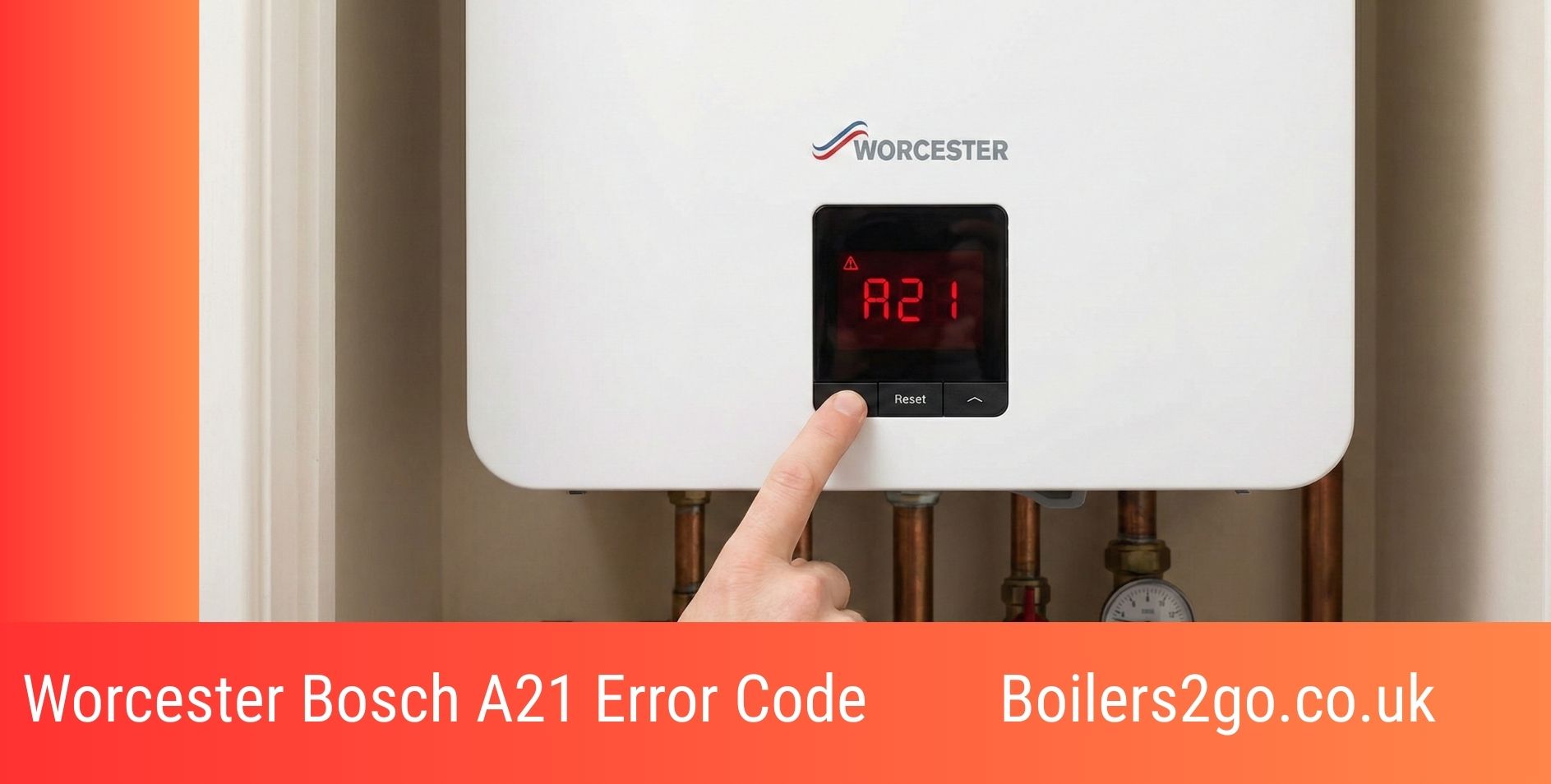
The Worcester boiler A21 fault code is a diagnostic alert that appears on the boiler’s control panel or the linked wireless thermostat, indicating a loss of radio frequency (RF) communication between these two key components of your home heating system.
In simple terms, your Worcester Bosch boiler relies on this RF signal to receive instructions from the room thermostat—such as when to fire up for central heating or hot water on demand.
Without it, the boiler may shut down or fail to respond, leaving your radiators cold and taps running chilly.
This error is specific to Worcester models equipped with wireless controls, like the popular Greenstar series, including combi boilers and system boilers. It’s not a sign of a major catastrophe, such as a gas leak or pressure failure, but rather a connectivity hiccup in the smart controls that make modern boilers energy-efficient.
Understanding this fault empowers you to act quickly, potentially saving on emergency call-outs from Gas Safe registered engineers.
What Causes the Worcester Boiler A21 Fault Code?
The Worcester boiler A21 fault code arises from disruptions in the RF signal pathway that links your boiler’s receiver module to the wireless thermostat, preventing seamless operation of your entire central heating setup.
These interruptions can stem from everyday wear, environmental factors, or simple oversights, affecting the boiler’s ability to modulate heat output based on room temperature needs.
Below, we delve into the primary culprits, providing context on how each impacts your Worcester Bosch boiler’s performance in a typical UK home. Common issues such as incorrect boiler settings, insufficient maintenance, and system blockages can lead to various problems, including the notorious Worcester Bosch EA227 error code. This error indicates that there may be a fault in the system, often related to pressure or water flow issues, which can significantly hinder your boiler’s efficiency. Addressing these factors promptly is essential to ensure reliable heating and hot water supply in your home.
Dead or low batteries in the thermostat
One of the most frequent triggers for the Worcester boiler A21 fault code is depleted batteries in the wireless room thermostat, which powers the device responsible for sending RF signals to the boiler.
Thermostats in Worcester systems, such as those in the Greenstar Comfort RF range, use standard AA batteries that last about 12-18 months under normal use.
When power dips below a critical level—often after a cold snap that ramps up heating demands—the thermostat can’t transmit a strong enough signal, causing the boiler to lock out and display the A21 error.
This is particularly common in older installations or properties with high thermostat usage, like family homes or multi-tenant rentals where the heating runs longer.
How to fix dead or low batteries in the thermostat
- To resolve this cause of the Worcester boiler A21 fault code, start by safely powering down your heating system: turn off the boiler at the isolator switch and wait five minutes.
- Locate your wireless thermostat—usually wall-mounted in a central living area—and use a flat-head screwdriver to gently prise it from its bracket, avoiding damage to the plastic casing.
- Remove the old batteries, noting the orientation (positive and negative terminals), and insert fresh, high-quality AA alkaline batteries, such as Duracell or Energizer, which provide longer life in low-temperature environments.
- Reattach the thermostat to the wall bracket, ensuring it clicks securely.
- Next, reset the thermostat by pressing and holding the reset button (often a small pinhole accessed with a paperclip) for 10 seconds until the display clears.
- On your boiler, reset the A21 fault by turning the central heating control knob to the off position, waiting 10 seconds, then turning it back to your desired temperature (e.g., 50-60°C for efficiency).
- Power the system back on and monitor for 30 minutes—if the RF signal reconnects, the flashing A21 should vanish, restoring hot water and radiator flow.
- Test by adjusting the thermostat setpoint; the boiler should respond within a minute. If batteries were the sole issue, this fix typically costs under £5 and takes 15 minutes, keeping your home heating reliable without professional intervention.
Interference disrupting the RF signal
Interference with the RF signal is another key cause of the Worcester boiler A21 fault code, where external electromagnetic noise from household devices overwhelms the 868 MHz frequency used by Worcester’s wireless controls.
Common culprits include Wi-Fi routers, cordless phones, microwave ovens, or even thick walls in period properties that weaken the signal over distances exceeding 30 metres.
In urban UK settings, neighbour’s electronics or baby monitors can exacerbate this, leading to intermittent dropouts where the thermostat’s commands for boiler ignition or modulation fail to reach the receiver module inside the boiler. This not only triggers the A21 alert but can also spike energy bills if the boiler runs inefficiently as a fallback.
How to fix interference disrupting the RF signal
- Addressing interference as a cause of the Worcester boiler A21 fault code begins with a simple repositioning test: temporarily move the wireless thermostat closer to the boiler—ideally within 10 metres and in direct line-of-sight—to bypass physical barriers like concrete walls or metal shelving units.
- Avoid placing it near heat sources (e.g., radiators) or electrical appliances that emit RF noise, such as DECT phones or LED lamps.
- Once relocated, reset both devices: on the thermostat, slide the battery cover and press the reset button; on the boiler, use the reset function via the control knob as described earlier.
- If the signal strengthens, make the new position permanent by drilling a discreet hole for cable tidying or using adhesive mounts for a renter-friendly setup.
- For persistent issues in multi-device homes, consider adding a signal booster compatible with Worcester RF systems (around £20-£30 from specialist suppliers), which amplifies the transmission without voiding warranties.
- After adjustments, run a full cycle: set the thermostat to 21°C and verify the boiler fires up, eliminating the A21 error. This homeowner-led tweak often resolves 70% of interference cases, enhancing overall system efficiency and reducing wear on your combi boiler’s components.
Thermostat out of effective range
When the wireless thermostat falls out of effective range, it triggers the Worcester boiler A21 fault code by failing to maintain a stable RF link with the boiler’s internal receiver, especially in larger homes or extensions where distances stretch beyond the standard 100-metre open-air limit.
Factors like multi-storey layouts in Victorian terraces or signal attenuation through floors amplify this, causing the boiler to interpret silence as a fault and halt operations for safety. Landlords in converted flats might see this more often due to partitioned spaces, disrupting tenant comfort and potentially breaching rental heating standards.
How to fix thermostat out of effective range
- To fix the out-of-range issue behind the Worcester boiler A21 fault code, first measure the distance between your thermostat and boiler using a tape measure, aiming to keep it under 30 metres indoors for optimal RF performance.
- If relocation is feasible, choose a new spot midway between rooms for even temperature sensing—perhaps hallway level to avoid drafts—then detach and remount as with battery replacement, ensuring no metal obstructions nearby.
- Post-move, perform a full system reset: isolate power, wait, then reconnect and press the thermostat’s pairing button (consult your model’s manual for the exact sequence, often holding ‘OK’ for 5 seconds).
- For extended properties, pair the thermostat with a Worcester-compatible RF relay kit (£50-£80), which acts as a midpoint repeater to bridge gaps without rewiring.
- Activate by following the kit’s LED pairing lights until they sync green, then test: crank the thermostat up and listen for the boiler’s hum within 60 seconds, confirming the A21 clears. This solution not only banishes the fault but optimises zoning for zoned heating, saving up to 10% on gas bills in multi-room setups.
Faulty component in the thermostat or boiler receiver
A faulty component, such as a damaged circuit board or corroded antenna in either the thermostat or boiler receiver, can precipitate the Worcester boiler A21 fault code by corrupting the RF data packets needed for command relay.
Exposure to moisture in damp UK basements or dust buildup in airing cupboards accelerates wear, mimicking a total signal loss and locking out the boiler’s printed circuit board (PCB). This is rarer in newer Greenstar i models but crops up in 5-10-year-old installations, affecting hot water priority and central heating cycles.
How to fix faulty component in the thermostat or boiler receiver
- Rectifying a faulty component causing the Worcester boiler A21 fault code requires initial isolation: power off the system and visually inspect the thermostat for cracks or corrosion on contacts—clean gently with a dry microfibre cloth if minor.
- For the boiler receiver (a small module clipped inside the control panel), access via the front fascia (refer to your user manual for safe opening), checking for loose wires or burn marks. If undamaged, reseat connections and reset.
- However, true faults demand part replacement: source an official Worcester thermostat (£80-£150) or receiver module (£40-£60) from approved stockists, ensuring compatibility with your boiler’s serial number.
- Install by swapping the old unit—clip out the receiver, plug in the new one, and re-pair via the thermostat’s menu (hold ‘Menu’ and select ‘Rebind’).
- Post-install, bleed radiators to rule out airlocks and monitor for 24 hours. While DIY-savvy homeowners can handle this, landlords should opt for a Gas Safe pro to maintain compliance and warranty integrity.
How to Prevent the Worcester Boiler A21 Fault Code in the Future
Preventing the Worcester boiler A21 fault code involves proactive upkeep of your wireless controls and overall home heating infrastructure, ensuring long-term reliability for your Worcester Bosch system.
Schedule annual boiler servicing by a Gas Safe engineer to inspect RF modules and clean components, catching battery wear or alignment issues early—this aligns with UK building regs and can extend your boiler’s lifespan by 20%.
For thermostats, adopt a calendar reminder every six months to check and replace batteries proactively, especially pre-winter, using long-life variants to combat cold-induced drain.
Minimise interference by mapping your home’s layout during installation, positioning the thermostat away from electronics and using shielded Wi-Fi channels if needed. Landlords, incorporate RF signal tests into tenant handover checklists to spot range problems in rentals promptly.
Finally, invest in a smart home energy monitor (£30-£50) to track system health, alerting you to signal dips before they escalate into full A21 lockouts. These habits not only sidestep faults but boost efficiency, potentially slashing gas consumption by 8-12% in average UK households.
When You Absolutely MUST Call a Gas Safe Engineer
While many Worcester boiler A21 fault code instances are straightforward, certain red flags demand immediate intervention from a Gas Safe registered engineer to safeguard your home and comply with UK gas safety laws.
If basic resets fail after multiple attempts, or if the error recurs within hours, it could signal deeper PCB faults or wiring shorts that risk electrical hazards—never tamper beyond surface checks.
Persistent A21 alongside unusual noises (e.g., humming pumps) or gas odours points to intertwined issues like flue blockages, where DIY could endanger carbon monoxide levels. For landlords, any fault in rented properties requires professional logging for EPC compliance and tenant safety certificates.
Older boilers (over 10 years) showing A21 might indicate obsolescence, warranting a full diagnostic to avoid cascading failures. Always prioritise certified experts for part replacements involving the boiler’s internals, as improper handling voids warranties and contravenes regulations.
In emergencies, use the Gas Safe Register hotline (0800 408 5500) for verified pros—better safe than sorry when your family’s warmth is at stake.
FAQs
Does the Worcester boiler A21 fault code affect hot water supply?
Unlike pressure-related errors, the A21 fault primarily disrupts central heating signals but can indirectly impact hot water if your system prioritises combi mode. The boiler may still produce on-demand hot water via direct taps, but inconsistent thermostat communication could lead to fluctuating temperatures—always verify with a multimeter test on the receiver if heating resumes but hot water lags.
Can weather conditions trigger a Worcester boiler A21 fault code?
Extreme cold can indirectly provoke the A21 error by accelerating battery drain in outdoor-exposed thermostats or causing minor expansions in wiring that loosen RF connections. In frosty UK winters, insulate exposed controls and use weatherproof covers to maintain signal integrity without frequent indoor relocations.
Is the A21 fault covered under Worcester Bosch warranty?
Warranty coverage for the A21 fault depends on your model’s age and service history—typically 2-12 years for parts like receivers, but only if annual servicing is proven. Exclusions apply to user-induced damage, such as battery corrosion, so retain invoices; extended plans via installers often bundle RF diagnostics for peace of mind.
How does the A21 error differ from other Worcester communication faults like H07?
While A21 targets RF thermostat loss, H07 indicates broader controller failures, such as wired zone valve mismatches in multi-boiler setups. A21 is usually wireless-specific and resettable, whereas H07 often needs firmware updates—distinguishing them via the manual’s entity diagrams prevents misdiagnosis.
Can I upgrade my thermostat to avoid future A21 faults on a Worcester boiler?
Upgrading to a Worcester-compatible smart thermostat, like the Bosch EasyControl, integrates app-based monitoring with stronger RF protocols, reducing A21 risks by 50% through auto-repair features. Ensure seamless pairing during installation to leverage OpenTherm efficiency for zoned heating in larger properties.

I’m Penny North, a home energy heating expert. My mission is to demystify new boilers and complex heating systems to help you achieve a warm, cosy home with lower energy bills and a smaller environmental footprint.