

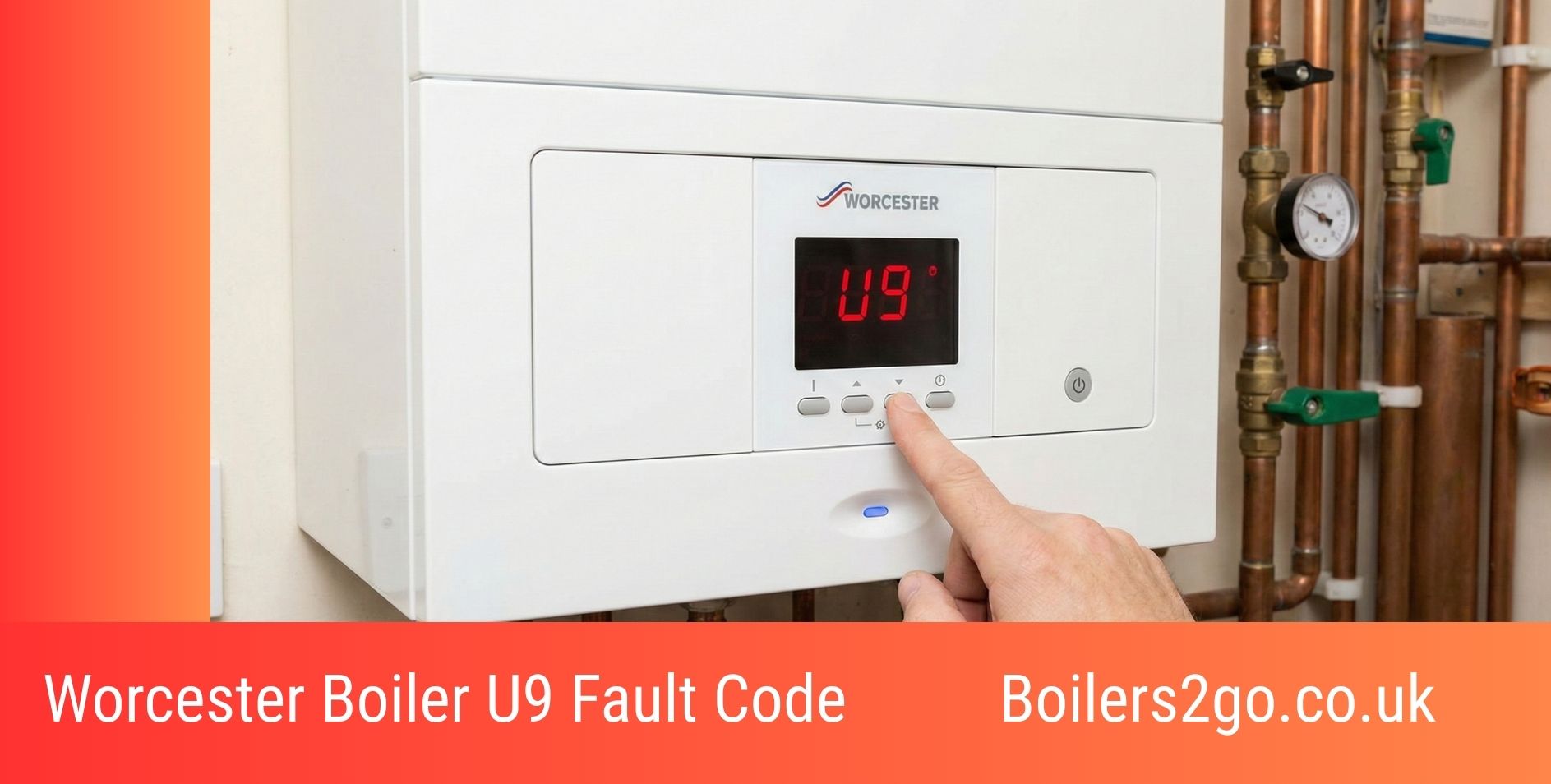
If you’re dealing with a Worcester Boiler u9 fault code on your combi or system boiler, you’re not alone. This error often appears on Worcester Bosch models.
In this guide, I’ll break down what the u9 error means, its common causes, and simple steps to resolve it.
Get a quote today and take the stress out of replacing your boiler. At Boilers2Go, we offer fast, reliable installation across the UK - often as soon as the next day. 
Need a new boiler?
What Is the Worcester Boiler U9 Fault Code?
The Worcester u9 fault code on your boiler is a safety alert that typically indicates the boiler’s flow temperature has become too high. In essence, your heating system detects overheating in the water flowing through the boiler and shuts down to prevent potential damage or safety risks.
This is common in popular Worcester Bosch Greenstar series boilers, such as combi boilers used in many UK homes and rental properties. Overheating can disrupt your domestic hot water and radiators, leaving you without warmth, especially during colder months.
When the u9 code flashes on the boiler display, it often accompanies a lockout mode, sometimes showing a countdown (like U9 decreasing to U0) before allowing a reset.
This built-in feature protects the appliance from further issues, but it can be inconvenient for landlords ensuring tenant comfort or homeowners relying on consistent boiler performance.
What Causes the U9 Fault Code on Worcester Boilers?
Several factors can trigger the u9 error in your Worcester boiler, often related to restricted water flow, component failures, or maintenance oversights. As an expert in UK boiler repairs, I’ve seen these issues arise from everyday wear and tear in residential properties. Below, I’ll explain the main causes. In addition to these factors, it’s important to regularly check the system pressure and ensure that there are no airlocks in the pipes, as these can also contribute to the u9 error. For those experiencing repeated issues, a thorough Worcester Bosch EA229 error overview can provide more insights into specific underlying problems that may require professional attention. Maintaining routine servicing can greatly reduce the likelihood of encountering these errors in the future.
Note: while some steps are DIY-friendly, always prioritise safety. Gas appliances like boilers require a Gas Safe registered engineer for any internal work to comply with UK regulations.
Low Water Pressure
The system pressure in your boiler drops below the recommended 1-1.5 bar, often due to leaks, bleeding radiators too frequently, or natural evaporation, leading to poor circulation and overheating. This is a frequent boiler malfunction in older UK homes.
How to Fix It
- Check the pressure gauge on your boiler. If low, repressurise the system using the filling loop (usually a flexible hose under the boiler).
- Turn the valves slowly until the gauge reaches 1.2 bar, then close them.
If pressure keeps dropping, inspect for leaks and call a professional heating engineer.
Blocked Heat Exchanger
Limescale, sludge, or debris builds up inside the heat exchanger (the part that transfers heat to water), restricting flow and causing the temperature to spike. Common in hard water areas like the South East of England.
How to Fix It
For minor blockages, a power flush by a qualified technician can clean the system. In severe cases, the heat exchanger may need replacement. Prevent this with regular boiler servicing and installing a magnetic filter.
Faulty Circulation Pump
The pump, which circulates water through the system, may fail, seize, or run inefficiently due to age or electrical issues, reducing flow and triggering the overheat sensor.
How to Fix It
Listen for unusual noises from the boiler. If the pump isn’t humming, try resetting the boiler. If it persists, a Gas Safe engineer should test and replace the pump if necessary. Costs typically range from £150-£300 including labour.
Air Locks in the System
Trapped air in radiators or pipes hinders water circulation, leading to hot spots and boiler overheating. This often happens after draining the system or in properties with upstairs heating.
How to Fix It
Bleed your radiators starting from the lowest floor.
Use a radiator key to release air until water drips out, then top up the system pressure. If air returns quickly, there might be a leak,seek professional advice.
Defective Temperature Sensor (NTC Thermistor)
The sensor that monitors flow temperature becomes faulty or loose, sending incorrect readings to the control board and causing unnecessary shutdowns.
How to Fix It
This requires diagnostic tools to test. An engineer can replace the NTC thermistor, a relatively quick fix costing around £100-£200. Avoid DIY as it involves electrical components.
System Sludge Build-Up
Over time, rust and debris accumulate in pipes and radiators, impeding flow similar to a blocked artery, common in unmaintained rental properties.
How to Fix It
Arrange a chemical flush or power flush service. Adding an inhibitor chemical during annual servicing prevents future build-up, ensuring efficient home heating.
These causes align with common boiler error scenarios, incorporating terms like central heating faults, combi boiler overheating, and Worcester Bosch troubleshooting for better search visibility.
How You Can Prevent the U9 Fault Code
Prevention is key for maintaining your Worcester boiler’s reliability, especially for landlords managing multiple properties.
- Schedule annual servicing by a Gas Safe engineer to catch issues early—this is a legal requirement for rental homes under UK gas safety laws.
- Install water softeners in hard water regions to reduce limescale, and monitor system pressure monthly.
- Using smart thermostats can also optimise heating efficiency, reducing strain on the boiler.
FAQs
Is the U9 fault code specific to certain Worcester Bosch models?
Yes, the U9 code appears more frequently in older two-digit display models like the Greenstar CDi series, where it denotes temperatures over 99°C. Newer models might show extended codes like E9 or 223 for similar overheating issues.
Can the U9 error affect my boiler warranty?
If your Worcester boiler is under warranty (typically 5-10 years), attempting DIY fixes beyond basic resets could void it. Always consult the manufacturer’s guidelines or contact Worcester Bosch support first.
What should landlords do if tenants report a U9 fault?
Prioritise tenant safety by arranging an urgent Gas Safe inspection. Document the issue for records, and consider emergency cover plans to minimise downtime in rental properties.
How does hard water contribute to U9 errors long-term?
In areas with high mineral content, hard water accelerates limescale in the heat exchanger, exacerbating overheating risks. Regular descaling and filters can mitigate this over years of use.
Is there a connection between U9 and other error codes like E9?
Often, U9 follows an E9 (safety limiter trip) as part of the lockout sequence. Addressing the root overheating cause resolves both, but they indicate related flow or pump problems.

I’m Penny North, a home energy heating expert. My mission is to demystify new boilers and complex heating systems to help you achieve a warm, cosy home with lower energy bills and a smaller environmental footprint.