

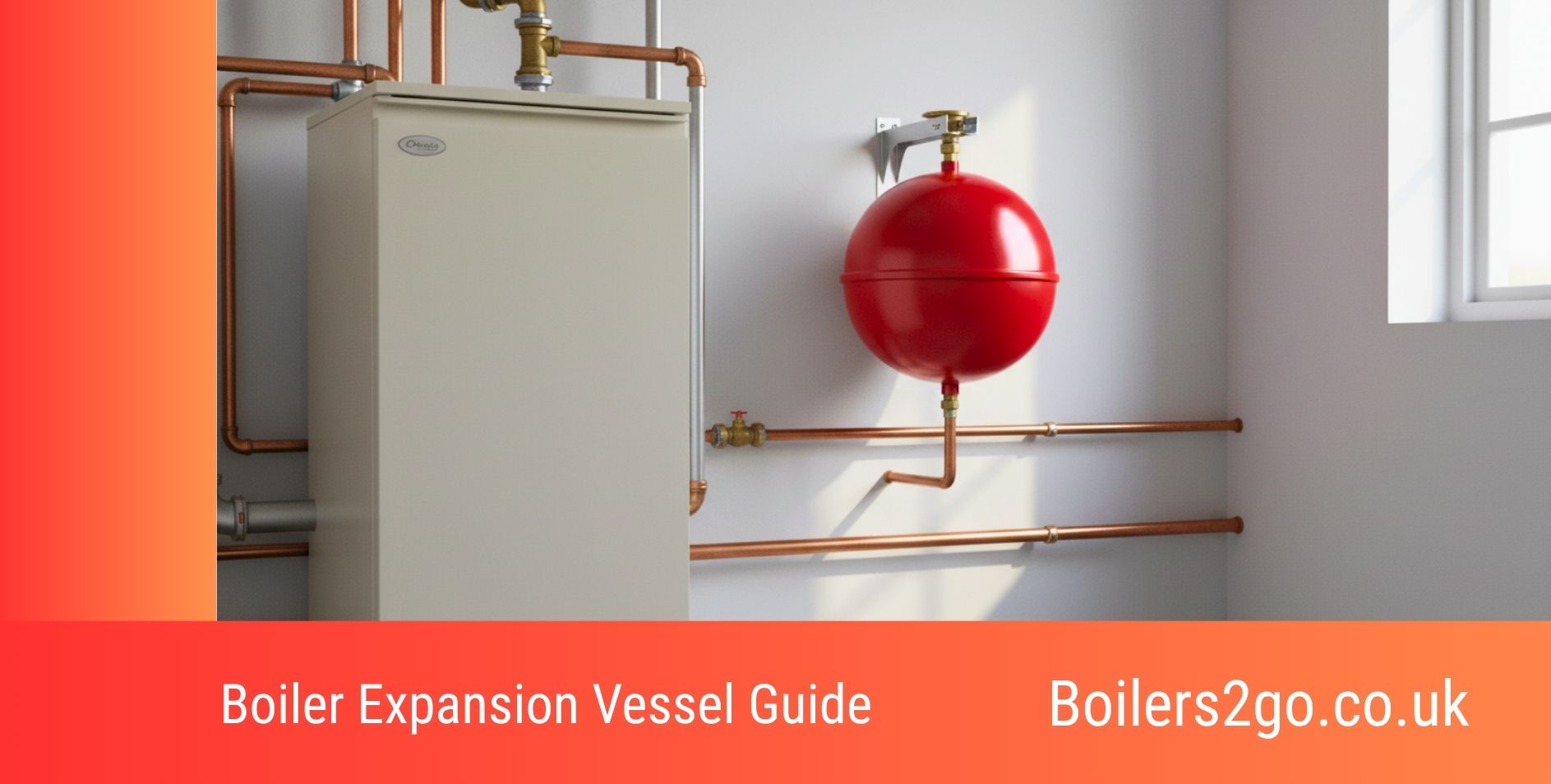
The boiler expansion vessel is a vital component in modern sealed central heating systems that accommodates the natural expansion of water as it heats up, helping maintain safe and stable system pressure for reliable boiler operation.
If your heating system is losing pressure regularly or the pressure relief valve keeps discharging, the expansion vessel may be faulty — a common issue that often leads to boiler lockouts. Request a new boiler quote from Boilers 2 Go today for expert advice and efficient replacements.
What Is A Boiler Expansion Vessel?
A boiler expansion vessel is a pressurised tank containing a rubber diaphragm that separates water from a cushion of air or nitrogen, designed to absorb the increased volume of heated water in sealed heating systems.
How Does A Boiler Expansion Vessel Work?
A boiler expansion vessel works by allowing hot water to enter one side of the diaphragm when the system heats up, compressing the air or nitrogen on the other side to accommodate expansion and prevent dangerous pressure spikes.
Where Is The Boiler Expansion Vessel Located?
The boiler expansion vessel is usually located inside the boiler casing (especially in combi and system boilers) or mounted externally on the pipework near the boiler in larger installations.
What Are The Common Signs Of A Faulty Boiler Expansion Vessel?
Common signs of a faulty boiler expansion vessel include rapid pressure fluctuations on the gauge, frequent activation of the pressure relief valve, boiler lockouts due to low pressure, and water escaping from the pressure relief valve even when the system is cold.
How Do You Test And Recharge A Boiler Expansion Vessel?
You test and recharge a boiler expansion vessel by isolating the system, checking the Schrader valve (similar to a car tyre valve) for pressure (typically 0.75–1.0 bar when cold), and using a pump to restore the correct pre-charge pressure if it has dropped.
When Should You Replace A Boiler Expansion Vessel?
You should replace a boiler expansion vessel when recharging fails to hold pressure, the diaphragm has ruptured (evidenced by water coming from the Schrader valve), or the vessel is over 10 years old and showing signs of corrosion or repeated failures.
Need A New Boiler Quote?
Repeated expansion vessel failures often indicate an ageing or inefficient boiler that would benefit from replacement with a modern A-rated model offering better reliability and extended warranties. Request a new boiler quote from Boilers 2 Go today for competitive pricing, expert system assessment, and professional Gas Safe installation tailored to homeowners and landlords.
FAQs
Can a faulty boiler expansion vessel damage other heating components?
Yes, a failed vessel can cause excessive pressure swings that stress the boiler heat exchanger, pump, and pipework, potentially leading to premature component failure.
How much does professional expansion vessel replacement typically cost?
Professional replacement of an internal expansion vessel usually costs £250–£450 including labour and parts, while external vessels are often cheaper at £180–£350.
Is it possible to recharge a completely flat boiler expansion vessel?
Recharging is possible if the diaphragm is intact, but a ruptured diaphragm requires full vessel replacement as water will contaminate the air side.
Do combi boilers and system boilers use different sized expansion vessels?
Yes, combi boilers typically have smaller integrated vessels (6–8 litres) while system boilers often require larger external vessels (10–25 litres) depending on system volume.
How does the size of the expansion vessel affect heating system performance?
An undersized vessel causes frequent pressure problems and relief valve discharge, while an oversized vessel provides better pressure stability but takes up more space.

I’m Penny North, a home energy heating expert. My mission is to demystify new boilers and complex heating systems to help you achieve a warm, cosy home with lower energy bills and a smaller environmental footprint.