

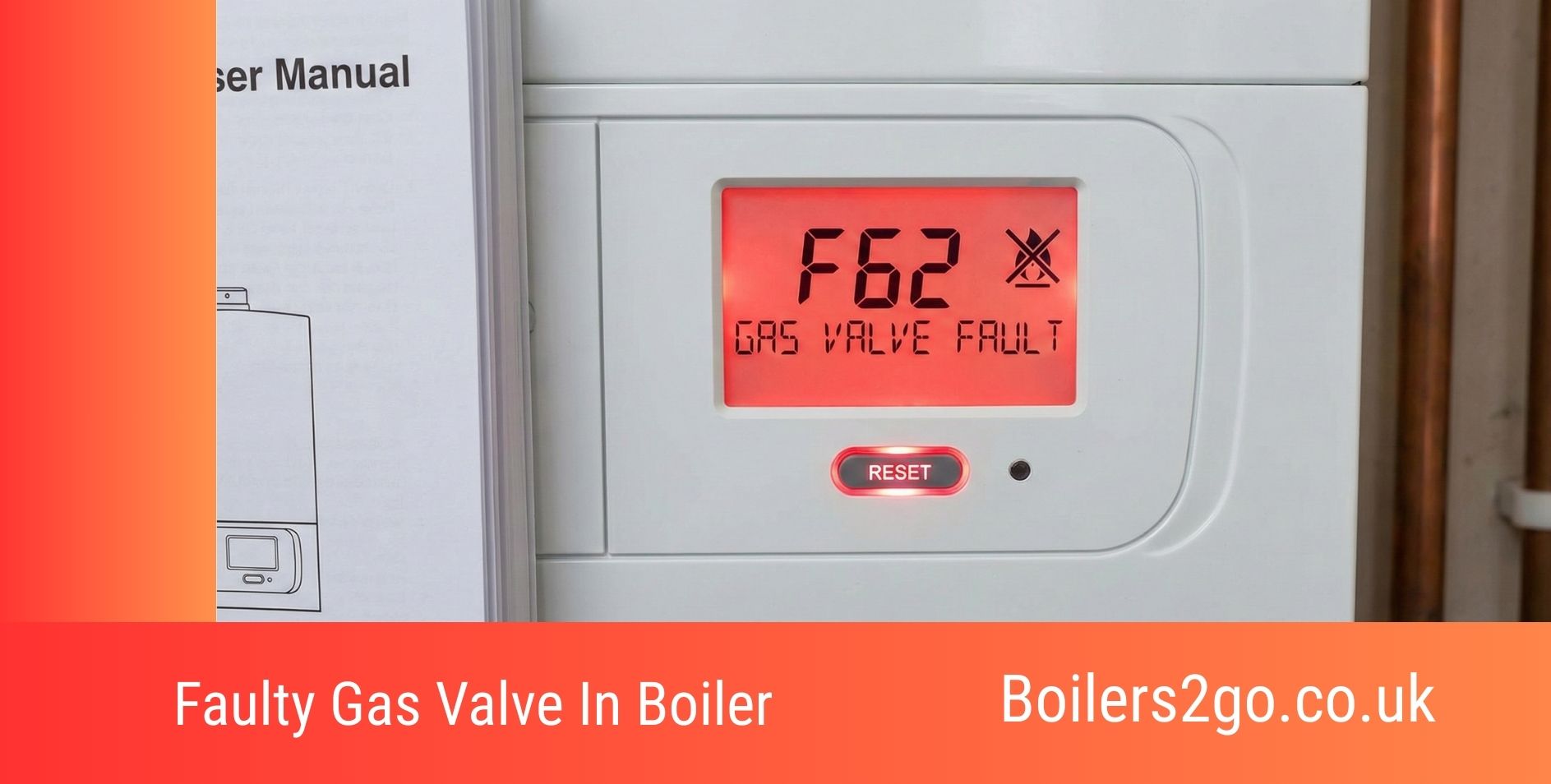
Dealing with a faulty gas valve in your boiler can be a frustrating experience, especially during the colder months when reliable home heating is essential. As a common issue in UK households, a faulty gas valve often leads to no hot water or central heating, prompting homeowners and landlords to seek quick, practical solutions.
Because gas valve repairs are always engineer work, a boiler cover, repair and annual service plan bundles repairs and servicing together.
In this guide, I’ll explore what a faulty gas valve means, its potential causes, and how a Gas Safe registered engineer fixes each one, so you know what to expect.
What Causes a Faulty Gas Valve in a Boiler?
A faulty gas valve can be caused by several factors, ranging from everyday wear to installation errors, each impacting the valve’s ability to control gas flow effectively. Understanding these causes is crucial for diagnosing the issue accurately and avoiding unnecessary repair costs. If you aren’t sure the gas valve is to blame, our guide to common boiler problems covers other faults with similar symptoms, such as ignition failure and lockouts.
Below, I’ll detail the most common culprits, incorporating related terms like boiler gas supply problems, defective solenoid valves, and heating system malfunctions to provide a fuller picture.
Get a quote today and take the stress out of replacing your boiler. At Boilers2Go, we offer fast, reliable installation across the UK - often as soon as the next day. 
Need a new boiler?
Wear and Tear from Prolonged Use
Wear and tear from prolonged use is one of the primary causes of a faulty gas valve, as the constant opening and closing over years degrades internal components like seals and diaphragms.
In UK homes, where boilers often run extensively during winter, this natural degradation can lead to leaks or sticking valves.
How to Fix Wear and Tear on a Gas Valve
- Wear and tear on a gas valve is a job for a Gas Safe registered engineer—by law, only a Gas Safe registered engineer may work on gas valves. The engineer will isolate the boiler’s power and gas supply and inspect the valve for signs of corrosion, leaks or sticking.
- For internal wear, replacement is usually necessary; the engineer will source a compatible valve (common makes include Honeywell and SIT) and fit it.
- Never try to clean, adjust or replace a gas valve yourself: it is illegal and dangerous, and it can also void your boiler warranty.
Dirt and Debris Buildup
Dirt and debris buildup is another frequent cause of a faulty gas valve, where particles from the gas supply or environment clog the valve’s orifices, restricting gas flow and leading to incomplete combustion.
This issue, often linked to poor maintenance or contaminated gas lines, can manifest as sputtering flames or error codes related to gas pressure faults in systems from brands like Ideal or Baxi.
How to Fix Dirt and Debris Buildup in a Gas Valve
- Dirt and debris in a gas valve must be dealt with by a Gas Safe registered engineer; never dismantle a gas valve yourself.
- The engineer will clean or replace the valve as needed and check the gas supply for contamination.
- After any work on the valve, they will carry out a gas tightness test and check combustion to make sure the boiler is operating safely.
Electrical Faults or Wiring Issues
Electrical faults or wiring issues can cause a faulty gas valve by disrupting the signals from the boiler’s PCB (printed circuit board) to the valve’s solenoid, preventing it from opening or closing properly. Our guide to boiler PCB faults covers the related symptoms.
Common in homes with fluctuating power supplies or rodent damage to cables, this problem ties into broader boiler electrical problems and can trigger safety lockouts.
How to Fix Electrical Faults or Wiring Issues in a Gas Valve
- Electrical faults affecting a gas valve should be diagnosed by a Gas Safe registered engineer, who will isolate the electricity and check the wiring harness and connections to the valve.
- Damaged wiring will be replaced to the original specification and the boiler reset to clear any error codes.
- If the solenoid itself is faulty—indicated by no clicking sound on activation—the engineer will replace the valve or its coil; this must be done by a Gas Safe registered engineer, as it involves gas components.
Incorrect Gas Pressure
Incorrect gas pressure is a key cause of a faulty gas valve, occurring when the incoming gas supply is too high or low, straining the valve and leading to erratic operation or shutdowns. This can stem from supplier issues, faulty regulators, or problems in the meter, often associated with gas inlet pressure anomalies in UK domestic heating setups.
How to Fix Incorrect Gas Pressure Affecting a Gas Valve
- Incorrect gas pressure must be checked by a Gas Safe registered engineer, who will measure the working pressure at the boiler’s inlet with a manometer and compare it with the manufacturer’s recommended range.
- If the problem lies with the supply or the meter regulator, your gas supplier will need to arrange the fix—never adjust the regulator yourself. If you smell gas, call the National Gas Emergency Service on 0800 111 999.
- Never adjust the gas valve yourself; a Gas Safe registered engineer must recalibrate and check the system, ensuring compliance with Gas Safety (Installation and Use) Regulations 1998.
Manufacturing Defects or Poor Installation
Manufacturing defects or poor installation can cause a faulty gas valve right from the start, where substandard components or improper fitting lead to premature failure, such as misaligned connections causing vibrations or leaks. This is less common but relevant for recently installed boilers, relating to warranty-covered boiler defects and installation errors.
How to Fix Manufacturing Defects or Poor Installation in a Gas Valve
- To fix manufacturing defects or poor installation in a gas valve, review your boiler’s warranty documentation—most new boilers come with a manufacturer warranty of several years—and contact them for a free inspection if within terms.
- For installation issues, have the original fitter return to realign or reseal connections. In cases of defects, a full valve replacement under warranty is typical; document all communications and insist on Gas Safe accredited work to maintain safety standards and insurance validity.
How Can You Prevent a Faulty Gas Valve in the Future?
Preventing a faulty gas valve in the future involves regular maintenance and proactive checks to extend your boiler’s lifespan and avoid costly repairs. Schedule an annual service by a Gas Safe engineer, which includes checking the gas valve, burner and gas pressure.
Additionally, install a magnetic filter to trap debris in the system, monitor for unusual boiler noises, and ensure your home’s gas supply is stable by reporting any meter irregularities promptly. For landlords, incorporate these into tenancy agreements to maintain compliance, while homeowners can benefit from boiler cover plans for added peace of mind.
When Must You Call a Gas Safe Engineer About a Faulty Gas Valve?
You must call a Gas Safe engineer to handle a faulty gas valve, as DIY attempts can lead to dangerous outcomes like gas explosions or carbon monoxide exposure.
If you smell gas, notice yellow flames instead of blue, or experience persistent error codes despite basic resets, contact a professional immediately—do not attempt fixes yourself. In the UK, only Gas Safe registered engineers are legally allowed to work on gas appliances, so verify their ID card via the Gas Safe Register website. For emergencies, dial the National Gas Emergency Service on 0800 111 999 without delay.
Faulty Gas Valve in a Boiler: FAQs
Can a Faulty Gas Valve Affect My Home’s Energy Bills?
A faulty gas valve can indeed increase your home’s energy bills by causing inefficient gas usage, where the boiler cycles more frequently or burns excess fuel to compensate for poor regulation. Monitoring your meter readings and comparing them to previous months can help spot this early.
Is a Faulty Gas Valve Covered Under Home Insurance?
Whether a faulty gas valve is covered under home insurance depends on your policy; many standard buildings insurance plans exclude wear and tear, but optional boiler breakdown cover often includes valve repairs. Always check your policy documents or contact your insurer for specifics.
How Does Weather Impact a Faulty Gas Valve?
Extreme weather, like freezing temperatures in the UK, can exacerbate a faulty gas valve by causing condensate pipes to freeze or pressure fluctuations, leading to more frequent malfunctions. Insulating exposed pipes can mitigate this risk during winter.
What Role Does Water Quality Play in Gas Valve Faults?
Poor water quality, such as hard water in areas like London, can indirectly contribute to gas valve faults by scaling up the heat exchanger, which strains the entire system including the valve. Installing a water softener may help in high-limescale regions. Scale and sludge can eventually damage the exchanger itself, and our guide to a faulty heat exchanger in a boiler explains the warning signs.
Are There Eco-Friendly Alternatives to Traditional Gas Valves?
Eco-friendly alternatives to traditional gas valves include those in modern condensing boilers or hybrid systems integrating renewables, which use advanced modulation for better efficiency. The Boiler Upgrade Scheme can help with the cost of switching to a heat pump, though gas boilers and hybrid systems are not eligible.
Get a quote today and take the stress out of replacing your boiler. At Boilers2Go, we offer fast, reliable installation across the UK - often as soon as the next day.
Need a new boiler?

I’m Penny North, a home energy heating expert. My mission is to demystify new boilers and complex heating systems to help you achieve a warm, cosy home with lower energy bills and a smaller environmental footprint.