

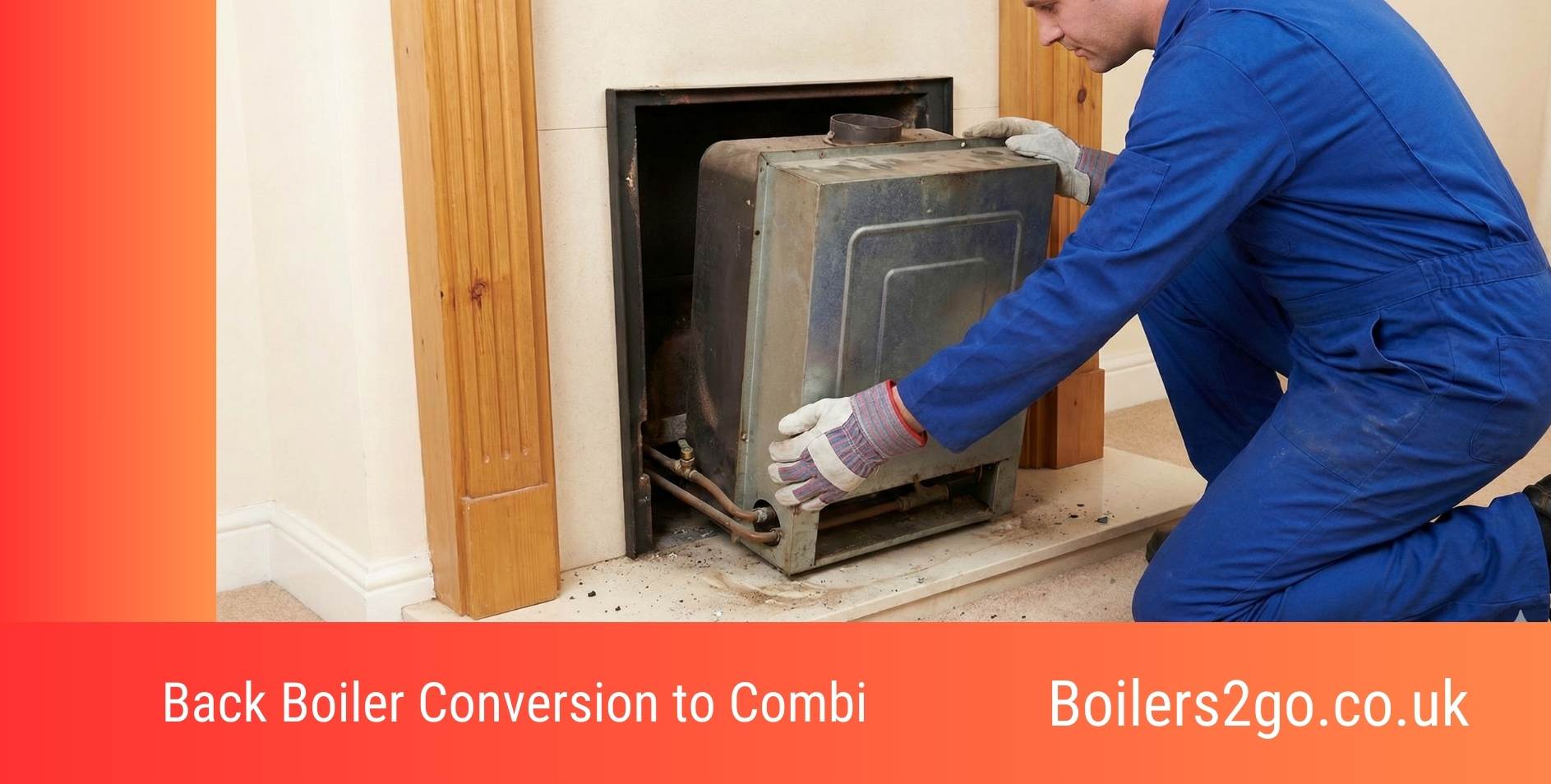
Upgrading from an old back boiler to a modern combi boiler, known as a back boiler conversion to combi, is one of the most popular heating upgrades in the UK right now. Thousands of homeowners and landlords every year replace their outdated, inefficient back boiler behind the fire with a compact, energy-saving combination boiler, saving money on bills, gaining space, and bringing the property up to current building regulations.
This guide covers what the conversion involves, average costs in 2026, benefits versus drawbacks, the full removal and installation process, grants available, and how to choose the right Gas Safe engineer.
Get a quote today and take the stress out of replacing your boiler. At Boilers2Go, we offer fast, reliable installation across the UK - often as soon as the next day. 
Need a new boiler?
What Are the Main Benefits of Converting a Back Boiler to a Combi Boiler?
Converting from a back boiler to a combi delivers multiple advantages for UK properties:
- Average energy bill savings of £300 to £580 a year, according to Energy Saving Trust figures.
- Instant, unlimited hot water, with no waiting for a cylinder to heat.
- More living space, removing the cylinder, cold water tanks, and the old fireplace unit.
- Increases property value and makes the home easier to sell or let.
- Brings the heating system up to current Part L building regulations.
- Removes the risk of asbestos exposure from old back boiler units.
- Quieter operation and far fewer breakdowns.
How Much Does a Back Boiler to Combi Conversion Cost?
A full back boiler conversion to combi in the UK typically costs between £3,800 and £6,500, including parts, labour, a new flue, a system flush, and Gas Safe certification. If you have a Baxi Bermuda unit, our guide to the Baxi Bermuda back boiler covers model-specific replacement prices and alternatives.
| Property Type | Average Cost (2026) | Typical Installation Time |
|---|---|---|
| 2-3 bed terraced/semi | £3,800 – £4,800 | 3-4 days |
| 3-4 bed detached | £4,500 – £5,800 | 4-5 days |
| Flat with difficult access | £4,200 – £6,500 | 4-6 days |
The Boiler Upgrade Scheme grant offers £7,500 in England and Wales, extended through March 2028, for anyone installing a heat pump instead of a gas combi. The ECO4 scheme may also help for households on certain benefits.
What Does the Back Boiler to Combi Conversion Process Involve?
A professional back boiler removal and combi installation usually follows these steps:
- Initial survey by a Gas Safe engineer.
- Asbestos check and safe removal if required, essential for pre-2000 back boiler units.
- Removal of the old gas fire and back boiler unit.
- Capping off or removing the old cold water tank and hot water cylinder.
- Power flush of the entire heating system.
- Installation of the new combi boiler, usually in the kitchen or utility room.
- New flue, condensate pipe, and pipework modifications.
- Full system testing and Gas Safe certification.
Our guide on how messy removing a back boiler is explains what disruption to expect during the work.
Can Every House Have a Back Boiler Converted to a Combi?
Not every property is suitable for a direct combi swap. Common issues include:
- Low mains water pressure or flow rate; combi boilers need at least 1.0 to 1.5 bar and 10 to 12 litres a minute.
- Very large homes with 15 or more radiators and multiple bathrooms, where a system or regular boiler may be better.
- Listed buildings or conservation areas, where planning permission is sometimes needed for external flues.
A good installer will carry out a full heat-loss calculation and water pressure test before quoting.
How Long Does a Back Boiler to Combi Conversion Take?
Most standard conversions take 3 to 5 working days from start to Gas Safe sign-off. Heating and hot water are unavailable during this time, so many people book the work for spring or summer.
How to Prevent Problems After a Back Boiler to Combi Conversion
To keep a new combi boiler running well for 12 to 15 years:
- Have it serviced every 12 months by a Gas Safe engineer.
- Install a magnetic system filter and limescale reducer, especially in hard water areas.
- Keep the pressure between 1 and 1.5 bar.
- Bleed radiators annually.
- Consider a maintenance and breakdown plan, typically £10 to £20 a month.
Back Boiler to Combi Conversion: FAQs
Will the Fireplace Be Lost When the Back Boiler Is Removed?
Not necessarily. Most people replace the old gas fire with an electric or bioethanol fire, or board it up and install a TV or feature wall. A decorative fireplace surround can still be kept if desired.
Discussing this preference with the installer at the survey stage helps make sure the final finish matches expectations rather than being decided on the day.
Can Existing Radiators Be Kept After a Back Boiler to Combi Conversion?
Yes, in most cases existing radiators can stay. The installer will usually upgrade any old 8mm microbore pipework to 15mm where needed for better flow.
A handful of radiators may need replacing if they’re heavily corroded internally, which a proper survey should flag before the work begins.
Is a Back Boiler to Combi Conversion Worth It If You Plan to Sell Within 1 to 2 Years?
Generally yes. Replacing an old back boiler with a modern condensing combi can improve a property’s Energy Performance Certificate (EPC) rating, which can make it more attractive to buyers.
Even over a short ownership window, this improvement is often worth more at sale than the cost of the conversion itself, particularly in a competitive local market.
Do Landlords Have to Upgrade From a Back Boiler by Law?
Not directly, but tightening EPC rules make an upgrade likely. The government confirmed in January 2026 that private rental properties in England and Wales will need a minimum EPC rating of C by 1 October 2030, covering all tenancies rather than a phased split between new and existing lets.
Most homes still fitted with a back boiler currently sit at EPC D or E, so many landlords are upgrading now to spread the cost ahead of the deadline rather than facing a rush closer to 2030.
Can the Cost of a Back Boiler to Combi Conversion Be Spread Over Time?
Yes, many companies offer 0% finance over 2 to 10 years, or buy now, pay later options with nothing to pay for 12 to 24 months.
A typical monthly cost for a £4,800 conversion works out at around £45 to £80 a month over a 10-year term, though comparing a few finance offers is worth doing before committing.
What Happens to the Old Back Boiler Once It Is Removed?
A Gas Safe engineer disposes of the old unit responsibly, and where the boiler is pre-2000 and contains asbestos components, this is handled as a separate, specialist part of the job rather than routine disposal.
Confirming how disposal is handled, and whether it’s included in the quoted price, is worth clarifying before work begins.
Does Removing a Back Boiler Affect the Chimney or Flue?
Yes, the old flue running up through the chimney is decommissioned, and a new balanced flue is fitted through an external wall for the combi boiler instead. As the new combi is wall-mounted rather than sitting in the fireplace, you will also need to decide where it goes, and our guide on whether you can move a boiler covers the rules for positioning it somewhere new.
In listed buildings or conservation areas this can require planning permission, so checking this early avoids delays once the work is scheduled. A quick check of the Gas Safe Register confirms an installer’s credentials before agreeing to any quote.

I’m Penny North, a home energy heating expert. My mission is to demystify new boilers and complex heating systems to help you achieve a warm, cosy home with lower energy bills and a smaller environmental footprint.