

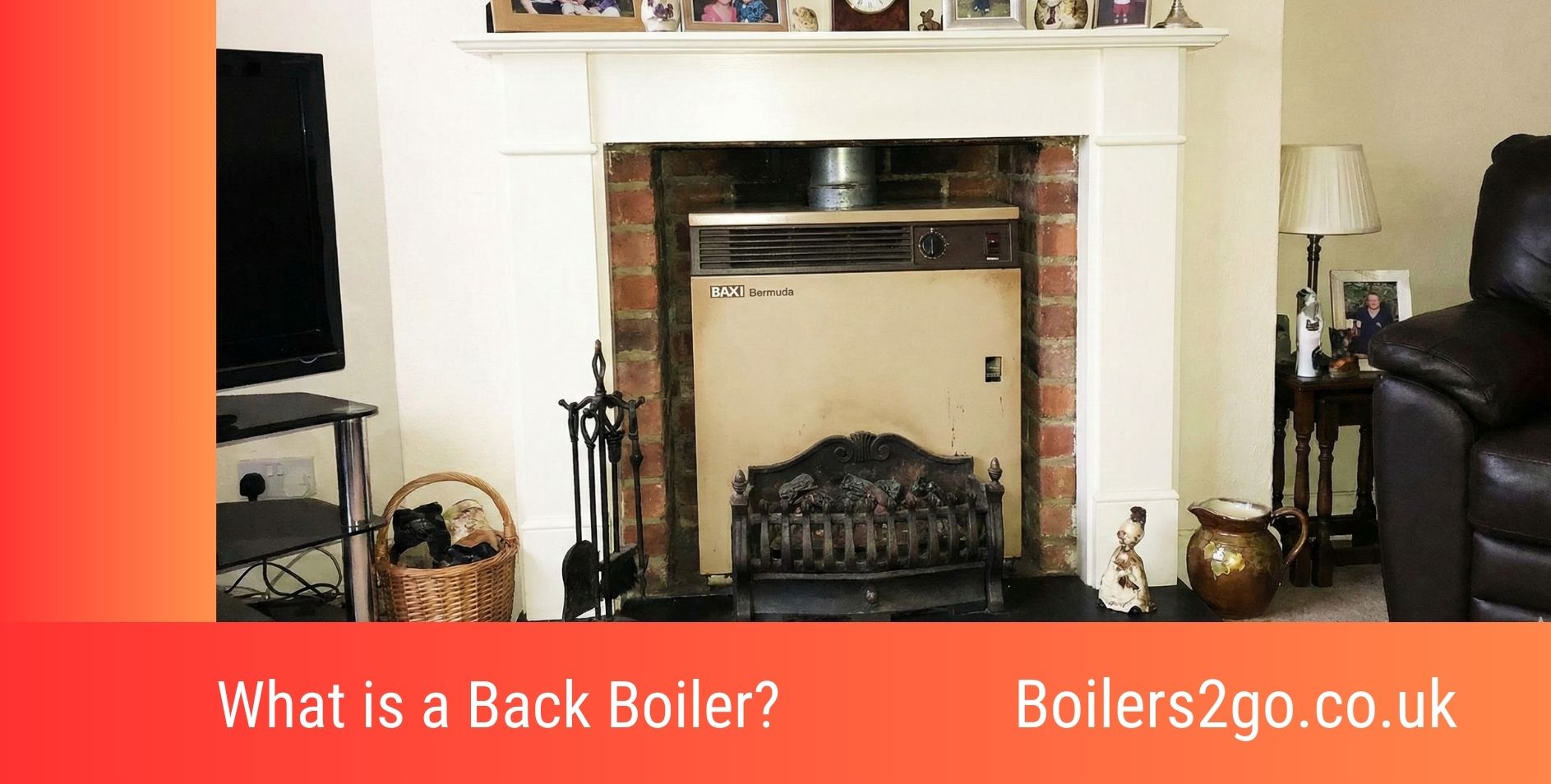
One topic that still comes up regularly in UK heating advice is the back boiler, those hidden units tucked away behind fireplaces in many older British homes.
This guide covers what a back boiler is, how it operates, its upsides and downsides, associated costs, and how it stacks up against today’s alternatives, to help inform decisions for a specific property.
Get a quote today and take the stress out of replacing your boiler. At Boilers2Go, we offer fast, reliable installation across the UK - often as soon as the next day. 
Need a new boiler?
What Is a Back Boiler?
A back boiler is a type of central heating unit installed directly behind a fireplace or stove, designed to heat water using the fire’s energy while also warming the room. These systems were a clever space-saver in their heyday, often powered by gas, solid fuel such as coal, or wood, and they piped hot water to radiators and taps throughout the home.
What Types of Back Boiler Are There?
Gas back boilers were typically found in urban homes for their convenience, while solid fuel versions suited rural properties with easy access to coal or logs. Each type ties into the home’s chimney for venting, making it a seamless fit for a traditional fireplace. Modern boilers vent differently, usually through a dedicated pipe in an external wall, and our guide to what a boiler flue is explains how that works.
How Does a Back Boiler Work?
A back boiler works by capturing heat from the fireplace’s firebox to warm water in a built-in chamber, which then circulates through the home’s pipes to heat radiators and provide hot water on demand.
It functions much like a mini furnace hidden in plain sight: the fire heats the boiler’s water jacket, and a pump pushes that hot water around the system, with gravity or pumps aiding flow in older gravity-fed setups.
Key Components of a Back Boiler System
Essential parts include the heat exchanger that transfers fire heat to water, a flue for safe exhaust, and controls such as thermostats to regulate temperature. The term fireback boiler often refers to the same setup, emphasising its integration with the hearth.
What Are the Pros and Cons of Back Boilers?
The pros and cons of back boilers largely come down to nostalgic charm versus modern inefficiency. On the plus side, they are compact and dual-purpose, but drawbacks include high running costs and maintenance challenges.
Pros tend to shine in space-tight properties, while the cons often push towards an upgrade in more energy-conscious times.
Get a quote today and take the stress out of replacing your boiler. At Boilers2Go, we offer fast, reliable installation across the UK - often as soon as the next day.
Need a new boiler?
Advantages of Back Boilers
They save space by combining heating and a focal fireplace, offer reliable warmth during power cuts for solid fuel types, and can be cost-effective for anyone with access to cheap fuel sources, which suits homeowners who value the ambiance of an open fire.
Disadvantages of Back Boilers
Efficiency hovers around 60 to 70%, wasting energy compared with the 90%-plus achieved by modern boilers, which can lead to considerably higher bills. They are also tricky to service, pose safety risks such as carbon monoxide if neglected, and are increasingly being phased out under UK net-zero goals.
How Much Does a Back Boiler Cost?
Back boiler costs vary widely, but replacement or installation typically runs £2,000 to £5,000, including removal of the old unit and any chimney adaptations needed.
Ongoing running costs tend to sting more than the upfront figure. Gas models can rack up £1,000 or more yearly in fuel, far pricier than efficient alternatives, especially given current 2026 energy prices.
Back Boiler Installation and Maintenance Costs
New installs are rare now, but repairs can cost £200 to £500 per fix. Annual servicing, strongly recommended for safety, adds a further £100 to £150, factoring in Gas Safe engineer fees for compliance.
Back Boiler Replacement Costs
Swapping to a combi boiler runs £1,500 to £4,500 including labour. Many homeowners now opt for a back boiler to combi conversion to improve efficiency, free up space, and eliminate the ongoing maintenance issues tied to older fireplace-based systems.
How Do Back Boilers Compare to Other Types of Boilers?
Compared to other boiler types, such as combi, system, or regular models, back boilers are less efficient, more physically integrated into the home, and lag behind in both convenience and eco-friendliness. Back boilers suit a retro aesthetic, whereas modern systems prioritise speed and savings for busy UK households.
Back Boiler vs Combi Boiler
Combi boilers heat water instantly without a tank, achieving 90%-plus efficiency versus a back boiler’s lower rates, making them cheaper to run and easier to install in small flats, which suits landlords looking to minimise void periods between tenancies. Unlike a back boiler, a wall-mounted combi is not tied to the fireplace, so you can choose a new position for it, as our guide on whether you can move a boiler explains.
Back Boiler vs System Boiler
System boilers store hot water in a cylinder for multiple taps, offering better flow than a back boiler’s often sluggish output, with a built-in pump for consistent pressure in larger homes.
Back Boiler vs Regular (Conventional) Boiler
Regular boilers use separate tanks for hot water and heating, similar in principle to a back boiler but generally more efficient and more adaptable to renewables, helping reduce a property’s carbon footprint under current UK regulations.
Get a quote today and take the stress out of replacing your boiler. At Boilers2Go, we offer fast, reliable installation across the UK - often as soon as the next day.
Need a new boiler?
When Should You Replace a Back Boiler?
If a back boiler is over 20 to 30 years old, using excessive fuel, or showing safety red flags such as unusual noises or leaks, it is a good time to weigh up a replacement for better efficiency and peace of mind.
A common concern is disruption during the swap. Our guide to how messy removing a back boiler is can help set realistic expectations before committing to an upgrade.
Anyone considering this transition can request a free quote for a new, energy-efficient boiler that could significantly reduce bills and boost the property’s value, whether for a homeowner seeking comfort or a landlord ensuring tenant safety. Any installation should be carried out by an engineer listed on the Gas Safe Register.
Back Boilers: FAQs
How Has UK Legislation on Back Boilers Changed?
Recent UK policy, including the ongoing push towards net-zero homes through the 2020s, increasingly restricts non-condensing back boilers and encourages grants for eco-upgrades to meet stricter emission standards.
Are Back Boilers Suitable for Historic or Listed Properties?
In listed buildings, a back boiler can help preserve architectural integrity by maintaining an original fireplace, though special permissions may be needed for any modifications under heritage guidelines.
Are There Modern Alternatives Based on Back Boiler Designs?
Some contemporary designs incorporate back boiler principles into biomass stoves, blending traditional aesthetics with renewable fuels for sustainable heating in off-grid UK homes.
Do Back Boilers Affect Home Insurance?
Insurers may charge higher premiums for homes with an older back boiler due to fire risk, so disclosing it and keeping up with regular servicing can help keep costs down.
Can Back Boilers Work With Smart Thermostats?
To a limited extent, some back boilers can link to smart thermostats for better control, though full integration often requires partial upgrades to compatible components rather than working seamlessly out of the box.
Is It Still Legal to Use an Existing Back Boiler in 2026?
Yes, an existing back boiler can continue to be used as long as it remains safe and passes its annual gas safety inspection. The restrictions mainly affect new installations, since a modern replacement must be a high-efficiency condensing model under current UK Boiler Plus regulations.
Why Do Back Boilers Develop Faults Suddenly After Years of Use?
Many back boilers are original to the property and have been running for several decades, so components such as the heat exchanger and pump are simply reaching the end of their practical working life. A sudden fault on a very old unit is often the first sign that a wider replacement, rather than a single repair, is the more sensible route forward.
Get a quote today and take the stress out of replacing your boiler. At Boilers2Go, we offer fast, reliable installation across the UK - often as soon as the next day.
Need a new boiler?

I’m Penny North, a home energy heating expert. My mission is to demystify new boilers and complex heating systems to help you achieve a warm, cosy home with lower energy bills and a smaller environmental footprint.