

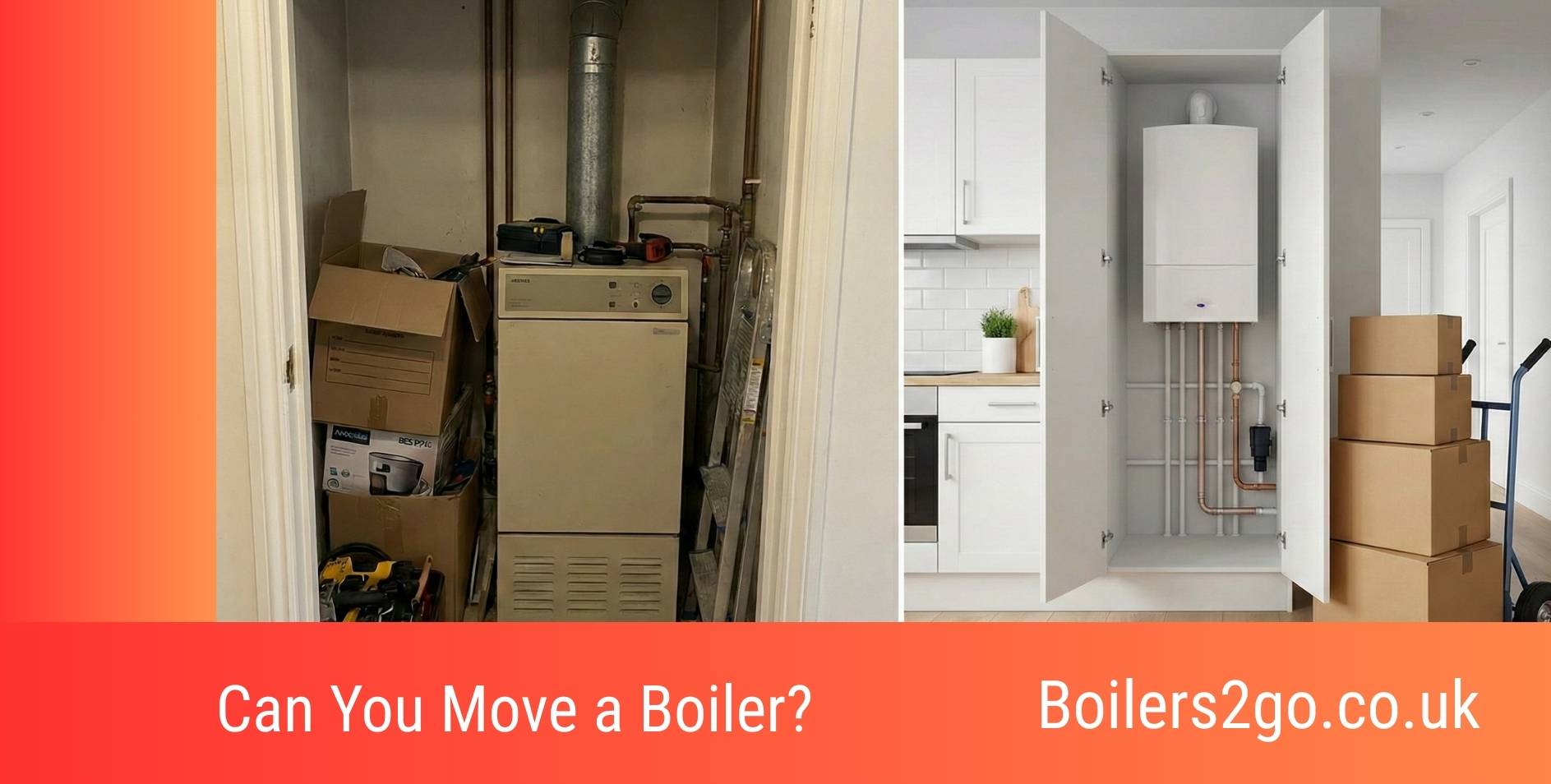
Yes, it is entirely possible to relocate a boiler, whether the goal is redesigning a kitchen, creating space for an extension, converting a loft, or simply moving it to a quieter spot away from living areas.
Wherever the new spot is, check the rules first: our guides to installing a boiler in a bathroom and installing a boiler in a bedroom explain the specific requirements for those rooms.
This guide covers everything worth knowing about moving a boiler to another room or wall, including costs, regulations, common challenges, and the practical considerations that come up at each stage.
Get a quote today and take the stress out of replacing your boiler. At Boilers2Go, we offer fast, reliable installation across the UK - often as soon as the next day. 
Need a new boiler?
Is It Possible to Relocate a Boiler in the UK?
It is possible to relocate a boiler in almost every UK property, though whether it is straightforward or complex depends on several factors. The distance being moved, the type of boiler (combi, system, or conventional), the new proposed location, and the current gas supply route all play a part.
A Gas Safe registered engineer will always carry out a site survey before quoting, since altering a gas supply is never a general plumbing task.
What Are the Main Reasons Homeowners Want to Move a Boiler?
Homeowners move a boiler for a variety of practical and aesthetic reasons. The most common include freeing up kitchen space during a refurbishment, reducing noise in living areas, especially with older boilers, moving it to an airing cupboard or loft for a cleaner look, or relocating it outside into a utility room or garage when extending the house. If your current boiler is an old back boiler behind a fireplace, relocating it usually means replacing it altogether, and our guide to back boiler conversion to a combi explains how that upgrade works.
Whatever the reason, the right position affects both running efficiency and how easy the system is to service, so read our guide to the best place to put a boiler before committing to a new spot.
How Much Does It Cost to Move a Boiler?
The cost to move a boiler typically ranges from £400 to £800 for a short move, under 2 to 3 metres on the same wall, £800 to £2,000 for moving to a different room on the same floor, and £2,000 to £4,500 or more when moving it upstairs, into a loft, or a long distance across the house.
Plumbing modifications, insulation requirements and the exact distance involved can all significantly affect the final figure, and our moving boiler costs guide breaks this down further. Prices generally include new gas pipework, extended heating pipes, a new flue kit, condensate pipe rerouting, and commissioning.
Get a quote today and take the stress out of replacing your boiler. At Boilers2Go, we offer fast, reliable installation across the UK - often as soon as the next day.
Need a new boiler?
What Regulations and Rules Apply When Relocating a Boiler?
Relocating a boiler in the UK is heavily regulated under the Gas Safety (Installation and Use) Regulations 1998 and Part J of the Building Regulations. Only a Gas Safe registered engineer can legally carry out the work.
The new position must have adequate ventilation, a suitable flue termination point that meets clearance distances from windows, doors and boundaries, and the condensate drain must run to a proper waste point. Once the work is complete, the engineer carries out boiler commissioning to verify all connections are secure and the system is operating efficiently before signing it off.
Can You Move a Combi Boiler Yourself (DIY)?
It is not legal to move a combi boiler in the UK if the work involves altering or extending the gas supply pipe. Any work on the gas-carrying parts must be completed by a Gas Safe registered engineer, as our guide to installing a boiler yourself explains.
Preparatory building work, such as removing cupboards or chasing walls, can be done independently, but the final connection and commissioning is strictly professional-only.
What Are the Most Common Challenges When Moving a Boiler?
The most common challenges when moving a boiler include extending the gas supply safely, since copper pipe must be correctly sized and clipped, rerouting the flue so it still meets manufacturer clearances, extending heating flow and return pipes without causing airlocks or poor circulation, and running a new condensate drain with the correct 1:40 fall to prevent freezing.
How Long Does It Take to Relocate a Boiler?
The time it takes to relocate a boiler varies from half a day for a very short move on the same wall, to 2 to 3 full days for a complete room change involving new pipe runs and flue work. Most standard kitchen-to-airing-cupboard or kitchen-to-loft moves take 1 to 2 days.
Can You Move a Boiler Upstairs or Into a Loft?
A boiler can be moved upstairs or into a loft, provided the floor is strong enough to take the weight, most modern combi boilers weigh 30 to 45kg, the gas pressure at the meter is adequate for the extra height and pipe length, and a vertical flue or horizontal flue with extensions can be installed legally.
Can You Move a Boiler Outside Into a Garage or Outbuilding?
A boiler can be moved outside into a garage or purpose-built outbuilding using a weatherproof boiler cabinet or an outdoor-specific model. The gas pipe must be protected from damage, the flue must terminate correctly, and the condensate pipe needs trace heating or an increased diameter to prevent winter freezing.
Our guide to installing a boiler outside covers the pros and cons, from weatherproofing to long-term maintenance.
How to Prevent Problems When Planning a Boiler Relocation
Prevention tips for the future:
- Always get at least 3 written quotes from local Gas Safe engineers with the Domestic Gas Central Heating and Combis categories on their card.
- Ask the engineer to carry out a full site survey before quoting. Never accept a phone-only quote for relocation work.
- Plan the new location early with a kitchen designer or builder so pipe routes can be first-fixed before plastering.
- Leave enough working space, usually 600 to 700mm in front of the boiler, for the next engineer who services or replaces it.
- Consider upgrading to a modern, quieter combi at the same time if the current boiler is over 10 to 12 years old, since it often costs little extra once the pipes are already being moved.
Once the new boiler is commissioned, keep an eye on the pressure gauge, since repressurising correctly after any relocation helps the system settle in and avoid nuisance faults in the first few weeks.
Related Boiler Relocation Guides
- Hiding a boiler
- How long it takes to fit a new boiler
- Boiler flue replacement cost
- Can a plumber install a boiler?
Moving a Boiler: FAQs
Will Moving a Boiler Invalidate the Manufacturer’s Warranty?
In most cases, no, as long as the work is carried out by a Gas Safe engineer and the boiler is re-registered with the manufacturer, which many engineers handle as part of the job. Some brands, such as Worcester Bosch or Viessmann, require an accredited installer specifically for extended warranty terms, so it is worth checking this before booking.
Can You Keep Existing Radiators When Moving a Boiler a Long Distance?
Yes, though the system may need power-flushing and the pipe sizes checked. Very long pipe runs sometimes require larger-diameter flow and return pipes, or even a low-loss header, to maintain proper circulation and efficiency.
Is It Worth Fitting a Magnetic Filter When Moving a Boiler?
Yes, particularly in hard water areas such as the South East and Midlands. Adding these during the move costs very little extra and helps protect the new heat exchanger for years to come.
Do You Need to Tell Your Insurer When You Move a Boiler?
It is good practice to inform an insurer. Most policies cover boiler moves carried out by Gas Safe engineers, but failing to notify them could complicate a future claim, so it is worth a quick call to check.
Can You Move a Boiler Temporarily During Building Work?
Yes, many homeowners do this during major extensions. Engineers can cap off pipes temporarily and reinstate the original position later, though it usually costs almost as much as two separate moves, so it is worth weighing up against a single, permanent relocation if the layout allows.
Does Moving a Boiler Require Planning Permission?
Planning permission is not usually required for relocating a boiler within a property, since this falls under Building Regulations rather than planning law. However, moving a boiler outside into a new external structure, or as part of a wider extension, may bring in separate planning considerations worth checking with the local authority beforehand.
Can You Move a Boiler Without Upgrading the Whole Heating System?
Yes, a straightforward relocation does not require replacing the boiler itself, provided the existing unit is in good working order and the new location suits its flue and pipework requirements. Many homeowners do choose to upgrade at the same time simply because the disruption and labour overlap, but it is not a requirement.
Get a quote today and take the stress out of replacing your boiler. At Boilers2Go, we offer fast, reliable installation across the UK - often as soon as the next day.
Need a new boiler?

I’m Penny North, a home energy heating expert. My mission is to demystify new boilers and complex heating systems to help you achieve a warm, cosy home with lower energy bills and a smaller environmental footprint.