

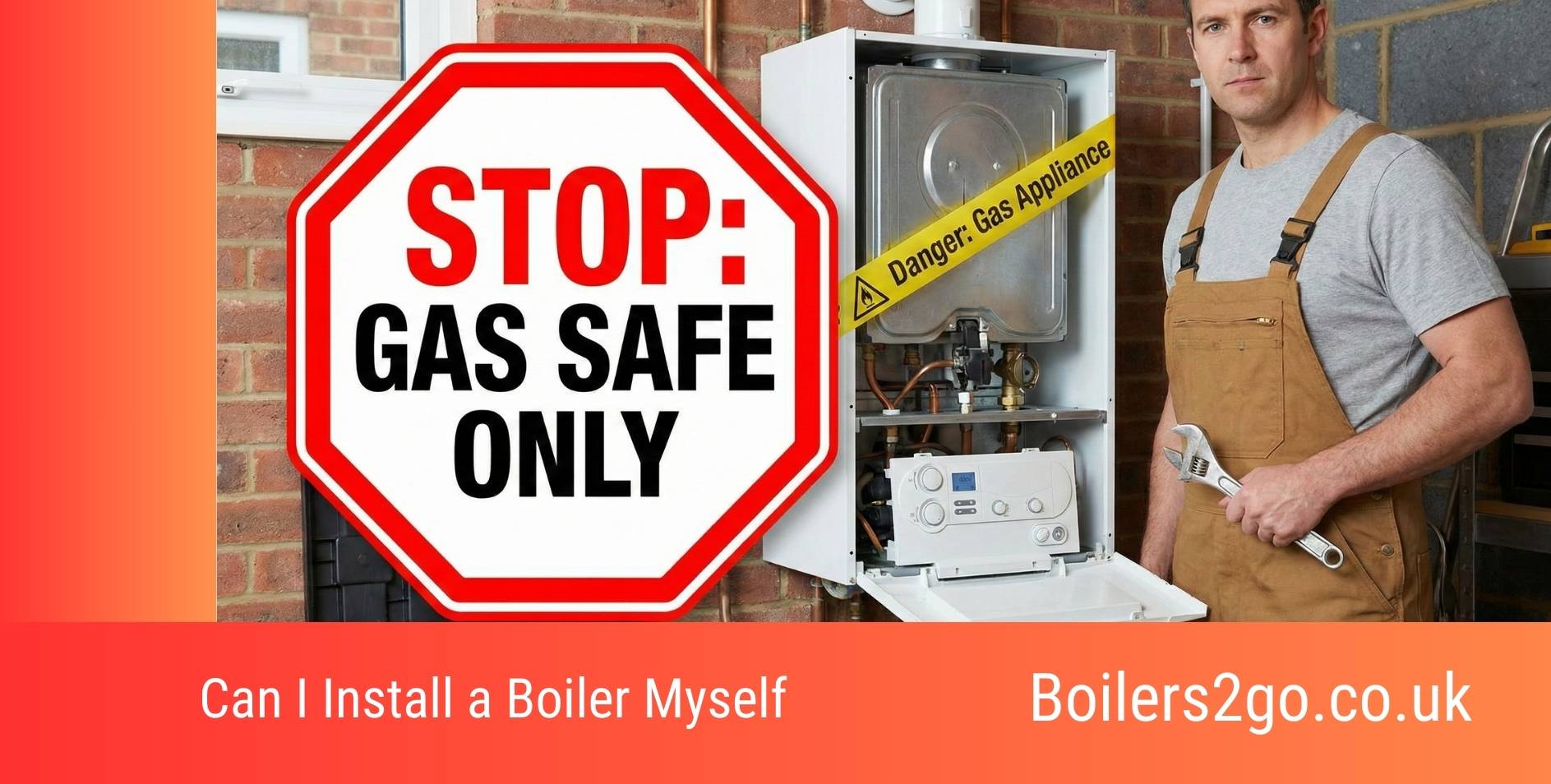
Thinking about installing a boiler without a professional? This guide covers the legalities, the potential dangers, and smarter alternatives for a home heating system, whether managing a rental or upgrading a personal property.
Understanding the rules around self-installation of heating appliances can prevent costly mistakes and, more importantly, keep everyone in the property safe.
Is It Legal to Install a Boiler Yourself in the UK?
No, it is not legal to install a gas-fired boiler yourself in the UK. Under the Gas Safety (Installation and Use) Regulations 1998, which remain firmly in force in 2026, only Gas Safe registered engineers can legally carry out gas boiler fitting work.
For electric boilers, the rules are different. Self-installation is not outright illegal, but the work must comply with Building Regulations Part P for electrical safety, and it is strongly recommended that a qualified electrician certifies the job regardless.
Landlords should be particularly careful here. Non-compliant work can invalidate a gas safety certificate, putting tenant welfare at risk alongside significant legal and financial exposure. With newer gas boilers increasingly built to be hydrogen-blend ready as part of the industry’s move toward net zero, a DIY attempt also risks falling foul of efficiency requirements under Part L of the building regulations.
Who Regulates Boiler Installation in the UK?
The Gas Safe Register oversees all gas work in the UK, while NICEIC or a similar body handles electrical certifications for electric boiler installs.
It is always worth checking that any notifications required for a major installation have gone to the local authority, ensuring the upgrade meets current building standards.
What Are the Risks of Installing a Boiler Yourself?
The risks of a DIY boiler installation are substantial, ranging from gas explosions to carbon monoxide poisoning if connections are not made correctly.
Improper flue placement in particular has led to serious incidents in older UK homes, where deadly fumes can build up without anyone noticing until it is too late. Electrical faults in a self-fitted unit can also cause fires, especially in damp areas, and can void a home insurance policy in the process.
For landlords, these dangers extend further, into potential liability claims from tenants that can run to thousands of pounds. Even comparatively minor errors, such as incorrect pressure settings, can reduce heating efficiency, push bills up, and shorten the appliance’s overall lifespan.
Health and Environmental Hazards of DIY Boiler Installation
Beyond immediate safety concerns, poor ventilation from amateur installation work can contribute to damp and mould growth, affecting indoor air quality over time. As the UK continues pushing for greener, more efficient homes, a non-compliant install can also work against carbon reduction targets and, in some cases, affect a property’s value.
What Skills and Qualifications Would DIY Boiler Installation Actually Require?
A genuine DIY boiler installation would require plumbing expertise, electrical knowledge, and gas engineering training. For gas specifically, Gas Safe registration would still be legally required, which makes true DIY installation impossible for a gas appliance regardless of skill level.
For anyone with relevant trade experience, the work involves pipe soldering, pressure testing, and flue gas analysis, all of which are skills developed and assessed through formal ACS qualifications rather than picked up casually.
For electric variants, Part P competency is the key requirement for safe wiring. It is easy to underestimate the precision this work demands, and small inaccuracies can lead to a genuinely inefficient heating system down the line.
Tools and Safety Gear Needed for Boiler Installation
A proper installation calls for torque wrenches, multimeters, and gas analysers, along with appropriate PPE such as gloves and masks. Without professional calibration of this equipment, none of it can guarantee a genuinely safe combi boiler setup, even in experienced hands.
Why Should You Hire a Professional to Install a Boiler?
Hiring a professional ensures compliance, safety, and optimal performance, and the work is typically backed by a warranty that a DIY install simply would not carry.
Gas Safe professionals are trained to spot problems such as incompatible pipework early, which can save considerable money on future repairs. For landlords managing multiple properties, this also means reliable tenant heating with far less risk of unexpected downtime.
Professionals can also integrate smart controls for genuine energy savings, aligning the system with hydrogen-ready standards as the industry evolves. It is not just a question of legality. It is peace of mind.
Efficiency and Lifespan Benefits of Professional Installation
Expert fitting maximises the ErP efficiency rating a boiler is capable of, reducing fuel use over its lifetime. Proper commissioning by a qualified engineer also helps the boiler run reliably throughout its working life.
How Much Does Professional Boiler Installation Cost?
Professional boiler installation typically costs between £1,500 and £4,000, including the unit and labour, varying by boiler type such as system or combi. A basic gas combi installation is often around £2,000 fitted, while electric options can be cheaper at £1,000 to £2,500, since there is no flue to fit.
If the new boiler is going in a different spot to the old one, our guide to moving boiler costs is worth reading, since moving a boiler can add anywhere from £300 to £1,200 to the overall bill depending on the complexity of the new site.
Checking how much a plumber charges to install a boiler also helps confirm a quote is fair, since rates vary significantly by location and the complexity of the job.
It is also worth checking how long it takes to fit a new boiler, so any disruption to hot water or heating can be scheduled around rather than coming as an unwelcome surprise.
Homeowners in rural areas without mains gas typically pay more for oil boiler setups, which require an OFTEC registered engineer rather than Gas Safe. It is also worth checking for any current VAT reductions on energy-efficient upgrades, which can help offset costs for both homeowners and landlords.
Hidden Costs of DIY vs Professional Boiler Installation
A DIY approach might look free upfront, but it carries a real risk of £500 or more in remedial fixes or fines if the work does not comply with regulations. A professional, by contrast, typically offers a fixed quote upfront, avoiding the nasty surprises that can come with a botched heating appliance replacement.
Pros and Cons of Attempting a DIY Boiler Installation
The main advantage of a DIY approach is potential upfront cost saving, but for gas units, this is heavily outweighed by the legal and safety downsides. Homeowners who have tried to save money this way have, in some cases, ended up facing far larger penalties and remedial costs than a professional installation would ever have cost.
For electric boilers, there can be some personal satisfaction in a competent, properly certified DIY job, but the risk of a voided warranty still looms large if anything goes wrong. For landlords specifically, the risk of tenant disputes arising from a faulty self-install is generally a deal-breaker on its own, with little upside to offset it without the right qualifications in place.
Professional Boiler Installation and Renewable Heating
In today’s increasingly eco-conscious UK housing market, professional installation also supports better integration with renewables such as solar thermal or heat pumps, a consideration that is often overlooked amid the general appeal of doing it yourself.
Planning a Professional Boiler Installation
Once the decision has been made to bring in a professional rather than attempt the work personally, a few practical questions are worth answering in advance. One is whether your preferred spot is allowed at all, since some rooms have their own rules, as our guide to installing a boiler in a bathroom explains.
Getting the output right matters just as much as the fitting itself. Our guide to what size boiler you need explains how factors such as home size, insulation quality, and local climate affect the correct output, since an oversized unit can short-cycle while an undersized one will struggle to keep up with demand.
Positioning is another factor worth getting right from the outset. Our guide to the best place to put a boiler covers how positioning affects efficiency and the system’s life, something a professional will factor into their assessment of a property’s layout.
Finally, it is worth understanding the different types of boilers, since fuel type, efficiency ratings, and suitable sizing all vary considerably between combi, system, and regular boilers, and each has its own advantages depending on a property’s setup.
Ready to Install a New Boiler?
For anyone who has concluded that DIY is not the right route, requesting a new boiler quote is a straightforward, obligation-free way to get expert guidance and ensure the heating system ends up safe, compliant, and cost-effective.
Any installation should always be carried out by an engineer listed on the Gas Safe Register for gas work, or a NICEIC-registered electrician for an electric boiler, regardless of which route is chosen.
Installing a Boiler Yourself: FAQs
Can a Qualified Plumber Install a Gas Boiler Without Gas Safe Registration?
No. Even a qualified plumber must hold Gas Safe registration specifically for gas work. Without it, installing a gas boiler remains illegal and could lead to professional sanctions on top of the safety risks involved.
How Do Hydrogen-Ready Boilers Affect DIY Boiler Installation?
The push for hydrogen-blend ready boilers adds another layer of complexity to any attempted DIY install, since someone without professional training cannot properly commission the boiler, confirm it is set up correctly or register the installation as required.
Can You Partially Install a Boiler Yourself and Have a Professional Finish It?
This is not advisable. Professionals may refuse to certify or complete work that was started unlawfully, potentially leaving the property with an unusable system and the original effort wasted entirely.
Does a Self-Installed Boiler Need Building Control Notification?
Any boiler installation must be notified to building control. Self-installers risk the work being rejected if it does not meet current standards, which can mean a full removal and reinspection rather than a straightforward fix.
Can an Online Course Qualify You to Install a Boiler Yourself?
No. Courses covering plumbing basics do exist, but Gas Safe registration requires in-person assessments and recognised apprenticeship-level training. An online course alone will not legally qualify anyone for gas boiler work in the UK.
What Happens If a Gas Boiler Is Installed by an Unregistered Person?
This is treated as a serious breach of the Gas Safety (Installation and Use) Regulations 1998. Beyond the safety risk, it can invalidate home insurance, void any manufacturer warranty on the boiler, and in a rental property, breach the landlord’s legal gas safety obligations, potentially resulting in a fine or prosecution.
Can You Replace an Electric Boiler Part Without an Electrician?
Very minor tasks, such as replacing a fuse, are generally fine for a competent homeowner. Anything involving the boiler’s wiring, isolator switch, or connection to the circuit falls under Part P of the building regulations and should be carried out or certified by a qualified, ideally NICEIC-registered, electrician.

I’m Penny North, a home energy heating expert. My mission is to demystify new boilers and complex heating systems to help you achieve a warm, cosy home with lower energy bills and a smaller environmental footprint.