

Choosing the right location for a boiler affects safety, efficiency and the regulations an installer needs to follow.
Whether it’s a new combi boiler installation or relocating an existing central heating unit, getting the location right helps avoid common pitfalls and keeps the system performing at its best.
What Is the Ideal Location for Installing a Boiler in a UK Home?
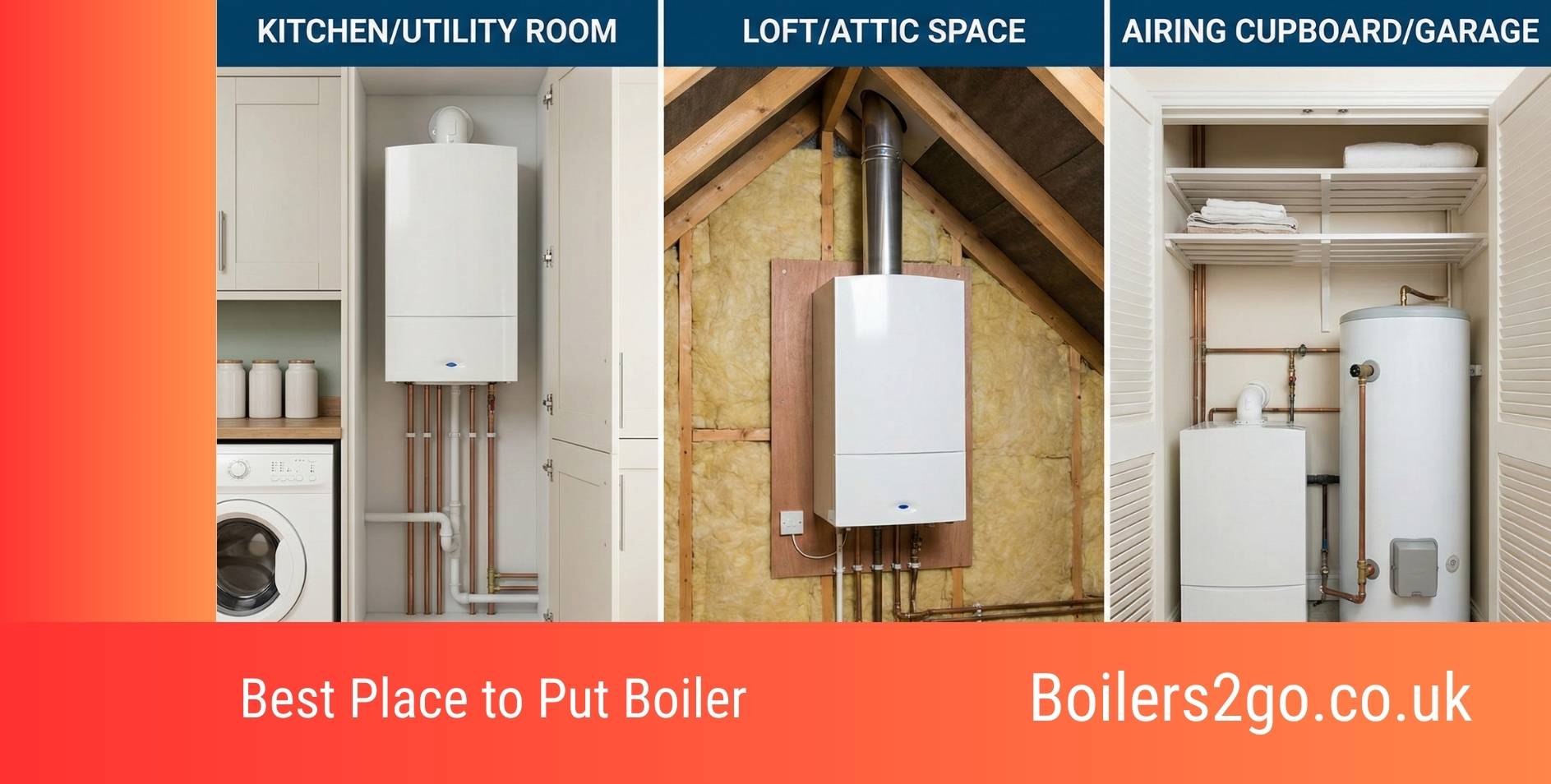
The ideal location for installing a boiler in a UK home is typically the kitchen, utility room, or airing cupboard, where it’s accessible yet out of the way, balancing convenience with regulatory compliance. Proper ventilation is essential in these spaces to prevent gas buildup and ensure safety.
Carbon monoxide safety and ventilation are the main concerns, so it’s always worth having a Gas Safe registered engineer confirm the location meets regulations and standards.
These spots allow for easy maintenance while minimising noise disruption in living areas. For compact flats, wall-mounted combi boilers in kitchens work well, integrating neatly with existing pipework and supporting quick hot water delivery.
Under UK building regulations, including Approved Document J for combustion appliances, the site must support proper flue termination and ventilation to prevent carbon monoxide risks. For landlords, this is key for gas safety certificates, since poor placement can lead to failed inspections and tenant complaints.
Considering Space and Accessibility Factors
Measure clearances around the unit, allowing at least 600mm of front access for servicing. In older terraced houses, avoid cramped spots that could complicate future upgrades or maintenance access.
It’s also worth keeping an eye on the wider picture: the government has not introduced a requirement for new gas boilers to be hydrogen-ready, so there’s no current legal requirement on this front. Many boilers sold today are certified as hydrogen-blend ready (up to 20%), and a government decision on hydrogen’s wider role in home heating was due in 2026.
Can You Put a Boiler in a Bedroom?
Yes, you can put a boiler in a bedroom, but it’s rarely the best choice due to noise and safety concerns, though modern quiet models make it feasible in some cases.
En-suite installations can work well for saving space, but only with acoustic enclosures to dampen operational hum that could disturb sleep. UK regulations require room-sealed units here to isolate combustion products and protect occupants from fumes.
For homeowners with growing families, this location can free up kitchen space, though landlords should weigh up tenant preferences, since noise complaints can arise in rental properties.
Noise Mitigation Strategies for Bedroom Installs
Opt for low-decibel boilers under 40dB, and add insulation around the unit where possible. Vibration pads can also reduce disturbance, improving overall home heating comfort.
Is the Loft a Good Place to Put a Boiler?
Yes, the loft is a good place to put a boiler if it’s insulated properly and accessible, offering out-of-sight storage that maximises living space below.
This suits larger UK homes particularly well, allowing gravity-fed systems or additional tanks to sit out of the way. Frost protection, such as pipe lagging, is essential to prevent winter bursts in an unheated attic.
Landlords benefit from this discreet setup, which reduces tampering risks, but ladder access still needs to comply with health and safety requirements for annual checks.
Insulation and Protection Essentials
Trace heating cables for pipes and a loft hatch alarm for security are both worth considering. This setup also supports eco-upgrades such as solar thermal integration, which is a growing feature of sustainable heating systems.
Can You Install a Boiler Outside?
Yes, outdoor installation can work well where indoor space is tight, provided the boiler is designed for external use and properly weatherproofed. Our guide to installing a boiler outside covers the pros and cons.
This type of installation often allows more flexible placement, letting homeowners optimise indoor space while minimising noise inside the property. With growing interest in eco-friendly heating, outdoor units can also complement renewable add-ons such as solar thermal panels.
Can You Put a Boiler in the Garage?
Yes. Installing a boiler in the garage is a solid option, especially for detached properties, since it keeps the unit away from main living areas while providing ample space for larger system boilers.
For a garage installation, it’s worth weighing up gas against electric, since each has its own advantages depending on the property; our electric boiler vs gas boiler guide compares the two.
This location suits oil-fired units common in rural UK properties well, with straightforward external flue routing. Regulations require weatherproofing against damp, and secure gas supply lines for gas models.
Homeowners tend to appreciate the reduced indoor noise, and landlords often find it simplifies maintenance without needing to enter tenant living spaces.
Weatherproofing and Security Tips
Enclosing the unit in a cabinet with ventilation grilles, and adding locks, helps protect it from the elements and tampering. This approach works for electric boilers too, avoiding the gas hazards associated with attached garages.
Can a Boiler Be Placed in a Bathroom?
Yes, a boiler can be placed in a bathroom, but only in designated zones away from water sources, to comply with electrical and gas safety standards.
Compact combis can fit well in family bathrooms, but must sit in Zone 2 or beyond, with IP-rated protection against splashes. Sealed units help combat humidity-induced corrosion in these spaces.
For landlords, this can help optimise small rental properties, though extractor fans should always be prioritised to manage moisture.
Zoning and Ventilation Requirements
Wiring in bathroom zones should follow BS 7671, the UK wiring regulations enforced by bodies such as NICEIC, with appropriate earthing and protection in place. Proper airflow prevents condensation, preserving the heating appliance’s efficiency over time.
What Are the Pros and Cons of Different Boiler Locations?
The pros and cons of different boiler locations vary by property type. Kitchens offer convenience but expose the unit to cooking vapours, while lofts provide seclusion at the cost of easy access.
Utility rooms tend to strike a good balance, offering dedicated space for noise isolation, though retrofit costs can be higher in older homes.
Homeowners might prefer garages for the extra room they offer, though cold starts in winter can affect efficiency. Landlords should also weigh up tenant impact, since bedroom placements could put off families.
Tailoring Choices to Property Types
In apartments, airing cupboards tend to minimise disruption. In houses, dry basements can offer a hidden install option. In every case, it’s worth weighing up the energy loss that comes from long pipe runs to remote spots. Once you have settled on a location, timing matters too: our guide to the best time to install a boiler explains why booking outside the winter rush makes the work easier to schedule.
Need a New Boiler Quote?
Boilers2Go offers guidance and personalised, no-obligation quotes to help find the best place for a new boiler, balancing safety, efficiency and cost. Get Installation Quote
Moving an existing boiler is possible with the right expertise. Our guide to moving a boiler covers what’s involved, and our moving boiler costs guide helps with budgeting.
Boiler Placement: FAQs
Does Boiler Placement Affect Home Insurance Premiums?
Certain locations, such as lofts or garages, might lower premiums by reducing fire risks in living areas, but it’s always worth disclosing the details to an insurer for accurate coverage.
Does Boiler Location Affect Property Value?
Strategic placement, such as in a utility room, can boost appeal by maximising usable space, and can be a modest factor in a competitive UK market.
Does Boiler Position Affect Smart Thermostat Integration?
Yes. Central spots like kitchens make wiring for thermostats easier, which improves compatibility with systems such as Nest or Hive for remote control.
How Does Cold Weather Affect Where to Put a Boiler?
In winter-prone areas, it’s worth avoiding exposed locations without insulation to prevent freezing, opting for internal spots for more consistent performance instead.
How Can You Future-Proof Your Boiler Location?
Selecting an adaptable area allows for upgrades to heat pumps or hybrid systems further down the line, aligning with the UK’s 2050 net-zero targets without needing a major relocation.
How Much Clearance Space Does a Boiler Need?
Most manufacturers ask for at least 600mm of clear space in front of the boiler for servicing, plus smaller clearances at the sides and top. An installer will confirm the exact figures for the specific model being fitted.
Can I Move My Boiler to a Different Room Myself?
No. Moving a boiler involves gas, electrical and flue work that must be carried out by a Gas Safe registered engineer. It isn’t a DIY job, even if the new location seems straightforward.
Does Boiler Location Affect Running Costs or Efficiency?
Yes, to some extent. Longer pipe runs between the boiler and taps or radiators lose more heat in transit, and cold locations such as garages can mean a longer warm-up time, both of which can add slightly to running costs.
More Boiler Location Guides

I’m Penny North, a home energy heating expert. My mission is to demystify new boilers and complex heating systems to help you achieve a warm, cosy home with lower energy bills and a smaller environmental footprint.