

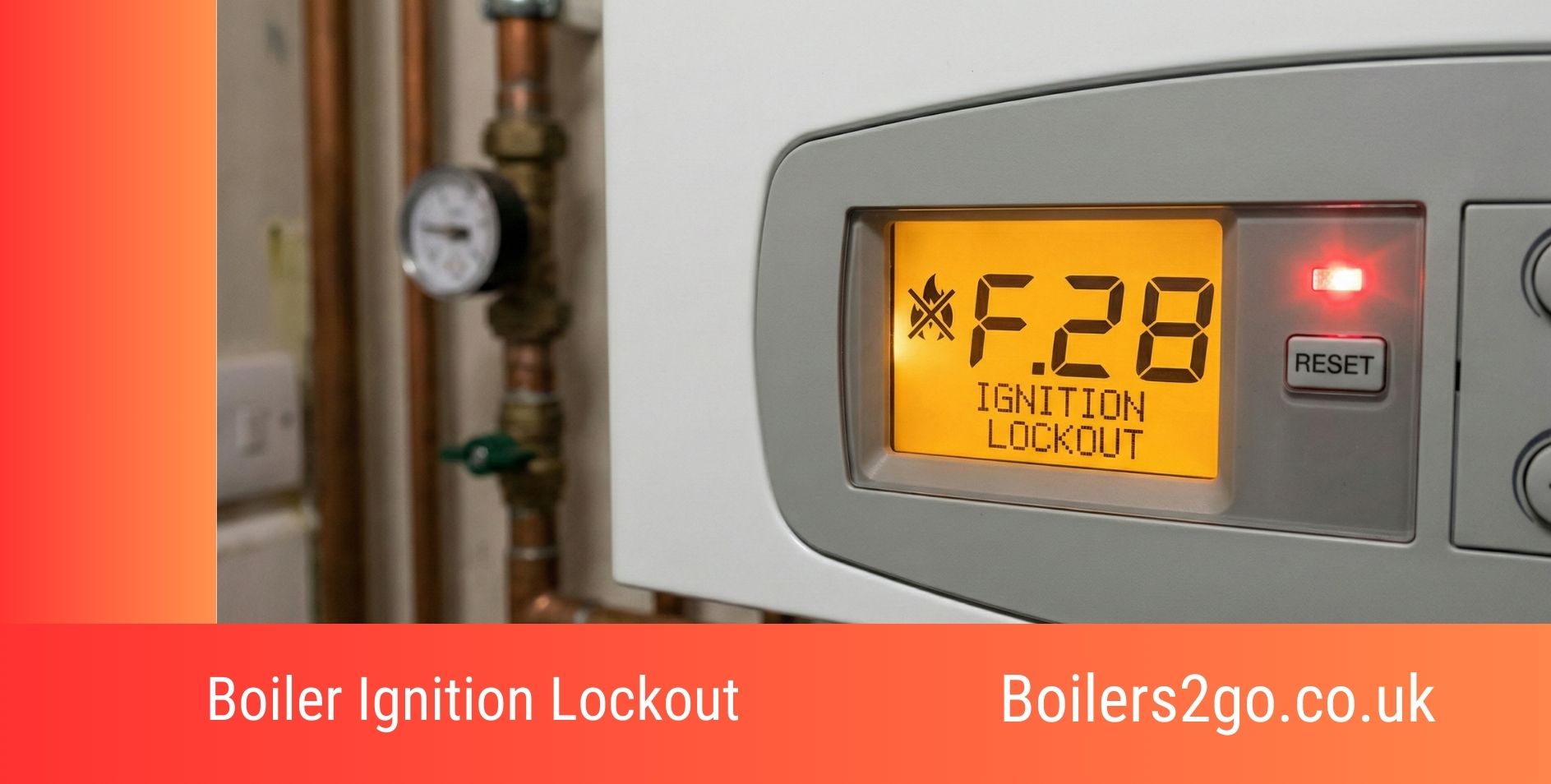
Boiler lockout is a common issue that many UK homeowners and landlords encounter, often leaving households without heating or hot water at inconvenient times.
This safety mechanism in your gas boiler or combi boiler activates to prevent potential hazards, but understanding its triggers can help you resolve it quickly and safely. Once the cause is dealt with, our guide on how to reset a boiler walks through the restart step by step.
Ensuring that you follow the guidelines outlined in the setup guide will not only help you get your heating back up and running but also give you a better understanding of your system’s operations. Regular maintenance and familiarization with your boiler’s features can prevent future lockout scenarios.
Get a quote today and take the stress out of replacing your boiler. At Boilers2Go, we offer fast, reliable installation across the UK - often as soon as the next day. 
Need a new boiler?
What Is a Boiler Lockout?
A boiler lockout is a protective feature in modern heating systems that shuts down the boiler when it detects a fault or unsafe condition.
This automatic response, often indicated by a fault code on the boiler’s display panel or a flashing light, ensures that the appliance doesn’t continue operating in a way that could cause damage or pose risks like gas leaks or carbon monoxide exposure.
In the UK, where gas boilers are prevalent in central heating setups, lockouts are designed to comply with safety standards set by bodies like Gas Safe Register. Homeowners might notice their radiator system failing to heat up or no hot water from taps, prompting them to check the boiler error code.
What Causes a Boiler Lockout?
Boiler lockouts can stem from various issues in your home heating system, ranging from simple maintenance oversights to more complex mechanical failures. Identifying the root cause is crucial for UK landlords and homeowners to restore their central heating efficiently. If your boiler is showing more than one symptom, our guide to common boiler problems can help you narrow down the cause.
Regular checks and maintenance can also help avoid these problems in the first place, ensuring your heating system operates smoothly.
Below, I detail common causes, each with specific fixes tailored for safe DIY approaches where appropriate.
Get a quote today and take the stress out of replacing your boiler. At Boilers2Go, we offer fast, reliable installation across the UK - often as soon as the next day.
Need a new boiler?
Low Water Pressure
Low water pressure in your boiler system occurs when the pressure gauge reads below the recommended 1-1.5 bar level, often due to leaks in pipes, radiators, or the boiler itself, or from recent bleeding of radiators without repressurising.
This triggers a lockout because insufficient water can lead to overheating and damage to the heat exchanger. For combi boilers popular in UK homes, this is a frequent culprit, especially in hard water areas where scale buildup exacerbates pressure drops.
How to Fix Low Water Pressure
- To fix low water pressure, start by checking the boiler’s pressure gauge— if it’s below 1 bar, locate the filling loop (usually a flexible hose with valves under the boiler) and slowly open both valves to allow mains water in until the gauge reaches 1.5 bar.
- Close the valves securely and reset the boiler as per your model’s manual, which might involve pressing a reset button.
- If pressure drops recur, inspect for visible leaks around radiators or pipes; tighten any loose fittings or use sealant tape on joints.
- For persistent issues, bleed radiators to release trapped air, but always repressurise afterwards. Avoid over-pressurising, as this can cause other faults.
Ignition Failure
Ignition failure happens when the boiler’s pilot light or electronic igniter fails to light the gas burner, often due to a faulty ignition lead, electrode, or buildup of debris like dust and soot on components.
In older conventional boilers or system boilers, this can also result from thermocouple issues sensing the flame incorrectly, leading the safety system to lock out to prevent unburnt gas accumulation.
How to Fix Ignition Failure
- To fix ignition failure, first ensure the gas supply is on by checking if other gas appliances work; if not, contact your gas supplier. For DIY, reset the boiler—most models have a reset button or switch; hold it for 10-30 seconds as instructed in the user manual.
- Clean accessible parts like the ignition electrode with a soft brush if you’re comfortable, but never dismantle gas-related components.
- If the issue persists after reset, it may require replacing the ignition lead, which should be done by a professional to avoid voiding warranties on your heating appliance.
Overheating
Overheating in a boiler arises when the internal temperature exceeds safe limits, typically from poor water circulation caused by a faulty pump, airlocks in the system, or limescale buildup in the heat exchanger, common in UK regions with hard water. Overheating often announces itself with banging or rumbling first, so our guide to a boiler making noise can help you spot the problem before it causes a lockout.
This lockout protects against boiler damage or bursts, and it’s often signalled by error codes like E119 on certain models.
How to Fix Overheating
- To fix overheating, begin by checking for air in the system: bleed all radiators starting from the lowest floor, using a radiator key to release air until water flows steadily, then repressurise the boiler.
- Inspect the circulation pump—listen for humming; if silent, it might need priming or replacement. For limescale, flush the system with a descaling solution via the filling loop, but follow manufacturer guidelines.
- Reset the boiler once cooled, and monitor temperature; if it recurs, a power flush by an engineer might be needed to clear blockages in your central heating pipes.
Blocked Flue or Condensate Pipe
A blocked flue or condensate pipe prevents exhaust gases from venting properly or acidic wastewater from draining, triggering a lockout for safety. Flue blockages can come from bird nests, debris, or ice in winter, while condensate pipes freeze in cold UK weather or clog with sludge.
How to Fix Blocked Flue or Condensate Pipe
- To fix a blocked flue or condensate pipe, visually inspect the external flue terminal for obstructions like leaves or nests and clear them gently without tools that could damage it.
- For frozen condensate pipes, thaw by pouring warm (not boiling) water over the pipe or using a hot water bottle. Install lagging insulation afterwards to prevent refreezing.
- If the blockage is internal, pour a mixture of warm water and mild detergent down the pipe to dissolve sludge.
- Always reset the boiler post-fix, but if gases aren’t venting, stop and call a professional immediately to avoid carbon monoxide risks.
Faulty Thermostat or Sensors
A faulty thermostat or sensors misread temperatures, causing the boiler to lock out as a precaution against erratic operation. This could be due to wiring issues, battery depletion in wireless thermostats, or sensor calcification in combi or system boilers. It’s essential to address these issues promptly to prevent extended downtime.
If your boiler is switching itself off rather than locking out, our guide on why a boiler keeps turning itself off covers the causes of that problem.
Regularly checking for air in the radiators and bleeding them as necessary will help ensure optimal performance. Taking these proactive steps can enhance the lifespan of your boiler and reduce the likelihood of unexpected failures.
How to Fix Faulty Thermostat or Sensors
- To fix a faulty thermostat or sensors, replace batteries in room thermostats and test by adjusting settings to see if the boiler responds.
- Check wiring connections for looseness and secure them if accessible. Clean sensors with a soft cloth if limescale is visible, but avoid harsh chemicals.
- Reset the boiler and calibrate the thermostat per the manual.
- For integrated sensors, a diagnostic check with a multimeter might be needed, but this is best left to experts to ensure accurate readings in your home heating setup.
Gas Supply Issues
Gas supply issues involve interruptions like low gas pressure from the meter, closed valves, or supplier outages, preventing the boiler from firing up and leading to lockout. In UK households, this is more common during peak winter demand or after meter replacements.
How to Fix Gas Supply Issues
- To fix gas supply issues, verify the gas meter valve is open and check for emergency control valve positions.
- If other gas hobs work, the issue might be boiler-specific—reset it after ensuring supply. Contact your gas provider if there’s a suspected line problem or outage.
Never tamper with gas pipes; if smell gas, evacuate and call the National Gas Emergency Service on 0800 111 999.
Electrical Problems
Electrical problems such as tripped circuit breakers, faulty PCBs (printed circuit boards), or power surges can cause lockouts by disrupting the boiler’s control system. In UK homes with older wiring, this is exacerbated by voltage fluctuations. Our guide to boiler PCB faults covers circuit board problems in more detail.
Regular maintenance and check-ups can help identify these problems before they escalate. Always refer to your user manual for guidance on specific fault codes and recommended fixes to ensure your system operates efficiently.
How to Fix Electrical Problems
- To fix electrical problems, check your home’s fuse box for tripped breakers related to the boiler and reset them. Ensure the boiler’s power supply is stable—use a surge protector if surges are common.
- For PCB faults, a reset might temporarily resolve, but replacement is often required. Always isolate power before checking, and consult an electrician if wiring is suspect to comply with UK electrical safety regs.
How to Prevent Boiler Lockout in the Future
Preventing boiler lockout involves regular maintenance to keep your heating system reliable. Schedule annual servicing by a Gas Safe engineer to catch issues like pressure drops or blockages early.
Monitor water pressure weekly, especially in winter, and insulate condensate pipes to avoid freezing. Bleed radiators monthly during heating season and consider installing a magnetic filter to reduce sludge buildup.
For landlords, ensure tenants report faults promptly, and opt for smart thermostats for better control and early alerts on anomalies in your gas heating setup.
When Should You Call a Gas Safe Engineer About a Boiler Lockout?
You absolutely must call a Gas Safe engineer if you suspect gas leaks (smell of gas or hissing sounds), if lockouts persist after basic resets, or for any work involving gas components, flue systems, or internal repairs to avoid legal and safety risks.
In the UK, only registered professionals can handle these to prevent carbon monoxide poisoning or explosions. Don’t delay if error codes indicate serious faults like flame failure or if your boiler is under warranty.
Boiler Lockout: FAQs
Is Boiler Lockout the Same as a Boiler Breakdown?
No, boiler lockout is a temporary safety shutdown due to detectable faults, whereas a boiler breakdown often implies permanent damage requiring major repairs or replacement parts.
Can Weather Conditions Trigger a Boiler Lockout?
Yes, extreme cold can freeze condensate pipes or cause pressure fluctuations, while high winds might block flues with debris, leading to lockouts in exposed UK properties.
Does Boiler Lockout Affect My Home Insurance?
Boiler lockout itself usually doesn’t void insurance, but neglecting maintenance that leads to repeated issues might impact claims; check policies for boiler cover add-ons.
This collective knowledge is essential for making smart investment decisions in home heating solutions.
Do Lockout Causes Differ Between Combi and Conventional Boilers?
Yes. Combi boilers are more prone to pressure-related lockouts due to their integrated design, while conventional boilers with separate tanks might face issues from pump failures or header tank problems.
By analyzing real-world performance and customer feedback, potential buyers can gain valuable insights into whether the Vitodens 111W is the right fit for their home.
How Does Hard Water Contribute to Boiler Lockouts?
Hard water builds up limescale in heat exchangers and pipes, reducing efficiency and causing overheating or pressure issues that trigger lockouts, particularly in southern UK areas.
Get a quote today and take the stress out of replacing your boiler. At Boilers2Go, we offer fast, reliable installation across the UK - often as soon as the next day.
Need a new boiler?

I’m Penny North, a home energy heating expert. My mission is to demystify new boilers and complex heating systems to help you achieve a warm, cosy home with lower energy bills and a smaller environmental footprint.