

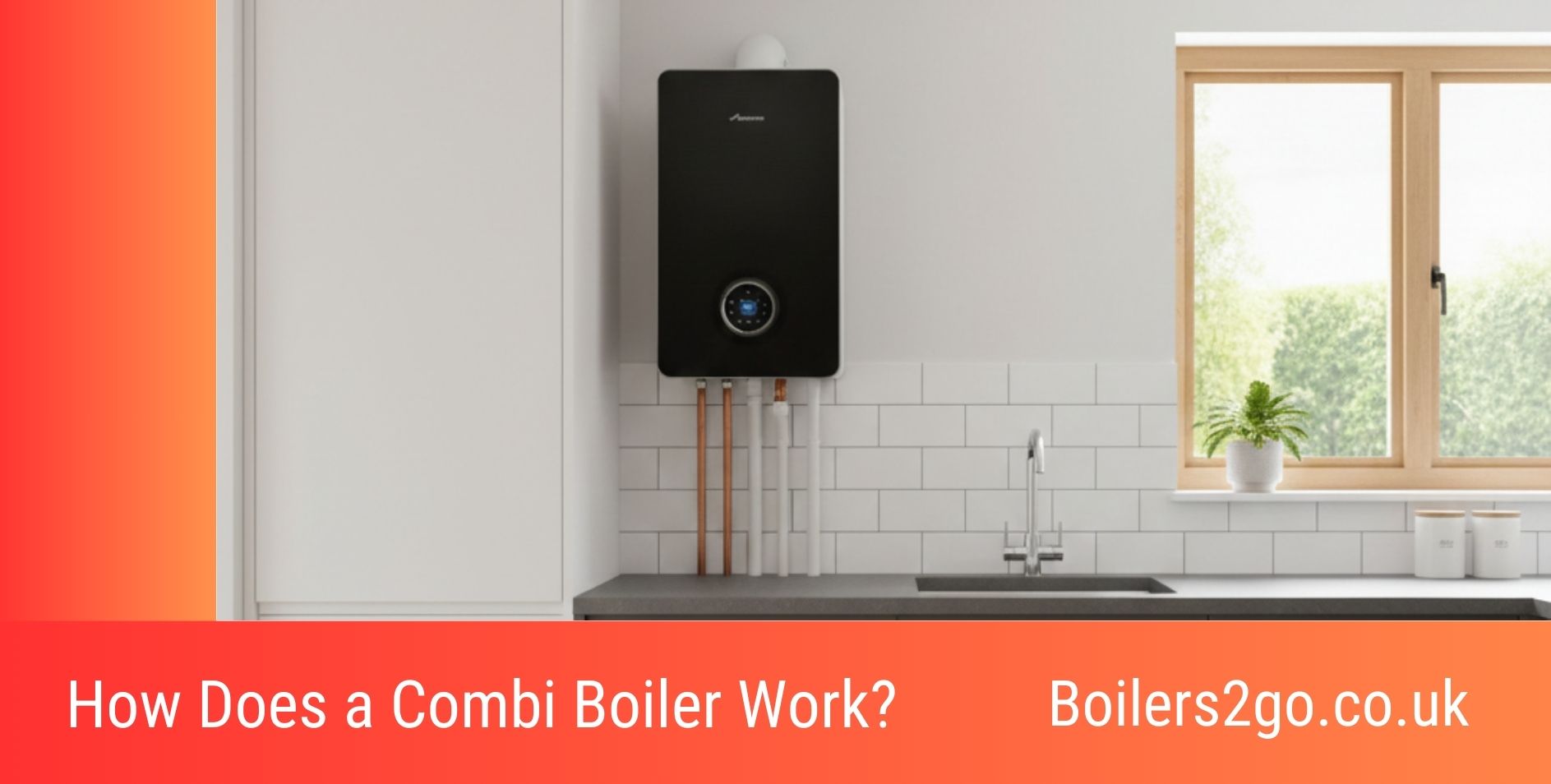
For a UK homeowner or landlord curious about how a combi boiler works, these compact units, also known as combination boilers, provide both central heating and instant hot water without the need for a separate cylinder or tank, making them a popular choice for efficient home heating in modern properties. Beyond saving space, they can cut energy bills and carbon emissions, need relatively little maintenance, and thermostatic controls let users fine-tune settings for comfort and efficiency. For a balanced view of where they fall short, see our guide to combi boiler pros and cons.
How Does a Combination Boiler Work?
A combi boiler works by combining the functions of a traditional boiler and a hot water heater into one efficient unit, supplying heated water directly from the mains supply whenever it’s needed. When a tap is turned on or the heating is activated, the combi boiler springs into action, using gas or electricity to heat cold water on demand through its internal components. Our guide to the main types of boilers explains how this differs from system and regular boilers.
At the heart of this process is the heat exchanger, a key part that transfers heat from the burning fuel to the water. Cold water enters the boiler from the mains, passes through the primary heat exchanger where it’s warmed by the gas burner, and then gets distributed either to the radiators for central heating or to the taps for domestic hot water.
Understanding this mechanism can help with deciding if a combi system suits a particular property. If it does, our guide to the best combi boilers compares leading models on efficiency and features.
What Are the Main Components Inside a Combi Boiler?
The main components inside a combi boiler work together to deliver reliable heating and hot water, allowing the system to run efficiently without bulky storage tanks.
Key parts include the gas burner, which ignites to produce heat; the primary heat exchanger, responsible for warming the water; and the diverter valve, which directs the flow between heating and hot water modes.
Other essential elements are the pump, which circulates water through the pipes; the expansion vessel, which handles pressure changes; and the flue, which safely expels exhaust gases. Safety features like the pressure relief valve and thermostat prevent overheating or excessive pressure buildup in a condensing combi boiler setup.
How Does a Combi Boiler Provide Hot Water on Demand?
A combi boiler provides hot water on demand by instantly heating mains-fed water as soon as a tap is opened, eliminating the wait for a stored supply to warm up. This process starts when sensors detect the flow of water, triggering the gas valve to open and the burner to ignite.
The cold incoming water then flows through a plate heat exchanger or secondary heat exchanger, where it’s rapidly heated by the hot water from the primary circuit. Within seconds, a steady stream of domestic hot water reaches the desired temperature, controlled by the boiler’s thermostat and flow rate sensors.
This efficient method suits smaller UK households or flats where space is limited, since it avoids energy loss from storing hot water. For landlords managing multiple properties, this can mean lower running costs and fewer maintenance issues compared with conventional systems.
How Does the Central Heating Function in a Combi Boiler?
The central heating function in a combi boiler activates when the thermostat signals a drop in room temperature, circulating heated water through radiators or underfloor systems to warm the home. The process begins with the boiler’s control board receiving the demand and opening the gas supply to the burner.
Water is then pumped through the primary heat exchanger, absorbing heat before being pushed out to the heating circuit via pipes and valves. The diverter valve ensures priority is given to heating when no hot water is being used, maintaining consistent warmth across the property.
Modern gas-fired combi boilers often incorporate modulating burners that adjust flame intensity based on demand, enhancing energy efficiency and reducing fuel bills for UK homeowners.
What Role Does the Diverter Valve Play in a Combi Boiler?
The diverter valve plays a crucial role in a combi boiler by switching the flow of heated water between the central heating system and the hot water outlets, ensuring warmth or a hot shower without interruption. When hot water is demanded, the valve diverts the hot flow from the heat exchanger directly to the taps, bypassing the radiators.
In heating mode, it redirects the water to circulate through the pipes and emitters. This three-way valve, often motorised, responds to signals from the boiler’s PCB and flow switches, optimising performance in a compact heating appliance.
Faulty diverter valves can lead to issues like lukewarm water or inconsistent heating, so regular servicing is worth keeping up with for longevity in UK installations.
How Does Condensing Technology Work in Modern Combi Boilers?
Condensing technology works in modern combi boilers by capturing and reusing heat from exhaust gases that would otherwise be wasted, boosting efficiency to over 90% in many models. As the burner heats the water, flue gases containing water vapour are produced and passed through a secondary heat exchanger.
Here, the gases cool, condense into liquid, and release latent heat back into the system, pre-warming the incoming cold water. This process not only lowers energy consumption but also reduces carbon emissions, in line with UK regulations for eco-friendly home heating.
For landlords, opting for a high-efficiency condensing combi can improve Energy Performance Certificate (EPC) ratings, making properties more attractive to tenants. To check how your own boiler measures up, our guide to boiler efficiency covers the common causes of lost efficiency and how to fix them.
What Maintenance Is Required for a Combi Boiler to Work Efficiently?
Maintenance for a combi boiler to work efficiently includes annual servicing by a Gas Safe registered engineer, who checks components like the heat exchanger for blockages, ensures the flue is clear, and tests safety devices. Regular bleeding of radiators and monitoring system pressure also help prevent issues.
Homeowners can perform simple tasks like checking for leaks or unusual noises, but an annual service by a Gas Safe registered engineer is recommended for safety and is usually a condition of the manufacturer’s warranty.
How Does Water Pressure Affect a Combi Boiler’s Performance?
Water pressure affects a combi boiler’s performance by influencing the flow rate and heating efficiency. Low pressure can result in weak showers or slow heating, while high pressure might cause leaks. Ideal mains pressure for most UK combi systems sits between 1 and 1.5 bar, monitored via the boiler’s gauge.
If pressure drops, repressurising via the filling loop is usually straightforward, but persistent issues may indicate a fault needing professional attention.
What Are the Most Common Combi Boiler Problems?
Common issues with how combi boilers work often stem from limescale buildup in hard water areas, which can clog the heat exchanger and reduce efficiency. Frozen condensate pipes in winter or faulty sensors can also disrupt operation.
Addressing these promptly through descaling or insulation can restore smooth functioning, especially in older UK installations.
How Does a Combi Boiler Compare to Other Types in Terms of Operation?
A combi boiler compares to other types like system or regular boilers by operating without a hot water cylinder, providing an instant supply but potentially struggling with multiple outlets running simultaneously. System boilers, by contrast, store hot water for higher demand, though they require more space. Combi boilers often have lower initial costs and save space, making them popular in smaller homes, while system boilers tend to suit larger households with higher hot water needs. Our system boiler vs combi boiler guide compares the two in more detail.
For UK landlords with larger properties, understanding these operational differences helps with choosing the right setup.
Can a Combi Boiler Work with Renewable Energy Sources?
A combi boiler can work with renewable energy sources by integrating with solar thermal panels, where preheated water from the panels enters the boiler and reduces gas usage. Hybrid models combining gas and electric heat pumps are also emerging for greener operation.
This kind of adaptation supports UK net-zero goals, offering sustainable heating without compromising on-demand functionality.
Looking for a Combi Boiler Quote?
Anyone considering how a combi boiler works and weighing up an upgrade can request a tailored quote for combi boilers suited to UK homes and rental properties.
A certified engineer can assess the property’s needs, recommend suitable options like A-rated models from leading brands, and handle installation with minimal disruption.
Requesting a combi boiler installation quote is quick and obligation-free, whether the boiler is for a family home or a rental property.
How a Combi Boiler Works: FAQs
How Long Does It Typically Take for a Combi Boiler to Heat Water?
It typically takes a combi boiler just 10 to 30 seconds to heat water from cold, depending on the model’s power output and incoming water temperature. This quick response is due to the direct heating method, making it convenient for busy UK households.
What Size Combi Boiler Is Needed Based on How It Works?
The size of combi boiler needed depends on a property’s hot water demand and number of radiators. For example, a 24 to 27kW unit suits small homes with one bathroom, while 35kW or more handles larger ones. Assessing flow rates ensures the boiler’s operation matches actual needs without overworking it.
How Does Weather Affect a Combi Boiler’s Operation?
Weather affects a combi boiler’s operation in cold snaps by risking frozen pipes, which can block condensate discharge and cause shutdowns. Insulating external pipes and using weather compensation controls helps maintain efficiency during UK winters.
Are Electric Combi Boilers Different in How They Work?
Electric combi boilers differ in how they work by using electricity to heat elements instead of gas burners, providing a similar on-demand service but without flue requirements. They suit off-grid UK properties well, though running costs may be higher.
How Does a Combi Boiler Handle Power Cuts?
A combi boiler handles power cuts by shutting down safely, since it relies on electricity for ignition and controls. Once power returns, it restarts automatically, but checking the pressure gauge afterwards helps ensure a smooth resumption of the heating system.
Does a Combi Boiler Need a Cold Water Tank in the Loft?
No. One of the main appeals of a combi boiler is that it draws directly from the mains, so there’s no need for a cold water storage tank in the loft or a separate hot water cylinder, which frees up space elsewhere in the property.
Can a Combi Boiler Run Out of Hot Water?
Not in the way a stored system can, since it heats water on demand rather than drawing from a tank. It can, however, struggle to keep up if several outlets run at once, which is where sizing the unit correctly for the property becomes important.
Is a Combi Boiler Cheaper to Run Than a System Boiler?
Often, yes, particularly in smaller properties with lower hot water demand, since there’s no cylinder losing heat while water sits in storage. In larger homes with high simultaneous demand, the running cost gap can narrow, and a system boiler may end up more practical overall.

I’m Penny North, a home energy heating expert. My mission is to demystify new boilers and complex heating systems to help you achieve a warm, cosy home with lower energy bills and a smaller environmental footprint.