

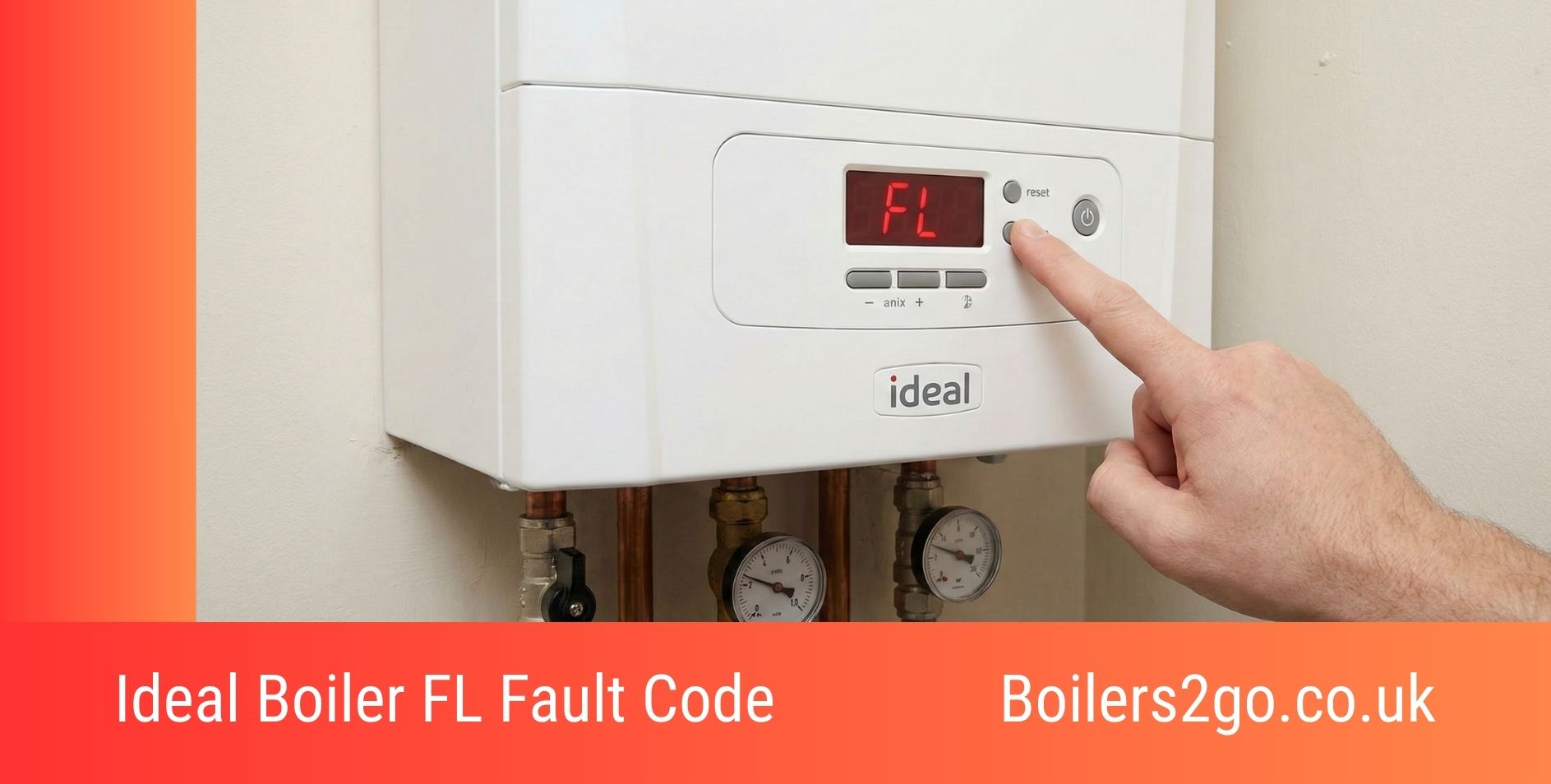
The Ideal boiler FL fault code appears as a protective mechanism in your combi boiler or system boiler, halting operation to prevent unsafe combustion and potential carbon monoxide risks in enclosed spaces like kitchens or utility rooms.
This common alert on models like the Ideal Logic, Isar, or Icos series signals a flame loss or ignition failure, where the burner either won’t light or extinguishes prematurely, disrupting your domestic heating system.
In this guide, I’ll demystify the Ideal boiler FL error, often shown as flashing ‘F’ and ‘L’—covering its meaning, root causes, and practical fixes.
Get a quote today and take the stress out of replacing your boiler. At Boilers2Go, we offer fast, reliable installation across the UK - often as soon as the next day. 
Need a new boiler?
What Does the Ideal Boiler FL Fault Code Mean?
The Ideal boiler FL fault code means your boiler has detected a loss of flame, typically due to an ignition lockout after the burner fails to establish or maintain a stable burn, leaving your radiators cold and taps tepid. To resolve this issue, first check if there is any blockage in the flue or air intake, as these can prevent the boiler from igniting properly. If the problem persists, consider consulting the user manual for ideal boiler error code solutions that may guide you through troubleshooting steps or suggest when professional help is needed. Regular maintenance can also prevent future occurrences of this fault code, ensuring your heating system operates efficiently. In addition to addressing the FL fault code, it’s important to be aware of other potential issues indicated by your boiler. For instance, if you encounter the ideal boiler F1 fault code, it signifies a different set of problems related to low water pressure. To find effective remedies for this, refer to the ideal boiler F1 fault code solutions, which can help restore your heating system to its optimal performance.
Causes
Interrupted Gas Supply
An interrupted gas supply tops the list of triggers for the Ideal Boiler FL error, often from a tripped meter, empty prepayment credit, or accidentally closed isolation valve, starving the burner of natural gas fuel essential for ignition in UK mains-connected homes.
How to Fix It: Start by confirming gas availability, light a cooker hob or fire to test flow; if it sputters, top up your pay-as-you-go meter or call your supplier like British Gas.
Locate the yellow-handled isolation valve near the boiler (it should align with the pipe when open) and turn it fully on. Reset the boiler by switching it off at the fused spur for 30 seconds, then back on.
For landlords, this quick check prevents tenant complaints during peak demand; if pressure remains low, a Gas Safe engineer can measure and adjust to the required 21mbar.
Faulty Gas Valve
A faulty gas valve in your Ideal boiler can prevent proper fuel release, causing intermittent flame detection and repeated lockouts, a wear-and-tear issue in older installations exposed to fluctuating UK gas quality. Regular maintenance is essential to ensure the safety and efficiency of your system, as neglecting issues related to the gas valve can lead to complete breakdowns. For homeowners experiencing persistent problems, it’s crucial to check the ideal boiler status explained, which often highlights indicators of malfunction and necessary repairs. Prompt action can not only extend the lifespan of your boiler but also improve overall heating performance and energy efficiency.
How to Fix It: Avoid tampering with the valve yourself, it’s a high-risk component. Power down the boiler and visually inspect for visible damage or leaks (soapy water test on joints for bubbles).
Attempt a reset via the control knob to ‘0’ then ‘fire’. Persistent FL flashing demands a professional: book a Gas Safe specialist to test solenoid operation and replace if needed, often under warranty for models under 7 years old, ensuring compliance with Gas Safety Regulations.
Blocked Flue or Exhaust System
A blocked flue or exhaust system restricts combustion air and expels, leading to incomplete burning and flame instability, common in properties with bird nests, leaves, or soot buildup from inefficient prior burns.
How to Fix It: Safely inspect the external flue terminal for obstructions, use a torch and gloves, clearing debris gently without dislodging seals. Indoors, check the boiler’s air intake grille for dust.
Reset after clearing, monitoring for recurrence. For thorough cleaning, especially in chimney-connected setups, hire a certified flue sweep or Gas Safe engineer to perform a sweep and balance test, vital for multi-occupancy rentals to meet landlord obligations under the Housing Act.
Full or Blocked Condensate Trap
A full or blocked condensate trap, where acidic wastewater from efficient condensing boilers accumulates, backs up and disrupts the burner assembly, triggering the FL code as a safety interlock in humid or neglected systems.
How to Fix It: Locate the white plastic trap at the boiler base (per your model’s user manual) and carefully empty excess water into a bucket, wear gloves for the mild acid. Flush with warm soapy water to clear sludge.
Reassemble securely and reset the unit. If blockages persist from limescale in hard water areas like the Midlands, install an inhibitor during annual servicing; otherwise, a heating pro can descale the entire drain line to restore flow and efficiency.
Dirty or Faulty Ignition Electrode
The ignition electrode, responsible for sparking the flame, can become dirty or faulty from carbon deposits or misalignment, failing to ionise the gas-air mix and causing false flame loss signals on the PCB.
How to Fix It: Isolate power and gas, then access the electrode via the boiler’s front panel (consult Ideal’s online diagrams for your variant). Wipe gently with a lint-free cloth—no abrasives to avoid scratching.
Check and adjust gap to 3-4mm if bent. Test post-reset; for replacement, source genuine Ideal parts online and fit via a Gas Safe engineer to recalibrate and avoid voiding your heating warranty.
FAQs
How Often Should I Service My Ideal Boiler to Avoid FL Faults?
Aim for an annual Gas Safe service in spring, focusing on flame sensors and gas paths—this proactive step can slash breakdown risks by 40%, per UK heating benchmarks, and keeps energy bills in check for eco-conscious homeowners.
Does the Ideal Boiler FL Code Affect Hot Water Only or Heating Too?
It typically halts both central heating and domestic hot water in combi models, but system boilers might prioritise heating circuits; always verify via the manual to manage tenant expectations in rental properties.
Can Weather Influence the Ideal Boiler FL Fault Code?
Yes, extreme cold can condense moisture in the flue, mimicking blockages, while high winds might cause downdraught—consider a flue cowl upgrade for exposed sites, as recommended by the Heating Installers Council.
Is the Ideal Boiler FL Error Covered Under Home Insurance?
Most UK boiler cover policies include it if serviced recently, but check exclusions for neglect; landlords benefit from commercial plans via providers like Homeserve for multi-property peace of mind.
What’s the Lifespan of an Ideal Boiler Before FL Becomes Recurrent?
With regular maintenance, 10-15 years is standard, but early FL signs post-8 years often signal heat exchanger wear—budget for upgrades to A-rated models for Green Deal incentives.

I’m Penny North, a home energy heating expert. My mission is to demystify new boilers and complex heating systems to help you achieve a warm, cosy home with lower energy bills and a smaller environmental footprint.