

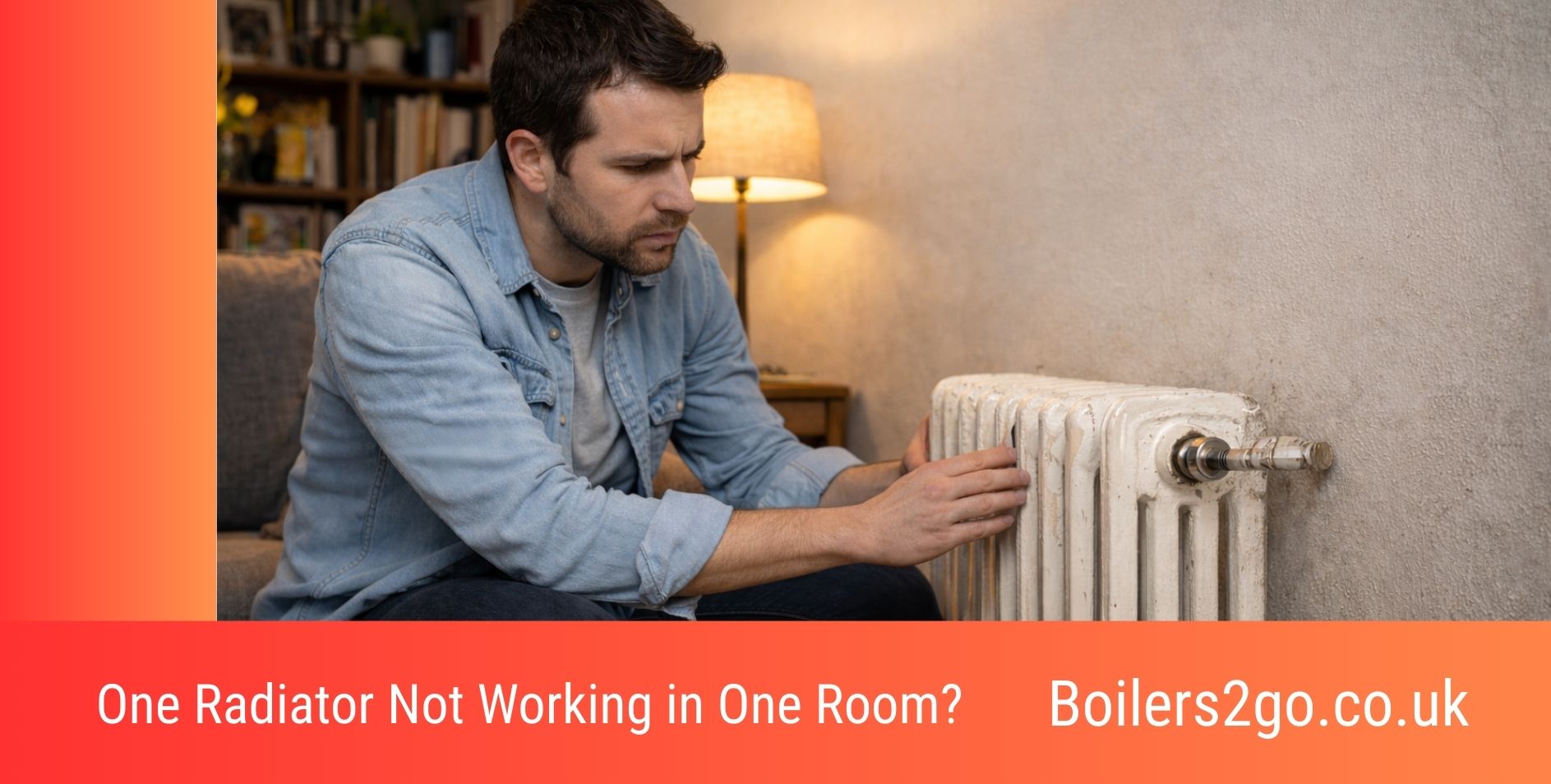
When every radiator in a house is warm except one stubborn unit in one room, it is frustrating and confusing. The good news is this: if only one radiator is not working, the boiler is almost never the problem. In most UK homes, a single cold radiator points to a local issue that is usually fixable without major work.
This guide walks through the most common reasons one radiator will not heat up, what can safely be checked at home, and when it is time to call a heating engineer.
What Does One Cold Radiator Tell You?
Before jumping to fixes, it helps to notice how the radiator behaves, since the pattern reveals a lot about the underlying cause. If the radiator is hot to the touch but the room still feels cold, furniture blocking the heat may be the issue rather than a fault; our guide to putting furniture in front of a radiator explains why.
- Cold at the top, warm at the bottom: usually trapped air
- Hot at the top, cold at the bottom: often sludge or an internal blockage
- Stone cold all over: a valve, flow, or circulation issue
- Warm only when other radiators are off: a balancing problem
If all other radiators heat normally, the boiler, pump, and main pipework are almost certainly fine.
Why Is Only One Radiator Not Working?
1. Trapped Air in That Radiator
This is the classic and most common cause. Air rises, so it collects inside individual radiators, especially ones upstairs or furthest from the boiler. When air is trapped, hot water cannot fully circulate. Our guide on how to bleed a radiator walks through the fix step by step.
Typical signs include a radiator cold at the top, gurgling or hissing sounds, and a room slower to warm than others.
Fix: bleeding the radiator usually solves this in minutes. Once the air escapes and water flows evenly again, the radiator should heat normally.
2. Sludge or Debris Inside the Radiator
Over time, rust and debris settle at the bottom of radiators. If only one radiator is affected, it is often because it sits at a low point in the system or is rarely used. Our guide to central heating sludge explains how it forms and how to remove it.
Typical signs include a radiator hot at the top but cold at the bottom, one that takes ages to warm if it warms at all, while other radiators work fine.
Fix: removing and flushing the radiator is a DIY option for anyone confident doing so. If several radiators show similar symptoms, a system powerflush may be needed instead, since bleeding alone will not fix sludge, as water cannot flow through solid build-up.
3. Thermostatic Radiator Valve (TRV) Stuck Shut
TRVs are meant to open and close automatically, but they can seize, especially after summer when the heating has not been used for months.
Typical signs include a radiator that is completely cold while other radiators on the same system are hot, and turning the TRV makes no difference.
A quick check: turn the TRV fully up, remove the plastic head, which usually unscrews, and gently press the small metal pin underneath. If the pin does not move freely, it is likely stuck.
Fix: freeing the pin often restores flow. If not, the valve may need replacing, a common, low-cost repair.
4. Lockshield Valve Closed or Misadjusted
The lockshield valve, usually hidden under a plastic cap on the opposite side of the TRV, controls how much water flows through the radiator.
If it is fully closed, almost closed, or has been knocked during decorating, the radiator may not get enough hot water. Typical signs include a radiator barely warm or cold, with the problem often starting after decorating or furniture was moved.
Fix: opening the lockshield valve slightly often restores heat. This is also closely tied to radiator balancing.
5. Radiator Out of Balance
In an unbalanced system, radiators closest to the boiler hog the hot water, leaving others starved.
Typical signs include one radiator staying cold while others heat very quickly, a radiator that only warms when others are turned off, and this pattern is common in extensions, loft rooms, or end-of-run radiators.
Fix: balancing the system redistributes flow so every radiator heats evenly, which involves adjusting lockshield valves across the house. Our guide on how to balance radiators explains the process. A professional is worth consulting if the system needs extensive adjustment, since a properly balanced system improves comfort and can lower energy bills at the same time.
6. Radiator Pipework Issue (Less Common, but Real)
Occasionally, the problem is not the radiator itself but the pipes feeding it. Possible causes include an airlock in the pipe run, a crushed or kinked pipe, common in older floors, or a poor connection following previous work.
Typical signs include a radiator that has never worked properly, an issue that started after renovations, and no response to bleeding or valve checks. This is when a proper engineer’s diagnosis is worth arranging.
How to Fix One Radiator Not Working at Home
- Bleed the radiator.
- Check the TRV pin moves freely.
- Make sure the lockshield valve is open.
- Feel the pipes: are they hot near the valve?
- See if the radiator warms when others are turned down.
If none of these help, it is best to stop there, since forcing valves or draining systems without experience can create leaks.
When to Call a Heating Engineer About a Cold Radiator
Professional help is worth arranging if the radiator stays cold after bleeding and valve checks, if multiple radiators now show similar symptoms, if there are visible leaks, corrosion, or constant pressure drops, or if the radiator has never worked properly since installation.
A qualified heating engineer, listed on the Gas Safe Register where any gas-related work is involved, can quickly identify whether it is a valve, sludge, balance, or pipework issue.
Can One Cold Radiator Increase Heating Bills?
Yes, quietly. A cold room often leads to the thermostat being turned up, the boiler running longer, and other rooms overheating to compensate.
Fixing one underperforming radiator can improve comfort and reduce wasted energy across the whole system at the same time.
Is One Cold Radiator a Boiler Fault?
If only one radiator in one room is not working, it is almost never a boiler fault. In most UK homes, the cause is air, sludge, valves, or flow, all local issues, and all fixable.
Starting small and working through the checks methodically makes sense before assuming the worst. If the simple checks do not resolve it, a targeted repair is far cheaper than living with a cold room all winter.
One Radiator Not Working: FAQs
How Often Should Radiators Be Bled?
Once or twice a year, typically at the start of the heating season, is usually enough for most UK homes. Bleeding more often than that can point to an underlying issue, such as a slow air leak into the system, that is worth investigating rather than simply repeating the bleed indefinitely.
Is It Normal for a Radiator to Make Noise After Bleeding?
A little gurgling immediately after bleeding is normal as the last of the air works its way out and water settles. Persistent banging or gurgling that continues for more than a day or two after bleeding suggests trapped air elsewhere in the system or a pump issue worth checking further.
Can Smart TRVs Help Prevent a Radiator Going Cold?
Smart TRVs can help identify a struggling radiator earlier, since many log temperature data and flag when a room is not reaching its target. They will not fix an underlying mechanical issue such as sludge or a stuck valve, but they make it easier to notice a developing problem before it becomes a fully cold radiator.
How Much Does It Cost to Fix a Single Cold Radiator?
Costs vary by cause. Bleeding a radiator costs nothing if done at home, replacing a TRV typically costs £30 to £80 including fitting, and removing and flushing a single radiator runs to around £80 to £150. A full system powerflush, if several radiators are affected by sludge, typically costs £350 to £850 depending on the number of radiators.
Should a Landlord Treat One Cold Radiator as Urgent?
It depends on the wider context, but it is worth acting on reasonably promptly rather than leaving it. A single cold radiator is rarely a safety issue in itself, but it can indicate a developing problem such as sludge build-up, and addressing it early is usually cheaper and less disruptive for a tenant than waiting until it affects other radiators too.

With years of experience in boilers and home improvements in general, Myles Robinson is a passionate advocate for making home heating simpler, safer, and more affordable for households across the UK. With years of experience in the heating industry, Myles combines hands-on knowledge with a focus on customer-first service, helping homeowners choose the right boiler, understand their systems, and keep their heating running efficiently all year round. His articles break down complex topics into clear, practical advice you can trust.