

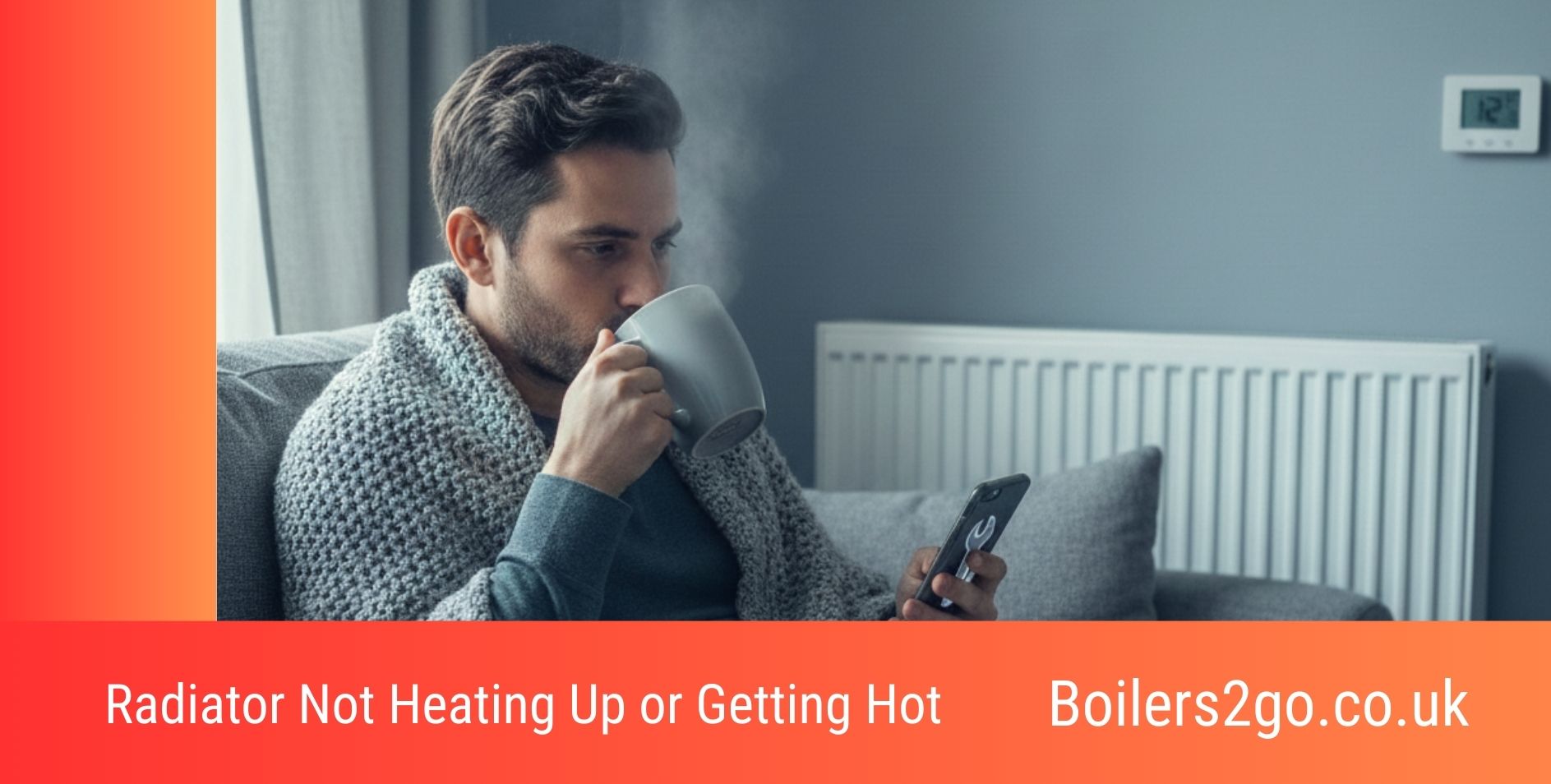
Few things are more frustrating than turning the heating on and finding one radiator stubbornly cold. It’s one of the most common heating complaints in UK homes, and thankfully, it’s usually fixable without replacing half the system.
This guide walks through why a radiator won’t heat up, what can safely be checked at home, and how to tell when the problem is bigger than a quick DIY fix.
No scare tactics. No jargon dumps. Just practical help.
How to Tell Why a Radiator Isn’t Heating Up
Before reaching for tools, it’s worth taking 30 seconds to notice what the radiator is actually doing. That pattern often points to the cause straight away.
Cold at the top, warm at the bottom: air trapped inside
Hot at the top, cold at the bottom: sludge settled inside
Cold all over, others fine: valve or flow issue
Several radiators cold: system-wide problem
Radiator heats briefly, then goes cold: pressure or circulation issue
That one observation saves a lot of guesswork.
Why Won’t My Radiator Heat Up? The Most Common Reasons
Trapped Air Inside the Radiator
Cause: Air enters the system
Effect: Hot water can’t fully circulate
Result: Radiator stays partly or fully cold
This is by far the most common issue in UK homes, especially at the start of winter.
Hissing or gurgling is often audible, and the radiator will feel cool at the top even though the pipes are hot.
What usually fixes it: bleeding the radiator once the heating is off and cool. After bleeding, the boiler pressure often needs topping up slightly, which is completely normal.
Sludge Blocking the Bottom of the Radiator
Cause: Corrosion inside the system
Effect: Heavy debris settles at the lowest point
Result: Bottom stays cold even though the top heats
This shows up a lot in older systems or homes without a magnetic filter.
If the radiator is hot at the top but cold at the bottom, air isn’t the issue, sludge is.
What helps:
- One radiator affected: remove and flush it
- Several affected: a system powerflush, which is an engineer job
Left alone, sludge doesn’t just block radiators, it can damage pumps and boilers too.
Thermostatic Radiator Valve (TRV) Stuck Shut
Cause: Valve hasn’t moved for months
Effect: Internal pin sticks closed
Result: Radiator gets no hot water at all
This often happens after summer, once the heating’s been off for a while.
The radiator stays stone cold, even though everything else works.
What usually works: removing the TRV head and gently freeing the pin underneath. It should spring back when pressed; if it doesn’t, that’s the problem.
Lockshield Valve Not Allowing Flow
Cause: Valve partially or fully closed
Effect: Water can’t circulate properly
Result: Radiator stays cold or weak
This often happens after decorating or plumbing work.
Fix: opening the lockshield valve slightly and giving the system time to respond.
Heating System Needs Balancing
Cause: Hot water takes the easiest route
Effect: Nearby radiators steal the heat
Result: Distant rooms stay cold
If downstairs radiators are roasting while upstairs barely warms up, balancing is usually the answer.
Balancing doesn’t repair anything. It simply redistributes heat properly.
Low Boiler Pressure
Cause: Water lost through bleeding or small leaks
Effect: Boiler can’t circulate heat properly
Result: Radiators go lukewarm or cold
Most combi boilers struggle below about 1 bar.
Fix: top up pressure using the boiler filling loop, following the boiler’s instructions.
Circulation or Pump Problems
Cause: Pump struggling or failing
Effect: Heat doesn’t move around the system
Result: Multiple radiators underperform
This is less common, but more serious.
If radiators stay cold even after bleeding and valve checks, this usually needs an engineer to assess the central heating pump, since a failing pump can affect the whole system rather than just one radiator.
How to Fix a Cold Radiator: DIY Checks in Order
For anyone comfortable checking things themselves, this order catches most problems:
- Check boiler pressure
- Bleed the cold radiator
- Check the TRV pin moves freely
- Make sure the lockshield valve isn’t closed
- Compare with other radiators
If one of these fixes it, the job’s done.
When Should You Call a Heating Engineer About a Cold Radiator?
DIY has limits. Professional help is worth calling in if:
- Several radiators won’t heat up
- Bleeding makes no difference
- Pressure keeps dropping
- Leaks or corrosion are visible
- The boiler makes banging or kettling noises
At that point, the issue is usually sludge, pump performance, or internal boiler components, not something worth guessing at. A Gas Safe registered engineer can diagnose the cause properly and confirm whether a powerflush, pump replacement, or something else entirely is needed.
How to Stop Radiators Going Cold Again
Most radiator problems return for predictable reasons. A few habits make a big difference:
- Bleed radiators once a year before winter
- Keep boiler pressure in the recommended range
Add central heating inhibitor after any drain-down.
- Fit a magnetic filter if one isn’t already in place
- Don’t ignore small cold spots, since they’re early warnings
Radiator Not Heating Up: The Takeaway
A radiator not heating up is annoying, but rarely mysterious. Where sludge is the culprit, taking the radiator off the wall to flush it is often the most effective fix, and our guide to removing a radiator from the wall explains how to do it without flooding the room.
In most UK homes, the problem comes down to air, sludge, or a stuck valve, not a failed boiler. Starting with simple checks, fixing what can safely be fixed, and bringing in an engineer if the problem spreads or keeps returning covers most situations.
Getting it sorted doesn’t just make the room warmer. It protects the system, saves energy, and makes winter far more comfortable.
Radiator Not Heating Up: FAQs
Can a Radiator Be Too Hot to Bleed Safely?
Yes. Always let the heating cool down before bleeding a radiator, since bleeding one while it’s hot risks scalding from escaping water or steam and can also draw more air into the system.
How Often Should Radiators Be Bled?
Once a year, ideally just before the heating season starts, is enough for most homes. Bleeding far more often than that can point to an underlying issue, such as a slow leak or a faulty automatic air vent, worth investigating.
Does Bleeding a Radiator Waste Water or Energy?
The amount of water lost is minimal and easily topped up via the filling loop. Bleeding trapped air actually improves efficiency, since a radiator full of air has to work harder to heat the same room.
Can a Faulty Room Thermostat Cause One Radiator to Stay Cold?
Not usually. A room thermostat controls when the whole system fires, rather than any single radiator, so a cold radiator alongside otherwise normal heating almost always points to a local issue like air, sludge, or a stuck valve rather than the thermostat.
Is It Normal for Towel Rails to Run Cooler Than Radiators?
Yes, to some extent. Towel rails often have a smaller surface area and may be fitted with their own TRV set to a lower temperature, so a slightly cooler towel rail isn’t automatically a fault.
Can Underfloor Heating Have the Same Cold Spot Issues as Radiators?
Yes. Underfloor heating loops can suffer from trapped air or sludge in a similar way, though diagnosing and fixing this usually needs a professional, since the pipework isn’t accessible in the same way a radiator is.
Does Radiator Size Affect How Quickly a Room Heats Up?
Yes. An undersized radiator for a given room will always struggle to reach a comfortable temperature quickly, regardless of how well the rest of the system is maintained, so it’s worth checking sizing if a specific room has always run cooler than others.
Should All Radiators Be Bled at the Same Time or One at a Time?
One at a time is the safer approach. Working through each radiator individually, starting from the ground floor and working up, makes it easier to spot which one had trapped air and to keep track of pressure as it’s topped up. Our guide on how to bleed a radiator covers the full process step by step.

I’m Penny North, a home energy heating expert. My mission is to demystify new boilers and complex heating systems to help you achieve a warm, cosy home with lower energy bills and a smaller environmental footprint.