

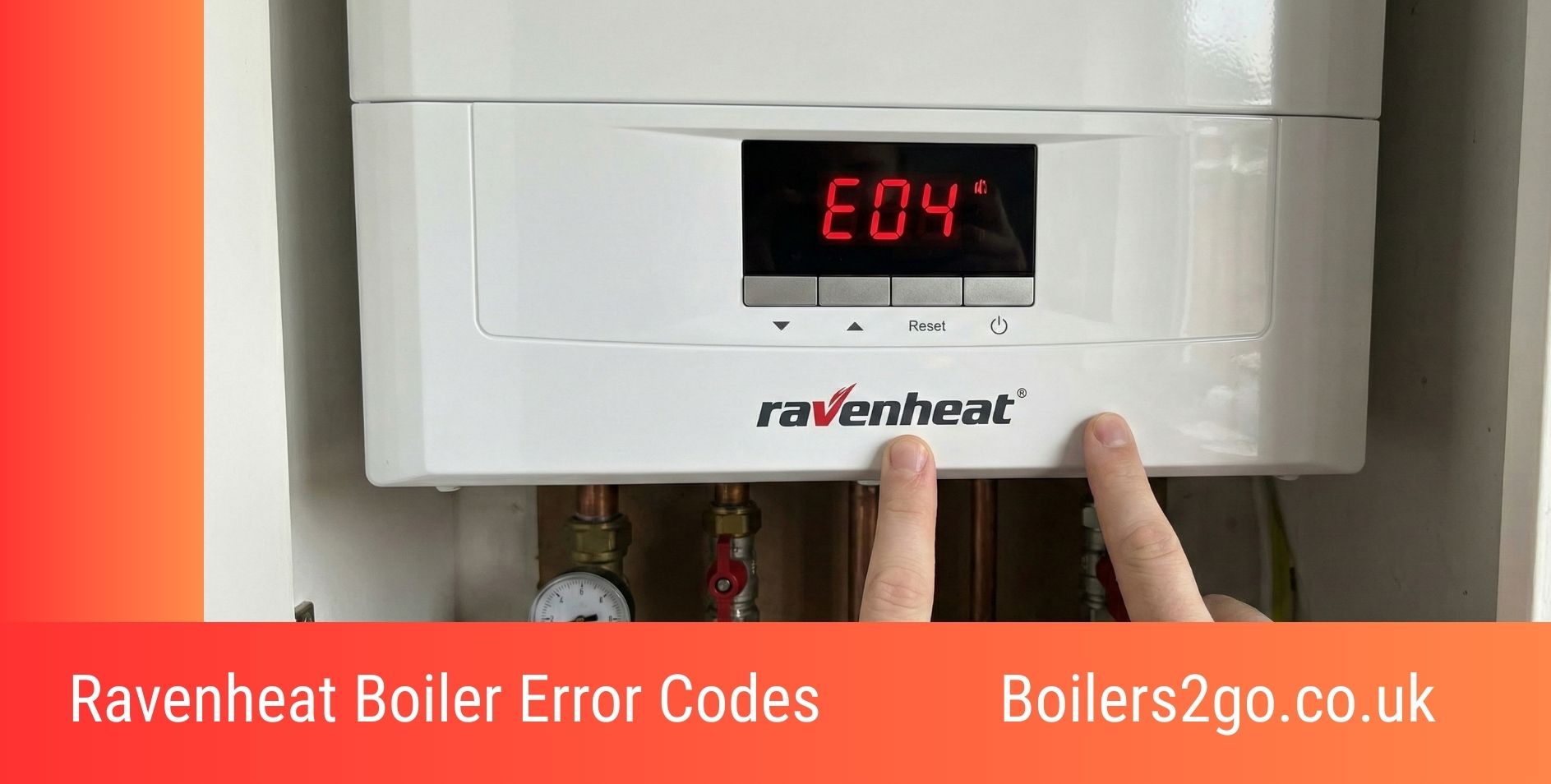
Ravenheat Boiler Error Codes: Causes & Fixes
[Video embed placeholder]
Encountering Ravenheat boiler error codes can be a frustrating interruption to a home heating system, leaving a property without hot water or central heating on a chilly winter day. These diagnostic fault codes, displayed on the boiler’s control panel, are essential signals from a gas boiler that something isn’t right, helping pinpoint issues before they escalate into costly repairs.
This guide breaks down the most common Ravenheat boiler fault codes, their meanings, potential causes, and step-by-step fixes in plain English.
Whether managing a rental property or a family home, understanding these central heating error codes helps in acting quickly, though for any gas-related work, safety always comes first with a Gas Safe registered engineer.
What Are the Most Common Ravenheat Boiler Error Codes?
The most common Ravenheat boiler error codes typically revolve around ignition failures, circulation problems, pressure imbalances, and sensor malfunctions, affecting models across the range from older RSF units to modern condensing boilers.
These fault indicators light up on the digital display or LED panel, signalling disruptions in the combustion process, water flow, or electrical circuits within the appliance.
For UK homeowners, recognising these early can prevent a full breakdown, especially during peak demand in autumn and winter when radiators and hot taps are in constant use.
Ravenheat Boiler Error Code 01 (Ignition Fault)
A Ravenheat boiler error code 01 signifies an ignition failure, where the boiler attempts to light the main burner but can’t establish or maintain a stable flame, resulting in no central heating or hot water supply.
This lockout code is one of the most reported in Ravenheat combi boilers, often triggered by the printed circuit board (PCB) detecting no flame signal after several attempts.
In practical terms, the thermostat calls for heat, but the gas valve doesn’t open properly, leaving the home chilly and taps running cold, a frustrating scenario for landlords facing tenant complaints.
What Causes Ravenheat Boiler Error Code 01?
Ignition faults in Ravenheat boilers stem from several interconnected issues in the burner assembly and gas supply chain.
Common culprits include a blocked or frozen condensate trap, which halts the drainage of acidic flue gases; a faulty flame detection electrode, also called an ionisation probe, that fails to sense the spark; or a dirty main burner clogged with debris from inefficient combustion.
Electrical glitches, such as loose wiring to the spark generator or a failing PCB, can also interrupt the sequence, while low gas pressure from a faulty meter regulator worsens the problem. In hard water areas like the South East, limescale on the electrodes adds another layer, reducing conductivity.
How to Fix a Blocked or Frozen Condensate Trap Causing Error Code 01
- Locate the external plastic pipe at the base of the boiler, often routed to a drain.
- For freezing, common in uninsulated outdoor pipes during UK frosts, gently pour warm, not boiling, water over the pipe to thaw it, using a towel to catch drips and avoid scalding.
- Once thawed, check for blockages by shining a torch inside. Clear minor debris with a flexible drain rod or wire hanger, then flush with warm water.
- Reset the boiler by pressing the reset button for 5 seconds. If it refires, monitor for recurrence and insulate the pipe with foam lagging to prevent future icing. This DIY fix suits confident homeowners, but hot water flow should be tested immediately afterward.
How to Fix a Faulty Flame Detection Electrode for Error Code 01
- Isolate the power supply at the fused spur to ensure safety.
- Remove the boiler’s front panel, consulting the user manual for model-specific clips, then locate the probe near the burner, a small metal rod about 1cm long.
- Disconnect its wiring harness carefully, unscrew the electrode, and inspect for carbon build-up or bending. Clean with fine emery paper if soiled, avoiding damage to the tip.
- Reinstall, reconnect, and power up for a reset. If the code persists, the electrode likely needs replacing, typically a £20 to £30 part, but this requires Gas Safe expertise to avoid gas leaks. Landlords should schedule annual servicing to catch probe wear early.
How to Fix a Dirty Main Burner Injector Causing Error Code 01
A dirty main burner injector triggering Ravenheat boiler error code 01 demands careful cleaning to restore gas flow.
- Switch off gas and electricity, ventilate the room, and remove the burner assembly per the manual, typically four screws on the front. The injector is a brass nozzle at the burner’s base; use a soft brush or compressed air to dislodge fluff and soot, never poking with metal tools to avoid enlargement.
- Wipe with a lint-free cloth dampened in soapy water, rinse, and dry thoroughly before reassembling.
- Test ignition after resetting. If unstable, low gas pressure might be the root cause, needing a meter check by the supplier. This fix can extend burner life, but gas odours should always be checked for before full operation.
Ravenheat Boiler Error Code E02
The Ravenheat boiler error code E02 indicates a pump circulation fault, where the internal pump fails to move water adequately through the primary heat exchanger and radiators, leading to inadequate heating distribution or boiler overheat protection kicking in.
This error code halts operation to prevent damage, common in older Ravenheat system boilers like the WH90 where pump bearings seize from sludge accumulation in the closed-loop heating circuit.
What Causes a Pump Circulation Fault (E02) in Ravenheat Boilers?
Pump issues causing Ravenheat boiler error code E02 often arise from airlocks trapped in the impeller, restricting rotation; mechanical seizure due to worn bearings or sludge from untreated central heating water; or electrical failures like a tripped capacitor in the pump motor.
In rented properties, infrequent bleeding of radiators can introduce air, while hard water regions see faster scaling on the pump head.
How to Fix an Airlock in the Pump for Error Code E02
- Turn off the boiler and isolate power.
- Attach a hose to the pump’s manual bleed valve, a small screw on the pump body, and route it to a drain, then slowly open the valve while the system is cold to release trapped air bubbles, expecting gurgling sounds as water flows.
- Top up pressure via the filling loop to 1 to 1.5 bar once bled, using a digital gauge for accuracy.
- Reset the boiler and run the pump override, holding the heating button for 5 seconds on most models, to circulate. This quick task restores flow, but should be repeated if radiators remain cold upstairs.
How to Fix Mechanical Seizure of the Pump for Error Code E02
- With power off, remove the front panel and locate the pump, a cylindrical component near the centre.
- Insert a flat screwdriver into the slotted shaft end and rotate clockwise gently. If stiff, apply penetrating oil sparingly and work it free over 10 to 15 minutes.
- Clean visible sludge with a cloth, avoiding disassembly unless experienced. Reassemble, reset, and test circulation by feeling for vibrations.
- If seized beyond this, pump replacement, around £150 to £200 fitted, is needed, ideally scheduled during routine servicing for landlords.
How to Fix an Electrical Failure in the Pump Motor for Error Code E02
- Check the pump’s wiring for loose connections. Unplug, inspect terminals for corrosion, and reseat firmly.
- Test the capacitor, a small cylinder on the pump, with a multimeter set to capacitance; it should read near its rated microfarads (for example, 2 to 4µF), and should be replaced if low, typically a £5 to £10 part.
- Restore power and reset. If the motor hums but doesn’t spin, the windings may be burnt, requiring a full pump swap by a Gas Safe professional. This fix highlights the need for annual electrical checks in high-use rental boilers.
Ravenheat Boiler Error Code 08E
Ravenheat boiler error code 08E points to low water pressure in the heating system, where the gauge drops below 0.5 bar, preventing safe operation to avoid dry-firing the heat exchanger.
This pressure fault code is prevalent in sealed systems, causing intermittent lockouts and poor radiator performance, especially after bleeding air from the central heating loop.
What Causes Low Water Pressure (08E) in Ravenheat Boilers?
Low pressure leading to Ravenheat boiler error code 08E can result from gradual leaks in radiator valves or flexible hoses, a faulty pressure relief valve dripping externally, or a depleted expansion vessel that no longer absorbs pressure fluctuations. Droplet evaporation from minor seepages over time is subtle but cumulative in unmonitored landlord properties.
How to Fix Leaks in Radiator Valves for Error Code 08E
- Isolate the affected radiator by closing its lockshield and thermostatic valves, then drain via the bleed key into a bucket.
- Unscrew the valve nut, clean the olive and threads with a wire brush, and apply PTFE tape before reassembling tightly.
- Refill the system via the filling loop, monitoring the boiler gauge to 1.2 bar, and bleed again to expel air. For persistent drips, replace the valve, typically £15 to £25, with a compression type, straightforward for a DIY-confident homeowner, but checking for underfloor corrosion first is worthwhile.
How to Fix a Faulty Pressure Relief Valve for Error Code 08E
A faulty pressure relief valve behind Ravenheat boiler error code 08E needs replacing, since it can’t be serviced. Water near the safety valve on the boiler’s return pipe is usually the giveaway sign.
- Turn off power and water, relieve pressure by opening drain cocks, then unscrew the valve, a brass fitting rated at 3 bar. Fit a new one with a fibre washer, hand-tighten plus a quarter-turn, and repressurise slowly.
- Test by running hot taps; no discharge means success. This £40 to £60 job suits someone with basic plumbing tools, but landlords should log it for compliance records.
How to Fix a Depleted Expansion Vessel for Error Code 08E
Depleted expansion vessel issues causing Ravenheat boiler error code 08E involve recharging. Tapping the vessel, a steel sphere on the system, gives a solid sound if it’s waterlogged.
- Use a car tyre pump on the Schrader valve to inflate to 0.75 bar, matching cold system pressure, then check for the air cushion by pressing the valve, where a hiss indicates success.
- Top up boiler pressure and reset. If there’s no improvement, replacing the vessel, typically £80 to £120, is a task for an engineer to ensure vessel integrity in high-pressure setups.
Ravenheat Boiler Error Code F77
Ravenheat boiler error code F77 denotes a gas valve fault, where the solenoid-operated valve sticks open or closed, risking unsafe combustion or no ignition, often with a humming noise from the valve assembly. This fault code locks out the boiler immediately for safety, impacting hot water on demand in combi models.
Common Causes of Gas Valve Faults (F77) in Ravenheat Boilers
Gas valve problems resulting in Ravenheat boiler error code F77 include solenoid coil burnout from electrical surges, debris in the valve seat from poor gas quality, or diaphragm tears in the gas-air mixer unit. Over time, mineral deposits from mains gas variations harden components, more common in urban installations.
How to Fix Burnt-Out Solenoid Coils for Error Code F77
- Disconnect power and gas, remove the valve cover (two screws), and test the coils with a multimeter; zero ohms means failure.
- Unsolder or unplug faulty coils, typically a £30 to £50 set, and fit new ones, ensuring polarity matches. Reassemble, purge air from gas lines, and relight via reset. Due to gas handling, this is strictly for Gas Safe engineers, with pre-winter checks especially worthwhile.
How to Fix Debris in the Gas Valve Seat for Error Code F77
- Isolate gas at the meter, ventilate, and disassemble the valve body.
- Use a soft brush to remove particles from the inlet filter and seat, flushing with clean gas oil if needed.
- Rebuild with new O-rings, typically a £10 kit, test for leaks with soapy water on joints, and recommission. Professional intervention is mandatory to avoid carbon monoxide risks.
Ravenheat Boiler Error Code F85
Ravenheat boiler error code F85 signals a thermistor (NTC sensor) fault, where the temperature probe sends erratic readings to the PCB, causing erratic heating or shutdowns to prevent scalding. This sensor error affects flow or return thermistors, leading to lukewarm radiators or fluctuating hot water temperatures.
What Triggers Thermistor Faults (F85) in Ravenheat Boilers?
Thermistor faults for Ravenheat boiler error code F85 arise from wiring chafing against sharp edges, sensor overheating from dry runs, or calibration drift after years of limescale exposure. In multi-occupancy rentals, frequent hot water draws accelerate wear.
How to Fix Damaged Wiring on Thermistors for Error Code F85
Damaged wiring causing Ravenheat boiler error code F85 involves tracing harnesses from sensors to the PCB.
- Power off, inspect for fraying, common near the heat exchanger, and strip 1cm of insulation to splice with heat-shrink connectors and solder.
- Test continuity with a multimeter, aiming for a reading near 10k ohms at 25°C. Secure with cable ties and reset. This is straightforward for an electrically minded user, but checking for shorts first is essential.
How to Fix Overheating Damage to the Thermistor for Error Code F85
Overheating damage to the thermistor triggering Ravenheat boiler error code F85 means sensor replacement.
- Locate the NTC, a bead-like resistor on the pipes, unscrew, and fit a new one, typically £15 to £25, coating threads with heat paste.
- Calibrate by running a heat cycle and checking display stability. An engineer is recommended for precise fitting in confined boiler spaces.
How Can Ravenheat Boiler Error Codes Be Prevented in the Future?
Preventing Ravenheat boiler error codes starts with proactive maintenance tailored to UK homes and rental properties, ensuring the central heating system runs smoothly year-round.
Scheduling annual Gas Safe servicing catches ignition or pump issues early, typically costing £80 to £120 but saving on emergency call-outs.
Treating the heating water with inhibitor chemicals like Fernox F1 combats sludge and limescale, especially in hard water areas, added via a radiator after flushing every two years. Insulating exposed pipes and the condensate trap helps fend off freezing in sub-zero temperatures, and bleeding radiators monthly during the heating season maintains pressure balance.
For landlords, installing a magnetic system filter, typically £100 to £200, traps debris, and using smart thermostats for even loads reduces thermistor stress. Regular pressure checks, aiming for 1 to 1.5 bar cold, via the gauge prevent low-pressure faults, while educating tenants on resets avoids unnecessary lockouts. These habits extend a boiler’s lifespan beyond the standard 10 years, minimising downtime and energy bills.
When You Absolutely MUST Call a Gas Safe Engineer
While simple resets or bleeding can tackle minor Ravenheat boiler error codes, certain scenarios demand immediate intervention from a Gas Safe registered engineer to safeguard the household from gas leaks, carbon monoxide poisoning, or explosion risks, a non-negotiable requirement under UK law for rented homes. A quick check of the Gas Safe Register confirms an engineer’s credentials before any callout.
Calling one urgently is warranted if error codes persist after basic troubleshooting, such as repeated 01 ignitions hinting at gas supply faults, or F77 gas valve issues involving high-pressure components.
Any unusual smells, such as rotten eggs from gas, soot around the flue, or visible water leaks near electrical parts all warrant professional attention, since DIY tampering voids warranties and insurance.
For landlords, persistent circulation errors (E02) or sensor faults (F85) in older models may signal broader system corrosion, requiring certification for compliance.
Engineers carry the tools for safe gas purging and part swaps, often diagnosing via diagnostic software unavailable to homeowners. This matters most for vulnerable occupants like families or the elderly, and checking the engineer’s Gas Safe ID before entry is always worth doing.
Related Reading
For anyone managing a mixed portfolio of boiler brands, Intergas boiler error code explanations covers the equivalent fault-code guidance for Intergas systems, useful alongside this Ravenheat-specific guide.
The ideal boiler f3 fault code solutions page covers a specific Ideal fault, helpful for comparing how different manufacturers approach similar underlying issues like sensor and ignition faults.
FAQs
How often should a Ravenheat boiler be checked for error codes?
For optimal performance in a UK home heating setup, inspecting the display panel weekly during winter, noting any flashing lights or codes that could indicate emerging faults, is a sensible habit.
Combined with quarterly pressure and bleed checks, this catches issues like low water levels before they trigger lockouts, extending efficiency without daily hassle.
What does a flashing red light mean on a Ravenheat boiler?
A flashing red light often signals an electrical or sensor anomaly, distinct from numbered error codes, potentially linked to the PCB or wiring integrity.
Unlike specific faults, it warrants a quick power cycle first, but persistent flashing points to deeper diagnostics best left to a professional to restore safe operation.
Can Ravenheat boiler error codes affect energy bills?
Yes, unresolved Ravenheat boiler error codes, such as circulation faults, force inefficient short-cycling, potentially raising gas usage by up to 20% as the unit struggles to maintain temperature.
Addressing them promptly through servicing keeps central heating optimised, aligning with broader UK energy-saving goals and reducing winter bills for cost-conscious households.
Are Ravenheat boilers prone to more error codes than other brands?
Ravenheat boilers, while affordable, may show slightly higher error code frequency in hard water regions, since their compact designs can accumulate scale faster than some premium rivals.
With diligent water treatment, their reliability broadly matches mid-range models, making them a reasonable choice for budget-conscious upgrades in rental portfolios.
How can it be confirmed whether a Ravenheat boiler warranty covers error code repairs?
Ravenheat warranties, typically 2 to 5 years standard, cover manufacturing defects causing error codes but exclude neglect, such as untreated water leading to pump faults.
Checking the installation certificate for expiry and retaining service records is essential, and contacting Ravenheat support with the serial number confirms eligibility for any claim without risking cover on the wider heating investment.
Can weather conditions in the UK make Ravenheat error codes more frequent?
Yes, cold snaps are a common trigger, particularly for condensate-related lockouts, since a frozen external pipe is far more likely during a hard frost than in milder weather.
Insulating exposed pipework before winter sets in, rather than reacting once a freeze has already caused a lockout, is the more effective approach for reducing weather-related faults.
Is it safe to keep resetting a Ravenheat boiler if the same error code keeps returning?
Resetting once or twice to test whether a fault clears is generally fine, but repeatedly resetting a boiler that keeps returning to the same code risks masking a developing problem rather than fixing it.
If a code reappears within a day of a reset, that’s a sign the underlying cause needs a proper diagnosis from a Gas Safe engineer rather than another reset.

I’m Penny North, a home energy heating expert. My mission is to demystify new boilers and complex heating systems to help you achieve a warm, cosy home with lower energy bills and a smaller environmental footprint.