

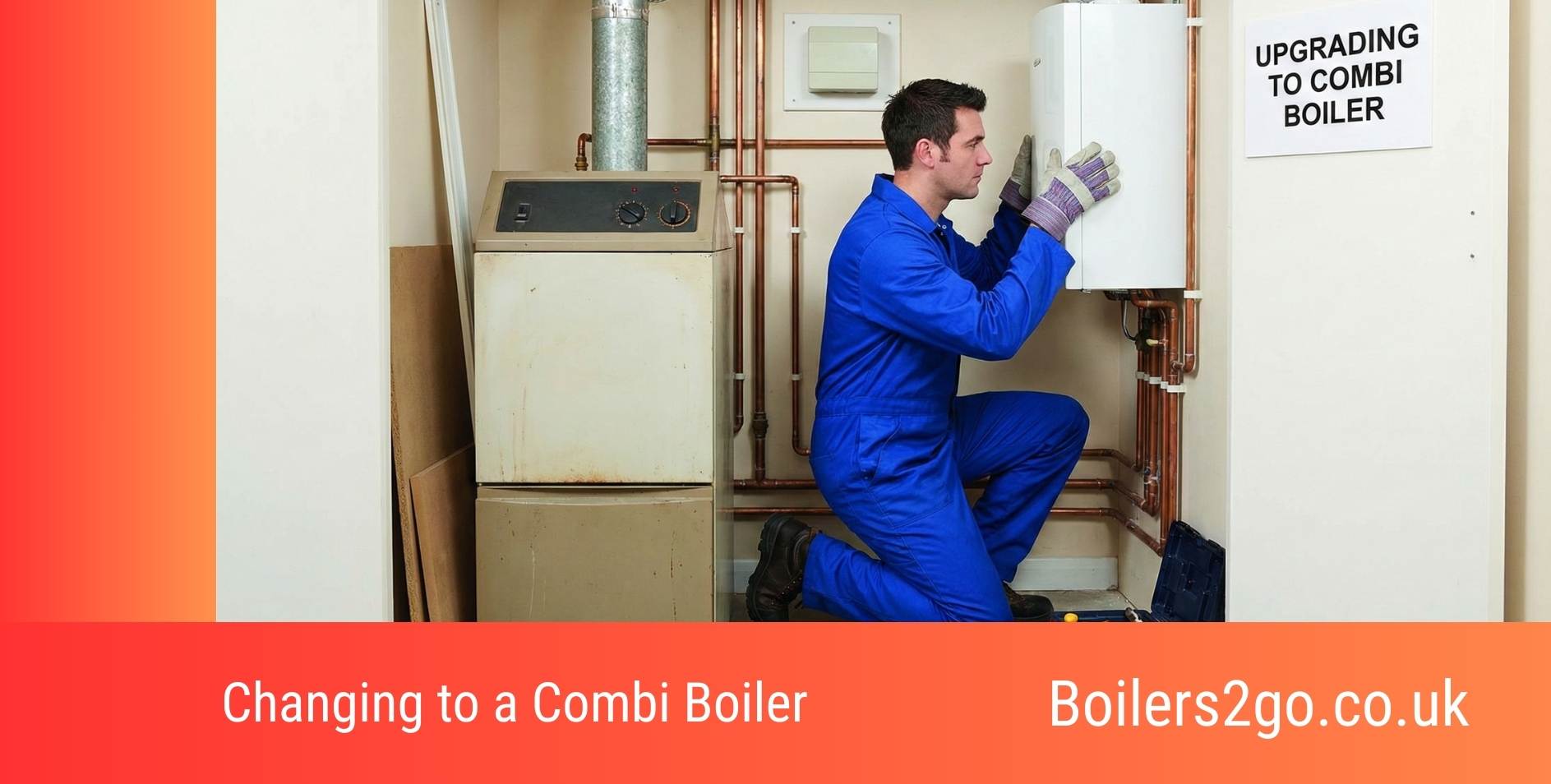
Changing to a combi boiler is one of the most popular home heating upgrades in the UK right now. Thousands of homeowners and landlords switch from an old conventional (regular) or system boiler to a modern combination boiler every year, since it saves space, reduces energy bills, and provides instant hot water without a cylinder.
This guide covers costs, benefits, suitability, the installation process, and the real-world considerations that matter before making the switch.
With so many options available, it helps to compare the best combi boilers for your home against a specific property’s size, efficiency needs and budget before committing to a model.
Why Are So Many UK Homeowners and Landlords Changing to a Combi Boiler?
Changing to a combi boiler remains the number one boiler upgrade choice across the UK because of these key advantages:
- Space saving, removing the need for a hot water cylinder and loft tanks
- Lower energy bills, typically 10 to 25% cheaper to run than an old G-rated boiler
- Endless hot water, with no waiting for a cylinder to reheat
- Easier and usually cheaper installation when converting from an existing cylinder system
- Higher property value and a better EPC rating, important for landlords
- A neater appearance, with everything in one wall-mounted unit
For a closer look at how a combi stacks up against a conventional setup specifically, the benefits of switching to a combi boiler guide covers the comparison in more depth.
Is Your Home Actually Suitable for Changing to a Combi Boiler?
Not every property is ideal for a combi swap. Here are the main factors an engineer will check.
Mains Water Pressure and Flow Rate
Combi boilers need good incoming mains pressure, ideally 1.5 bar or higher, and a flow rate of at least 12 litres per minute. Older houses with lead pipes, or properties at the top of a hill, often have low pressure, which can make a combi perform poorly.
Some current models handle this better than others. The ideal logic combi boiler performance review and the viessmann vitodens 100w features breakdown both cover models with strong flow performance even where mains pressure is on the lower side.
Number of Bathrooms and Simultaneous Demand
Running two showers plus a kitchen tap at once needs a powerful 35 to 40kW combi, such as a Worcester 4000, Vaillant ecoTEC Plus or Viessmann Vitodens 100-W. Larger homes with three or more bathrooms are usually better served by a system boiler paired with an unvented cylinder.
Comparing vaillant boiler efficiency ratings explained and general boiler costs for homeowners helps weigh up whether the higher output needed for heavy simultaneous use is worth the extra upfront cost.
Existing Pipework Layout
Properties that already have a hot water cylinder can almost always be converted, though very old gravity-fed systems may need significant pipework upgrades.
Understanding boiler reset procedures explained ahead of time can help troubleshoot any teething issues after installation, and comparing a ferroli boiler cost breakdown analysis against other budget options is worth doing if pipework upgrades are pushing the total cost up.
How Much Does Changing to a Combi Boiler Cost (UK Average Prices)?
| Item | Average Cost (inc. VAT) |
|---|---|
| New combi boiler, supply only | £2,300-£3,800 |
| Full installation & conversion | £3,800-£6,500 |
| Powerflush | £450-£750 |
| System upgrades (filters, valves) | £300-£800 |
| Removing old tanks & cylinder | £350-£650 |
| Total typical cost | £4,500-£7,500 |
Landlords can currently claim 100% capital allowances on qualifying work, and homeowners may qualify for the Boiler Upgrade Scheme grant if switching to a heat pump, though this scheme does not extend to a like-for-like gas combi upgrade.
It is worth comparing the top boiler brands for 2026 and an alpha boiler cost analysis for homeowners against the totals above, since brand and output size are the biggest factors affecting the final quote.
Step-by-Step: What Happens When You Change to a Combi Boiler
- A free home survey by a Gas Safe registered engineer
- Removal of the old boiler, cylinder and header tanks
- The new high-efficiency combi is mounted, usually in the same place or in the kitchen
- The system is powerflushed
- Pipework alterations are made, including a bypass, filling loop and condensate drain
- A magnetic filter and scale reducer are fitted, mandatory on most warranties
- A new wireless thermostat and controls are installed
- Full commissioning, a Gas Safe certificate, and Building Regulations sign-off
The whole job normally takes two to four days.
Pros and Cons of Switching to a Combi Boiler
| Pros | Cons |
|---|---|
| Huge space saving | Can struggle with very high simultaneous demand |
| Cheaper running costs | Dependent on decent mains pressure |
| Instant hot water | Not ideal for homes with old or small-bore pipes |
| Cleaner installation | Slightly higher upfront cost than a like-for-like swap |
| Better for flats and smaller houses |
Best Combi Boilers for Conversion in 2026 (UK)
- Worcester Bosch Greenstar 4000 (best all-rounder)
- Vaillant ecoTEC Plus (quietest)
- Ideal Logic Max (best value)
- Viessmann Vitodens 050-W (best for tight budgets)
- Baxi 800 series (excellent warranty)
The models above all come with 10 to 12 year warranties when fitted by an accredited installer. Reviewing baxi boiler performance and efficiency, ideal boiler performance reviews and biasi boiler pros and cons side by side is a useful next step before choosing a specific model.
How to Prevent Problems After Changing to a Combi Boiler
- Have the system powerflushed before installation
- Fit a magnetic system filter, such as an Adey MagnaClean or Fernox TF1
- Install a scale reducer or water softener in a hard water area
- Book annual servicing, essential to keep a 10-plus year warranty valid
- Bleed radiators and check system pressure regularly
FAQs
Can I keep my old radiators when changing to a combi boiler?
Yes, in most cases the existing radiators can stay. An engineer will sometimes recommend oversized radiators, or adding one or two, if the house feels cold after the swap. It is worth checking boiler service prices in the UK so ongoing costs are budgeted for alongside the initial installation.
Will changing to a combi affect my shower pressure?
Usually it improves it. Because combis deliver mains-pressure hot water, most people notice a stronger shower, provided the incoming mains supply is decent. If pressure feels inconsistent afterwards, baxi boiler pressure adjustment methods covers the steps to correct it safely.
Do I need planning permission to remove loft tanks for a combi conversion?
No. This is considered permitted development and only requires Building Regulations sign-off, which the installer arranges as part of the job.
How long do modern combi boilers last?
With annual servicing, 12 to 15 years is normal, and well-maintained units from brands such as Worcester Bosch and Vaillant regularly run well beyond that.
Regular maintenance is central to this, alongside choosing a well-reviewed brand in the first place, such as those covered in resetting Worcester boiler settings and general boiler repair costs in the UK guidance.
Can landlords legally install a combi boiler in a rental property?
Yes. It often helps meet the minimum EPC rating currently required for private rentals, set out in the domestic Minimum Energy Efficiency Standard, with a tightening from EPC band E to band C confirmed for October 2030. Installation must be carried out by a Gas Safe registered engineer, and the certificate issued to the tenant.
For broader context on Understanding hot water cylinder systems and the electric boiler types and benefits, these guides help landlords weigh a combi conversion against other heating options for a rental property.
Related Reading

I’m Penny North, a home energy heating expert. My mission is to demystify new boilers and complex heating systems to help you achieve a warm, cosy home with lower energy bills and a smaller environmental footprint.