

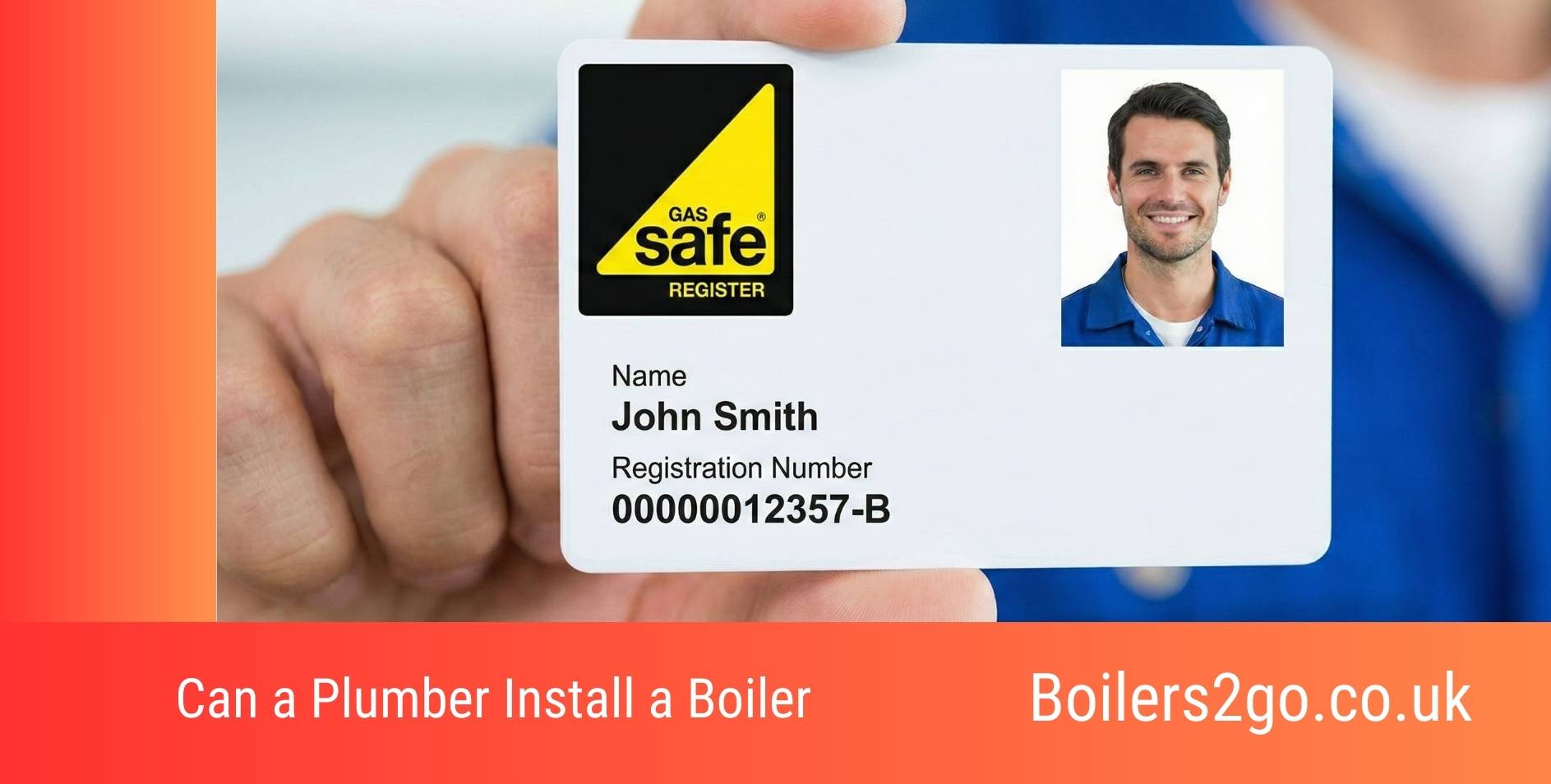
If you’re a UK homeowner or landlord wondering whether a plumber can install a boiler, the short answer is: only if they’re Gas Safe registered. This guide covers the qualifications needed, the risks of skipping them, typical costs, and why a dedicated Gas Safe specialist is often the better choice over a general plumber.
Getting the installation itself right matters just as much as who does it. If you’re planning on installing a boiler in a bathroom, that space has its own ventilation and safety rules to satisfy alongside the usual Gas Safe requirements.
This guide gives you clear, jargon-free answers to help you make an informed decision for your property’s central heating.
Can Any Plumber Legally Install a Boiler in the UK?
No. Not any plumber can legally install a boiler in the UK. Only those who are Gas Safe registered are permitted to handle gas boiler fitting. The same rule applies to homeowners, as our guide on whether you can install a boiler yourself explains.
This rule stems from the Gas Safety (Installation and Use) Regulations 1998, which require that all gas work, including combi boiler installation, is carried out by qualified professionals to prevent hazards like gas leaks.
A standard plumber might excel at pipework or drainage, but without a Gas Safe credential, they aren’t authorised to work on gas appliances.
This distinction matters for landlords ensuring valid tenant safety certificates, and for homeowners wanting to avoid a voided warranty. Unqualified installations are a common cause of emergency call-outs later down the line, so always verify credentials upfront.
How to Check a Plumber’s Gas Safe Registration
Look for the Gas Safe ID card, which includes the engineer’s photo and registration number, and cross-check it on the official Gas Safe Register, a simple step that protects your installation.
What Qualifications Does a Plumber Need to Install a Boiler?
The qualifications a plumber needs to install a boiler primarily include Gas Safe registration, which requires completing accredited training such as the ACS (Accredited Certification Scheme) assessments. Plumbers typically start with an NVQ Level 2 or 3 in plumbing, then specialise in gas engineering to gain competencies in areas like flue installation and ventilation checks. This ensures they can safely manage gas-fired heating systems.
For electric boilers, the bar is lower. No Gas Safe registration is needed, just electrical qualifications such as Part P compliance. But for most UK homes relying on gas central heating, that gas-specific expertise is non-negotiable.
Ongoing Gas Safe Training and Certification
Engineers must renew their Gas Safe registration every year and pass ACS competence reassessments every five years, keeping up with evolving standards. This ongoing education keeps installations compliant and efficient.
What Are the Risks of Hiring a Plumber Without Proper Credentials for Boiler Installation?
The risks of hiring a plumber without the proper credentials for boiler installation are significant, including gas leaks, carbon monoxide poisoning, and legal repercussions. Improper fittings can, in the worst cases, cause fires or explosions, endangering both people and property.
For landlords, this could mean failing an annual gas safety check, and breaches of the gas safety regulations can lead to unlimited fines or even imprisonment.
Homeowners might face invalidated insurance claims if a fault traces back to poor workmanship, turning a routine boiler replacement into a costly problem. Always prioritise safety over a cheaper quote.
Health and Safety Implications for Your Household
Poor installation can lead to inefficient heating, higher bills, and health issues from poor air quality. In rentals, tenants could report issues to the authorities, complicating a landlord’s responsibilities.
What Is the Difference Between a Gas Safe Boiler Company and a Plumber?
The difference between getting a Gas Safe boiler company versus a plumber to install a boiler lies in specialisation and comprehensive service.
A dedicated boiler firm often employs teams of Gas Safe engineers with deep expertise in models from brands like Viessmann or Ideal, ensuring optimal system performance. A general plumber might handle the job if qualified, but could lack the nuanced knowledge for complex setups, such as integrating smart thermostats.
Generally, boiler companies provide end-to-end solutions, including warranties and aftercare, which a solo plumber might not match, especially for larger landlord portfolios.
Boiler Company vs Plumber: Service Scope and Reliability
Boiler specialists typically offer fixed-price quotes and faster response times, reducing downtime in your central heating. Plumbers excel in multi-trade jobs but may subcontract gas work, adding layers of complexity.
How Much Does It Cost for a Qualified Plumber to Install a Boiler?
The cost for a qualified plumber to install a boiler typically ranges from £500 to £2,500, depending on the type, such as a combi versus a system boiler, and your location in the UK.
For a fuller breakdown of what affects this figure, our guide to how much a plumber charges to install a boiler goes into more detail.
Labour alone is typically £400 to £800 for a straightforward swap, though add-ons like new pipework or a power flush can push the total higher. London installations usually carry a premium compared with the rest of the UK.
Landlords may find bulk deals across a portfolio worthwhile, but should factor in VAT at 20% unless the work qualifies as a zero-rated energy-saving installation.
What Affects the Cost of Boiler Installation?
Costs vary with the boiler model, since high-efficiency condensing units cost more upfront but save money over time, along with disposal of the old unit and any building regulations notification fees, which typically add £100 to £200.
If the job involves relocating the boiler rather than a straightforward swap, check our guide to moving boiler costs before agreeing a quote, since relocating pipework and flues adds both time and cost.
What Are the Pros and Cons of Using a Plumber for Your Boiler Installation?
The pros and cons of using a plumber for your boiler installation come down to convenience versus specialism. A multi-skilled plumber can tackle related tasks, such as bathroom renovations, alongside the heating upgrade, saving time on coordinating separate trades. Costs might be lower too, if they’re local and suitably qualified, avoiding a specialist’s markup.
On the downside, limited experience with modern boiler technology can lead to a less efficient installation, and without a strong warranty behind the work, you carry more risk yourself. For more complex systems, a dedicated heating engineer is usually the safer bet for long-term reliability.
Choosing a Boiler Installer as a Homeowner or Landlord
Homeowners might value personalised service from a trusted plumber, while landlords tend to prioritise compliance and minimal void periods, often favouring companies with a proven track record.
Ready to Install a New Boiler? Get a Quote from Boilers 2 Go
If you’re ready to install a new boiler and want expert, Gas Safe assured service, Boilers 2 Go offers a tailored quote for UK homes and rental properties, covering everything from the site survey to final commissioning.
Before you get a quote, it helps to know roughly what you’re after. Our guide to types of boilers covers the main categories available, and what size boiler you need explains how to judge the right output for your property, so you go into the conversation with a clearer idea of what suits your home.
Can a Plumber Install a Boiler: FAQs
How Long Does It Take a Plumber to Install a Boiler?
A standard boiler installation by a qualified plumber usually takes 1 to 3 days, depending on whether it’s a like-for-like replacement or involves relocating the unit and updating pipework. Our guide to how long it takes to fit a new boiler covers what can extend this.
Can a Plumber Install an Oil Boiler, and What Are the Requirements?
Yes, plumbers can install oil-fired boilers if they’re OFTEC registered, which is the equivalent qualification for oil systems, ensuring safe handling of fuel storage and combustion.
What Should You Do If a Plumber’s Boiler Installation Fails a Gas Safety Inspection?
If it fails, contact the plumber immediately for corrections at their cost, and report persistent issues to the Gas Safe Register to protect your home and avoid legal troubles.
Are There Grants for Boiler Installations Done by Plumbers?
Not usually for gas boilers. The Boiler Upgrade Scheme offers grants of up to £7,500, but for heat pumps rather than gas boilers. For gas boilers specifically, check local energy efficiency programmes that might subsidise qualified plumber work instead.
How Can You Find Reviews for Plumbers Who Install Boilers?
Look on platforms like Trustpilot or Checkatrade for verified reviews, focusing on those mentioning Gas Safe compliance and boiler-specific jobs to gauge reliability.
Does a Plumber Need Different Qualifications to Install a Heat Pump?
Yes. Heat pump installations generally require MCS (Microgeneration Certification Scheme) certification rather than Gas Safe registration, since no gas work is involved. It’s a separate qualification, so always check for MCS accreditation specifically if you’re having a heat pump fitted.
Can You Check a Plumber’s Gas Safe Registration Before They Arrive?
Yes. You can look up any engineer or company on the Gas Safe Register website or app in advance using their licence number, which they should be happy to provide when you book. It’s worth doing this before confirming the appointment rather than waiting until they’re on your doorstep.

I’m Penny North, a home energy heating expert. My mission is to demystify new boilers and complex heating systems to help you achieve a warm, cosy home with lower energy bills and a smaller environmental footprint.