

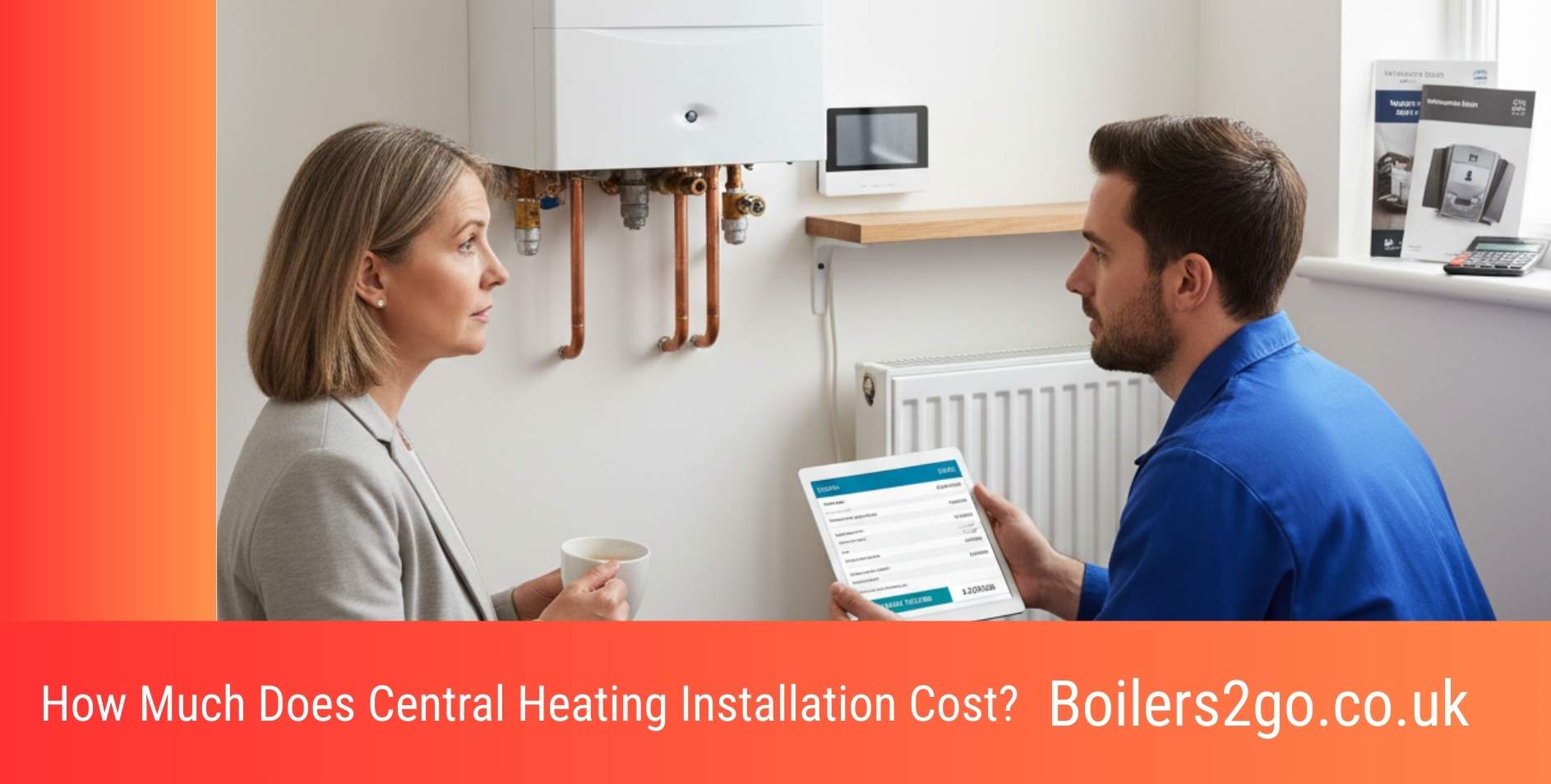
Installing central heating from scratch in a UK home has costs that vary quite a bit depending on the system chosen, the size of the property, and how much pipework or flooring needs changing. Once it is in, our guide to central heating running costs covers what you can expect to pay to run it.
As a rough guide in 2026, most homeowners are looking at around £3,500 to £8,500 for a new gas boiler and radiators, while air-source heat pump systems typically start around £8,000 and can reach £15,000 or more depending on specification.
Those figures assume supply and installation, which is how most heating engineers price full central heating work.
Get a quote today and take the stress out of replacing your boiler. At Boilers2Go, we offer fast, reliable installation across the UK - often as soon as the next day. 
Need a new boiler?
Full Central Heating Installation Cost Quick Guide
| System Type | Typical Property | Estimated Installed Cost | Notes |
| Gas boiler + radiators | 2–3 bed home | £3,500–£6,500 | Boiler, ~8 radiators, pipework, controls |
| Gas boiler + radiators | 3–4 bed home | £5,500–£8,500 | Most common full-system install range |
| Gas boiler + underfloor heating (downstairs) | 3–4 bed home | £7,000–£15,000 | Mix of UFH and radiators |
| Full underfloor heating + gas boiler | 3–4 bed home | £10,000–£20,000 | Retrofit costs depend heavily on flooring |
| Air-source heat pump + radiators | 3–4 bed home | £10,000–£13,500 | Before Boiler Upgrade Scheme grant |
| Air-source heat pump + underfloor heating | 3–4 bed home | £13,000–£30,000+ | Larger projects with floor works |
Gas Boiler and Radiators (Full Central Heating Installation)
For a typical UK house with no existing central heating system, installing a gas boiler, radiators, pipework, and controls usually lands somewhere in the mid-thousands rather than the tens of thousands. A new flue is part of any fresh boiler installation, and our guide to the cost to replace a boiler flue explains how horizontal and vertical flues differ in price.
In most 2 to 4 bedroom homes, a full gas central heating installation in 2026 commonly falls between £5,500 and £8,500. Smaller properties can come in lower, while larger homes with more radiators and pipework can push beyond that.
To understand where the cost comes from, it helps to look at the main components.
A new gas boiler usually costs somewhere between £1,200 and £3,000 installed, depending on output size and brand. Radiators typically cost around £200 to £350 each supplied and fitted, and most three-bed homes need around eight to ten of them.
Installing pipework throughout a house often adds £600 to £1,200 or more, especially if floors need lifting. If a hot water tank is required, that can add another £550 to £750. Labour is usually spread over several days, often making up £500 to £1,500 of the total cost depending on complexity.
Gas boiler systems remain popular because they’re familiar, widely supported by installers, and usually the lowest-cost way to heat a home with radiators. Our guide to the different types of central heating systems compares gas with electric and renewable options.
Get a quote today and take the stress out of replacing your boiler. At Boilers2Go, we offer fast, reliable installation across the UK - often as soon as the next day.
Need a new boiler?
Gas Boiler with Underfloor Heating
Adding wet underfloor heating changes the cost picture quite quickly. While boilers themselves don’t change much in price, underfloor pipe circuits, manifolds, and floor preparation add significant labour and materials.
For whole-house underfloor heating, many UK projects fall somewhere between £8,000 and £20,000, particularly in three or four-bed homes. Retrofit installations tend to be more expensive than new builds, since floors often need lifting or screeds replacing.
A common compromise is installing underfloor heating downstairs with radiators upstairs, which often lands between £7,000 and £15,000, depending on floor area and construction.
Underfloor heating works particularly well with modern condensing boilers because it runs at lower water temperatures, creating a comfortable, even heat while freeing up wall space normally used for radiators.
The main drawback is disruption during installation rather than running cost.
Air-Source Heat Pump with Radiators
Air-to-water heat pumps have higher upfront costs than gas systems but are becoming more common across the UK as homes move toward lower-carbon heating.
For a typical three or four-bedroom property, a properly designed air-source heat pump system with radiators usually falls somewhere between £10,000 and £13,500, though broader installation ranges often run from £8,000 to £18,000 depending on specification. These costs vary significantly based on the specific requirements and condition of the property.
Government support through the Boiler Upgrade Scheme can reduce costs significantly, with a standard grant of £7,500 available for eligible homes installing an air source heat pump. From 21 July 2026, this rises to £9,000 for a limited period for homes currently heated by oil or LPG, as part of a temporary uplift running until 31 March 2027.
One thing homeowners don’t always expect is that radiators often need upgrading when installing a heat pump. Because heat pumps run at lower temperatures than gas boilers, larger radiators may be required to deliver the same comfort level. This can add £2,000 to £5,000 to a project in some homes.
Heat pumps work best in well-insulated properties and can pair effectively with solar panels and other low-carbon upgrades. The biggest challenge is usually the initial investment rather than day-to-day performance.
What Affects the Cost of a New Central Heating System?
The biggest factor in central heating costs is rarely the boiler itself. It’s the amount of installation work around it. Pipe routes, flooring, insulation levels, and radiator upgrades usually influence the final price more than the heat source alone. If you are budgeting for a system boiler specifically, see our guide to system boiler costs.
That’s why two houses that look similar from the outside can end up with very different quotes.
In most cases, the best approach is choosing the system that suits the home, insulation level, and budget, rather than focusing only on the headline cost of the boiler or heat pump. A Gas Safe registered engineer or MCS-certified installer can help weigh up performance rating and capacity against a property’s actual heating needs during extreme weather, so it’s always worth getting a proper site assessment before committing to a system.
Get a quote today and take the stress out of replacing your boiler. At Boilers2Go, we offer fast, reliable installation across the UK - often as soon as the next day.
Need a new boiler?
Central Heating Installation Costs: FAQs
How Long Does a Full Central Heating Installation Take?
A straightforward gas boiler and radiator installation in a smaller home typically takes 3 to 5 days. Larger properties, or projects involving underfloor heating and significant pipework, can take 1 to 2 weeks or more.
Is It Cheaper to Install Central Heating in a New Build Than a Retrofit?
Generally, yes. New builds allow pipework and flooring to be planned from the start, avoiding the extra labour that comes with lifting existing floors or working around finished walls in an older property. In a retrofit, relocating the existing boiler to suit a new layout also adds pipework and labour, as our guide on whether you can move a boiler explains.
Do I Need Planning Permission to Install a New Central Heating System?
Most gas boiler and radiator installations don’t need planning permission. Air-source heat pumps usually fall under permitted development rules too, though it’s worth checking with the local authority for listed buildings or certain flat conversions.
Can I Get Central Heating Installed on Finance?
Many UK installers, including Boilers2Go, offer finance options that spread the cost of a full installation over an agreed term, which can make a larger project like underfloor heating or a heat pump system more manageable upfront.
How Much Does It Cost to Add Extra Radiators to an Existing System?
Adding a radiator to an existing system typically costs £200 to £400 per radiator including labour, though this can rise if new pipework needs running to reach the room.
Does a Bigger House Always Mean a Bigger Heating Bill?
Not necessarily. Insulation levels, boiler efficiency, and how well a system is controlled often matter more than raw square footage. A well-insulated larger home can sometimes cost less to heat than a smaller, poorly insulated one.
Is an Air-Source Heat Pump Worth It for an Older, Less Insulated Home?
It can be, but it’s worth getting a proper assessment first. Heat pumps perform best in well-insulated properties, so older homes may need loft or cavity wall insulation improvements alongside the heat pump to get the best results and stay eligible for grant funding.
Do I Need to Upgrade My Electrics for a Heat Pump Installation?
Most homes don’t need a full electrical upgrade, but an MCS-certified installer will check the property’s existing supply and consumer unit as part of the design process, since heat pumps do draw more electricity than a standard gas boiler.
Related Central Heating Comparisons
- Log burners vs central heating
- Electric boiler vs gas boiler
- Gas fire vs central heating
- Heat pumps vs gas boilers
Related Central Heating Guides
- What size radiator do I need?
- Where should a central heating thermostat be placed?
- Best radiators for fast heat-up and efficiency
- Central heating pump replacement
Get a quote today and take the stress out of replacing your boiler. At Boilers2Go, we offer fast, reliable installation across the UK - often as soon as the next day.
Need a new boiler?

With years of experience in boilers and home improvements in general, Myles Robinson is a passionate advocate for making home heating simpler, safer, and more affordable for households across the UK. With years of experience in the heating industry, Myles combines hands-on knowledge with a focus on customer-first service, helping homeowners choose the right boiler, understand their systems, and keep their heating running efficiently all year round. His articles break down complex topics into clear, practical advice you can trust.